Introduction
Ever felt that small twinge of worry locking up your apartment, wondering what’s actually going on back home? For most renters, that’s a familiar feeling. Break-ins, stolen packages, shared hallways with strangers coming and going — apartment living has its own risks, and a traditional alarm system usually isn’t even an option once lease rules get involved.
That’s exactly the gap DIY apartment security fills. It hands control back to you — smart sensors, motion detectors, mobile alerts — all without drilling a single hole, signing a contract, or waiting on landlord approval. This guide walks through exactly how to set one up, so your apartment stops feeling like a question mark every time you leave it.
Table of Contents
Why Apartment Security Feels Harder Than Ever (The Real Problem)
Living in an apartment often means feeling safe on paper but not so sure in real life. Break-ins, stolen packages, unexplained noises in a shared hallway — it adds up to a low-grade anxiety, especially when you don’t fully control who has access to your building. Most renters want better protection, but landlord rules get in the way fast. Drilling, running wires, or signing a long monitoring contract usually just isn’t on the table.
That lack of control is exactly why renter-friendly setups matter so much. What renters actually need is protection that respects lease terms without giving up real security. Unsecured entry points, blind spots near doors and windows, thin shared walls, high tenant turnover — these are apartment-specific risks that a standard homeowner system was never built to solve. A WiFi-free indoor camera is a good example of a device designed around exactly this kind of constraint — no permanent installation, no landlord sign-off needed.
What makes this frustrating is that safety shouldn’t hinge on whether you own the place or not. Renters deserve the same level of control homeowners get — that’s the whole point of DIY apartment security: flexible, lease-friendly options built for how apartments actually work. Once you understand why this problem is different for renters, choosing the right setup gets a lot easier.
What Is DIY Apartment Security?
Apartment living comes with real limits, but your safety shouldn’t be one of them. This kind of setup covers simple, renter-friendly security solutions you install yourself — no drilling, no wiring, no professional visit required. It’s built for everyday renters who want genuine protection without breaking lease terms or spending a fortune. You set it up, you control it, and it comes with you when you move out.
Built for Renters, Not Homeowners
Unlike a traditional house alarm, this kind of setup is built around flexibility. It usually means door and window sensors, indoor cameras, and motion alerts that stick on or plug in within minutes. No long-term contract, no wall damage, no landlord sign-off. Before installing anything permanent though, it’s worth knowing where your rights actually stand — most states treat security modifications as lease-governed alterations, so a quick lease check saves you a headache later.
Simple Technology That Actually Makes Sense
You don’t need to be tech-savvy to run one of these. Most setups connect straight to a smartphone app, so you get an alert the moment a door opens or movement is picked up — whether you’re at work, asleep, or away for the weekend. That real-time awareness is what makes this feel empowering instead of one more thing to manage.
Practical Protection for Real Apartment Risks
Shared hallways, ground-floor windows, thin walls — apartments carry risks a standalone house doesn’t deal with. A setup like this is built around exactly those problems: deterring break-ins, watching entry points, and cutting down the low-grade worry that comes with living in a building you don’t fully control. In short, it gives renters an affordable, realistic way to feel secure in a space they don’t own but still call home.
Why DIY Apartment Security Systems Are Perfect for Renters
Renters need security that works with apartment life, not against it. That’s exactly why DIY setups have become the go-to choice for modern tenants. Based on real renter experience, these systems solve common problems without creating new ones — no landlord conflicts, no heavy costs, and no complicated setup process.
- No drilling or permanent damage
DIY apartment security systems use adhesive mounts or simple plug-in devices. You protect your space without risking your security deposit or violating lease rules. - Budget-friendly protection
Professional systems often come with high upfront costs and monthly fees. DIY apartment security offers reliable protection at a fraction of the price, making safety accessible for every renter. - Easy installation without professionals
You don’t need technicians or tools. Most setups take minutes, not hours, and work straight out of the box—perfect for busy renters. - Move-out friendly and reusable
When it’s time to move, your system moves with you. This flexibility makes apartment security systems you can do yourself a long-term investment, not a temporary fix.
For renters who want real control without giving up flexibility, this kind of setup — paired with the basics covered in our broader home security guide — is simply the smart move.
Essential Components of a DIY Apartment Security System
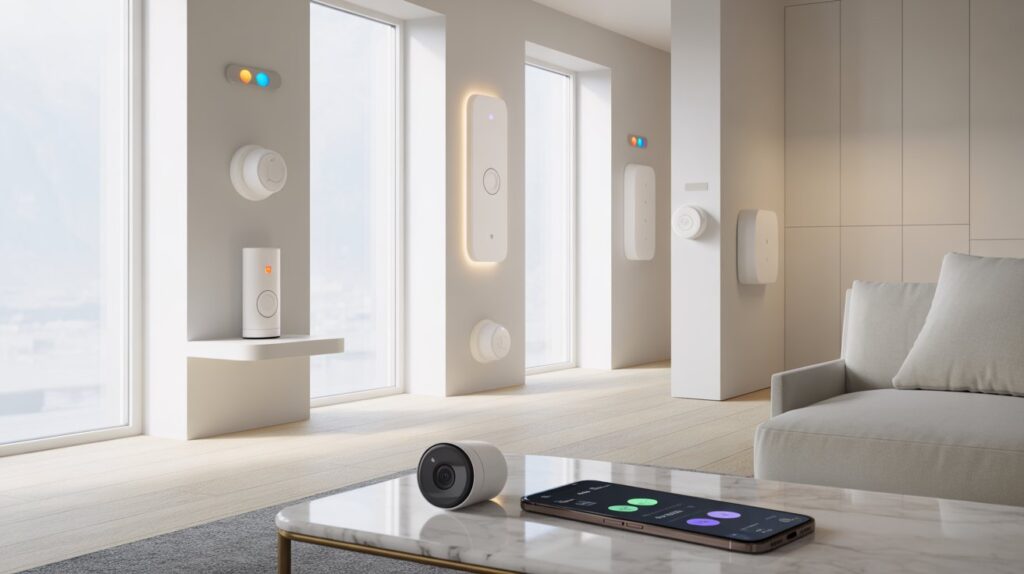
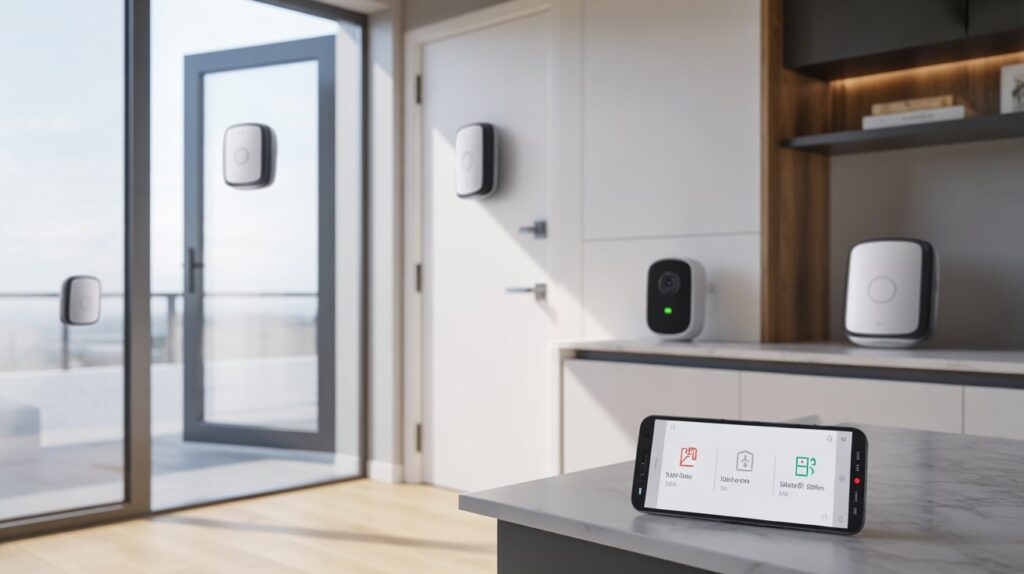
A strong DIY setup doesn’t need a dozen devices — it needs the right ones. Apartment security works best when each piece solves a real apartment risk, like a shared entrance or an unattended package sitting by the door. The essential components below are renter-friendly, easy to use, and proven to add real protection without turning your daily routine into a chore.
Smart Door & Window Sensors
Door and window sensors are the first line of defense in DIY apartment security. They alert you the moment a door opens or a window is moved—something especially valuable in apartments with shared hallways or ground-floor access. Simple to install and discreet, these sensors offer instant awareness without invading your space.
Indoor Security Cameras
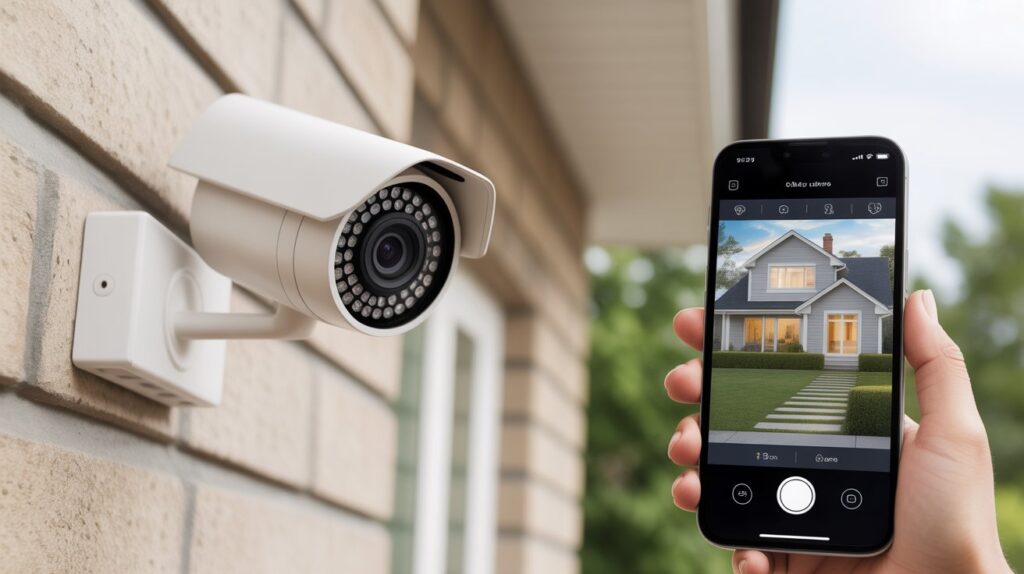
Indoor cameras help you see what’s happening when you’re not home. Whether it’s checking on deliveries, monitoring entry points, or simply gaining peace of mind, they add a powerful visual layer to apartment security systems you can do yourself. Most models are compact, plug-and-play, and designed for renter privacy and control.
Motion Detectors & Smart Lighting
Motion detectors catch movement in areas cameras might miss, while smart lighting adds a visible deterrent. A sudden light turning on can stop unwanted activity before it starts. Together, they create a smarter, more responsive apartment security system without constant monitoring.
Mobile Apps & Alerts
What truly ties DIY apartment security together is mobile control. With real-time alerts and simple apps, you stay connected to your apartment from anywhere. This level of control turns basic devices into a complete security experience—one that fits perfectly into modern renter life.
How to Set Up Apartment Security Systems Yourself (Step-by-Step)
- Plan your apartment layout first
Walk through your apartment and think like a renter, not a homeowner. Focus on main entry points, shared hallways, and ground-level windows. This step helps apartment security systems you can do yourself work smarter, not harder. - Place sensors where they actually matter
Install door and window sensors on the most-used and most-exposed areas. Avoid random placement—strategic positioning improves accuracy and reduces false alerts in DIY apartment security setups. - Position cameras with real-life use in mind
Aim indoor cameras toward doors, package drop areas, or open spaces. Make sure they cover movement clearly without invading personal areas, keeping apartment security both effective and respectful. - Test alerts and motion coverage
Open doors, walk past sensors, and check notifications on your phone. Reliable alerts build trust in your system and confirm your apartment security system is working when it truly counts. - Adjust and retest for daily living
Even minor adjustments in device placement can greatly improve your security coverage. Fine-tuning ensures apartment security systems you can do yourself stay reliable without becoming annoying or disruptive.
Common Mistakes to Avoid With DIY Apartment Security
Even the best tools can fail if they’re used the wrong way. From real renter experience, most problems with apartment security systems you can do yourself don’t come from the devices—they come from simple setup mistakes. Avoiding these common errors can make the difference between feeling protected and feeling falsely secure.
- Poor sensor placement
Placing sensors too high, too low, or on rarely used doors reduces their effectiveness. Sensors should protect real entry points, not just look good on a wall. - Ignoring blind spots
Corners, side windows, and secondary doors are often forgotten. These blind spots are exactly where apartment break-ins tend to happen, especially in shared buildings. - Relying on one device only
A single camera or sensor can’t protect an entire apartment. Smart DIY apartment security works best when sensors, cameras, and alerts support each other.
DIY apartment security isn’t about buying more — it’s about using what you already have correctly. Set up thoughtfully, even a simple setup becomes reliable, balanced, and genuinely protective.
Are DIY Apartment Security Systems Really Safe and Reliable?
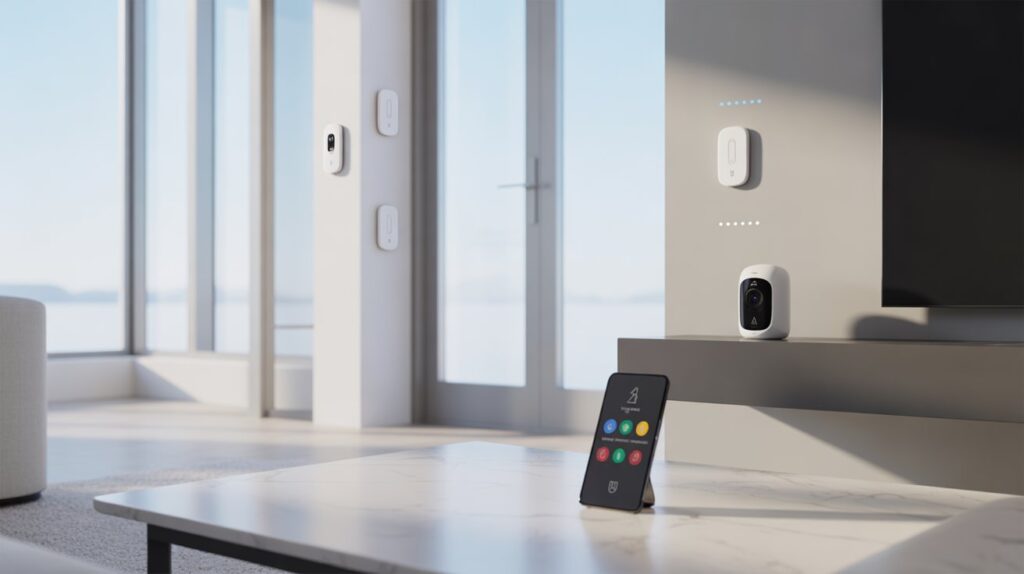
When it comes to protecting your home, honesty and clarity are key. Apartment security systems you can do yourself are effective and convenient, but understanding their real-world strengths and limitations is essential. These systems provide peace of mind for renters while offering flexibility that traditional security setups often lack.
Real-World Effectiveness
DIY apartment security systems excel at preventing common apartment risks, such as unauthorized entry through doors and windows or package theft. Motion sensors, smart cameras, and alert notifications allow renters to monitor their space in real time, giving a strong sense of control. For most apartments, this level of protection is more than enough to keep residents safe and secure.
Limitations vs Professional Systems
DIY systems are practical, but they do have real limits. They typically don’t include 24/7 professional monitoring, advanced alarm protocols, or a guaranteed emergency response the way a commercial setup does. Buildings in higher-crime areas — you can check local trends through the FBI’s Crime Data Explorer — may need more than a DIY system alone can offer. Knowing where that line sits helps you set realistic expectations instead of a false sense of security.
When DIY Is Enough (and When It Isn’t)
DIY apartment security works best for small to medium apartments, renters on a budget, or those who move frequently. It’s perfect for solo tenants, small families, or anyone seeking flexible, affordable protection. However, if your apartment is in a high-risk neighborhood or you need certified monitoring for insurance purposes, combining DIY solutions with professional support—or opting for a fully professional system—may be the safer choice.
At the end of the day, a well-planned DIY setup gives renters protection that’s both reliable and practical. Installed thoughtfully, it delivers real safety and everyday convenience — all without giving up the flexibility renting demands.
Final Thoughts
Living in an apartment shouldn’t mean feeling powerless or unsafe. A thoughtful DIY setup gives renters the control and flexibility they deserve — without breaking the bank or breaking lease rules. From smart sensors and cameras to motion detectors and mobile alerts, every device puts protection back in your hands, on your own terms.
Take a moment to think about it — how would a genuinely secure home change your daily routine? With the right combination of tools, that’s not a stretch goal; it’s something you can build this weekend, right in your own apartment. And once your sensors and cameras are in place, pairing them with a reliable smart lock rounds out the setup — control your entry points, set your own rules, and actually feel it.
FAQs
Q1: Can I install a security system myself?
Yes! DIY apartment security systems are designed for easy installation—no professional help required.
Q2: What is the best do it yourself security system?
The best system combines smart sensors, cameras, and mobile alerts that fit your apartment layout and budget.
Q3: Can you set up a security system in an apartment?
Absolutely. Renter-friendly systems are made to avoid drilling or permanent changes while providing full protection.
Q4: What is the best home security system for an apartment?
Look for compact, wireless systems with motion detectors, door/window sensors, and real-time app notifications.
Q5: How do I burglar proof my apartment?
Secure entry points, install sensors and cameras, use smart lighting, and always stay alert to blind spots.
About the Author
M Bilal is the founder of CrimTechHub and holds a Bachelor’s degree in Criminology, a background that shapes how he looks at renter and apartment security specifically — not just what devices exist, but what’s actually enforceable once lease terms and landlord rules come into play. Each guide is put together by checking product specs against real tenant-rights resources and current crime data, so what you read here reflects how these setups perform in an actual rental, not just how they’re marketed.