Introduction
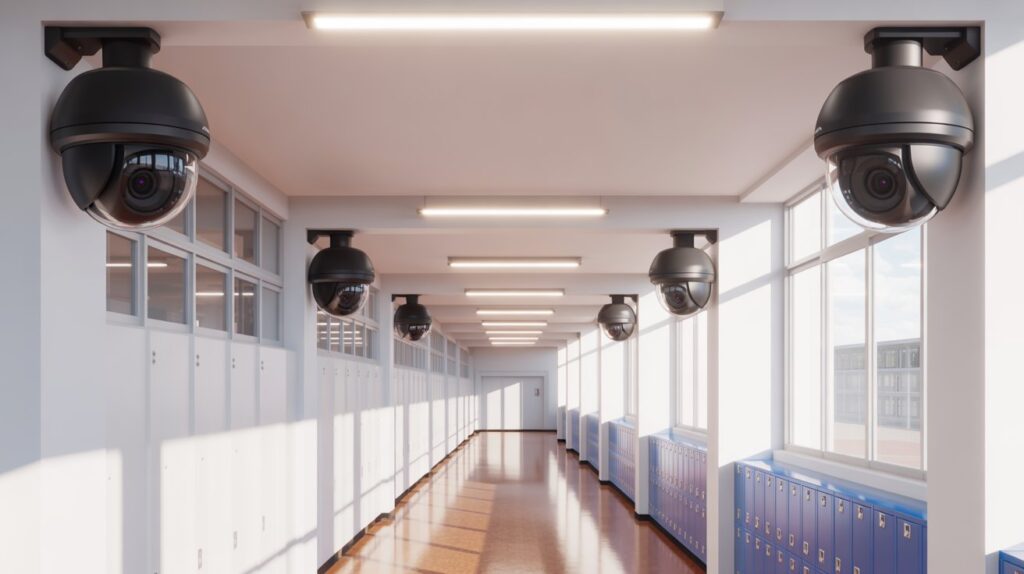
Something happens in a school hallway or on the playground — is the camera footage still there, or already erased? For parents and educators, that answer shapes how confidently a school handles safety concerns and complaints.
School cameras don’t record forever. Most systems overwrite footage after a set retention period, unless an incident flags it for review. This guide covers how long schools typically keep footage, what affects that window, and where privacy meets accountability.
Table of Contents
Why School Security Camera Footage Retention Matters
For parents, nothing matters more than their child’s safety at school. For staff, it means having clear answers when something goes wrong. Retained footage isn’t just video on a drive — it’s a factual record that helps schools respond fairly to real incidents.
When bullying, vandalism, or unauthorized access occurs, saved footage lets administrators review what actually happened instead of relying on conflicting accounts. This protects students from false accusations and holds staff accountable.
Retention length also matters for spotting patterns — repeated incidents in the same hallway or entrance only surface when footage sticks around long enough to compare. And for parents, it answers a simple question: if something happened last week, is the footage still there?
At its core, this builds trust. Clear retention policies reassure parents, protect students, and support the kind of reliable security systems every school needs.
How Long Do Security Cameras Keep Footage in Schools?
The answer depends on school policy, storage capacity, and whether an incident occurs. Schools don’t keep video forever — instead, they follow structured retention periods that balance safety, privacy, and storage limits.
Short-Term Storage (7–30 Days)
Most schools default to a one-to-four-week window for everyday footage — enough time to review a hallway dispute, an unrecognized visitor, or a routine check. If nothing gets flagged, the system records over it automatically.
Medium-Term Storage (30–90 Days)
Larger campuses or high-traffic areas often extend retention to 30–90 days. That extra buffer matters when a report surfaces late — a bullying concern raised weeks after, or property damage no one noticed right away.
Long-Term Storage for Serious Incidents
Once violence, theft, or an active investigation enters the picture, standard deletion no longer applies. Footage gets pulled into a separate archive, and how long it’s kept depends on the investigation itself — not a fixed policy.
These tiers reflect a balance schools aim for: enough retention to protect students and staff, without ignoring privacy or storage limits of a security system.
What Factors Determine How Long School Camera Footage Is Stored?
There’s no single rule that applies across every campus — retention length comes down to a mix of practical constraints, safety priorities, and legal obligations. Schools generally try to hold onto footage long enough to protect students and staff, while still keeping an eye on privacy and system storage limits.
Key factors that decide how long school camera footage is stored include:
- Storage capacity and system type
Schools using modern cloud-based systems can often store footage longer than those relying on local hard drives. Limited storage means older video is automatically overwritten, which directly affects how long school security cameras keep footage. - School district policies
Each district sets its own guidelines based on budget, campus size, and safety goals. Some districts choose shorter retention for privacy reasons, while others keep footage longer to support accountability and incident reviews. - Legal and compliance requirements
Laws and regulations play a major role in determining retention limits. Schools must follow student privacy rules while also preserving footage when it may be needed for legal, disciplinary, or law enforcement purposes. - Incident-based footage preservation
When a serious event occurs, normal deletion schedules usually stop. Footage linked to bullying, threats, or safety concerns is often saved separately and kept longer, regardless of standard retention timelines.
Taken together, these factors explain why retention windows look so different from one school to the next. But the underlying goal stays consistent everywhere: protect students, support fair decision-making, and keep trust intact between schools, families, and staff.
Do School Security Cameras Keep Footage Longer for Investigations?
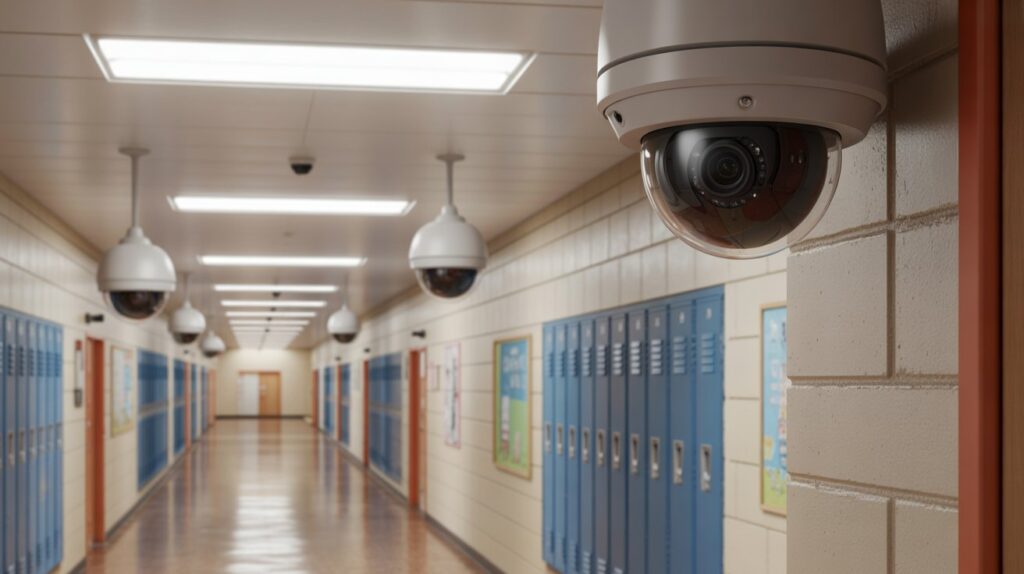
Yes — once an investigation is involved, standard retention rules usually stop applying. Under normal conditions, footage may be deleted after a set number of days, but a reported safety concern changes that immediately, especially for bullying, threats, or legal disputes where accurate evidence matters.
When a concern is raised, administrators typically secure the relevant footage before it’s overwritten, preserving it for careful review and cooperation with outside authorities. At this point, retention is driven by responsibility, not storage limits.
When Footage Is Legally Required to Be Preserved
- Law enforcement requests — If police are involved, schools are often required to preserve footage for an extended period so investigators can rely on clear evidence rather than witness accounts alone.
- Internal disciplinary cases — Schools may retain footage longer for repeated bullying complaints or serious rule violations, helping administrators make fair, fact-based decisions.
- Court or parental requests — Once a formal request is filed, schools are typically required to hold that footage until the matter is resolved, regardless of the standard schedule.
Some states have gone further and passed specific requirements — Texas law, for instance, extended the retention period for school video from three months to twelve months for footage from special education settings, and required schools to keep any recording tied to a reported incident until the matter is fully resolved, including all appeals.
Extended retention during investigations reflects a school’s duty to act responsibly — preserving footage that matters, not just clearing storage on a schedule.
Are There Laws Governing School Security Camera Footage Retention?
Yes, school security camera footage is not stored randomly. Clear laws and policies guide how long do security cameras record in schools, with a strong focus on student privacy and responsible data use. These rules are designed to protect children, support school safety, and ensure footage is handled ethically and lawfully.
While schools are allowed to use security cameras for safety, they must also follow strict privacy standards. Footage retention policies are created to balance security needs with the rights of students and staff, which is why schools cannot keep or share video without valid reasons.
Key legal and policy factors that govern school camera footage retention include:
- FERPA considerations
The Family Educational Rights and Privacy Act (FERPA) plays a major role in how schools manage video recordings. If footage directly identifies a student, it can be treated as an education record under federal law — a distinction that affects retention timelines and who’s allowed to view or request access to it. The U.S. Department of Education’s Student Privacy Policy Office maintains detailed guidance on these rights for parents and eligible students. - State and district-level policies
Beyond federal guidelines, individual states and school districts set their own retention rules. These policies define storage timelines, access controls, and deletion procedures, ensuring consistency across schools while addressing local legal requirements. - Privacy rights of students and staff
Schools must respect personal privacy, especially in sensitive areas. Cameras are placed and managed in ways that avoid unnecessary intrusion, and footage is kept only as long as it serves a clear safety or legal purpose.
Understanding these laws is what lets parents and educators trust the process — retention decisions are guided by responsibility and legal obligation, not just convenience. Clear boundaries like these keep the purpose of school cameras in check: they’re there to protect students, not to monitor them.
How Schools Manage, Store, and Delete Security Camera Footage
Cloud vs. Local Storage Systems
The choice between cloud platforms and on-site servers usually comes down to budget and security priorities. Cloud storage tends to support longer retention windows and easier remote access, while on-premise systems often run into fixed storage limits that cap how long footage can realistically stick around.
Automatic Deletion Policies
Most school security systems follow automatic overwrite rules — once the retention period ends, older footage is deleted to make room for new recordings, unless it’s been flagged for review or investigation.
Access Control and Data Security
Footage access stays limited to authorized staff only, which is key to protecting student privacy. Strong passwords, defined user permissions, and audit logs work together to ensure retained footage is properly secured throughout its entire retention period — not just stored, but actively protected.
Can Parents or Students Request School Security Camera Footage
Many parents and students wonder whether they can access school security camera recordings. Understanding how long do security cameras record in schools is important, but knowing who can view the footage and under what conditions is equally critical. Schools balance transparency with privacy, ensuring that requests are handled fairly and legally.
- When requests are allowed
Parents or students may request footage in situations such as verified safety incidents, bullying, or property damage. Schools usually have formal procedures for submitting these requests, and relevant video is preserved to support investigations or disciplinary actions. - When footage access is denied
Requests may be denied if the footage involves other students, is outside the retention period, or contains sensitive areas where privacy must be protected. Denying access in these cases prevents misuse and safeguards everyone’s rights.
How Schools Protect Privacy - Schools rely on strict access controls, regular audits, and layered security to ensure only authorized personnel can view footage. Under FERPA, a student’s education record — which can include identifiable footage — generally can’t be disclosed without parental or eligible-student consent, and parents have the right to inspect and review those records, as outlined on the Indiana Department of Education’s FERPA page, which is part of why schools handle these requests so carefully.
By following these guidelines, schools ensure parents and students feel respected and informed, while protecting student privacy and safety.
Conclusion
Footage retention isn’t just a technical setting — it’s about safety, trust, and accountability working together. From a routine hallway check to a serious investigation, how that video is stored, managed, and accessed touches every student, parent, and educator connected to that school.
Solid retention policies, legal compliance, and careful privacy handling are what let a school stay secure while still respecting everyone’s rights — the same principles that shape good home security systems too.
Does this change how you see the cameras at your child’s school? Behind every one is a system built on responsibility, not surveillance for its own sake — a steady effort to look out for students throughout their day.
FAQs
Q: How long do security cameras hold footage in schools?
Most school systems keep footage for 7 to 30 days under standard policy, though some districts extend that to 90 days for larger campuses or high-traffic areas.
Q: Can I get CCTV footage from a year ago?
Typically no — footage that old only survives if it was pulled out and archived separately for a specific investigation or legal case.
Q: How long does it take for camera footage to disappear?
Once the retention period ends — usually within a few weeks to a month — the system automatically overwrites the old footage to make room for new recordings.
Q: How long does CCTV footage have to be kept by law?
There’s no single mandated number — it depends on state law and district policy, with most standard footage held in the 7- to 30-day range before longer retention kicks in for flagged incidents.
Q: Do security cameras delete footage automatically?
Yes — once the retention window closes, most systems overwrite old footage on their own, unless that specific clip has been flagged and pulled for review.
Author Box
M Bilal
Founder, CrimTechHub
M Bilal holds a degree in Criminology and writes about home and school security topics at CrimTechHub. He researches security systems, camera technology, and safety policies to help parents and homeowners make informed decisions. Follow his work on Facebook.