
Introduction
What happens to your property’s security the moment the internet drops? An outdoor security camera without WiFi or internet keeps working exactly when cloud-based systems fail, recording locally so nothing gets missed — no matter how remote the property or how long the outage lasts. These offline cameras hand you full control over your own footage, real privacy from third-party servers, and dependable protection for your home, business, or land, all without an app or cloud account standing between you and your own security data.
Table of Contents
Why Outdoor Security Without Internet Is Becoming a Real Need
Security today is no longer just about catching a thief on camera. It’s about feeling safe, staying in control, and knowing your property is protected around the clock. Many homeowners are also learning that leaning entirely on cloud-based systems carries real risk — outages, subscription lock-ins, and privacy exposure. This is exactly why an outdoor security camera without WiFi or internet has moved from a niche pick to a genuine necessity for a growing number of properties.
Rural areas and remote properties often can’t count on internet at all, let alone a stable connection. Farms, vacation cabins, construction sites, and countryside homes need monitoring that doesn’t depend on WiFi uptime. During storms or power outages — exactly when break-ins are most likely — cloud-based security camera systems typically go dark at the worst possible time. An outdoor security camera without WiFi or internet keeps recording locally regardless, so protection never actually stops.
Privacy is the second driver. Homeowners are increasingly wary of footage sitting on someone else’s servers or passing through third-party apps they don’t fully control. Offline cameras store everything on-site instead, which means the property owner — not a cloud provider — decides who sees the footage and when.
There’s also a broader shift happening: theft, trespassing, and vandalism aren’t just city problems anymore, and that’s pushed home security planning into suburbs and small towns that never worried about it before. An outdoor security camera without WiFi or internet delivers steady, always-on coverage without monthly fees or ongoing online exposure — which is why more property owners are switching to offline setups instead of renewing another cloud subscription.
What Is an Outdoor Security Camera Without WiFi or Internet?
An outdoor security camera without WiFi or internet is a standalone surveillance solution designed to work completely offline. Instead of relying on cloud storage or mobile apps, these cameras record and store footage locally, making them reliable, private, and easy to manage—especially in areas with poor or no internet access.
These cameras are built around simple, proven technology that continues working even during internet outages or network failures. Once installed, they monitor activity automatically and keep recordings secure on-site, giving users full control over their security data.
How these cameras work offline:
- Record video directly to an SD card inside the camera
- Store footage on a DVR or NVR system connected by cable
- Use closed-circuit recording, keeping footage completely private
- Operate independently without cloud access or online apps
Why this setup matters in real life:
- Ideal for rural homes, farms, and remote properties
- Reliable during power cuts and internet outages
- No monthly fees or subscription costs
- Greater privacy and data security compared to cloud cameras
An outdoor security camera without WiFi or internet keeps things simple: reliable footage, straightforward setup, and zero dependence on apps or cloud accounts. Paired with a smart lock that works without WiFi, it gives a property owner a full offline security layer — cameras watching the perimeter, a lock securing the entry — without either device needing an internet connection to function. For anyone who wants dependable surveillance without technical complexity or online risk, this offline approach stays a practical, low-maintenance choice.

How Offline Outdoor Security Cameras Actually Work
An outdoor security camera without WiFi or internet runs on one simple principle: it records what happens and keeps that footage on-site. There’s no cloud upload, no live streaming, and no dependency on a network connection to function. Once installed, the camera monitors activity around the property — a home entrance, farm gate, or storage area — and keeps recording even when the internet goes down.
These cameras are built for people who want consistent security without managing apps or accounts. They start recording automatically based on motion or a set schedule, so nothing important gets missed. That’s what makes offline systems especially practical in remote locations or anywhere power and internet service are unreliable.
Storage Options and Recording Methods
Offline outdoor cameras rely on a handful of proven storage and recording methods:
- SD card storage — footage saves directly inside the camera for quick, on-site access
- DVR systems — collect recordings from wired cameras and store them securely in one central unit
- NVR systems — commonly paired with higher-resolution cameras for sharper video storage
- Motion-based recording — saves storage space by capturing footage only when movement is detected
Getting this right matters more than most people assume: local video storage strategies are usually designed around continuity of operations, often following a grandfather-father-son backup approach, according to ISACA’s guidance on implementing CCTV systems. Applying that same logic at home — rotating storage instead of letting a card or drive silently fill up — is what keeps an offline camera actually useful when footage is needed most. ISACA
Because everything stays on-site, users keep full control of their own recordings. An outdoor security camera without WiFi or internet delivers dependable performance, real privacy, and practical protection — a trusted option for anyone who values reliability over constant connectivity.
Key Benefits of Using an Outdoor Security Camera Without Internet
Choosing an outdoor security camera without WiFi or internet is not just about convenience—it is about trust, control, and reliability. These cameras are designed for people who want security that works quietly in the background without depending on technology that can fail when it matters most. From private homes to remote properties, offline cameras offer real-world advantages that online systems often cannot match.
They provide peace of mind by focusing on core security needs rather than unnecessary features. When there is no internet connection involved, the system becomes simpler, safer, and more dependable, especially in areas with unstable networks or frequent power interruptions.
Why Offline Security Cameras Make Sense
- Stronger privacy protection
Footage stays on local storage, not on cloud servers, reducing the risk of data leaks or unauthorized access. - Reliable performance at all times
An outdoor security camera without WiFi or internet continues recording during internet outages, storms, or network failures. - No monthly fees or subscriptions
Once installed, there are no ongoing costs, making offline cameras a cost-effective long-term security solution. - Uninterrupted monitoring
Motion detection and scheduled recording ensure your property is monitored day and night without online dependence. - Simple and stress-free operation
Fewer apps, fewer settings, and fewer points of failure make offline systems easy to manage for any user.
For property owners who want steady, private, and low-maintenance protection, an outdoor security camera without WiFi or internet checks every box that actually matters — without the recurring costs or online exposure that come with cloud-based systems.
Best Places Where Offline Outdoor Security Cameras Work Perfectly
- Farms and agricultural land
An outdoor security camera without WiFi or internet is ideal for wide, open areas where internet access is limited or unavailable, ensuring equipment, livestock, and storage areas remain protected. - Remote homes and rural properties
Offline cameras provide reliable monitoring for houses located far from cities, where network coverage is unstable or power outages are common. - Construction sites
These cameras help deter theft and vandalism by recording activity continuously, even after work hours, without relying on temporary internet connections. - Warehouses and storage facilities
Local recording allows businesses to maintain private, uninterrupted surveillance over valuable inventory and restricted areas. - Vacation homes and cabins
An outdoor security camera without WiFi or internet offers dependable protection for properties that remain unoccupied for long periods, without monthly fees or online risks. - Parking areas and outdoor yards
Offline monitoring ensures consistent security for vehicles and open spaces, especially in locations where internet access is unreliable or unnecessary.
These real-world use cases show why offline outdoor security cameras remain a trusted and practical solution wherever constant internet access cannot be guaranteed.
Important Things to Check Before Buying One
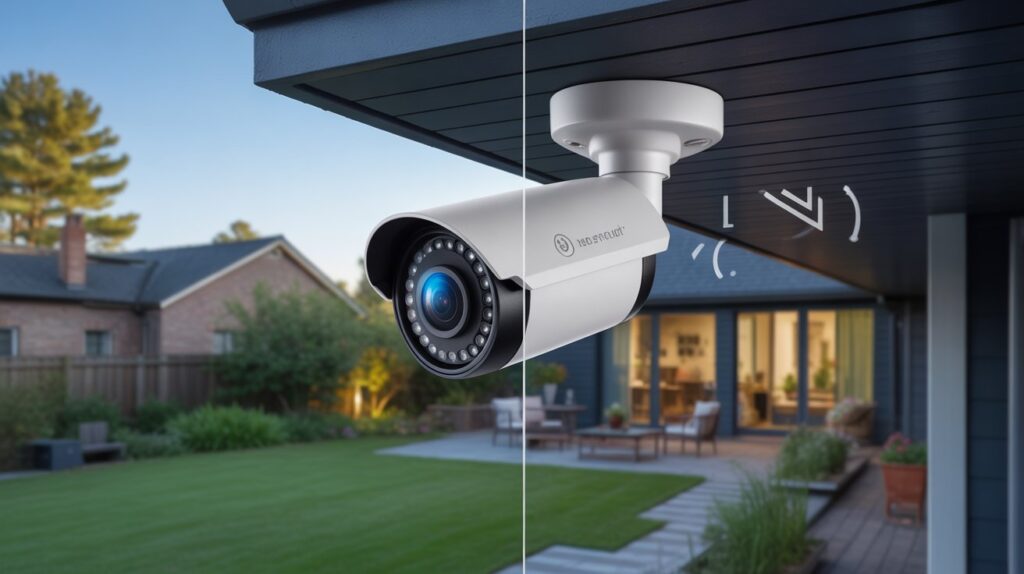
Before buying an outdoor security camera that doesn’t depend on Wi-Fi or the internet, it’s important to focus on features that guarantee consistent, long-term protection. Selecting the right camera means thinking about practical factors—such as coverage area, durability, and ease of use—that fit your property and daily routines. By carefully evaluating these aspects, you can ensure your offline security system performs reliably when you need it most and provides true peace of mind.
Power Source, Storage Capacity, and Night Vision
- Power Source
Decide between battery-powered, solar-powered, or wired cameras. Battery and solar options offer flexibility for remote locations, while wired systems provide uninterrupted operation without frequent maintenance. - Storage Capacity
Check whether the camera supports large SD cards or DVR/NVR storage. Higher capacity allows continuous recording without frequent data management, which is crucial for offline surveillance. - Night Vision
Ensure the camera has clear night vision or infrared capabilities. This is critical for 24/7 monitoring, as most security incidents occur during low-light conditions or at night. - Weatherproof and Durable Build
Look for cameras rated for outdoor use with water and dust resistance to withstand all weather conditions. - Ease of Access to Footage
Confirm that reviewing and retrieving recordings is simple, whether through direct SD card access or a local monitor.
Weighing these factors upfront is what separates a camera that performs for years from one that gets replaced within a season — turning your purchase into a genuinely practical, long-term investment in your property’s security.
Common Myths About Security Cameras Without WiFi
Many people assume an outdoor security camera without WiFi or internet is outdated or less capable than a cloud-based system. These assumptions often stop homeowners from choosing an offline setup that could genuinely serve them better. Let’s separate the myths from the facts.
Myth 5: They don’t provide real protection
Fact: Research on surveillance camera deployments has found that introducing cameras can reduce crime by roughly 25% in the areas they cover, primarily by deterring planned offenses like theft rather than just recording them after the fact, according to a peer-reviewed study hosted by Arizona State University’s Center for Problem-Oriented Policing. That deterrent effect holds just as well for a camera recording locally as one streaming to the cloud — a visible camera is still a visible camera to anyone casing a property.
Myth 1: Offline cameras are less reliable
Fact: Offline cameras record straight to local storage — SD cards or a DVR/NVR unit — so monitoring continues uninterrupted even during internet outages or network failures.
Myth 2: You can’t access footage remotely
Fact: Live remote streaming isn’t part of the offline setup, but recordings are easy to review on-site or transfer manually whenever needed — and that trade-off is exactly what keeps your footage private and fully under your control.
Myth 3: They’re only old technology
Fact: Modern offline cameras support full HD video, night vision, and motion detection in durable, weatherproof builds — matching online cameras on picture quality and features.
Myth 4: Setup is complicated
Fact: Most offline security cameras are plug-and-play, with no app or cloud account required, making installation simple even for a first-time user.
Conclusion
Choosing an outdoor security camera without WiFi or internet means taking full control of your home’s safety — constant surveillance, real privacy, and dependable monitoring even where connectivity is weak, with no apps, cloud fees, or subscriptions involved.
For larger properties, pairing it with an outdoor PTZ camera with auto motion tracking extends that same offline reliability across a wider area. The best security setup isn’t the most complicated one — it’s the one that’s simple, reliable, and ready when you actually need it.
FAQs
Q1: Is there a security camera that works without Wi-Fi or internet?
Yes, outdoor security cameras without WiFi or internet work offline using SD cards or DVR/NVR systems, providing reliable local recording.
Q2: Can you have security cameras with no internet?
Absolutely. Offline cameras record footage locally, offering privacy, uninterrupted monitoring, and zero dependency on the internet.
Q3: How can I connect my CCTV camera to my phone without internet?
You can use cameras with direct local access via Wi-Fi hotspot or DVR/NVR connections, allowing phone viewing without an internet connection.
Q4: Can I view a CCTV camera remotely without Wi-Fi?
Remote viewing without internet is limited; offline cameras store footage locally, which you can access directly via SD card or a local monitor.
Q5: How do I set up a CCTV camera without Wi-Fi?
Install the camera, insert an SD card or connect to a DVR/NVR, and configure motion detection or recording schedules—no internet required.
Q6: What are the disadvantages of no Wi-Fi camera?
Limited remote access is the main drawback, but offline cameras excel in privacy, reliability, and uninterrupted security.
About the Author
M Bilal holds a Bachelor’s degree in Criminology and writes about home security, surveillance technology, and physical protection for everyday properties at CrimTechHub. His background in criminology shapes a research-first approach to topics like burglar deterrence, surveillance methods, and property security — looking beyond product specs to how these systems actually hold up in real-world security situations. He researches each guide by studying how security cameras, storage systems, and offline surveillance technology genuinely perform before writing about them.