Introduction
You reach for the handle, it doesn’t budge, and suddenly you’re standing outside your own bedroom wondering how to open the door when it is locked. It happens more often than people admit — a slammed door, a curious kid, or a lock that’s simply worn out. The good news is most of these situations have a quick, safe fix. This guide walks through exactly why doors get stuck, how to open one step by step, and when it’s smarter to just call a pro.
Table of Contents
What Causes a Locked Door to Get Stuck
Most locked doors get stuck because of three simple reasons: a misaligned latch, a worn-out locking mechanism, or a spring lock that catches without you meaning to lock it. If you’re trying to figure out how to open the door when it is locked, understanding the actual cause first saves you time and stops you from forcing something that isn’t broken.
Interior doors, especially bedroom and bathroom doors, usually use a privacy lock or a spring lock — the kind with a small button on the doorknob rather than a keyhole. These are convenient until the door frame shifts even slightly, which happens more often than people expect, especially in older homes or during seasonal humidity changes. When the frame swells or settles, the latch no longer lines up with the strike plate the way it should. You turn the handle, but the latch stays jammed in place, and the door feels locked even if the button wasn’t pressed on purpose.
Common reasons a locked door gets stuck include:
- Misaligned door frame – swelling or settling shifts the strike plate out of position
- Accidental locking – a child pressing the lock pins, a slammed door, or forgetting the button was set
- Worn locking mechanism – internal parts age and stop catching properly
- Faulty door handle – a worn spindle or cam spins without retracting the latch
- Humidity or temperature changes – common across USA homes with seasonal weather shifts
Sometimes it’s not the lock at all — it’s the door handle itself. If the internal spindle or cam wears down over time, the handle can spin freely without actually retracting the latch. This gives the illusion of a jammed lock when really it’s mechanical failure inside the handle assembly. This kind of gradual lock failure isn’t unique to manual doors either — even smart locks run into similar issues over time, which is why it’s worth checking our Kwikset Smart Lock Battery Change Guide if your home already uses electronic locks and you want to avoid getting stuck the same way.
Knowing which of these is happening — a locking mechanism issue, a misaligned frame, or plain accidental locking — is the first step before trying any tool. If your issue is more about the lock hardware failing repeatedly rather than a one-time incident, it might be worth reading our guide on how to tell if a door lock needs replacing, since a lock that jams often is usually close to the end of its life anyway.
Signs You’re Dealing With a Jammed vs. Locked Door
A jammed door won’t open even when it’s unlocked, while a locked door won’t open because the locking mechanism is actively engaged — telling the two apart is the difference between fixing a $5 problem and calling a locksmith for nothing. Before you try to figure out how to open the door when it is locked, it helps to confirm you’re actually dealing with a lock and not a stuck door frame, because the fix for each is completely different.
How to Tell If the Door Is Actually Locked
If the handle turns freely but the door still won’t budge, that’s usually a jammed latch, not a locked door. A true locked door will show clear resistance the moment you try to turn the handle or knob — it feels stiff, stops halfway, or doesn’t move at all. In most American homes, interior doors use a simple privacy lock or spring lock, so if you can see the button on the doorknob is pressed in, that’s your confirmation the locking mechanism is engaged, not the frame.
How to Tell If the Door Is Jammed, Not Locked
A jammed door usually happens after painting, humidity swings, or a house settling over a few years — the door swells slightly and the latch no longer clears the strike plate. Signs of a jammed door instead of a locked one include:
- The handle turns normally but the door doesn’t open
- No lock button is visible or engaged on the knob
- The door sticks at the same spot every time you try
- Pushing or pulling gently while turning the handle causes slight movement
Why This Distinction Matters
Trying lockpicking tools or a paper clip on a jammed door wastes time and can damage the latch mechanism for nothing, since the real issue is friction, not a locking pin. On the other hand, applying pressure to a frame that’s simply swollen — thinking it’s locked — can scratch the door hardware or crack the trim plate. If your door frame keeps causing problems like this, it’s worth looking at our guide on Best Door Security Devices to Protect Your Home, which covers hardware built to hold alignment and reduce these frame-related lock issues over time.
Step-By-Step Solutions: How to Open a Locked Bedroom Door
The fastest way to open a locked bedroom door is with a flat tool worked into the privacy lock or latch — here’s exactly how to do it, method by method.
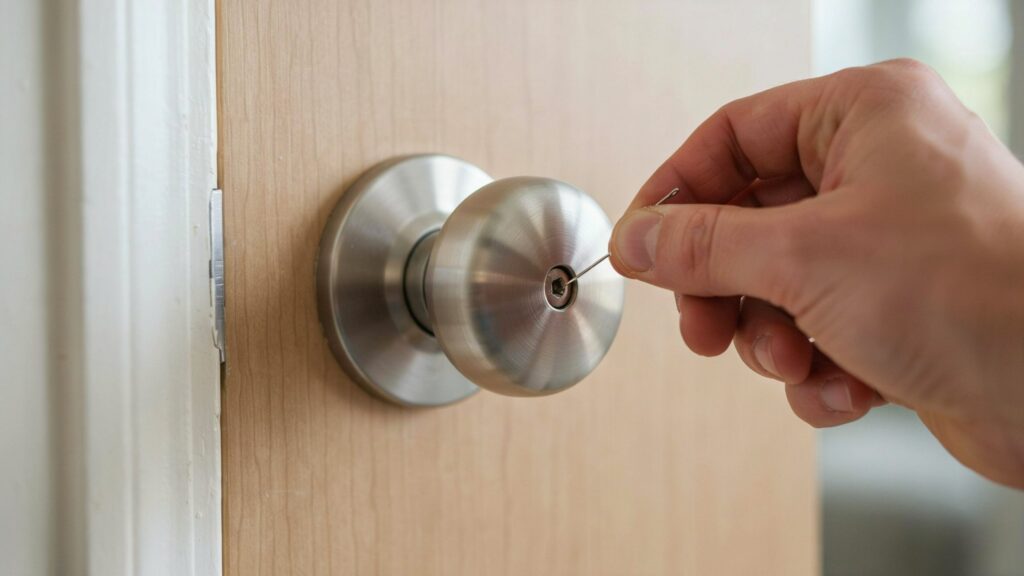
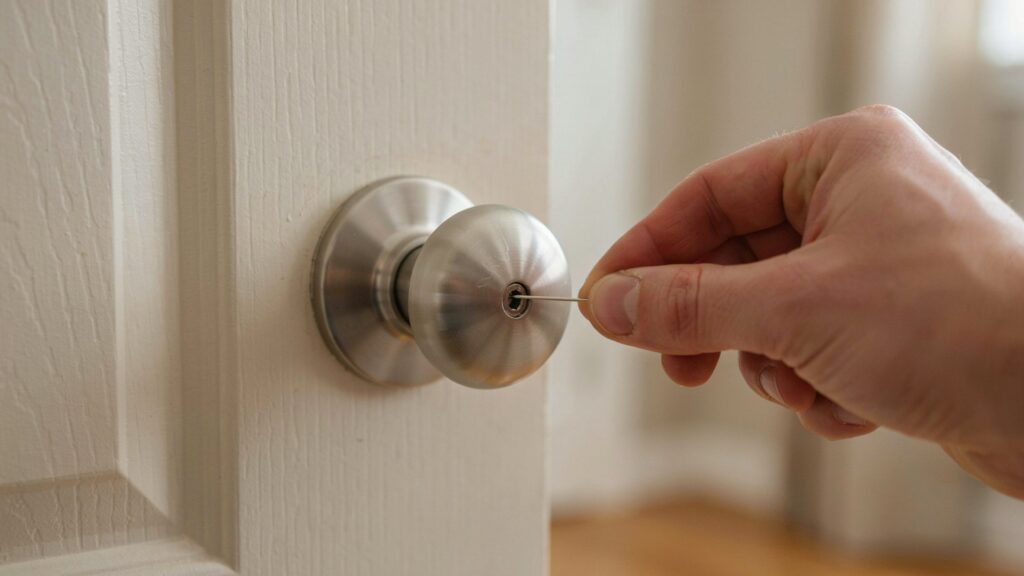
Method 1: The Paper Clip or Bobby Pin Technique
- Straighten one end of a paper clip or bobby pin
- Insert it into the small privacy release hole on the doorknob
- Apply slight inward pressure while gently turning the tool, not the handle
- This rotates the internal cam that releases the spring lock
- Turn the handle once you feel it give way
Method 2: The Credit Card Method
- Works only on doors with a spring latch, not a deadbolt
- Slide a sturdy plastic card between the door and the frame, right at the latch
- Wiggle and push the card toward the latch while pressing it back
- Turn the handle as the latch retracts
Method 3: The Flathead Screwdriver Method
- Insert a small flathead screwdriver into the privacy release hole instead of a pin
- Turn it like you would a key, applying steady pressure
- This works well when a paper clip is too thin to engage the lock pins
Method 4: Remove the Door Handle
- If the above methods fail, look for a small slot on the neck of the knob
- Press it in with a screwdriver to slide the outer knob off
- Remove the trim plate underneath and manually turn the latch mechanism with a flathead screwdriver
- This is how most locksmiths handle a jammed privacy lock without damaging the door
Method 5: Call a Professional Locksmith
- If the lock disengages partially then jams again, the internal mechanism may be broken
- A locksmith can usually open an interior lock in minutes without damage
- This is the safest option if you’ve already bent a paper clip or scratched the door hardware
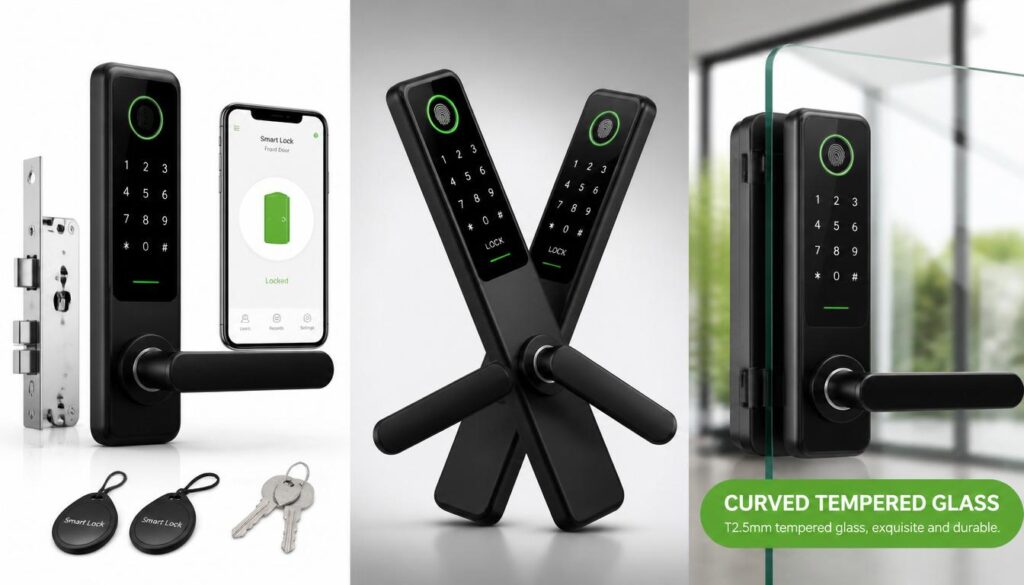
Each of these methods follows the same core logic: apply pressure and insert and twist rather than force. If your bedroom door keeps getting locked accidentally, it’s also worth checking our guide on choosing the right smart lock for interior doors, since keyless entry systems remove the “locked out with no key” problem completely.
Tools You Can Use Without Calling a Locksmith
Most homes already have everything needed to open the door when it is locked — no special equipment required. A bobby pin, a sturdy plastic card, and a small flathead screwdriver cover almost every interior door lock situation.
- Bobby pin or paper clip – best for privacy locks with a release hole
- Credit card or old gift card – works on spring latch doors only
- Flathead screwdriver – gives more control than a pin for stubborn locks
- Coat hanger – useful as a backup if a pin bends or breaks
- Allen wrench – fits some older doorknob styles with a hex-shaped release
Keep one of these in a kitchen drawer, since a locked bedroom door with no key on hand is one of the most common household lockouts in the USA. For a deeper visual breakdown of each technique, wikiHow’s guide on opening a locked door covers the credit card and pin methods step by step. If your home relies on older mechanical locks often, our guide on keyless entry systems for interior doors covers how to skip these tools altogether.
When to Stop and Call a Professional
Call a locksmith once you’ve tried two or three DIY attempts and the lock still won’t budge — pushing further usually causes more damage than it solves. If the paper clip bends, the screwdriver slips repeatedly, or the handle stays completely stuck even after applying pressure, that’s a sign the internal cam or latch mechanism has failed, not just jammed.
- The tool breaks or gets stuck inside the lock
- The handle won’t turn at all, even slightly
- You’ve already tried 2–3 methods with no progress
- It’s a security or keyed lock, not a simple privacy lock
A locksmith can usually open an interior lock in under 15 minutes without damaging the door, which often costs less than replacing a scratched doorknob or trim plate. If your home deals with this often, it may be time to consider upgrading to a smart lock, which removes the “locked out with no key” problem for good.
Why You Don’t Have to Worry About a Locked Door
A locked door is almost never a permanent problem — with the right method or a quick call to a locksmith, it’s usually fixed within minutes. Once you know how to open the door when it is locked, the panic of being stuck outside your own bedroom disappears completely.
Most household lockouts involve simple privacy locks or spring locks, not high-security deadbolts, which means the fix rarely requires anything destructive. A bent paper clip, a plastic card, or a flathead screwdriver solves the majority of cases in under five minutes. Even in the rare instance these DIY methods fail, a licensed locksmith can open an interior lock without damaging the door or lock hardware, usually for a modest fee.
This is also why accidental locking, though frustrating in the moment, isn’t something to lose sleep over. It happens in homes across the USA every day — kids pressing lock buttons, doors slamming shut in the wind, or a lock disengaging awkwardly after years of use. None of it means your door or lock is unfixable. If jammed locks keep happening in your home, it’s worth reading our guide on the best interior door locks for daily use, which breaks down options that are far less likely to lock you out by accident.
How Milcasa Transforms Your Door Lock Challenges
Milcasa solves the root cause of most locked door problems by replacing outdated privacy locks with reliable, easy-to-use door hardware built for real homes. Instead of learning how to open the door when it is locked every time an accident happens, homeowners get lock systems designed to prevent the problem in the first place.
- Smooth, precision-fit latch mechanisms that resist misalignment from humidity or a shifting door frame
- Durable doorknob and lock assemblies that don’t wear down or jam over time like cheaper hardware
- Simple emergency release design for privacy locks, so a locked bedroom door is never a real crisis
- Easy installation that fits standard interior doors without special tools
- Consistent performance even after years of daily use, cutting down on accidental lockouts
For households that deal with jammed or accidentally locked doors often, upgrading the hardware is usually more practical than repeatedly picking a lock with a paper clip. Milcasa’s door lock solutions are built around this exact problem, giving homeowners hardware that works the way it should — turn the handle, and the door opens, every time.
Conclusion
A locked door feels stressful at the moment, but it’s rarely as complicated as it seems. Whether it’s a paper clip, a screwdriver, or better hardware from the start, you have real options before ever panicking. If your locks are already electronic, our Kwikset Smart Lock Battery Change Guide helps you avoid the smart-lock version of the same problem. The next time a door catches you off guard, pause and think — is this really a lockout, or just a lock asking to be replaced?
FAQs
How to unlock a door when it’s locked?
Use a bobby pin or credit card on the latch, or a flathead screwdriver on the privacy release hole, then turn the handle once it gives way.
How to force a lock open?
Try applying steady inward pressure while turning the tool, not the handle — forcing it too hard risks damaging the latch mechanism, so stop if it doesn’t budge after a few tries.
What to do if you accidentally lock yourself out?
Stay calm and check for an unlocked window or alternate entry first, then try the credit card or paper clip method before calling a locksmith.
What is the easiest way to open a lock without a key?
For most interior doors, sliding a sturdy plastic card between the door and frame at the latch is the fastest, tool-free option.
What household items can unlock a door?
A bobby pin, paper clip, credit card, flathead screwdriver, or even a coat hanger can open most spring locks and privacy locks.
How do I open my front door if I locked myself out?
Front doors usually have a deadbolt, so DIY tricks rarely work — check for a spare key or unlocked window, and call a locksmith if not.
About the Author
M. Bilal holds a BS in Criminology and runs CrimTechHub, a home security resource built around practical, research-backed advice for everyday homeowners. With a background in crime prevention and physical security, Bilal focuses on solutions that actually work in real households — not just theory. When not writing, Bilal tests and reviews door locks, smart home security devices, and access control systems to help readers make informed decisions about protecting their homes.