Introduction
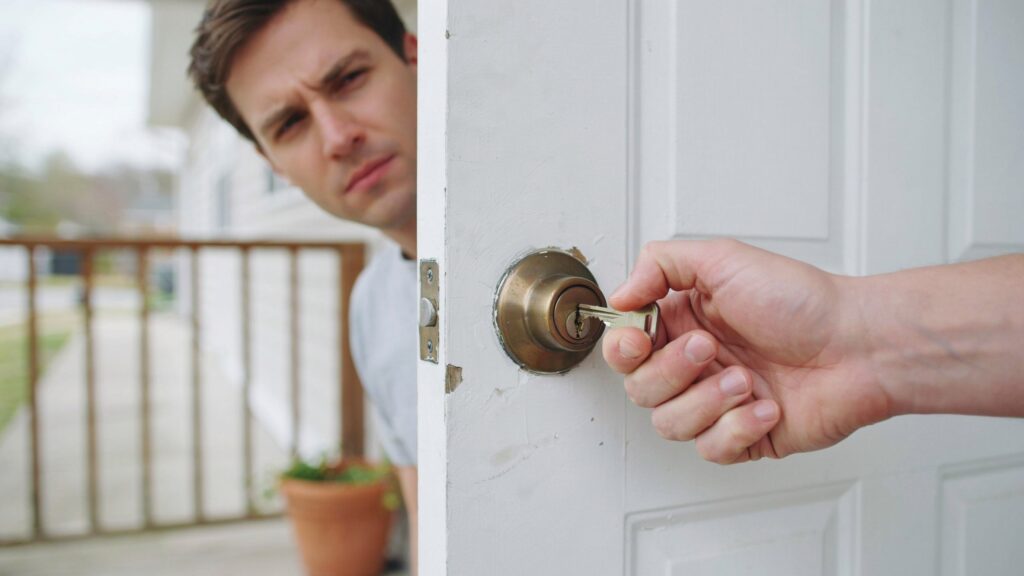
Standing outside your own front door, key in hand, while it just won’t turn — it’s more common than most people think. Whether it’s a worn key, a stuck cylinder, or a frame that’s shifted slightly with the seasons, there’s usually a simple explanation behind it. This guide walks through the real reasons a door lock stops working and the practical steps to open a door lock yourself, before it’s ever necessary to call a locksmith.
Table of Contents
Why Do Door Locks Suddenly Stop Opening?
A door lock usually stops opening for one of four reasons: a worn key, dirt inside the cylinder, humidity swelling the frame, or a misaligned latch. None of these mean the lock is ruined — they’re just normal wear that builds up over time.
Common causes:
- Worn key — thinned metal edges no longer push the internal pins into place
- Dirt or grime buildup — everyday debris like pocket fibers and tiny metal particles settle inside the cylinder over time, gradually blocking the pins from sliding freely
- Humidity swelling — a wooden frame expands, shifting the bolt out of line
- Misalignment — settled hinges tilt the door just enough to throw off the latch
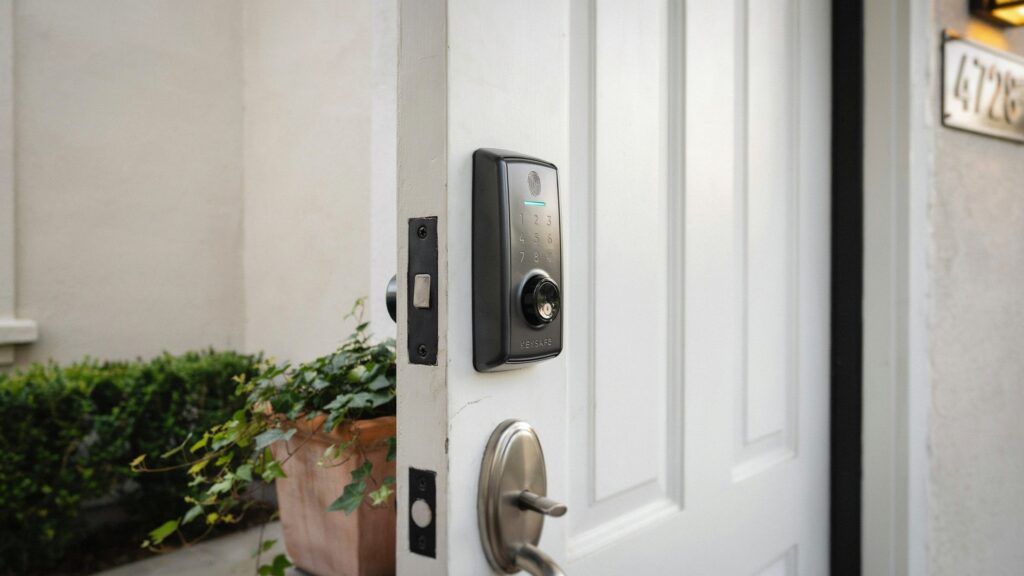
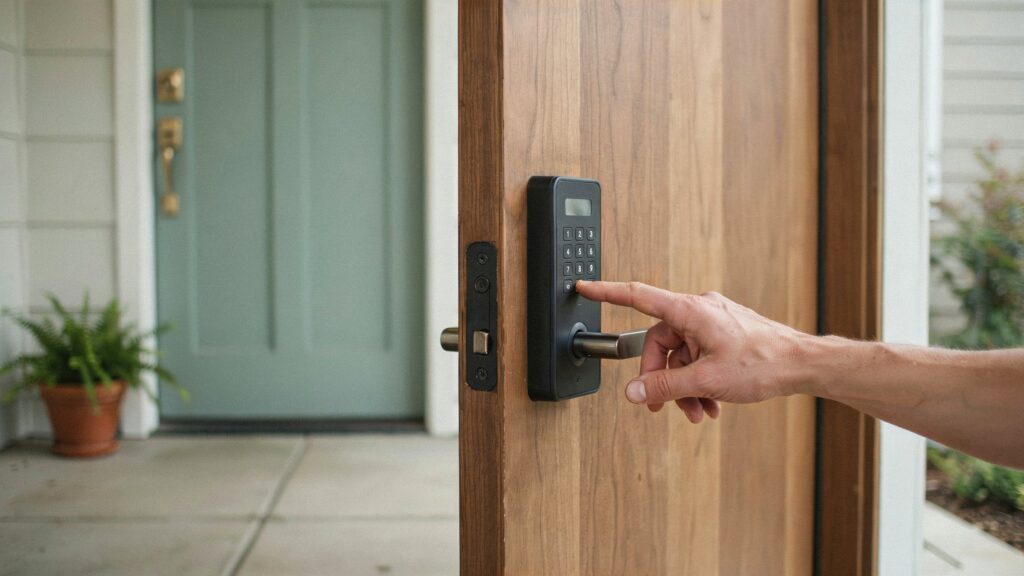
A common example: a deadbolt that turns fine in winter but starts sticking every humid morning is usually a frame or alignment issue, not a broken lock. Spotting which of these four it is makes the next fix much easier — and it’s also worth knowing that a lock struggling this often is a good sign to consider a keyless entry upgrade.
Check the Key and Door Alignment Before Anything Else
Before trying anything else, check whether the key fully seats into the lock and whether the door sits flush in its frame — this simple check solves the problem more often than people expect. It takes less than a minute and rules out the two most common causes right away.
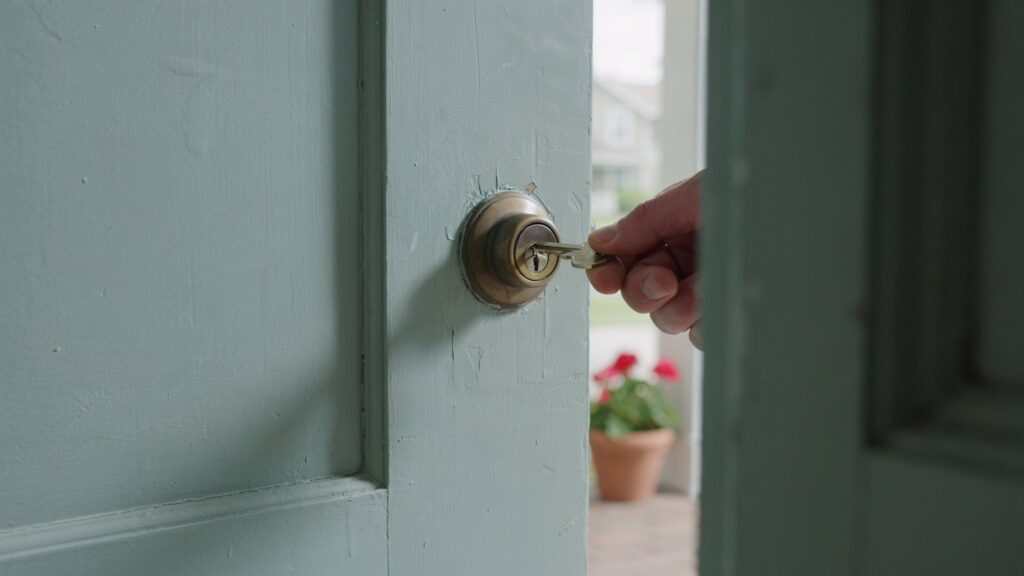
Start with the key itself. Push it in slowly and feel for any resistance about halfway through — that’s usually where a worn key stops lining up with the internal pins. If the key goes in smoothly but won’t turn, the issue is likely the lock, not the key. If it feels gritty or catches partway, a worn or slightly bent key is often the real problem, and a fresh-cut spare from the same original can solve it instantly.
Next, check the door itself. Close it gently and watch where the latch meets the strike plate on the frame. On many homes, especially older ones with wood frames, seasonal shifts of even 2–3 millimeters are enough to misalign the latch and bolt. A quick way to test this: hold the door slightly lifted by the handle while turning the key. If it suddenly turns easily, the door has dropped slightly on its hinges, and the lock itself is fine.
This two-part check — key first, then alignment — takes the guesswork out of a stuck door lock and points directly to the next fix needed. Homeowners who find their door is dropping on its hinges may also want to check for related frame damage, especially if there’s ever been a break-in attempt near the same entry point.
Try Wiggling the Key or Using a Spare
If the key goes in but won’t turn, a slight wiggle while applying gentle pressure often lines up worn pins enough to open a door lock without any tools. This trick works because it manually compensates for the small gaps a worn key leaves behind.
Why Wiggling Works
A door lock opens when every internal pin lifts to the exact same height, and a worn key sometimes lifts them just short of that mark. Wiggling the key left and right while turning applies slightly different pressure to each pin, nudging the stubborn ones into place. This is the same reason a locksmith’s tension wrench works — small shifts in pressure make up for tiny gaps in alignment.
A common scenario: a 5-year-old house key that’s been used daily may wear down by a fraction of a millimeter — barely visible, but enough to make the lock catch. Jiggling the key while pushing it in slightly further, then turning slowly, resolves this in most cases within a few tries.
When to Switch to a Spare Key
- If wiggling doesn’t work after 8–10 attempts, stop and try a spare key instead
- A spare cut from the original — not copied from a worn key — often turns smoothly right away
- If even the spare struggles, the problem is likely inside the lock, not the key
A Quick Word of Caution
- Avoid forcing or bending the key, since a snapped key inside the cylinder turns a simple fix into a bigger repair
- If the key ever feels like it’s about to bend, stop and try the spare instead
If neither the original key nor a spare turns smoothly, the lock cylinder itself may be the real issue — something covered in more detail in the section on lubricating a stiff lock later in this guide.
Use a Lubricant to Free Up a Stiff Lock
A dry or graphite-based lubricant applied directly into the keyhole is one of the fastest ways to open a door lock that feels stiff or gritty. It works within seconds because it coats the internal pins and cylinder walls, letting them move freely again instead of catching on dirt or friction.
Why Lubrication Fixes a Stiff Lock
Every deadbolt relies on small pins sliding smoothly inside a metal cylinder. Over time, that cylinder collects dust, old oil residue, or rust, which thickens into a paste-like buildup. This buildup adds enough friction that the pins drag instead of gliding, which is why a lock can turn fine one week and feel stuck the next. Locksmith trade guidance recommends graphite or dry lubricants over oil-based sprays, since oil-based products attract more dust and gum up the pins over time — a lubricant breaks down existing buildup and recoats the metal, restoring the smooth motion the lock needs to open.
Source: Understanding Lock Cylinders — MAKE, purely informational, no affiliate links.
A common scenario: a side door that’s rarely used — maybe once every couple of weeks — is far more likely to stiffen up than the main entrance, simply because it doesn’t get the regular movement that keeps a lock’s internals clear.
How to Apply It the Right Way
- Use a graphite powder or silicone-based spray — never oil-based products like WD-40, since oil attracts more dust over time and makes the problem worse
- Insert the small nozzle straight into the keyhole and apply a short burst, rather than spraying around the outer lock casing
- Insert and remove the key several times afterward to spread the lubricant evenly across all the pins
- Wipe away any excess from the outer face of the lock so it doesn’t attract dirt
What to Expect Afterward
Most stiff locks loosen up almost immediately after this step, and the difference is easy to feel the next time the key turns. If the lock still catches even after lubrication, that usually points to a worn or damaged cylinder rather than a dirt issue — which is exactly what the next section on lock cylinder problems will help identify, similar to how ignoring small warning signs on a smart lock can lead to bigger problems.
Try the Card Trick for Spring-Latch Doors
A slim, flexible card slid between the door and frame can open a door lock in seconds — but only on doors with a spring latch, never on a deadbolt.
- Works only on spring latches — the angled, beveled part of the lock that springs back when pushed, common on interior doors and older exterior doors without a deadbolt
- Won’t work on deadbolts — a deadbolt slides straight out with no spring action, so no card or flexible material can push it back
- How it’s done — slide a stiff plastic card (an old gift card works well) between the door and frame, angled toward the latch, then bend it while pushing toward the doorknob
- Common scenario — a bedroom or bathroom door that locks from the inside and gets accidentally locked by a child is a typical case where this trick works well
- Why it works — spring latches have an angled edge built specifically to give way under sideways pressure, and sliding the card in creates that exact push, causing the latch to retract on its own
- A safety note — this method should never be used on someone else’s property or a door that isn’t the reader’s own, since it’s meant for accidental lockouts, not entry without permission
- Where it fails — older latches with anti-shim features, or doors with a deadbolt engaged alongside the latch, won’t budge with this trick
If the door in question uses a deadbolt instead of a spring latch, the next section on lock cylinder problems is the better place to look for a fix.
Signs the Lock Cylinder Itself Is the Problem
When a key turns smoothly but the bolt still won’t move, or the key spins loosely without engaging anything, the lock cylinder itself is usually worn out — not the key or the door. This is the point where cleaning and lubricating stop helping, because the mechanism only allows rotation once every pin pair separates exactly at the shear line — the gap between the rotating plug and the fixed shell, and once that internal alignment physically breaks down, no amount of cleaning fixes it. Firgelliauto
A worn cylinder shows up in a few recognizable ways. The most common sign is a key that turns 360 degrees without any resistance, almost like it’s spinning in empty space — this usually means the internal cam that connects the key to the bolt has sheared or come loose. Another clear sign is a bolt that only partially extends, leaving the door either not fully locked or stuck halfway, even though the key turns normally. On some older locks, the key might also feel like it’s grinding against loose metal shavings inside, which points to internal wear rather than surface dirt.
A real-world example: a homeowner who’s replaced their key twice already but still faces the same sticking problem almost certainly has a cylinder issue, not a key problem — replacing the key a third time won’t fix it. This is a common situation on exterior doors that see daily use for 7–10 years without ever having the lock itself serviced or swapped out.
It’s worth knowing when a cylinder has simply worn out versus when it’s been tampered with. Scratches around the keyhole, a loose faceplate, or a lock that suddenly feels different after being fine the previous day can be signs of an attempted break-in rather than normal wear, and that’s a very different situation to handle. Anyone unsure which one they’re dealing with is better off treating it cautiously and considering a professional inspection alongside stronger entry-point protection, especially for a main entry door.
At this stage, replacing the lock cylinder is usually more reliable than continuing to troubleshoot it — a point covered further in the next section on knowing when it’s time to call a licensed locksmith.
When It’s Time to Call a Licensed Locksmith
Once a key breaks off inside the lock, the cylinder shears completely, or none of the DIY methods make a difference, that’s the point to bring in a licensed locksmith instead of continuing to troubleshoot alone.
A few clear signs point to this stage:
- A piece of the key breaks off and stays lodged inside the cylinder
- The bolt refuses to move in either direction, even with a functioning key
- There’s visible damage suggesting someone tried to force the lock
- Several fixes have already been attempted with no results
Picture this: a key snapping off inside a front door lock late at night isn’t something to dig out with makeshift tools, since that risk damaging the cylinder even further. A licensed locksmith can typically remove it and rekey the entire lock in under half an hour.
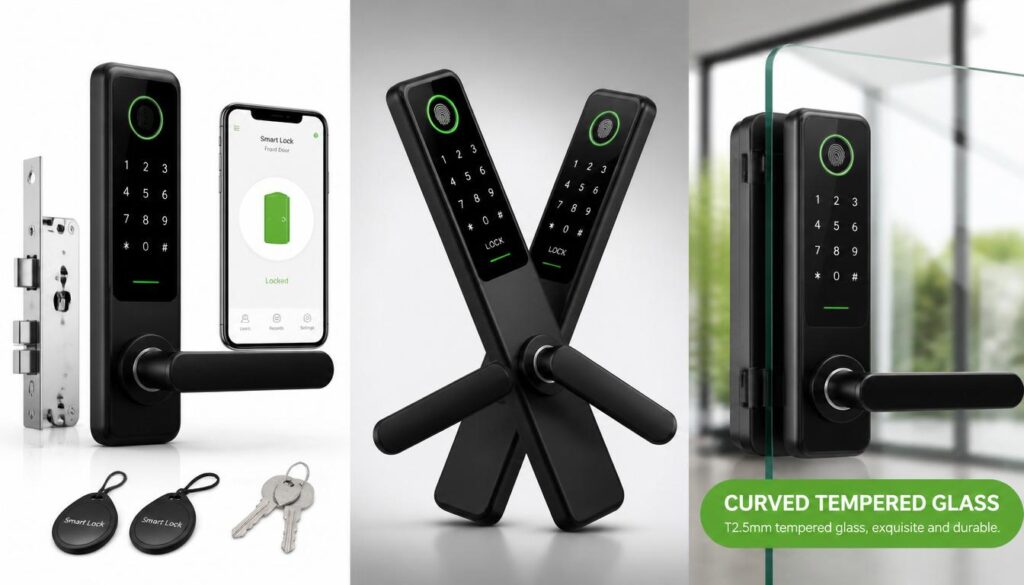
Sticking with a licensed, insured locksmith matters for more than convenience — it’s a safety factor worth weighing, especially for anyone thinking about upgrading to a smart lock afterward, which the closing section on preventing future lockouts touches on briefly.
Simple Habits to Avoid Getting Locked Out Again
A stuck door lock is rarely just bad luck — it’s usually the result of small warning signs that went unnoticed for months. Paying attention early, keeping a spare key on hand, and knowing when a fix is beyond a quick DIY trick can save a lot of frustration down the road.
The next time a key hesitates or a lock feels the slightest bit stiff, that’s worth listening to — not ignoring.
FAQs
How to force a lock open?
Forcing a lock is risky and can damage the door permanently — try wiggling the key, using a lubricant, or the card trick for spring latches first.
What unlocks your door without a key?
A spare key, the card trick for spring-latch doors, or a licensed locksmith are the safest ways to unlock a door without the original key.
How to open a door that has locked itself?
Check if it’s a spring latch (card trick works) or a deadbolt (needs a spare key or locksmith), since the fix depends on the lock type.
How to unlock a door if the key is inside?
An unlocked window, a spare key kept outside, or calling a locksmith are the most reliable options when the only key is locked inside.
What is the easiest way to open a lock without a key?
For spring-latch doors, sliding a stiff card between the door and frame is usually the quickest, tool-free method.
How do I open my door if I’m locked out?
Check for a spare key first, try the card trick if it’s a latch lock, and call a licensed locksmith if the door has a deadbolt.
How to unlock without a key?
The card trick works for spring latches only; deadbolts almost always require a spare key or professional help.
What tools open doors without a key?
A thin, flexible card is the only tool-free option for spring latches — deadbolts need a locksmith’s tools to open safely.