Introduction
You twist the knob, push, and nothing happens — now you’re standing outside your own bedroom wondering how to open a locked door knob without waiting hours for a locksmith. It’s one of those small emergencies that always seems to hit at the worst time, whether it’s a bathroom door that clicked shut on its own or a stuck bedroom door that just won’t turn. This guide walks through seven practical, tool-based methods anyone can use to get back inside quickly and safely.
Table of Contents
What Causes a Locked Door to Get Stuck?
A locked door knob usually gets stuck for one of three reasons: worn internal parts, a shifted door frame, or an accidental lock-in — and figuring out which one you’re dealing with makes the fix much faster.
Most interior knobs rely on a simple spring-loaded mechanism, and like any moving part, it wears down with daily use. After a few years, the pins and springs inside the knob lose tension, so the latch doesn’t retract as smoothly as it used to. This is especially common in older homes, where a knob installed 10 or 15 years ago starts sticking randomly, even when nothing was ever technically broken.
Door frame misalignment is another frequent culprit, and it’s more common than most homeowners realize. Wood frames expand and contract with humidity and temperature changes throughout the year, which slowly shifts the strike plate out of position. When that happens, the latch bolt no longer lines up correctly, so the knob feels locked or jammed even if the lock itself is working fine. If this kind of misalignment keeps happening on the same door, it might be worth exploring why home security matters and whether upgrading to smart home access control makes sense for that entry point.
Then there’s the everyday scenario almost everyone has lived through: the accidentally locked door. A privacy button gets bumped while pulling a bathroom or bedroom door shut, and it locks from the inside without anyone touching the actual lock switch on purpose. It happens most often with kids’ rooms and guest bathrooms, where the button sits low enough to catch on a doorframe or get pressed by a bag or laundry basket brushing past.
Once you know which of these is behind your locked bedroom door, the right unlocking method becomes obvious — and that’s exactly what the next sections walk through.
Types of Locks You’ll Encounter
Before you can open a locked door knob, it helps to know which of the two common privacy lock types you’re dealing with, since that changes how easy the fix will be.
Push-Button Privacy Locks
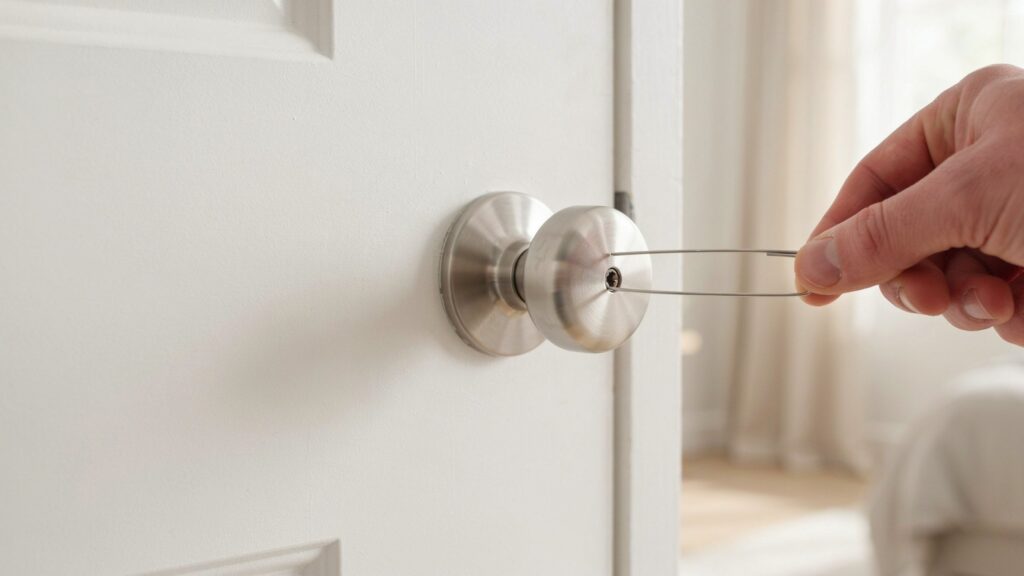
A push-button privacy lock is the round knob style found on the majority of bedrooms and bathrooms across the US, and it’s built around a straightforward locking mechanism. Pressing the small button in the center engages the lock from the inside, while a tiny door knob hole on the opposite side acts as the privacy release function for exactly this kind of emergency. This design is why a bobby pin lock or paperclip trick works so reliably — the pinhole was built by manufacturers specifically for quick, tool-based access. It’s the most common setup in newer homes and apartments, especially those built or renovated after 2000.
Turn-Button Privacy Locks
A turn-button privacy lock uses a small rotating knob or lever instead of a push button, and it’s more often found on older doors or homes built before push-button hardware became standard. Rather than pressing to engage the deadbolt-style latch, you twist the small button on the interior side to lock it. The good news is these respond to the same unlocking methods as push-button versions — a flathead screwdriver or straightened paperclip inserted into the release hole will disengage the lock pins just as effectively. If your home has a mix of both styles, as many older houses do, it’s worth checking each door once so you’re not caught guessing which technique to use during an actual lockout.
Once you know your lock type, the step-by-step methods below will make a lot more sense — and you’ll know exactly which tool to reach for first.
Step-by-Step Solutions: How to Open a Locked Bedroom Door
Six household tools can get you past a locked bedroom door in under two minutes, and the right one depends on what you have within reach and what kind of lock you’re facing.
With a Bobby Pin
The bobby pin lock method works because most privacy locks use a basic spring lock rather than a full pin-and-tumbler system, so there’s less resistance to work against.
- Straighten the pin and bend a slight hook at one end
- Insert it into the keyhole or door knob hole and feel around for the lock pins
- Apply light, steady pressure while twisting until the latch bolt gives way
This is often the fastest fix when a bobby pin is already sitting on a nearby dresser or bathroom counter.
With a Screwdriver
A flathead screwdriver is one of the most dependable tools for this job, especially on knobs with a visible privacy lock release hole.
- Insert the tip into the hole at the center of the knob
- Push in firmly while turning, the same motion a key would make
- If there’s no hole present, use the screwdriver to remove the handle screws instead
An eyeglass screwdriver or small Allen wrench does the same job if that’s what’s closer at hand, which makes this method one of the more flexible options on the list.
With a Credit Card
The credit card door unlock trick is a genuine plastic card latch technique, but it only works on doors with a beveled latch — not on a deadbolt.
- Slide the card into the gap between the door and frame, right at the door latch
- Angle it toward the latch bolt and push while wiggling the handle
- Pull the door open the moment the latch retracts
Keep in mind this method can scuff or bend a card, so an old gift card or expired store card works better than one you still use daily.
With a Coat Hanger
A coat hanger door lock method comes in handy when the gap around the door frame is too narrow for a card to fit through.
- Straighten the hanger and shape a small hook at one end
- Slide the hook into the frame gap near the lock pins
- Twist and pull gently until the locking mechanism releases
This one takes a bit more patience than the others, but it’s a solid backup when nothing else is working.
With a Paperclip
A paper clip lock pick works almost identically to the bobby pin method and tends to fit smaller privacy locks especially well.
- Straighten the clip and bend a small hook at the tip
- Insert it into the keyhole and locate the pins inside
- Wiggle while applying steady pressure until the mechanism turns
Because paperclips are thinner than bobby pins, this method sometimes reaches tighter mechanisms that a pin can’t quite manage.
Remove the Door Handle
Door handle removal is the most direct route when the lock itself seems physically jammed rather than just engaged.
- Locate the screws on the base of the knob and remove them with a screwdriver
- Slide the handle off to expose the latch mechanism underneath
- Manually push the latch back to open the door
This method is especially useful for a stuck bedroom door where the internal spring has failed completely, since none of the pinhole tricks will work if the mechanism itself isn’t turning.
Once the door’s open, it’s worth checking whether the lock needs replacing rather than just freed up again — a knob that’s jammed once tends to repeat the problem within a few months.
Alternative Unlocking Methods
When none of the household tools work, drilling the lock or forcing the door with your foot are the two remaining options — but both should be treated as a last resort, not a first choice, since they usually cause damage.
Drilling comes into play when a locked door knob has an internal mechanism that’s completely seized, not just stuck. Using a power drill with a small bit sized to the keyhole, you drill straight into the lock cylinder until the pins inside shear off and stop resisting the turn. This works on most standard interior hardware within a few minutes, but it destroys the pin lock in the process, so the entire knob or lockset needs replacing afterward. It’s a method worth knowing about, but one that only makes sense when a locksmith isn’t reachable and the situation genuinely can’t wait — a scenario like a child accidentally locked in a room with no privacy release hole on the knob.
Forcing the door open with a foot is the more familiar option, and most people have seen it in a movie at some point. Aiming a solid kick near the latch bolt, right where the door meets the frame, can pop a weak lock open on the first or second try. The problem is that this rarely stays contained to just the door lockout — it commonly cracks the frame, splinters the wood around the strike plate, or knocks the door off its hinges entirely. What looks like a quick fix on screen often turns into a repair job costing far more than a locksmith visit would have. Reserve this approach for true emergencies only — like when someone inside the room may be injured and every second spent trying gentler methods actually works against you.
Both approaches solve the immediate problem of a stuck bedroom door, but they trade a few saved minutes for real repair costs. If your home deals with frequent lockouts, it’s worth looking into upgrading to a keyless entry lock, which removes the need for any of these methods altogether.
Using an Emergency Key
Some interior locksets come with a small emergency key instead of a pinhole, and keeping it accessible is the fastest way to skip the whole locked door knob problem altogether.
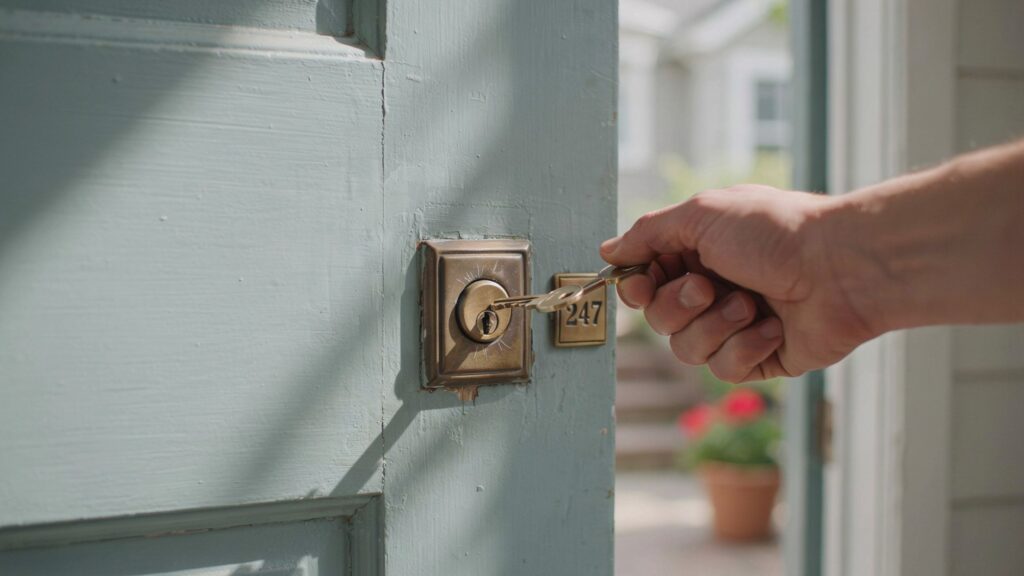
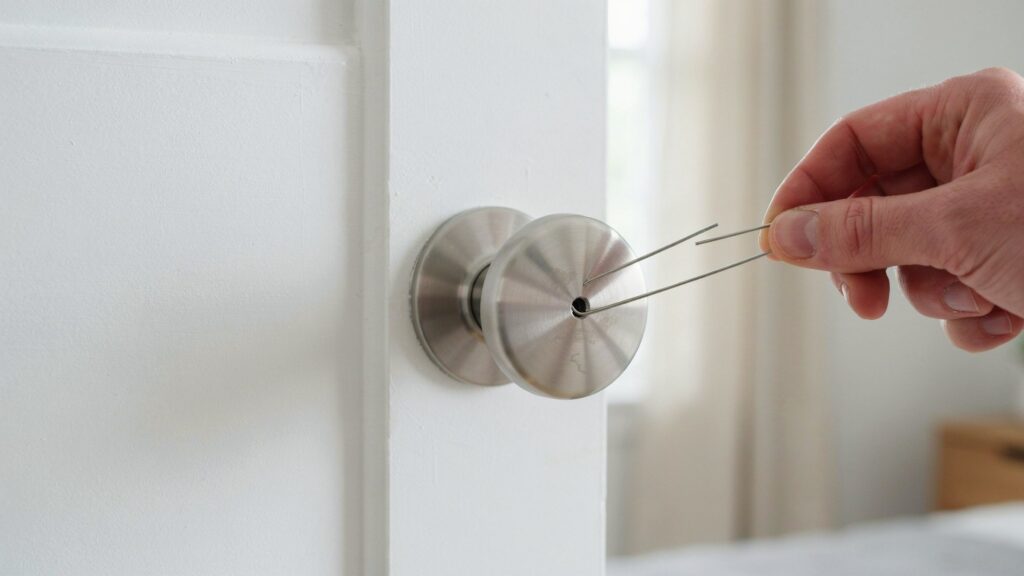
Many push-button and turn-button privacy locks sold in the US ship with a slim metal emergency key, sometimes no bigger than a bobby pin, tucked inside the box when the hardware is first installed. This key is designed to slide directly into the door knob hole and release the latch bolt in seconds, without any of the wiggling or guesswork that comes with a paperclip or screwdriver. The catch is that most homeowners toss it in a junk drawer or lose it entirely within the first year, which defeats the purpose the moment an actual door lockout happens.
Storing it somewhere predictable solves this. A few practical spots work well for most households:
- A small hook near the entryway, alongside spare house keys
- A labeled section of a kitchen junk drawer, away from other loose hardware
- A magnetic key holder attached to the inside of a nearby closet or pantry door
Keeping the emergency key in one of these spots means a locked bedroom door turns into a five-second fix instead of a search through every drawer in the house. This becomes especially useful in households with kids, where an accidentally locked door tends to happen more often, and reaching for the right tool immediately makes the whole situation far less stressful. It’s also worth pairing this habit with a broader look at your home’s keyless entry lock options, since some smart lock systems remove the need for a physical backup key altogether.
When to Call a Professional Locksmith
DIY tricks solve most cases of a locked door knob, but a professional locksmith becomes the smarter call once a deadbolt is involved, the hardware is smart-enabled, or repeated attempts have already caused damage.
Deadbolts are the clearest line where household methods stop working. Unlike a spring lock that a credit card or paperclip can bypass in seconds, a deadbolt extends a solid metal bolt deep into the frame, and none of the tricks used on privacy locks will budge it. Trying anyway usually just wastes time or scratches up the door for nothing. A licensed locksmith carries specialized lock tools built specifically for deadbolts and can typically get through one in under 15 minutes without forcing anything.
A keyless entry lock or smart lock malfunction is another situation better left to a professional. These systems combine mechanical parts with electronics, so a dead battery, a software glitch, or a miswired connection can lock someone out in ways no bobby pin or screwdriver will fix. Locksmiths who specialize in smart lock installation know how to bypass the electronic side safely without frying the internal components, which is something most homeowners aren’t equipped to attempt.
There’s also a point where continuing to try DIY methods does more harm than good. A few signs it’s time to stop and call for help:
- The door frame has started to splinter or crack near the strike plate
- The handle feels loose or wobbly after being worked on
- Ten or more minutes have passed with no progress on a stuck bedroom door
Recognizing this moment saves both the door and the lock from unnecessary damage. And once a locksmith is already on site, it’s often worth asking about upgrading to a keyless entry lock, since that single change can prevent most future door lockout situations from happening again.
Preventing Future Lockouts
A few small, one-time changes can stop a locked door knob from becoming a recurring problem, and most of them take less than 20 minutes to set up.
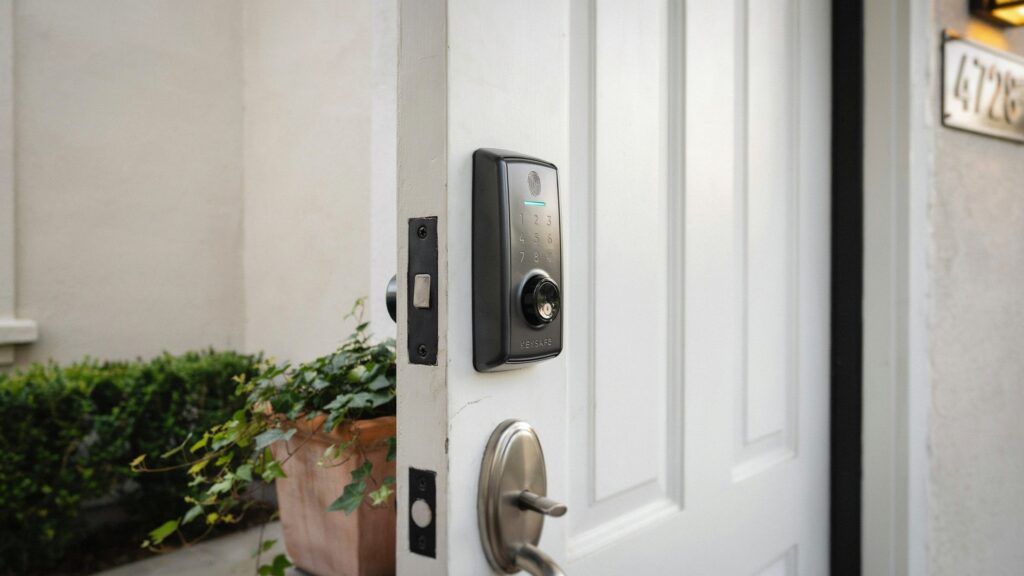
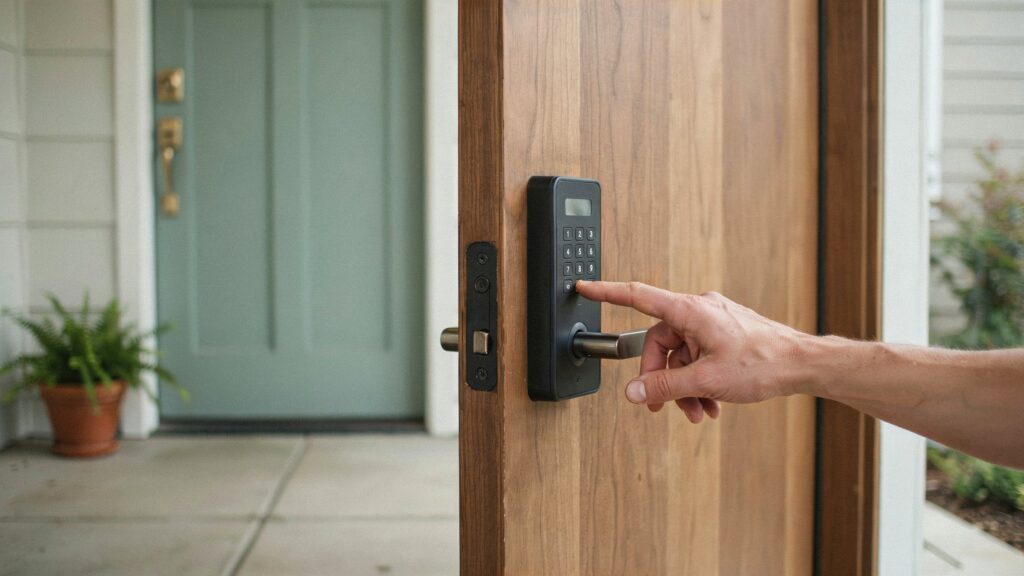
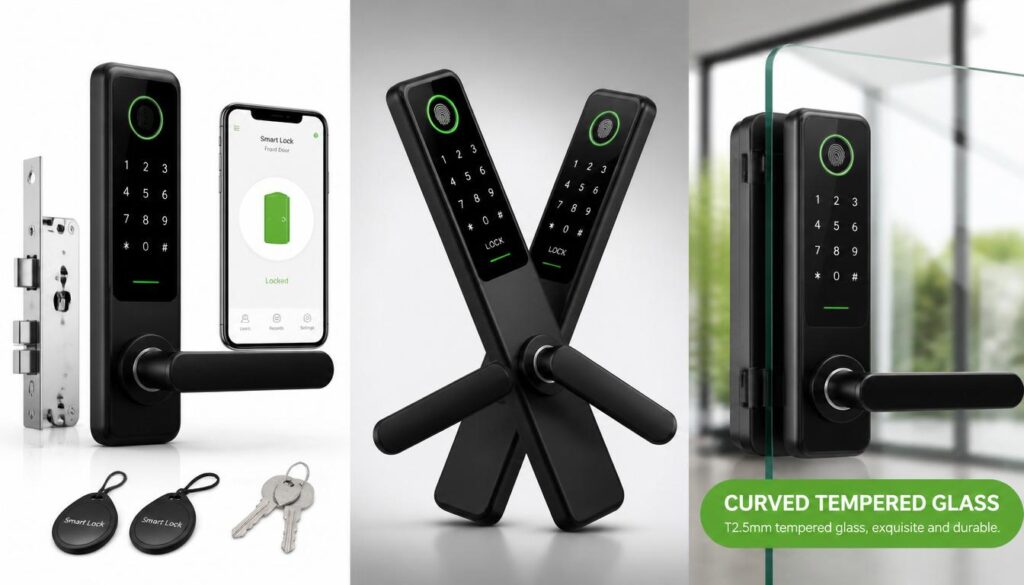
The simplest fix is swapping traditional privacy knobs for a keyless entry lock or smart lock, especially in rooms where accidental locking happens often. Bedrooms shared by kids, for example, tend to see the most repeat door lockout situations, since a privacy button gets bumped without anyone noticing until the door’s already shut. A keypad or app-based lock removes the lock pins and springs that wear out over time, replacing them with a system that doesn’t rely on a mechanical latch bolt at all.
For doors that keep their original hardware, a door stopper placed nearby prevents the door from swinging fully shut in the first place, which stops an accidentally locked door before the privacy lock even has a chance to engage. This works especially well in bathrooms, where steam and rushed exits make bumping the lock button more likely than people usually expect.
It’s also worth keeping a small emergency toolkit on hand, since even the best prevention habits occasionally fail. A few items make a real difference:
- A straightened paperclip or bobby pin lock tool, stored in a nearby drawer
- A small flathead screwdriver or eyeglass screwdriver kept with household tools
- A spare emergency key, if the lockset came with one
Homeowners dealing with a door frame misalignment issue should also get it checked separately, since a shifted frame causes the same jammed feeling as a faulty lock. According to This Old House, adjusting a misaligned strike plate is often a quick fix that resolves sticking at the source, rather than just treating the symptom.
Taken together, these steps turn a stuck bedroom door from a recurring headache into something that rarely happens again — and when it does, the fix is already sitting in a nearby drawer instead of requiring a search through the whole house
The Scale of the Problem
A locked door knob might feel like a personal, one-off headache, but the numbers say otherwise. The United States sees over 16,000 home and car lockouts every single day, and AAA Insurance alone assists close to 4 million people a year with car lockouts — and that figure doesn’t even include the countless home lockout calls handled by professional locksmiths nationwide.
That kind of volume shows this isn’t a rare inconvenience; it’s one of the most common household emergencies in the country. A stuck bedroom door, a jammed lock mechanism, or an accidentally locked door happens often enough that most people will deal with it more than once in their lifetime. Newer keyless entry lock and smart lock systems have started to bring these numbers down, but they haven’t solved the problem completely, which is exactly why knowing a few reliable unlocking methods still matters.
Understanding how common this is also puts the fix in perspective — a locked bedroom door isn’t a sign that something’s wrong with your home, it’s simply one of the most ordinary lock pins-and-latch problems a household deals with, and one that’s almost always solvable in a couple of minutes.
Conclusion
A jammed lock isn’t a crisis — it’s a puzzle with a handful of reliable answers, from a bent paperclip to a well-timed call to a locksmith. What matters most is staying calm and picking the right tool for the situation instead of forcing something that could cause real damage. Next time a door won’t budge, take a breath — chances are, the fix is already sitting in a nearby drawer.
FAQs
How to unlock a locked door knob without a key?
Insert a straightened paperclip or bobby pin into the privacy release hole and push while turning until the latch releases.
How to unlock a locked doorknob from the outside?
Use a flathead screwdriver or paperclip in the small pinhole on the outside of the knob and turn until it disengages.
How do I open my door if I locked myself out?
Try the pinhole with a paperclip or screwdriver first; if that fails, slide a plastic card into the latch or call a locksmith.
How to open the door if the door is locked?
Check for a privacy release hole and use a paperclip, bobby pin, or screwdriver to pop the latch open.
How to force a lock open?
As a last resort, a firm kick near the latch or drilling the lock can work, but both usually damage the door or frame.
What unlocks your door without a key?
A paperclip, bobby pin, flathead screwdriver, or plastic card can all bypass a standard privacy lock without a key.
About the Author
M. Bilal holds a degree in Criminology and has spent years studying home security systems, lock mechanisms, and everyday safety practices. He writes for CrimTechHub to help homeowners understand practical, tested solutions for common security and access issues — from choosing the right lock to handling everyday problems like a jammed door knob. His background in criminology shapes a practical, safety-first approach to every guide he writes, focused on what actually works in real households.