
Introduction
Ever walked into a small bathroom or hallway and noticed the door just… vanished into the wall instead of swinging open? That’s a cavity slider — the door that slides into the wall frame cavity instead of relying on hinges. It’s become a favorite in modern US homes for one simple reason: it saves space without sacrificing style. In this guide, we’ll cover what makes this door type work, how to choose the right system, and what it takes to install and maintain it properly for the long run.
Table of Contents
Which Door Slides Into the Wall Frame Cavity? Sliding Pocket Doors, Features and Types
A cavity slider is the door that slides into the wall frame cavity — instead of swinging open on hinges, it disappears completely into a hidden pocket built inside the wall itself. This is different from a barn door or a standard sliding door that just glides along the wall surface; a cavity slider actually vanishes from view once it’s open, which is exactly why so many homeowners in the USA search for this term when they see one for the first time in a modern home or apartment. If security is also a concern for sliding-style doors in a home, it’s worth checking out the best security bars for doors, which cover options built specifically for sliding and patio-style doors as well.
The system works through a hidden pocket frame — an aluminium wall cavity frame — installed inside the stud wall opening during construction or renovation. Key parts that make it function:
- Aluminium track (head track): mounted along the top of the frame, carrying the full weight of the door
- Rollers or carriages: attached to the door panel, riding along the track for smooth movement
- Floor guide: keeps the bottom of the door running straight so it doesn’t wobble or swing sideways
There are two basic types worth knowing before choosing one for a project:
- Single frame: holds one door panel sliding in one direction into a single wall cavity — common for bathrooms, laundry rooms, or bedroom entries
- Double frame: built for wider openings, houses two door panels sliding in opposite directions into two separate pockets — better suited for open-plan living areas or master suite entries
For example, a builder working on a 6-foot-wide opening between a kitchen and a dining area would typically go with a double-frame cavity slider rather than forcing one oversized panel into a single pocket.
What makes this door type so popular is simple: it’s a genuine space-saving door system, since there’s no arc needed for the door to open like a hinged door needs. That single detail is often the real reason someone starts searching for “which door slides into the wall frame cavity” in the first place — they’ve seen one in a small apartment or a renovated home and wanted a door that could fully disappear rather than just push against the wall. If you’re deciding between this and other space-saving options, it’s worth comparing a cavity slider to a barn door or bypass sliding door before committing, since each one handles wall space and installation differently.
Advantages of Cavity Slider Pocket Door
The biggest advantage of a door that slides into the wall frame cavity is simple: it saves usable floor space while giving a room a cleaner, more modern look than a swinging door ever could. Once the door panel disappears into the wall cavity, there’s no arc of open space to plan around, and no door leaf sticking out into a hallway or bedroom to bump into.
Space-Saving Without the Trade-Offs
A standard hinged door needs roughly 10 to 15 square feet of clearance just to swing open — space that’s often wasted in small bathrooms, laundry rooms, or tight apartment layouts. A cavity slider removes that problem entirely, since the door panel travels sideways into the pocket frame instead of swinging outward. For a homeowner renovating a small guest bathroom in a typical US home, that reclaimed space can be the difference between fitting a proper vanity or being stuck with a cramped, awkward layout. And since these entry points still need to stay secure even with a space-saving design, it’s worth reviewing the best door security devices that work well on tighter door frames without needing extra clearance.
A Cleaner, More Modern Look
Beyond saving space, this door type gives a room a distinctly clean and minimal appearance. Because the door panel disappears into the wall cavity, there’s no visible hardware, no swing radius, and no bulky hinges breaking up the wall line — especially with a flush sliding door finish that sits level with the surrounding wall. This look has become a favorite in modern US home design, particularly in open-concept spaces where builders want the wall to feel uninterrupted when the door is open.
Smooth, Quiet Operation
Good cavity slider systems also run on rollers or carriages riding along an aluminium track, which means the door glides with smooth and silent movement rather than the creak or slam of a traditional hinged door. This matters most in bedrooms, home offices, or nurseries, where noise control is a real, practical concern rather than just a nice-to-have.
Better Accessibility
Because there’s no threshold lip or swing space required, a cavity slider also makes a doorway easier to move through for wheelchair users, walkers, or anyone pushing a stroller — a detail that matters more as US homeowners plan for aging-in-place renovations.
If space and accessibility are driving factors, it’s worth also reading through what to look for when selecting the right cavity slider pocket door, since not every wall type or door weight suits the same frame system.
Before You Start the Installation
Before any cavity slider goes into a wall, the wall itself has to be checked and measured correctly — get this step wrong, and the door that slides into the wall frame cavity will bind, stick, or never sit right no matter how good the hardware is.
The first thing to check is stud or framing thickness, since not every wall can take a cavity frame as-is. Standard cavity frames are usually built for 90mm stud thickness for most units, though narrower frames can go as low as 76mm, suitable for a door panel up to about 2040mm high and 820mm wide. A common real-world snag: many older homes in the US are framed with narrower or non-standard studs, and a wall frame thinner than roughly 64mm is too thin for any cavity pocket and door — it needs to be battened out to match the cavity frame width before installation can even begin.
Next comes the rough opening — the actual hole in the wall framing that the pocket frame slides into. This isn’t guesswork; it follows a fixed formula. For a single door panel, the rough opening height needs to be the door height plus about 4-1/4 inches, and the rough opening width needs to be the door width multiplied by two, plus roughly 2 inches. So for a standard 30-inch door panel, that means planning for a wall frame opening close to 62 inches wide — double the door leaf width to leave room for both the door panel and the empty pocket it slides into.
Wall lining thickness matters just as much. Standard 10mm plasterboard is the most common lining used, but if thicker plasterboard, plywood, or tile is planned instead, the cavity unit has to be manufactured to match — swapping wall finishes after the frame is ordered usually means a redo. It’s also worth checking clearance inside the pocket itself: the cavity needs roughly 6-10mm of clearance on either side of the door panel thickness so it doesn’t scrape or bind if the panel ever twists slightly.
For anyone renovating rather than building new, it also helps to confirm there’s a proper lintel or structural support directly above where the track will sit, since cavity pocket frames are non-load-bearing and rely on the framing above to carry the wall’s weight.
What to Look for When Selecting the Right Cavity Slider Pocket Door
Choosing the right cavity slider comes down to four key factors: wall type, door weight, load capacity, and the space it’s going into — get any one of these wrong, and the door that slides into the wall frame cavity won’t run smoothly or last as long as it should.
Wall type is the first thing to confirm, since a cavity slider pocket door isn’t a one-size-fits-all product. Standard frames are usually built for plaster and plasterboard walls, but the exact frame has to match the stud thickness and lining being used:
- A frame designed for 10mm plasterboard won’t sit right against thicker lining like plywood or tile without being ordered to match
- Skipping this check is one of the most common reasons a cavity slider ends up sticking or misaligned after installation
Door weight and size come next, and this is where a lot of buyers underestimate what they actually need:
- A basic single-frame system can usually handle a standard 30-inch interior door without issue
- A heavier solid-core or glass door panel — often chosen for a home office or master bedroom — needs a frame rated for a higher load capacity
- Some heavy-duty aluminium track systems are built to carry loads up to 350 pounds, which matters if the plan includes a solid wood or oversized door rather than a lightweight hollow panel
Frame type also depends on the size of the opening:
- A single frame works well for smaller spaces like a bathroom or laundry room entry
- A double frame, with two door panels sliding into opposite pockets, suits wider openings such as an entry between a kitchen and dining area
- Picking the wrong frame type here usually means either wasted wall cavity space or a door that’s too narrow for comfortable use
Finally, it’s worth deciding early whether a soft-close mechanism is needed. This small addition controls how the door panel settles into the pocket, preventing slamming — a detail that matters more in bedrooms or nurseries than in a utility closet.
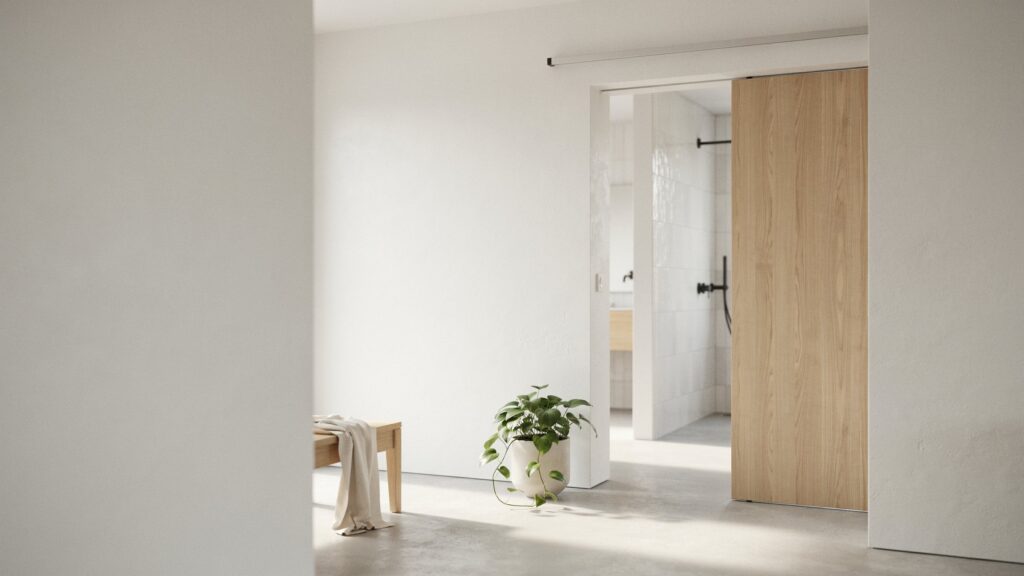
Setup the Optional Soft-Close Mechanism
A soft-close mechanism is an optional add-on that catches the door panel just before it fully closes, easing it into the pocket instead of letting it slam — and it’s worth having for anyone who wants their cavity slider to feel as smooth as it looks.
Without this feature, a door that slides into the wall frame cavity relies purely on momentum to shut. Push it a little too hard, and the panel can bang against the internal stop inside the pocket frame — a common annoyance in households with kids running through hallways or a strong draft pulling the door shut on its own. This is a similar concern to households already using childproof door security devices to manage how kids interact with doors around the house. The soft-close hardware fixes this by working like a small damper hidden inside the aluminium track: once the door panel gets within a few inches of fully closed, the mechanism grips the carriage and slows it down, so it settles into place quietly rather than hitting the stop at full speed.
This feature makes the most sense in specific rooms rather than every doorway in the house. A bedroom, home office, or nursery benefits the most, since noise control actually matters there — a slamming door at 11 PM is a different problem than a slamming pantry door. On the other hand, a laundry room or a rarely-used closet usually doesn’t need the extra hardware or cost, since the trade-off in added parts and price isn’t justified for low-traffic doors.
How Soft-Close Installation Fits Into the Frame
Setting this up isn’t a separate system bolted on afterward — it’s built into the same pocket frame and sliding rail that already carry the door panel. During assembly, the soft-close unit is mounted onto the aluminium track alongside the rollers or carriages, positioned so it only engages in the final stretch of the door’s travel rather than slowing it down the entire way. This keeps the smooth and silent movement of the door intact for most of its path, only adding resistance right at the end.
Choosing whether to add this feature ties back directly to what to look for when selecting the right cavity slider pocket door, since door weight plays a role here too — heavier panels need a stronger soft-close unit rated for that extra load, or the mechanism simply won’t be able to slow the door down properly.
Professional Installation and Guarantees
Professional installation matters because a door that slides into the wall frame cavity is only as good as the framing and alignment behind it — even a high-quality pocket frame will stick, sag, or run off-track if it’s fitted even slightly out of level.
Unlike a standard hinged door that can be adjusted after the fact by planing an edge or shimming a hinge, a cavity slider is built into the wall itself. Once the wall lining goes up over a misaligned frame, fixing the problem usually means opening the wall back up — a repair that costs far more time and money than getting it right the first time. This is exactly why most manufacturers recommend a qualified installer rather than treating it as a weekend DIY project, especially for anyone unfamiliar with reading rough opening measurements or leveling an aluminium track.
A professional installer brings a few things a first-time installer usually can’t:
- Accurate leveling of the head track: since even a slight tilt affects how smoothly the rollers or carriages move
- Correct anchoring into the stud wall opening: so the frame doesn’t shift once the wall is closed up
- Proper floor guide alignment: to stop the door from swinging sideways once it’s in daily use
- Compliance with product warranty terms: many manufacturers require professional installation to keep the guarantee valid
This is the detail most homeowners never think to check until it’s too late. Most cavity slider systems come with a manufacturer’s warranty covering the track, frame, and hardware — but that guarantee can be voided if the unit wasn’t installed according to the manufacturer’s specifications. For example, a warranty covering a heavy-duty track rated for 350 pounds won’t hold up if the frame was installed into an undersized rough opening or without the required structural support above it.
Getting this step right also protects the benefits covered earlier under the advantages of a cavity slider pocket door, since a poorly installed unit loses the smooth, quiet operation and clean look that make this door type worth choosing in the first place.
Maintenance and Durability of Cavity Slider Pocket Door
Keeping a cavity slider running smoothly for years comes down to one simple habit: regular cleaning of the track and rollers, since dust and debris buildup is the number one reason a door that slides into the wall frame cavity starts to stick or drag over time.
Because the aluminium track sits hidden inside the wall cavity, it’s easy to forget it needs any attention at all — until the door suddenly feels heavier to push or starts catching partway through its slide. In most cases, that’s not a sign of a failing frame; it’s dust, hair, or small debris that’s settled into the track where the rollers or carriages run. A quick wipe-down every few months, especially in homes with pets or during dry, dusty seasons, prevents this buildup from turning into a real mechanical problem.
Simple Habits That Extend the Life of the System
- Wipe the track periodically: a dry cloth or vacuum attachment clears dust before it packs into the rollers
- Check the floor guide: make sure it’s still seated properly, since a shifted guide is often what causes a door to wobble sideways
- Avoid forcing a sticking door: pushing through resistance can bend the carriage or damage the track instead of just cleaning it out
- Inspect the soft-close unit (if installed): a soft-close mechanism that feels jerky usually needs cleaning, not replacing
Why the Materials Matter Long-Term
Durability here isn’t just about cleaning — it’s also about what the frame and track are made of. Aluminium frames are chosen specifically because they resist warping and rust far better than steel or timber alternatives, which matters most in cavity sliders installed near bathrooms or laundry rooms where moisture exposure is common. A well-built pocket frame with a quality aluminium track can last decades without structural issues, as long as the wall around it stays dry and the hardware inside gets basic upkeep.
This ties directly back to professional installation and guarantees, since a correctly installed frame with proper anchoring is far less likely to develop the kind of misalignment that leads to premature wear in the first place.
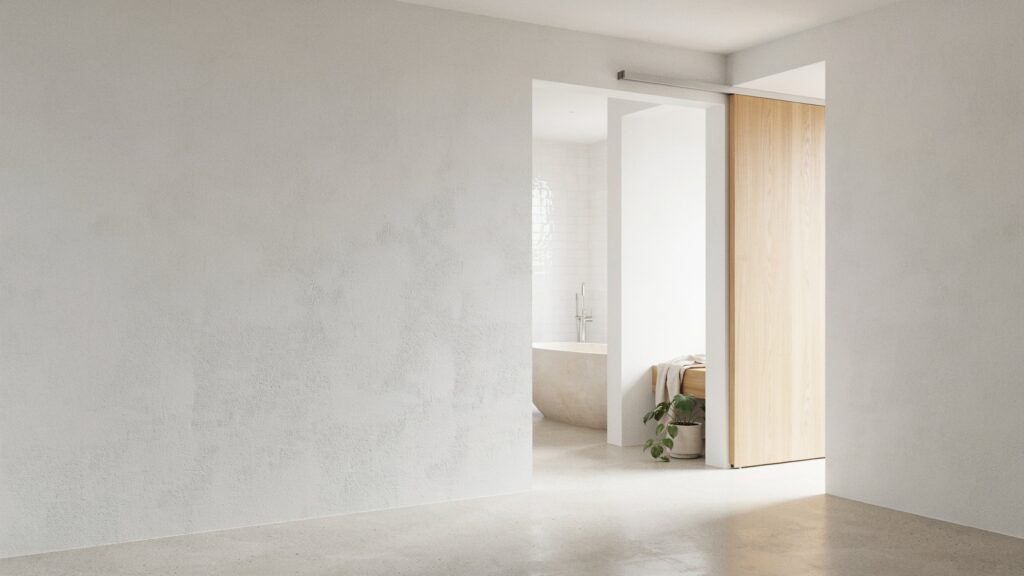
Mistakes to Avoid When Installing a Cavity Slider Door
Most problems with a door that slides into the wall frame cavity trace back to a handful of avoidable mistakes made during installation — get these right, and the system runs smoothly for years instead of causing headaches within months.
Common installation mistakes:
- Getting the rough opening size wrong: the wall frame opening must match the exact formula for the door panel width and height; even an inch off can leave the pocket frame too tight or too loose to sit correctly
- Installing the head track out of level: a track with even a slight tilt forces the rollers or carriages to work harder on one side, leading to uneven wear and a door that drifts instead of sliding straight
- Ignoring stud or wall thickness: fitting a standard cavity frame into a wall thinner than it’s designed for causes the pocket frame to bind against the studs instead of sliding freely
- Skipping the lintel or structural support check: since cavity pocket frames are non-load-bearing, missing proper support directly above the track can let the wall settle and pinch the frame over time
- Closing up the wall too early: sealing the wall lining before confirming the door panel slides smoothly means any adjustment later requires cutting the wall open again
- Forgetting floor guide alignment: a poorly positioned floor guide is one of the most common reasons a door swings sideways instead of tracking straight into the wall cavity
A common real-world scenario: a homeowner orders a standard single-frame system for a 30-inch door without checking their actual stud thickness, only to find during installation that the wall is too narrow for the frame to sit flush. This kind of mismatch usually means extra framing work or a returned order — both of which are avoidable with proper measuring before the frame is purchased. For a deeper look at how a wall needs to be evaluated before cutting into it, Bob Vila’s guide to installing a pocket door breaks down the mechanics worth understanding first.
Most of these mistakes connect directly back to what was covered in before you start the installation, since accurate measuring and wall preparation upfront is what prevents nearly every item on this list.
Final Thoughts
At the end of the day, a cavity slider isn’t just a door — it’s a decision about how a space feels and functions every single day. From wall preparation to soft-close hardware, every detail covered here exists for one reason: to make that hidden pocket door disappear into the wall as smoothly as it was designed to.
Before your next renovation, take a moment to think — is a swinging door really the best use of that space, or could disappearing it into the wall change how the whole room feels?
FAQs
Which type of door slides into a wall cavity?
A cavity slider is the door type that slides into a wall cavity, running on a hidden aluminium track and disappearing fully inside the wall frame instead of swinging open.
What type of door slides inside the wall?
It’s called a pocket door or cavity sliding door — the door panel rides on rollers along a track and tucks completely inside the wall’s stud opening when opened.
What door goes in a cavity slider?
Most cavity sliders accept standard hinged-door-style panels made from timber, glass, or MDF, as long as the panel’s weight matches the frame’s rated load capacity.
What are doors that slide in the wall called?
These are commonly known as cavity sliders, pocket doors, or wall cavity sliding doors — different regions use different names for the same hidden-track system.
What are the doors that go into the wall called?
They’re called pocket doors in the US and cavity sliders in Australia and the UK, both referring to a door that slides fully into a built-in wall pocket.
What is a slide door called?
A sliding door that runs along the wall surface is simply called a sliding door, while one that disappears fully inside the wall is specifically called a cavity slider or pocket door.
Author Box
Written by M. Bilal
Home Improvement Content Researcher
M. Bilal researches and writes practical, no-fluff home improvement guides, breaking down real installation specs, manufacturer guidelines, and everyday renovation problems into content homeowners can actually use. Every guide is built from manufacturer documentation, industry brochures, and hands-on research rather than guesswork — so readers get accurate, decision-ready information instead of generic advice.
Focus areas: home renovation systems, door and window installation, space-saving home solutions.