Introduction
You installed the camera to protect your family. You felt good about it.
Then came the knock.
Your neighbor is at the door — frustrated, pointing at your camera, demanding it come down. What started as a safety decision just turned into a conflict you never expected.This happens every day across the U.S. Not because homeowners are careless — but because most people never look up the rules before they install.The laws on outdoor surveillance cameras for home vary by state, carry real legal consequences, and affect every homeowner differently. Know them before you mount anything — and you’ll never have to answer that knock.
Table of Contents
Do You Have the Right to Install Outdoor Cameras at Home?
Yes — and U.S. law is firmly on your side.
As a homeowner, you have a clear legal right to monitor your own property. Your front door, driveway, porch, and backyard are yours to protect. No federal law blocks you from installing outdoor surveillance cameras on your home. Courts across the country consistently uphold this right.
But here’s what most people miss — this right has boundaries.
The U.S. has no single national law covering the laws on outdoor surveillance cameras for home. Rules vary by state, county, and even city. What’s legal in one state can expose you to a lawsuit in another. California, Illinois, and Florida, for instance, carry much stricter privacy protections than most other states.
The legal line is drawn by one key principle: reasonable expectation of privacy. Your property — fair game. Your neighbor’s yard, windows, or private spaces — off limits, even accidentally.
Know your rights. Know your limits. That’s how you stay protected on both ends.Think of it this way — owning a gun is legal, but how you use it is governed by law. Outdoor surveillance cameras work the same way. The right is yours. How you exercise it determines whether you stay protected or end up in court.
What Your Outdoor Camera Can — and Cannot — Record
This is where most homeowners either get it right — or get themselves into serious legal trouble.
The law uses one key standard to decide what’s acceptable: reasonable expectation of privacy. Simply put, if a person has a reasonable expectation that they won’t be watched in a certain space, pointing a camera there is a legal problem — even from your own property.
What you can legally record:
- Your own driveway, yard, porch, and entryways
- A public sidewalk or street visible from your property
- Shared spaces like a common driveway with consent
What crosses the legal line:
- Any private outdoor space that belongs to your neighbor
- Any window that looks into a bedroom, bathroom, or interior space
- Areas where people reasonably expect not to be watched
The camera angle matters more than most people realize. A slight tilt in the wrong direction can turn a legal setup into a privacy violation — and a potential lawsuit.
Audio Recording Laws — A Separate and Stricter Rule
Here’s the part that catches homeowners completely off guard.
Even if your video recording is 100% legal, your camera’s built-in microphone may not be. Audio recording is governed by a separate and stricter set of laws across the U.S.
In one-party consent states, only one person in the conversation needs to know it’s being recorded — usually you. In two-party (all-party) consent states like California, Florida, and Illinois, everyone being recorded must give consent. Recording audio without that consent can result in criminal charges — not just a civil dispute.
The fix is simple: if you’re unsure about your state’s rules, disable the audio on your outdoor camera. The video protection stays. The legal risk disappears.
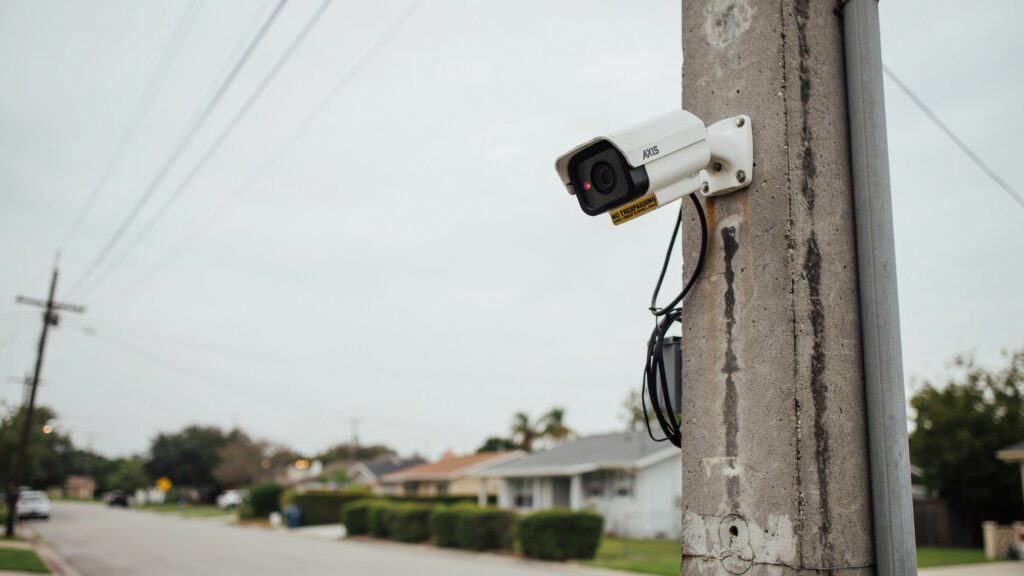
State-by-State Differences You Need to Know
One mistake homeowners make is assuming the law is the same everywhere. It isn’t — not even close.
There is no single federal law that specifically governs the laws on outdoor surveillance cameras for home. The federal government sets a broad privacy framework, but the real rules live at the state level. And some states take privacy very seriously.
States with stricter surveillance laws:
- California — One of the toughest in the country. The California Penal Code prohibits recording anyone in a private space without consent. Audio recording requires all-party consent.
- Illinois — The Eavesdropping Act makes unauthorized audio recording a serious offense. Video surveillance near private spaces also carries legal risk.
- Florida — All-party consent state for audio. Recording someone in a space where they expect privacy can lead to both criminal and civil liability.
On the other end, Texas and Arizona are among the more relaxed states — your camera, your property, your call — just avoid private spaces.
The smartest move before installing any camera is to check your local city or county ordinances as well. Some municipalities have rules that go even further than state law — covering camera placement distance, signage requirements, and HOA restrictions.
A quick search on your city’s official website or a call to your local government office can save you from a costly legal dispute later.This isn’t about fear — it’s about being informed. A homeowner in San Diego operates under completely different rules than one in Houston. Treating them as the same is a mistake that costs real money and real relationships.
Neighbor Disputes — What the Law Says
Few things create neighborhood tension faster than a surveillance camera pointed in the wrong direction.
If you believe your neighbor’s camera is recording your property, your private spaces, or your daily movements — you have legal options. This is one of the most common complaints tied to the laws on outdoor surveillance cameras for home, and courts across the U.S. take it seriously.
Your options when a neighbor’s camera crosses the line:
- Talk first. Many disputes are resolved with a simple, calm conversation. The neighbor may not even realize their camera angle is an issue.
- File a complaint. If talking doesn’t work, contact your local police department or code enforcement office. In many states, intentional surveillance of a neighbor’s private space is a criminal offense.
- Consult an attorney. If the recording is causing real harm — harassment, stalking, or privacy invasion — a lawyer can help you pursue a civil lawsuit for damages.
HOA rules add another layer. If you live in a community with a homeowners association, your HOA may have specific policies on camera placement, angles, and even camera visibility from the street. Violating those rules can result in fines — regardless of what state law allows.
The law protects you. But the fastest, cheapest resolution almost always starts with a direct conversation before it ever reaches a courtroom.One important thing most people overlook — if your neighbor files a formal complaint and an investigation finds your camera was improperly aimed, you may be required to reposition or remove it entirely. Staying proactive is always cheaper than being reactive.
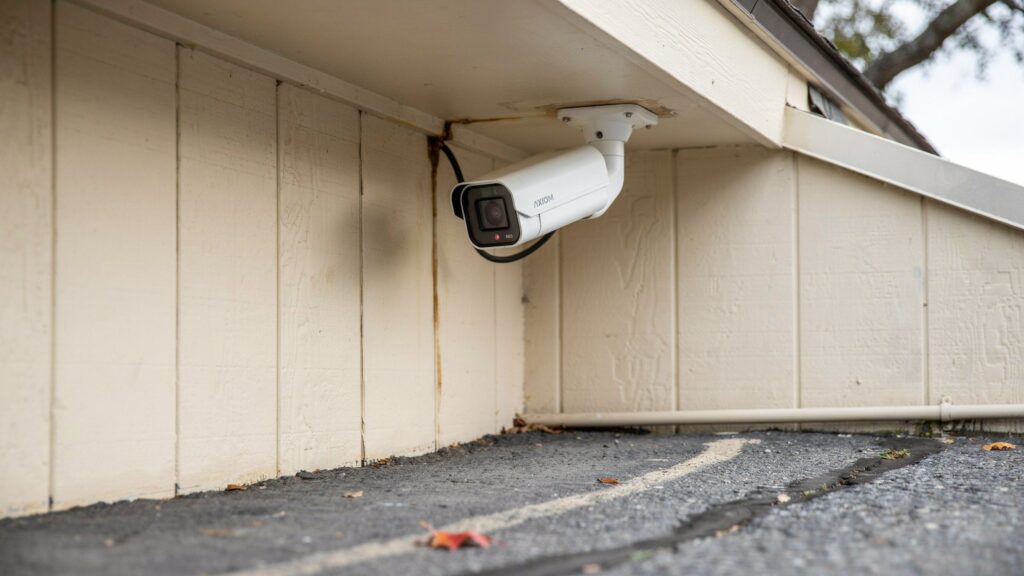
How to Stay Fully Legal — Practical Steps Before You Install
The installation is the easy part. The legal fallout — if it comes — is anything but. Get it right from the start and you’ll never have to find out.
Camera Placement — Aim Smart, Not Just Wide
Where you mount your camera matters as much as what it records. Keep the field of view focused on your own property. Avoid angles that drift into a neighbor’s yard, window, or private outdoor space — even partially. If you can adjust the angle slightly and stay fully on your property, do it. That one small move eliminates most legal risk.
Signage — Small Sign, Big Legal Protection
Most U.S. states don’t legally require you to post a notice about your surveillance cameras. But putting up a simple “Video Surveillance in Use” sign is one of the smartest things you can do. It deters trespassers, strengthens your legal standing, and removes any argument that recording was done with malicious intent.
Check Local Ordinances Before You Mount
The laws on outdoor surveillance cameras for home vary by city and county — not just by state. Spend ten minutes on your city’s official website or make a quick call to local code enforcement. Check for rules around camera placement distance, permit requirements, and HOA restrictions if applicable. Ten minutes now can save you thousands later.
Audio Settings — Turn It Off If You’re Unsure
If you don’t know your state’s consent laws for audio recording, disable the microphone on your outdoor camera. The video coverage remains fully intact. The legal exposure disappears entirely. It’s the simplest risk-free adjustment you can make.
Most legal camera disputes in the U.S. don’t happen because someone broke the law intentionally. They happen because the homeowner assumed everything was fine without verifying. Don’t be that homeowner.
Conclusion
Keeping your family safe is a right — and the laws on outdoor surveillance cameras for home are not your enemy. They exist to protect everyone’s privacy, including yours.Security and legality go hand in hand. Point your cameras wisely, know your state’s rules, and turn off audio if you’re unsure. That’s all it takes.
The homeowners who face trouble aren’t the ones who installed cameras. They’re the ones who never thought twice before doing it. A few smart decisions upfront keep you protected on every side.
Protect your home. Do it right. Do it once.
FAQs
Is it illegal for my neighbor to have a camera pointed at my house?
It depends on the angle. Recording your public-facing exterior is generally legal. But if the camera captures your private spaces — backyard, windows, or interior — that can cross into illegal territory depending on your state.
How can I stop my neighbor’s camera from pointing at my house?
Start with a calm conversation. If that fails, contact local code enforcement or consult an attorney. In many states, deliberately recording a neighbor’s private space is a violation of privacy law.
Am I allowed to have a camera outside my house?
Yes. U.S. homeowners have a clear legal right to install outdoor surveillance cameras on their own property. Just keep the field of view on your property and away from private spaces.
Can neighbors complain about security cameras?
Absolutely. If a camera is angled toward their private property or capturing audio without consent, a complaint to local authorities or HOA is completely valid — and often actionable.
What can you do if your neighbor’s security camera is pointed at your house?
Document it, talk to your neighbor first, then escalate to local authorities or an attorney if needed. You have legal remedies available — use them in order.
What can I use to block my neighbor’s security camera?
Privacy hedges, fences, or outdoor curtains are common legal solutions. Physically tampering with or disabling someone else’s camera is illegal — avoid it entirely.