Introduction
Have you ever stood in your driveway, pressing the remote again and again, wondering why your garage door just won’t close? For most homeowners, the answer isn’t a broken motor or a dead remote battery — it’s something far smaller and far more overlooked: garage door sensor height.
That tiny measurement near the floor decides whether your safety beam actually does its job. A few inches off, and the entire system stops working the way it’s supposed to — leaving your car exposed, your home unsecured, and your patience running thin. This guide walks you through exactly where your sensors should sit, why that height matters more than most people realize, and how to fix it once and for all.
Table of Contents
What Garage Door Sensor Height Actually Means
Most homeowners never think about garage door sensor height until something stops working. You press the remote, the door starts closing, and then it just won’t finish the job. The real issue is usually right there at the bottom of your door, quietly doing a job you’ve never had to think about — until now.
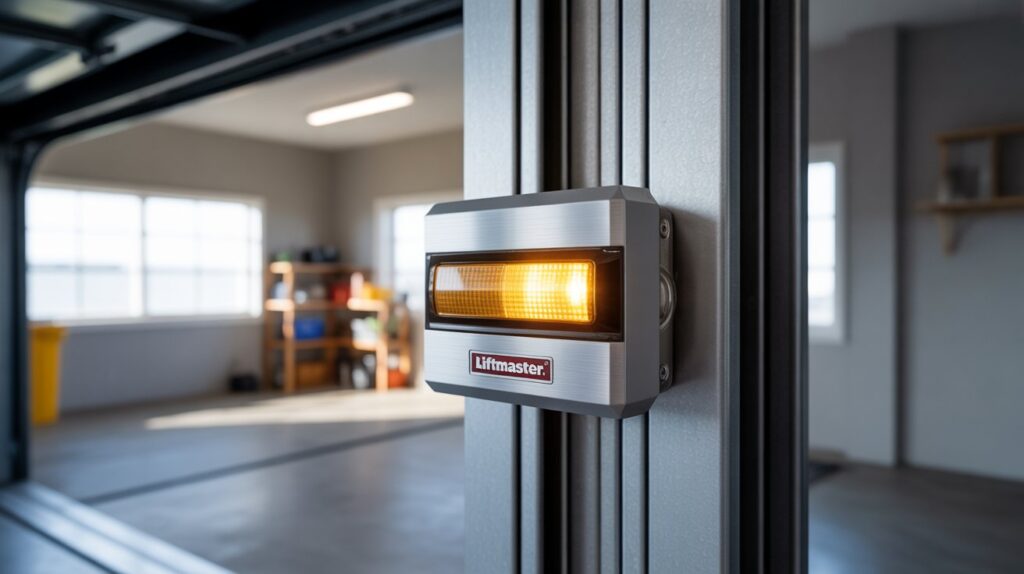
Garage door sensor height simply refers to how far off the ground your two safety sensors are mounted. These small devices sit on opposite sides of your garage door track, facing each other, sending an invisible beam across the opening. That beam is the entire safety system. If the height is off, even slightly, the beam doesn’t sit where it should, and your door reacts accordingly — refusing to close, reversing midway, or behaving unpredictably.
This measurement isn’t random — it’s built around real safety logic. Garage doors are heavy, fast-moving, and unforgiving if something gets caught underneath, so sensor height is chosen to:
- Catch real hazards — a pet running through, a toddler’s foot, or a stray bicycle wheel near the floor
- Avoid false triggers — sitting too low picks up dust, leaves, or minor floor debris that isn’t actually dangerous
- Match the door’s reaction zone — the height lines up with where objects are most likely to be when the door is closing
The height you choose directly decides what your sensors can and can’t detect.
Think of it like setting a tripwire:
- Too high — small things slip underneath unnoticed
- Too low — the sensor reacts to things that were never a real danger
- Just right — the beam catches genuine hazards without nuisance stops
Garage door sensor height is the balance point between real protection and everyday convenience — and getting it right is what separates a smoothly working garage door from one that fights you every single day.
The Standard Garage Door Sensor Height (And Why It’s Set This Way)
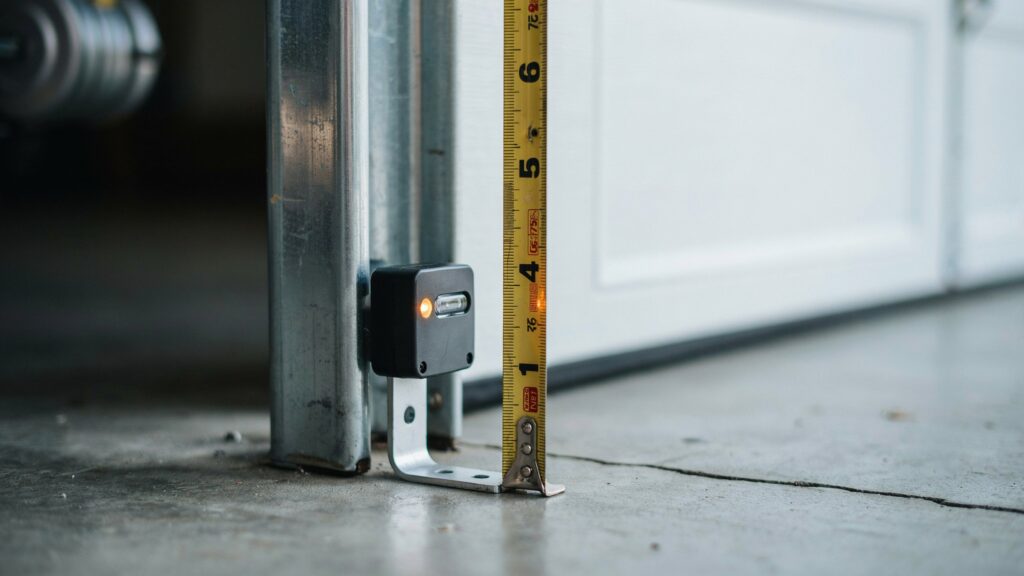
If you’ve ever wondered exactly where your sensors should sit, the answer is simpler than most people expect. The accepted garage door sensor height is 4 to 6 inches above the garage floor. This isn’t a random number manufacturers picked out of convenience — it’s the result of decades of safety testing built around how families actually use their garages.
This height range exists for a clear reason:
- It sits at the right level to catch most hazards — a child’s foot, a pet darting underneath, or a bike tire left near the door’s path
- It stays clear of common floor-level interference — slightly raising the beam above ground clutter like leaves, small debris, or uneven flooring
- It matches the design standard used across major U.S. brands — including LiftMaster, Chamberlain, Genie, and Craftsman, so the height stays consistent no matter which opener you own
Garage door safety sensors became a federal requirement in the U.S. after a wave of accidental injuries involving automatic doors, particularly among children. Since then, manufacturers have built their systems around this 4–6 inch range specifically because it offers the best real-world balance — low enough to detect genuine danger, high enough to avoid nuisance stops from everyday garage activity.
What makes this height standard so important is that it isn’t just a suggestion — it’s the foundation your entire safety system is built on. Mount your sensors outside this range, even by an inch or two, and you start working against the very protection the system was designed to provide. Staying within the standard garage door sensor height isn’t about following a rule for the sake of it; it’s about making sure the system does exactly what it was built to do, every time your door closes.
How to Measure Your Sensor Height the Right Way
Guessing the height of your sensors is exactly how most alignment problems start. You don’t need a professional visit or special equipment to get this right — you just need a few minutes, the correct tools, and a method that takes the guesswork out completely.
Tools You’ll Need
Before you start measuring garage door sensor height, gather a few simple household items:
- A tape measure — for an accurate reading from the floor
- A small level — to confirm both sensors sit evenly, not just at the right height
- A pencil or marker — to mark your measurement point before mounting
- A flashlight — helpful in dim garages where sensor brackets can be hard to see clearly
None of these require a trip to a hardware store if you’re just checking your current setup. If you’re remounting or adjusting brackets, having these on hand makes the entire process faster and far more accurate.
Step-by-Step Measuring Process
Getting the correct garage door sensor height comes down to a few careful steps, done the same way on both sides of the door:
- Start at the floor, not the bracket. Place your tape measure flat on the garage floor directly beneath the sensor.
- Measure straight up to the center of the sensor lens — not the top or bottom of the bracket, since the lens is what actually sends and receives the beam.
- Confirm the reading falls between 4 and 6 inches. This is the standard range that keeps your safety beam working as intended.
- Repeat the exact same process on the opposite sensor. Both readings should match closely, since a height mismatch is one of the most overlooked causes of sensor failure.
- Use your level to check that both sensors sit flat and even, not tilted up or down, before locking the brackets in place.
A common mistake homeowners make is measuring from the bracket’s mounting screw instead of the lens itself, which throws off the entire reading. Another frequent slip is measuring only one side and assuming the other matches — a habit that often leads straight to alignment issues down the line. Taking the extra two minutes to measure both sensors properly is a small effort that saves you from a much bigger headache later.
When Both Sensors Aren’t at the Same Height
Here’s something most homeowners never check: it’s not enough for your sensors to sit within the right range individually. They also need to match each other. You can have both sensors perfectly within the 4–6 inch standard and still run into problems if one sits at 4 inches while the other sits at 6.
The reason comes down to how the beam actually travels. Garage door sensors work by sending an invisible infrared line straight across the opening, from one side to the other. That beam only functions correctly when both sensors are looking directly at each other, at the exact same height. The moment one sensor sits even slightly higher or lower than the other, the beam no longer lines up — it shoots over, under, or just past the receiving sensor instead of hitting it directly.
This mismatch creates a frustrating pattern that many homeowners misread as a bigger mechanical issue:
- The door refuses to close, even though nothing is visibly blocking the path
- The sensor lights flicker or stay inconsistent, switching between on and off without a clear cause
- The problem seems to come and go, often worse at certain times of day when vibration or temperature shifts the angle slightly further
It’s an easy issue to overlook because everything looks fine at first glance. Both sensors appear mounted, both have power, and both seem to be working — yet the door still won’t close the way it should. That’s the nature of a height mismatch: the problem isn’t visible, it’s positional.
Spotting it is simple once you know what to look for. Measure both sensors using the same method from before, then compare the two numbers side by side. If there’s even a half-inch difference, that gap is likely the reason your garage door has been acting unpredictably. Matching garage door sensor height on both sides isn’t a minor detail — it’s the difference between a beam that works every time and one that quietly fails when you least expect it.
Garage Floors Aren’t Always Flat — Why That Changes Things
Most garage door height guides assume one thing: a perfectly flat, level floor. In reality, that’s rarely the case. Many U.S. garages have a slight slope built into the concrete on purpose, usually angled toward the door, to help rainwater and melted snow drain outside instead of pooling inside. That small design detail can quietly throw off your sensor height without you ever realizing it.
When your garage floor slopes, measuring from one fixed point no longer tells the full story. A sensor measured at exactly 5 inches near the door might sit at a noticeably different height compared to where the floor actually meets the wall a few feet back. The slope changes what “the floor” means depending on exactly where you measure, which is why two homeowners can follow the same instructions and still end up with sensors that don’t line up the way they expect.
This becomes especially noticeable in a few common situations:
- Older homes with settled foundations — where the concrete has shifted slightly over the years, creating an uneven base on one or both sides of the door
- Garages with drainage channels or trench drains — where the floor dips intentionally near the center or edges
- Homes on sloped lots — where the entire garage floor sits at a gentle angle from front to back
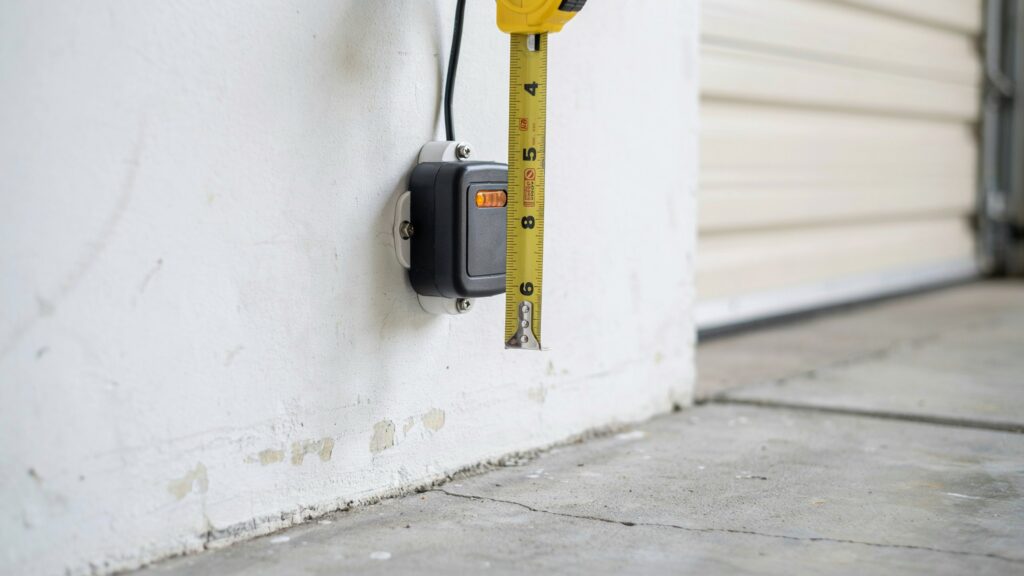
The fix isn’t complicated, but it does require a small adjustment to the standard approach. Instead of measuring from a single spot, check the floor level directly beneath each sensor individually, right where the bracket is mounted. If one side of your garage sits lower than the other, your sensor height should be measured from that specific point, not from an assumed flat baseline.
Garage door sensor height was never meant to be a one-size-fits-all number — it’s meant to be the correct distance from whatever ground your sensor actually sits above. Once you account for floor variation, you stop fighting a problem that was never really about the sensor at all. It was about the ground underneath it.
Final Thought
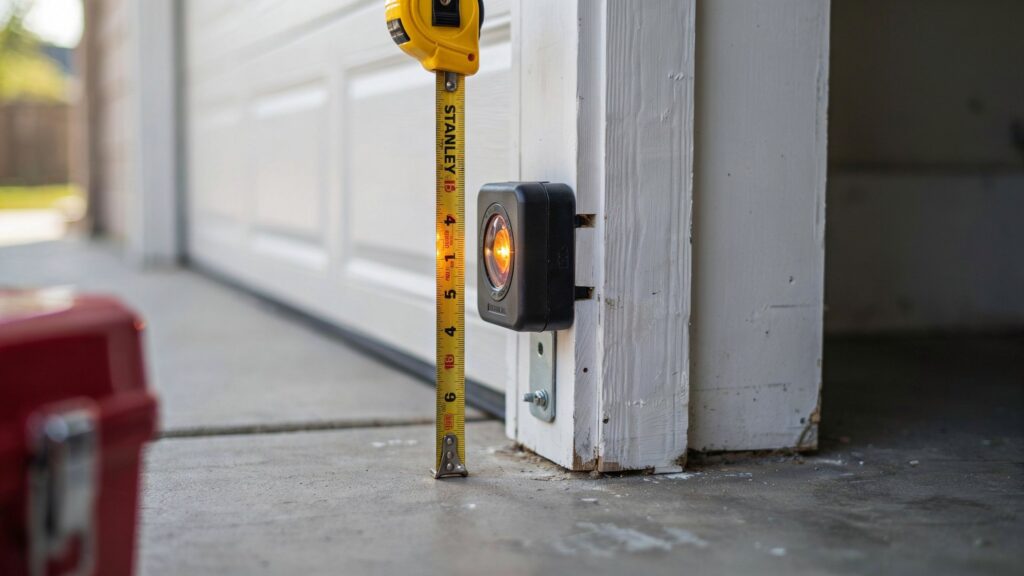
It’s easy to walk past your garage sensors a hundred times without a second thought — until the day your door won’t close, and that small device suddenly matters more than anything else in your garage. Garage door sensor height isn’t just a technical detail. It’s the quiet difference between a door that protects your family every time and one that fails when it’s needed most.
The right height, measured correctly, on a floor that isn’t always as flat as it looks — that’s the real reason some garage doors work flawlessly for years while others fight their owners daily.
So take a moment to check: when did you last measure your sensor height? That small mismatch might be the problem you’ve been missing.
A door is only as safe as the sensors beneath it — now you know exactly how to get that right.
FAQs
How high should garage door sensors be off the floor?
Garage door sensors should sit 4 to 6 inches above the garage floor for proper safety detection.
What is the height code for garage door sensors?
There’s no strict legal code, but the industry safety standard followed by major U.S. brands is 4 to 6 inches.
How to position garage door sensors?
Mount both sensors at matching heights, facing each other directly, so the infrared beam travels straight across the opening.
Why does the light sensor for a garage need to be 5 to 6 inches?
This range catches real hazards like pets or feet while avoiding false triggers from floor-level dust or debris.
What is the best height for PIR sensor?
For garage motion sensors, 4 to 6 inches above the floor offers the most reliable detection range.
How to tell if garage sensors are misaligned?
Blinking sensor lights, a door that won’t close, or sudden reversing usually point to misalignment.
Should both garage door sensors light up green?
Not always — many systems show one green and one amber or red light when working correctly.
How do I recalibrate my garage door sensor?
Power off the opener, realign both sensors at matching height, then restore power to reset the connection.