Introduction
Most people think they’re protected because they have a smoke detector on the ceiling. But here’s the hard truth — a basic alarm only makes noise. It doesn’t call anyone. It doesn’t dispatch the fire department. It just beeps and hopes someone nearby is awake and paying attention.
A central station fire alarm system works differently. The moment something triggers, a trained professional at a 24/7 monitoring center receives the alert and sends help — automatically, immediately, without waiting for you to react. No delays. No assumptions. Just a real response when it matters most.
Whether you own a home, run a small business, or manage a commercial property, this guide breaks down exactly how central station monitoring works, who needs it, and why it’s one of the most important fire safety decisions you can make.
Table of Contents
What Is a Central Station Fire Alarm System?
A standard fire alarm makes noise. That’s it. It beeps, it blares, and then it waits — for someone nearby to notice and call 911. But what if no one is home? What if the smoke fills the building before anyone reacts?
That’s exactly where a central station fire alarm system changes everything.
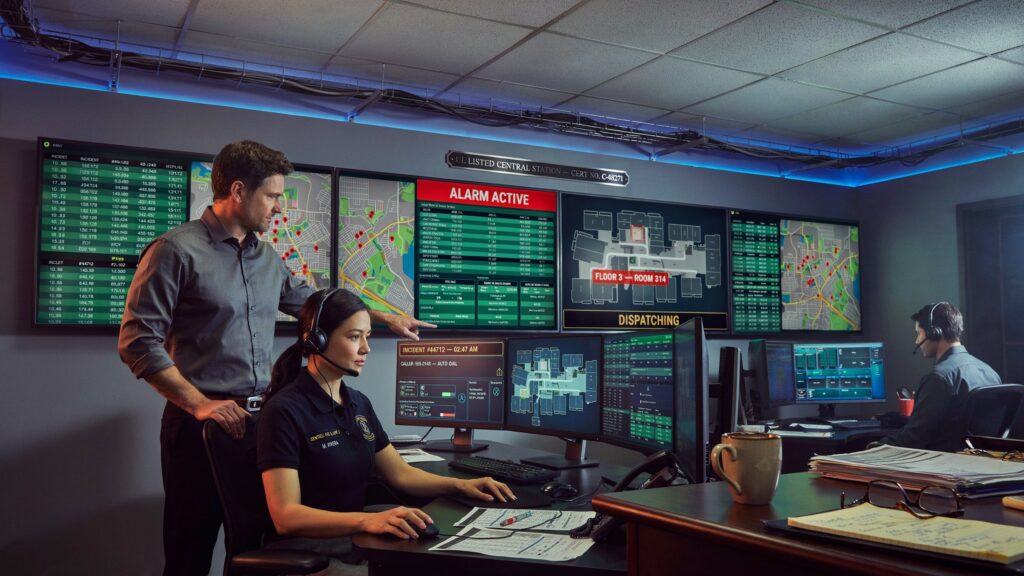
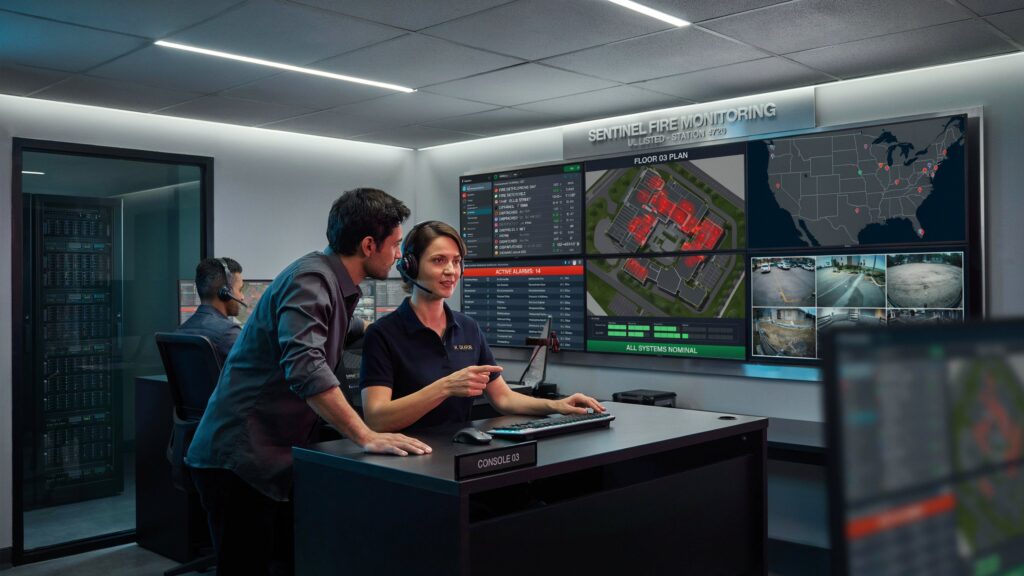
A central station fire alarm system is a monitored fire protection setup that connects your building’s alarm directly to a professionally staffed monitoring center — 24 hours a day, 7 days a week, 365 days a year. The moment a detector is triggered, an automatic signal travels to that center in seconds. A trained operator receives the alert, verifies the threat, and dispatches the fire department immediately — without waiting for you to wake up, notice, or call anyone.
These monitoring centers are UL-listed, meaning they meet strict safety and reliability standards set by Underwriters Laboratories. That’s not just a certification — it’s a guarantee that real, trained professionals are watching over your property around the clock.
For homeowners, this means protection even when you’re asleep, at work, or traveling. For businesses, it means your building isn’t left vulnerable after hours. For property managers and commercial facilities, it’s often a code requirement under NFPA 72 — the National Fire Alarm and Signaling Code followed across the United States.
A local alarm alerts people in the room. A central station fire alarm system alerts the people who can actually save your building.
How Does a Central Station Fire Alarm System Work?
The process is fast, automatic, and built to remove human delay from the equation. Here’s how it works in real time.
The moment a smoke detector, heat sensor, or pull station activates, the fire alarm control panel registers the alert. That signal doesn’t just ring a bell — it travels instantly to a UL-listed central monitoring center through a dedicated communication path. An operator receives the alert, confirms it’s a real threat, and contacts emergency services within seconds. No hesitation. No waiting for a neighbor to notice.
Signal Transmission Methods
The fire signal needs a reliable path to reach the monitoring center. Most modern systems use one or more of these methods:
- Cellular transmission — the most common today, works even if phone lines are cut or down
- IP-based communication — reliable, budget-friendly, and the go-to choice for modern commercial fire alarm setups.
- Traditional phone line — older method, still used but being phased out across the US
Top-tier systems run two communication paths at once — cellular and IP together. If one drops, the other takes over instantly. In a real fire, that backup isn’t a bonus — it’s what keeps the signal alive.
What Happens at the Monitoring Center
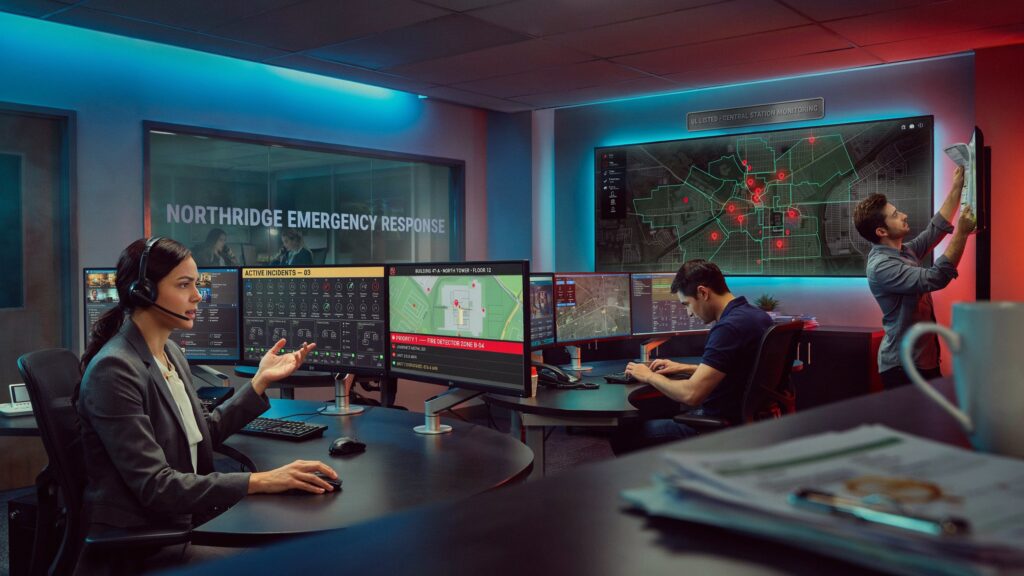
This is where trained professionals take over. The moment your alarm signal arrives, an operator pulls up your account, checks the zone that triggered, and makes an immediate decision. If it’s a confirmed threat — or even an unverified one — they dispatch the fire department right away.
They also contact you or your emergency contacts to keep everyone informed while help is already on the way.
No guessing. No delays. Just a fast, professional response working in the background while you focus on getting out safely.
Central Station vs. Local Alarm — What’s the Difference?
Most people assume their fire alarm is protecting them. The truth is — it depends on what type of alarm you have.
A local fire alarm does one thing: it makes noise. It beeps loud enough to wake you up or alert people nearby. But the moment everyone evacuates or the building is empty, that alarm is just screaming into silence. Nobody calls 911. Nobody shows up. The fire keeps burning.
A central station fire alarm system works completely differently. The second that alarm triggers, a trained operator at a professional monitoring center receives the signal and takes action — whether you’re home, asleep, or halfway across the country. Help is dispatched before you even realize what’s happening.
Here’s the honest side-by-side:
| Feature | Local Alarm | Central Station System |
| Alerts people nearby | ✅ Yes | ✅ Yes |
| Calls fire department automatically | ❌ No | ✅ Yes |
| Works when building is empty | ❌ No | ✅ Yes |
| 24/7 professional monitoring | ❌ No | ✅ Yes |
| Insurance discount potential | ❌ Rarely | ✅ Often |
The difference isn’t just features — it’s the gap between an alarm that warns and a system that responds. For anyone serious about fire protection in their home or business, that gap matters more than most people realize.
Who Needs a Central Station Fire Alarm System?
The short answer — anyone who can’t afford to lose what they’re protecting.
If your home has multiple levels, a detached garage, or a large footprint — a single smoke detector simply isn’t enough coverage. If a fire starts in the basement at 3 a.m., a monitored system calls for help while your family is still sleeping. That response time can mean everything.
Landlords and rental property owners need this more than most. Your tenants may not react fast enough. You’re not on-site. With central station monitoring in place, trained professionals track your property every hour of every day — whether you’re down the street or across the country.
Small businesses and retail stores face a real risk after hours. A break-in combined with arson, an electrical fault overnight, a kitchen fire in a restaurant — these don’t wait for business hours. A monitored system makes sure your business never sits vulnerable — even at 2 a.m. on a Tuesday.
Commercial buildings, warehouses, and schools are often legally required to have a monitored fire alarm system under NFPA 72 — the National Fire Alarm and Signaling Code. This standard is enforced across the United States and sets the minimum requirements for fire alarm monitoring in occupancy-based buildings.
Beyond legal compliance, there’s a financial benefit most people overlook. Many U.S. insurance providers offer premium discounts for properties with a UL-listed central station monitoring system in place. Over time, those savings can offset the cost of monitoring fees entirely.
Whether it’s your home, your business, or a building full of people — if it matters to you, it needs more than just a beeping alarm.
Key Benefits and Honest Limitations
No system is perfect. Here’s a clear-eyed look at what a central station fire alarm system delivers — and what it costs you.
The Benefits
24/7 professional monitoring is the biggest advantage. Fires don’t follow a schedule, and neither does the monitoring center. Day or night, someone trained is always watching.
Faster emergency response saves lives and limits damage. When the monitoring center dispatches the fire department directly, response time drops significantly compared to waiting for a neighbor to call 911.
Insurance discounts are a real financial win. Many U.S. insurers reduce premiums for properties with a UL-listed monitored fire alarm system — sometimes enough to cover a portion of the monthly monitoring cost.
Peace of mind is harder to measure but impossible to ignore. Knowing your home or business is protected even when you’re away is worth more than most people expect until the day they actually need it.
The Limitations
Monthly monitoring fees are ongoing. Depending on your provider and contract, costs typically range from $15 to $50 per month. It’s not a one-time purchase — it’s a recurring commitment.
Professional installation is required. This isn’t a DIY setup. A licensed fire alarm technician must install and configure the system to meet local codes and UL standards. That adds upfront cost.
These limitations are real, but they’re also manageable. For most homeowners and businesses, the protection a central station fire alarm system provides far outweighs what it costs to maintain it.
Conclusion
A beeping alarm tells you there’s a fire. A central station fire alarm system makes sure someone does something about it.
That’s not a small difference — that’s the difference between a building that survives and one that doesn’t. Between a family that escapes safely and one that didn’t get the warning in time.
If you own a home, run a business, or manage any property where people live or work, monitored fire protection isn’t an optional upgrade. It’s a responsibility. And a central station fire alarm system is one of the most reliable ways to meet it.
Don’t wait for a close call to take fire safety seriously.
This article is for informational purposes only. Always consult a licensed fire protection professional for installation, compliance, and monitoring recommendations specific to your property.
FAQs
What is a central station for fire alarms?
It’s a UL-listed professional facility that receives fire alarm signals 24/7 and immediately dispatches emergency services to your property.
How much does a central station alarm system cost?
Monthly monitoring typically runs $15–$50, plus upfront installation costs depending on your property size and system complexity.
What is the difference between a central station and a direct fire alarm?
A direct alarm sends signals straight to the fire department, while a central station routes the signal through a professional monitoring center first for verification.
Who monitors a central station alarm system?
Trained operators at a UL-listed monitoring facility watch incoming alerts around the clock and coordinate emergency response on your behalf.
Is ADT considered a central station alarm?
Yes — ADT operates UL-listed central monitoring stations and is one of the most widely recognized monitored alarm providers in the United States.
What does 5-5-5 mean to a firefighter?
It’s a traditional bell signal used in fire stations — three groups of five bells — historically used to indicate a firefighter has died in the line of duty.