Introduction
A garage door that refuses to close, with both sensor lights off, usually points to a power, wiring, or alignment problem rather than a broken door. Since these sensors are what protect people, pets, and vehicles from an accidental close, it’s worth understanding why they fail before assuming the worst.
This guide covers the common causes, quick checks you can do yourself, and when the issue needs a technician instead of a DIY fix.
Table of Contents
When Your Garage Door Suddenly Stops Working
It usually happens at the worst possible moment — you press the remote, the door starts moving, then stops halfway or reverses back up. For most homeowners, this is the first sign something’s off with the garage door sensor system.
In most cases, the safety sensors are behind it. Mounted near the bottom of the track, they create an invisible beam across the doorway, and if that beam breaks, the door stops automatically — a core safety feature in every modern opener.
When both sensor lights go dark at the same time rather than just one, it usually points to something deeper: a power problem, a wiring fault, or an issue with the opener itself. It’s a common issue, and in most cases it’s diagnosed quickly once you understand what the sensors are actually doing.
How Garage Door Safety Sensors Actually Work
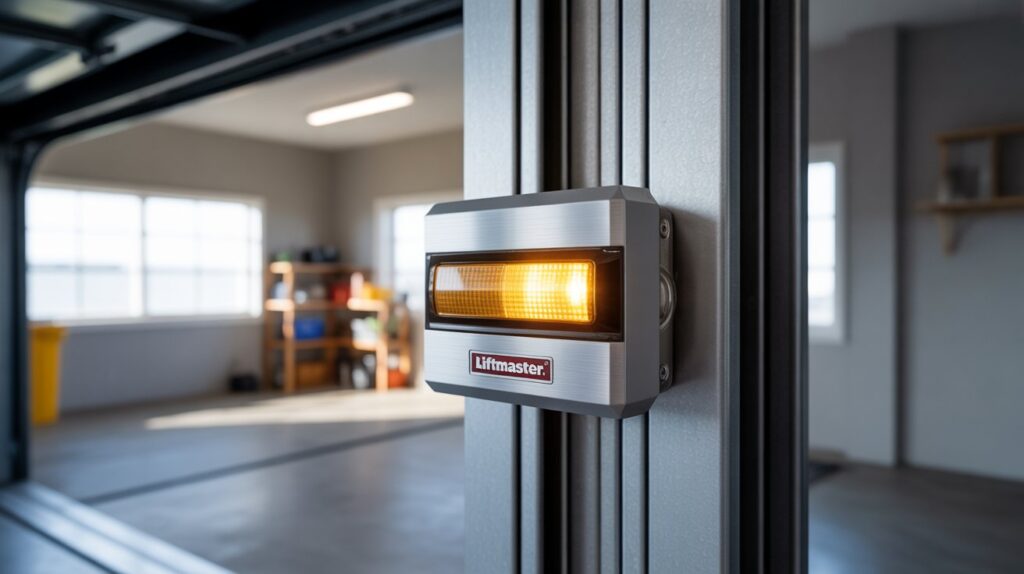
Though small, garage door safety sensors are essential for the door to operate safely. They’re typically mounted a few inches above the floor on each side of the track, and their job is simple: confirm nothing is in the door’s path before it closes.
Infrared Beam Connection Between Sensors
The system works through an invisible infrared beam sent from one sensor to the other. When the beam connects properly, the opener knows the path is clear and lets the door close normally. If that connection breaks, the door stops or reverses immediately to prevent accidents.
Why Indicator Lights Matter
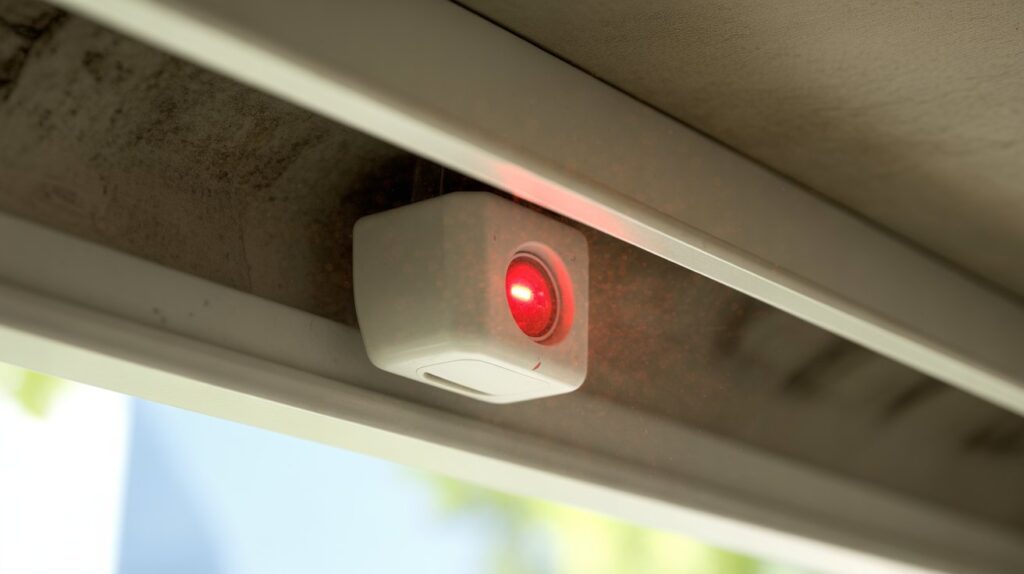
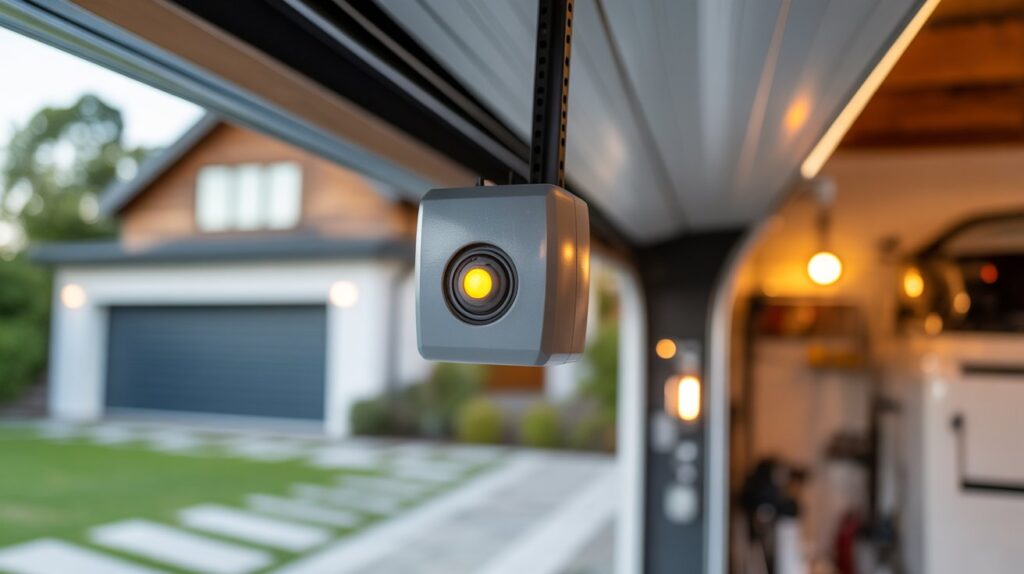
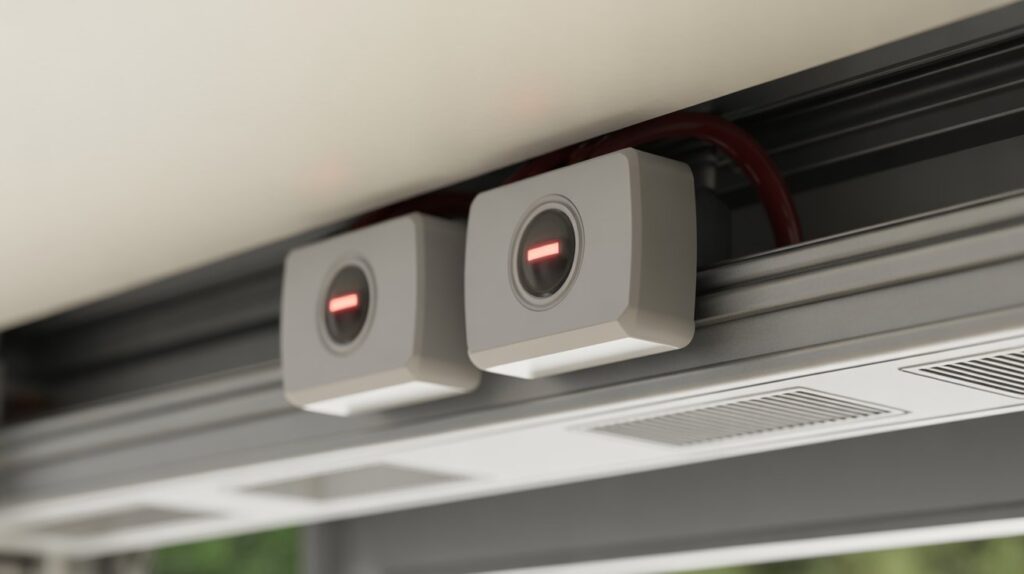
Each sensor has a small LED indicator light that helps homeowners quickly tell if the system is working. Normally:
- One sensor shows a steady light (sending unit)
- The other shows a solid or slightly dim light (receiving unit)
When neither light is on, it usually means the sensors aren’t receiving power, the wiring is damaged, or the opener connection has failed.
What Happens When the Beam Is Interrupted
When something blocks the beam — a trash can, a bike tire, even dust buildup — the system reacts instantly. The door stops closing and often reverses back up, which is exactly what prevents injuries to people, pets, and vehicles.
Why Modern U.S. Garage Systems Depend on Them
In the United States, these sensors aren’t optional — they’re a required safety standard in modern automatic garage door openers, put in place so doors don’t close on people or objects. That’s exactly why a system with both lights off needs a quick check rather than a wait-and-see approach — without working sensors, the door may not close at all.
The Most Common Reasons Both Sensors Stop Lighting Up
When both lights go dark at once, it usually means something is interrupting power, connection, or communication in the system rather than the sensors themselves being broken. Here are the most common causes:
- Power supply problems — A tripped breaker, unplugged opener, or outlet failure cuts power to the whole system, taking both sensor lights with it.
- Loose or damaged wiring — Staples, temperature swings, or pests can fray or loosen wiring over time. A broken connection means the sensors stop receiving electricity entirely.
- Misaligned sensor brackets — A bump from a trash bin, car tire, or storage box can shift the alignment enough that some systems stop showing any indicator light at all.
- Sunlight interference — Direct afternoon sun hitting the receiving sensor can confuse the infrared signal and temporarily disrupt readings.
- Faulty sensor units — Moisture, dust, and age wear out the internal components over time, eventually causing failure.
- Opener logic board issues — The board that supplies power and communication to the sensors can fail on its own, with the sensors showing no fault at all.
For the electrical side of this, the Consumer Product Safety Commission has published guidance on garage door opener entrapment hazards, which is worth a look if wiring or power issues keep recurring.
Step-by-Step Troubleshooting You Can Try at Home
If you notice both garage door sensors not lighting up, don’t panic. In many U.S. homes, this problem turns out to be something small that can be fixed in a few minutes. Before calling a technician, it’s worth checking a few things yourself.
Check the Power Source
Start with the basics. Your garage door opener must have power for the sensors to work.
- Make sure the opener is plugged in properly
- Check the wall outlet
- Inspect the circuit breaker in your electrical panel
Sometimes a breaker trips during a storm or power surge, and homeowners don’t realize it. When power returns, the sensor lights often come back immediately.
Inspect the Wiring
Next, take a quick look at the sensor wires running along the wall and track.
- Look for loose connections near the opener
- Check for cuts, pinched wires, or corrosion
- Make sure the small wires are still attached to the sensor terminals
Even a slightly loose wire can cause both garage door sensors not lighting up because the system loses its power connection.
Clean and Realign the Sensors
Garages collect dust, dirt, and spider webs more than most parts of the house. That buildup can block the sensor signal.
- Gently wipe the sensor lenses with a soft cloth
- Remove dirt, cobwebs, or debris
- Adjust the sensors so they face each other directly
When the alignment is correct, the indicator lights usually turn back on right away.
Reset the Garage Door System
Sometimes the system simply needs a reset.
- Unplug the garage door opener
- Wait about 30–60 seconds
- Plug it back in and test the door
This quick reset often restores communication between the opener and the sensors. Many homeowners overlook this step, but it can solve the issue surprisingly often.
When the Problem Is More Serious
Sometimes the issue isn’t just alignment or dust. If you’ve already checked the basics and both lights are still off, it may point to a deeper mechanical or electrical problem — recognizing these signs early saves time, money, and frustration.
Sensors Completely Dead
No lights at all on either sensor, even after checking power and wiring, usually means the units themselves have failed. Age, temperature swings, and moisture eventually wear out older systems.
Burn Marks or Damaged Wires
Check the wiring near the opener and along the track. Burn marks, cracked insulation, or severely frayed wires signal a compromised electrical connection, which can stop power from reaching the sensors entirely.
Opener Logic Board Failure
The opener’s control board manages the whole system, sensors included. When it starts failing, the sensors may suddenly lose power or stop responding — homeowners sometimes replace the sensors first, only to find the opener board was the actual problem.
When Replacing the Sensors Is the Smarter Option
If the sensors are old, damaged, or repeatedly acting up, replacement is often simpler than continued troubleshooting. For a closer look at sensor types and what to look for in a replacement, see our guide on garage door tilt sensors.
Conclusion
Both sensor lights going dark usually comes down to a power issue, damaged wiring, misalignment, or a failing opener board — not a mystery, and rarely something that needs replacing the whole system. Checking power, inspecting the wiring, cleaning the lenses, and realigning the sensors resolves most cases in a few minutes.
If the lights stay off after all of that, the sensors or the opener’s logic board are likely the real issue, and that’s when it’s worth calling a technician rather than continuing to troubleshoot.
FAQs
Why would both garage door sensor lights be off but the door still works with the button held down?
Holding the button bypasses the safety sensors, which confirms the issue is with the sensors or wiring, not the opener motor itself.
Can a power surge cause both garage door sensors to stop working?
Yes, a surge or tripped breaker can cut power to the whole sensor circuit, turning both lights off at once.
Should I replace both garage door sensors together or just the faulty one?
Replacing both at the same time is usually recommended, since sensor pairs are matched and mismatched units can cause alignment issues.
How often should garage door sensors be cleaned to prevent this issue?
Wiping the lenses every few months, or after storms and yard work, helps prevent dust and debris from blocking the beam.
Is it safe to use the garage door manually if the sensors aren’t lighting up?
Manual operation is fine short-term, but the automatic opener shouldn’t be used until the sensors are fixed, since the safety reversal won’t work.
About the Author
M Bilal holds a BS in Criminology and writes about home security, safety devices, and crime-prevention technology at CrimTechHub. His criminology background shapes how he covers this topic — focusing on how safety systems actually work, common failure points, and practical, safe troubleshooting steps homeowners can trust.