Introduction
Have you ever walked up to your front door at night, arms full of grocery bags, and had the light switch on before you even reached for anything? That small, almost magical moment is exactly what a PIR motion sensor light is designed to do. No fumbling for switches, no standing in the dark, just instant light the second you need it.
It’s a small detail, but it reshapes how secure and self-assured you feel each time you walk through your own front door after dark.
Table of Contents
What Is a PIR Motion Sensor Light?
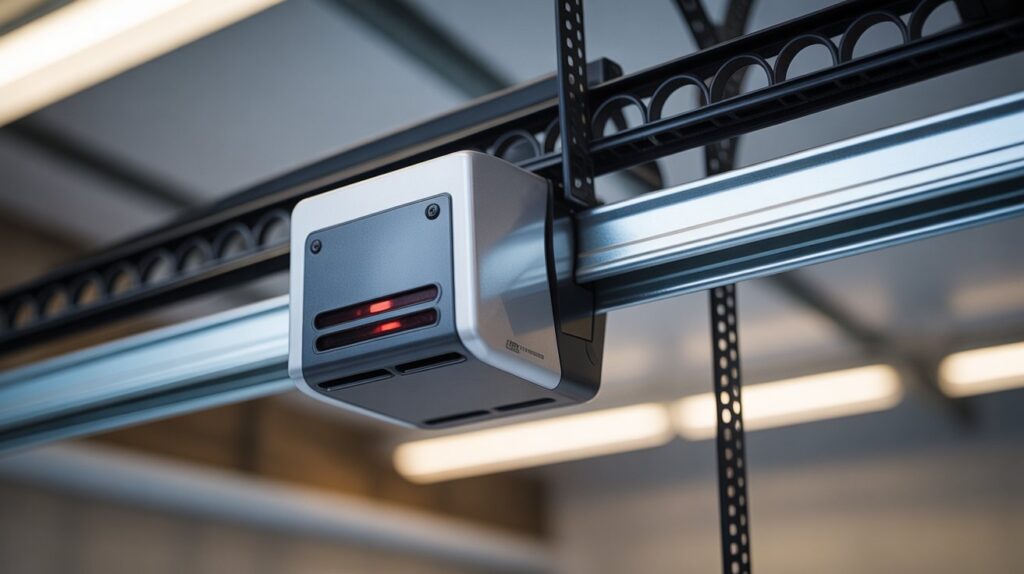
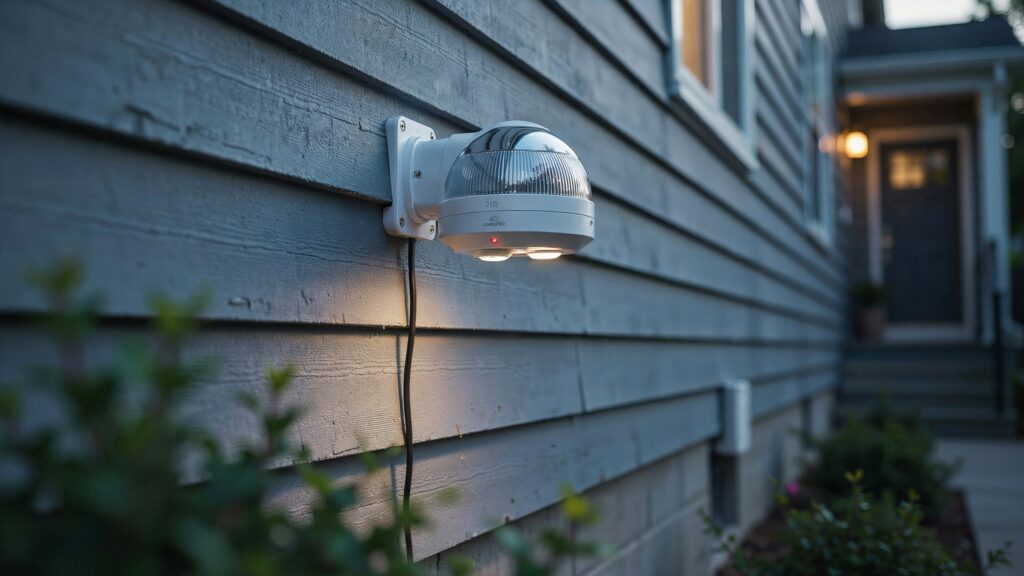
A PIR motion sensor light is a lighting fixture that turns on automatically the moment it detects movement nearby. The term “PIR” stands for Passive Infrared, which is the exact technology that makes this instant response possible. Instead of relying on switches or timers, the sensor watches for changes in infrared energy, the same heat signature that every person, pet, or vehicle naturally gives off.
Here’s the simple version: when a warm body moves across the sensor’s field of view, it disrupts the steady infrared pattern the sensor is used to reading. That disruption is enough to trigger the light instantly, without you touching anything. Once movement stops for a set period, the light shuts off on its own, so nothing runs longer than it needs to.
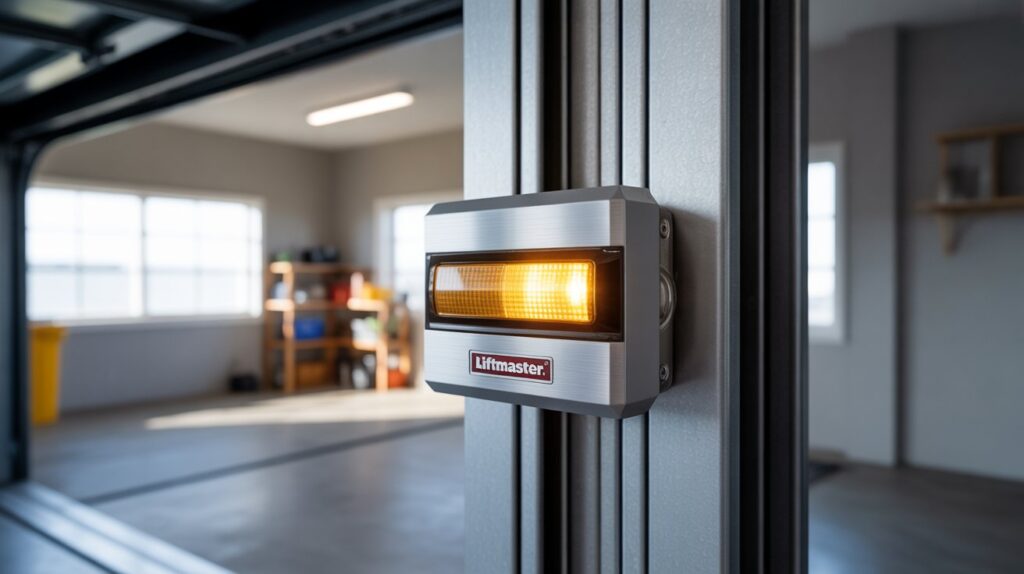
I’ve tested several of these lights around entryways and hallways, and what stands out is how effortless they feel in daily use. You stop thinking about switches altogether. Walk into a dark garage with your hands full, and the light is already on before you even reach for anything. Step onto a porch at night, and it responds before you’ve fully registered it’s dark outside.
This is why PIR motion sensor lights have become a go-to choice for homeowners across the USA who want practical security lighting that doesn’t demand extra effort. They’re not just about convenience, either. That instant illumination plays a real role in home safety, helping you avoid trips, spot unexpected activity outside, and move through your home with more confidence after dark.
How Does a PIR Sensor Actually Detect Motion?
At its core, a PIR motion sensor light works by constantly scanning the environment for infrared energy, then reacting the instant that pattern changes. It sounds technical, but the logic behind it is refreshingly simple once you break it down.
The Role of Infrared Heat
Every living being gives off heat in the form of infrared radiation, whether it’s a person walking down a hallway or a car pulling into a driveway. A PIR sensor is built to constantly monitor this infrared energy across its detection zone.
When everything stays still, the infrared levels the sensor reads remain steady and predictable. The moment a warm object, like a person, moves through that zone, it shifts the infrared pattern the sensor was tracking. That sudden shift is what triggers the light to switch on.
A few things worth knowing about how this plays out in real homes:
- Detection typically works within a range of 15 to 30 feet, depending on the model and placement
- The sensor reacts fastest to lateral movement, someone walking across its view, rather than moving straight toward it
- Placement height and angle directly affect how reliably it catches motion, which is why manufacturers usually recommend mounting between 6 and 10 feet high
I’ve noticed this firsthand while testing units on a covered porch: the light responded almost instantly to someone approaching from the side, but took a beat longer when someone walked straight up to the door. That’s simply the infrared pattern shifting more gradually in a head-on approach.
Why It’s Called “Passive”
The word “passive” isn’t just technical jargon, it actually describes something important about how the sensor operates. Unlike sensors that emit signals and wait for them to bounce back, a PIR sensor doesn’t send out any energy of its own. It simply reads the infrared radiation that’s already present in its surroundings.
This passive design is part of why these lights are so energy-efficient and reliable over time. There’s no constant transmission draining power, and no signal interference to worry about. The sensor is essentially just watching and waiting, using natural heat signatures to decide when to act.
For homeowners, this translates into a motion sensor light that runs quietly in the background for years, doing its job without demanding attention or maintenance.
Where PIR Motion Sensor Lights Are Commonly Used
A PIR motion sensor light earns its place in almost every part of a home, indoors and outdoors alike. Its ability to respond instantly to movement makes it useful anywhere dark spaces meet daily foot traffic.
Indoors, you’ll typically find these lights in:
- Hallways and staircases, where hands-free lighting prevents nighttime trips and falls
- Closets and pantries, lighting up the moment you reach for something
- Garages and basements, especially when carrying groceries or tools
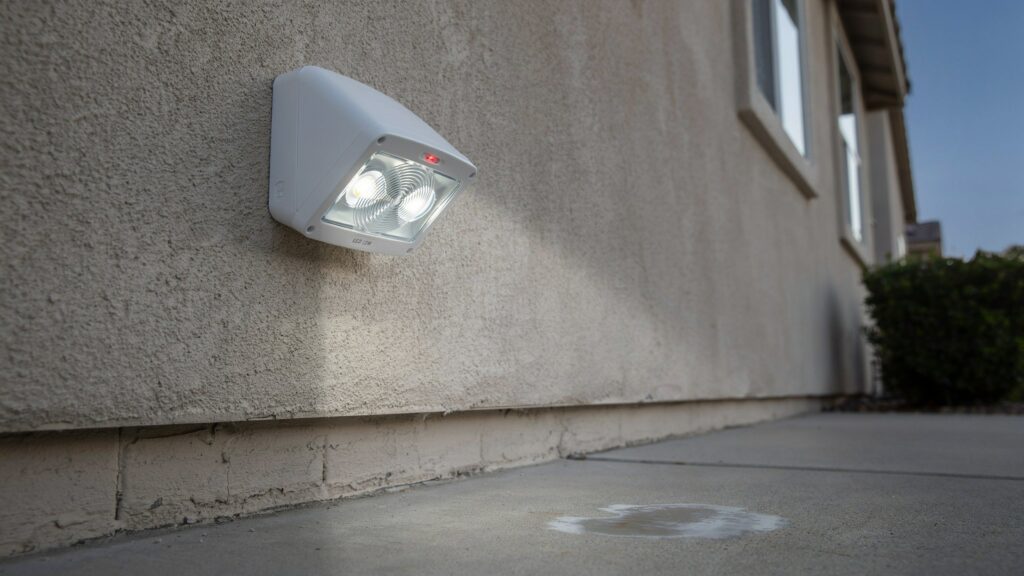
Outdoors, PIR motion sensor lights are a staple for:
- Front porches and entryways, greeting guests and deterring unwanted visitors
- Driveways and walkways, guiding safe movement after dark
- Backyards and side gates, covering blind spots around the property
I’ve seen this play out in real homes across the USA time and again: a motion sensor light near a side door does more to ease a homeowner’s mind than any amount of extra wiring ever could. It’s not about flooding every corner with light, it’s about having reliable illumination exactly where and when it’s needed.
Key Benefits of Choosing a PIR Motion Sensor Light
The real appeal of a PIR motion sensor light comes down to three things every homeowner cares about: safety, savings, and simplicity. Together, they make a strong case for why this small upgrade delivers outsized value.
- Better safety: Instant lighting means fewer stumbles on dark stairs and better visibility around entry points, where most unwanted activity tends to happen
- Lower energy bills: Since the light only activates when motion is detected, it avoids the wasted electricity of lights left running all night
- Everyday convenience: No switches to fumble for, especially useful when your hands are full or you’re moving through the house half-asleep
What makes this combination stand out is how naturally these benefits work together. You’re not choosing between saving money and staying safe, a PIR motion sensor light gives you both at once. I’ve found that homeowners who switch to these lights rarely think about them again after installation; they simply become part of how the home functions, quietly working in the background every night.
For families, older adults, or anyone managing a busy household, that kind of dependable, low-maintenance protection carries real peace of mind.
PIR vs. Other Motion Sensor Types (Microwave, Dual-Tech)
Not every motion sensor works the same way, and understanding the differences helps you choose the right one for your home. A PIR motion sensor light relies on infrared heat, but microwave and dual-tech sensors take entirely different approaches.
- PIR sensors detect body heat and work best for direct line-of-sight areas like hallways, porches, and entryways. They’re energy-efficient and rarely trigger falsely, since they respond specifically to heat signatures rather than general movement
- Microwave sensors send out radio waves that bounce back when disrupted by motion, allowing them to detect movement through thin walls or glass. They cover a wider area but tend to be more sensitive, sometimes picking up motion you didn’t expect
- Dual-tech sensors merge both technologies, needing PIR and microwave signals to confirm motion at the same time. This dramatically cuts down false alarms, though the added precision comes with a bigger price tag.
For most homes, a PIR motion sensor light strikes the right balance between reliability and affordability. I’ve found that unless you’re dealing with a large commercial space or need detection through walls, PIR remains the practical choice. It does the job without overcomplicating things or driving up your setup costs.
Choosing between these options really comes down to your space and how much sensitivity you actually need, not which one sounds more advanced on paper.
Common Problems and False Triggers — And How to Avoid Them
Even the most reliable PIR motion sensor light can act up occasionally, and knowing why helps you fix it fast instead of assuming the device is faulty.
- Pets and small animals: A dog or cat walking through the detection zone can trigger the light unnecessarily. Adjusting the sensor’s height or sensitivity usually solves this
- Heat sources nearby: Vents, dryers, or direct sunlight can confuse the sensor into reading a false heat signature. Keeping the sensor away from these sources prevents random activations
- Wind-blown objects: Trees, plants, or hanging decorations swaying in the wind can occasionally trip the sensor, especially in exposed outdoor spots
- Poor placement or angle: Mounting the light too low or aiming it at a busy street can cause frequent, unwanted triggers
I’ve run into most of these issues myself while testing outdoor units, and the fix is almost always the same: reposition the sensor, adjust the sensitivity dial, or angle it slightly away from the problem area. A five-minute adjustment usually solves what feels like a frustrating, ongoing issue.
The key takeaway is that false triggers aren’t a sign of a bad product, they’re almost always a placement problem. Once you understand what the sensor is reacting to, correcting it becomes straightforward.
Tips for Installing a PIR Motion Sensor Light the Right Way
Getting the most out of a PIR motion sensor light isn’t complicated, but a few small details make a big difference between reliable performance and constant false triggers.
Choosing the Right Placement
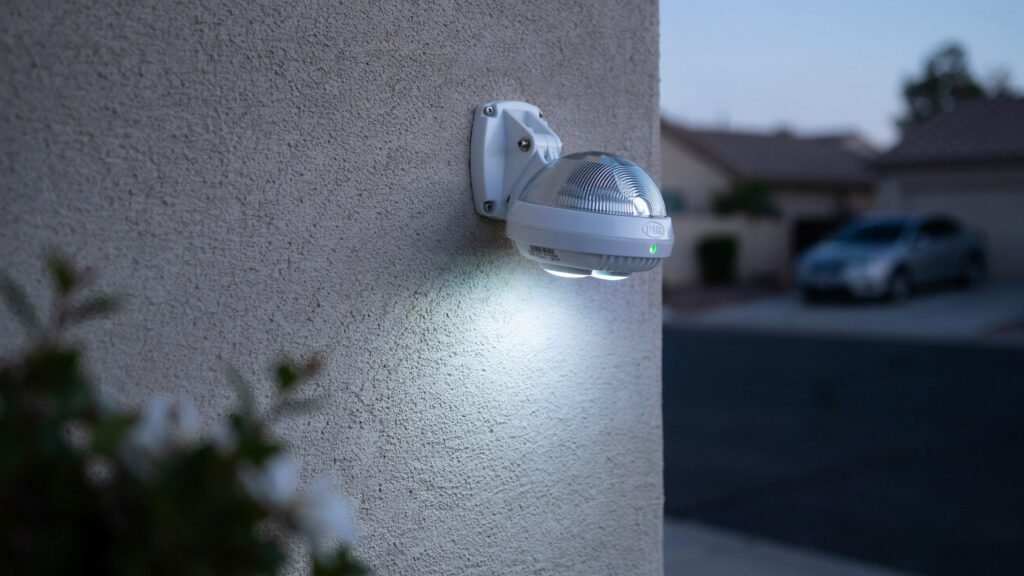
Install the light where movement naturally happens, entryways, driveways, or walkways rather than open yards with little foot traffic. Avoid pointing it directly at busy streets or sidewalks, since passing cars and pedestrians can cause it to activate more often than you’d like.
Getting the Height Right
Most PIR motion sensor lights perform best when mounted between 6 and 10 feet off the ground. This height range captures human movement accurately while reducing false triggers from small animals passing underneath.
Adjusting the Angle
Angle the sensor slightly downward toward the area you want covered, rather than straight ahead. A downward tilt helps the sensor focus on the ground-level activity that matters most, like someone approaching your door, instead of picking up distant motion it doesn’t need to detect.
A few additional installation habits worth keeping in mind:
- Keep the sensor away from heat vents, dryers, or direct afternoon sunlight
- Test the sensitivity setting after installation and adjust gradually rather than guessing
- Recheck placement seasonally, since foliage growth or new outdoor furniture can affect detection
I’ve found that most installation frustrations disappear once height and angle are dialed in correctly. It really is a five-minute adjustment that separates a smoothly working light from one that triggers at all the wrong moments.
Is a PIR Motion Sensor Light Right for Your Home?
If you’ve ever wished for lighting that just works without thinking about switches, a PIR motion sensor light is likely the answer. It fits naturally into homes where safety, energy efficiency, and everyday convenience all matter at once.
This kind of lighting makes the most sense if you:
- Have dark entryways, hallways, or outdoor spaces that see regular foot traffic
- Want to lower energy costs without sacrificing nighttime visibility
- Prefer a low-maintenance solution that doesn’t require daily attention
For most homeowners across the USA, a PIR motion sensor light checks every box that matters, reliable detection, real energy savings, and the kind of quiet dependability you stop noticing because it simply works. Whether it’s guiding you safely to your front door or lighting up a garage the second you step inside, it earns its place as one of the smartest, simplest upgrades you can make to your home.
Final Thoughts
A PIR motion sensor light is proof that the smartest upgrades to your home are often the simplest ones. It doesn’t demand attention, doesn’t complicate your routine, it just quietly does its job every single night, lighting your way the moment you need it most.
Think about the last time you fumbled for a switch in the dark, or worried about a shadowy corner near your front door. That small moment of unease is exactly what this technology was built to erase.
So take a moment to think — where in your own home could a little automatic light make the difference between hesitation and confidence? Sometimes, safety and peace of mind start with something this small.
FAQs
What is PIR motion sensor light?
A PIR motion sensor light is a fixture that turns on automatically by detecting infrared heat from moving people or animals.
What is a PIR motion sensor?
A PIR sensor is a passive infrared device that detects motion by sensing changes in heat energy within its range.
What’s the difference between PIR and motion sensor?
PIR is a specific type of motion sensor that detects body heat, while “motion sensor” is a broader term covering microwave and dual-tech options too.
What are the disadvantages of PIR sensors?
PIR sensors can trigger false alarms from pets, wind, or nearby heat sources, and they require a clear line of sight to work accurately.
What is the most common problem with PIR sensors?
The most common issue is false triggering caused by small animals, direct sunlight, or heat vents near the sensor.
What is the disadvantage of outdoor motion sensor lights?
Outdoor motion sensor lights can activate unnecessarily due to wind-blown branches, passing traffic, or extreme weather conditions.
What is the best sensor light for outside?
A PIR motion sensor light with adjustable sensitivity and a wide detection range works best for most outdoor spaces.
Do motion lights raise the electric bill?
No, motion sensor lights typically lower electric bills since they only run when movement is detected.
How many years do motion sensor lights last?
Most quality motion sensor lights last between 5 to 10 years with proper installation and care.