Introduction
Have you ever installed a security camera just to feel safer at home… but later wondered if it might be crossing a legal line? You’re not alone. Many homeowners in Texas do the same, without fully understanding the rules behind it.
The truth is, Home Security Camera Laws in Texas are not just about technology—they’re about privacy, boundaries, and responsible use. One wrong angle or an unaware audio recording can turn a simple safety tool into a legal concern.
That’s why understanding these laws matters more than ever today. With more families using security cameras for protection, knowing what you can and cannot record helps you stay safe, confident, and stress-free.
In this guide, we’ll break everything down in simple terms so you can protect your home the right way—without confusion or risk.
Table of Contents
Why Understanding Home Security Camera Laws in Texas Matters More Than Ever
Imagine coming home after a long day, feeling safe because you installed a security camera at your front door. It records every movement, giving you peace of mind. But at the same time, you may not realize that certain recordings could fall under the Home Security Camera Laws in Texas if they capture areas where others expect privacy. This is where most homeowners unintentionally cross the line.
Across Texas, more people are installing security cameras because home safety concerns are rising. From package theft to trespassing, cameras feel like a simple and smart solution. They are affordable, easy to set up, and give real-time protection—this is why the demand keeps growing every year.
But here’s the important part: security doesn’t mean unlimited surveillance. Understanding the Home Security Camera Laws in Texas helps you protect your home while respecting your neighbors’ privacy. Knowing where you can legally record—and where you cannot—keeps you safe from complaints, disputes, or even legal issues. In simple terms, awareness is just as important as the camera itself.
Are Home Security Cameras Legal in Texas?
Yes, in most cases, security cameras are legal in Texas for homeowners. But the key point is simple—how and where you use them matters under the Home Security Camera Laws in Texas. The law allows you to protect your property, but it does not give permission to invade someone else’s privacy.
Homeowners in Texas can legally install cameras, but they must stay within reasonable boundaries. The goal is security, not spying.
- You can record your own property for safety and protection
- You can monitor entrances like doors, driveways, and garages
- You cannot place cameras where there is a clear expectation of privacy
- You must avoid recording inside private spaces of others
The difference between legal security monitoring and unlawful surveillance is intent and placement. If your camera is focused on protecting your home, it is generally fine. But if it captures private areas beyond your property, it can lead to legal issues under privacy rules connected to Home Security Camera Laws in Texas.
Public Areas vs. Private Spaces
The most important rule is understanding “reasonable expectation of privacy.” In simple words, people expect privacy in certain places—and the law protects that.
Under the Home Security Camera Laws in Texas, public-facing areas are usually allowed for recording, but private spaces are restricted.
- Public areas: sidewalks, streets, front yards visible from outside
- Semi-public: driveways, front doors, shared spaces
- Private areas: bathrooms, bedrooms, or inside someone else’s home
- Neighbor’s private yard or windows facing into their home
For example, recording your front porch is usually fine. But pointing a camera directly into a neighbor’s bedroom window crosses a legal line.
The idea is simple: protect your home, but don’t cross into someone else’s private life. That balance is what keeps you safe legally and ethically in Texas.
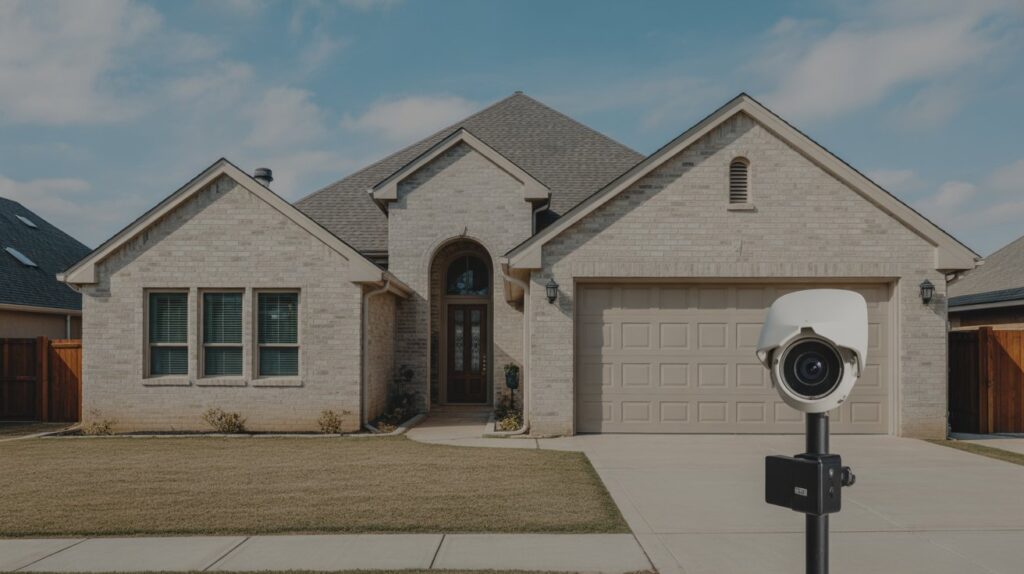
Where You Can and Cannot Place Security Cameras on Your Property
When it comes to Home Security Camera Laws in Texas, placement is everything. You are allowed to protect your home, but where you install your cameras can make the difference between legal security and privacy issues.
Most homeowners safely install cameras in areas that clearly belong to them and are meant for protection.
- Front doors and entry points for visitor monitoring
- Driveways to track vehicles and deliveries
- Backyards for property security
- Garages and side entrances for break-in prevention
These areas are generally acceptable because they focus on your own property and safety.
But problems can start when cameras go beyond your space or capture private zones. Under the Home Security Camera Laws in Texas, this can lead to complaints or legal concerns.
- Pointing cameras directly into a neighbor’s home or windows
- Recording fenced private yards that are not yours
- Installing hidden cameras in shared or sensitive areas
- Excessive zooming into someone else’s private property
Simple mistakes like poor angle or over-monitoring can create serious privacy disputes. Even if your intention is security, the law looks at how the footage affects others.
The safest way is to aim your camera only at your own space. When your focus stays on your property and not someone else’s private area, you protect your home while also staying within Home Security Camera Laws in Texas.
Texas Audio Recording Laws and What Homeowners Should Know
When understanding Home Security Camera Laws in Texas, audio rules are just as important as video. Many homeowners focus only on cameras, but sound recording can create legal risks if not handled correctly.
Texas follows a “one-party consent” rule. This simply means at least one person involved in the conversation must know about the recording. If you are recording in your own home or property, you are usually protected—but secretly recording others without consent can create legal trouble.
Here’s the key difference:
- Video recording is generally allowed on your property
- Audio recording has stricter privacy expectations
- Consent matters more for conversations than visuals
A security camera with a microphone may seem harmless, but it can become a problem if it captures private conversations. For example, a doorbell camera recording conversations of guests or neighbors without awareness could raise legal concerns under Home Security Camera Laws in Texas.
In simple terms: video protects your property, but audio touches privacy laws more directly. That’s why many homeowners either disable audio or use it carefully to avoid unnecessary risk.
Staying aware of these small details keeps your home security setup both safe and legally clean.
Common Home Security Camera Mistakes That Could Get You in Trouble
Even with the best intentions, small mistakes can quickly turn your setup into a legal problem under Home Security Camera Laws in Texas. Most homeowners don’t realize it until a complaint or issue happens.
One of the biggest mistakes is recording areas that don’t belong to you. A camera pointed slightly too far can capture a neighbor’s yard, windows, or private space. Even if it’s accidental, it can still raise privacy concerns.
Another common issue is hidden cameras. While security is the goal, placing undisclosed cameras in sensitive or shared spaces can lead to serious trust and legal problems. Transparency matters more than people think.
Sharing footage online is another risk. A clip meant to show “suspicious activity” can easily turn into a privacy violation if it includes neighbors or visitors without consent.
To stay safe and compliant under Home Security Camera Laws in Texas, keep it simple:
- Only record your own property clearly
- Avoid capturing private areas of others
- Use visible, not hidden, cameras
- Think twice before posting any footage online
- Adjust angles carefully after installation
At the end of the day, smart security is not just about recording—it’s about responsibility. A few careful choices keep your home protected and help you avoid unnecessary legal trouble.
Conclusion
At the end of the day, Home Security Camera Laws in Texas are not about limiting your safety—they are about balancing protection with respect for privacy. A camera can make your home feel safer, but only when it is used the right way.
When you understand where to place cameras, how audio recording works, and what mistakes to avoid, you don’t just protect your property—you also protect yourself from unnecessary legal trouble. It’s a simple mindset shift: smart security is responsible security.
Now take a moment to think — is your current setup truly safe, or could it cross a line without you realizing it?
Because in home security, awareness is not just power… it’s protection.
FAQs
1. Is it illegal to have a camera facing your neighbor’s backyard in Texas?
It can become a legal issue if the camera invades your neighbor’s reasonable expectation of privacy. Focus should stay on your own property.
2. Is it legal to put cameras in bedrooms in Texas?
Yes, but only if it’s your own bedroom or with full consent. Recording someone else’s private bedroom without permission is illegal.
3. Can my husband put cameras in the house without my permission in Texas?
In shared homes, it’s generally allowed for security, but hidden or intrusive recording without consent can create privacy and trust issues.
4. What can I do if my neighbour has a camera pointed at my house?
First try talking to them politely. If it continues, you can report it if it clearly violates privacy or targets private areas.
5. Can CCTV cameras work without internet?
Yes, many CCTV systems record locally on DVR/NVR or memory cards even without internet access.
6. Do CCTV cameras record sound?
Some do, but audio recording depends on the model and may be restricted by local consent laws.
7. How to stop neighbours CCTV?
You cannot legally block their security system, but you can file a complaint if it is aimed at private areas of your property.
8. Can security cameras hear conversations?
Yes, if they have a built-in microphone, but audio use must follow consent and privacy laws in Texas.