Introduction
Have you ever worried that your security camera missed an important moment while you were away? Many homeowners in the USA are now choosing a continuous recording security camera no subscription setup because motion-only recording can leave gaps in footage.
Unlike cameras that require monthly cloud fees, these systems record continuously and store video locally, giving you more control, better privacy, and reliable 24/7 monitoring. Whether it’s protecting deliveries, watching over your property, or improving home security, continuous recording offers peace of mind without ongoing subscription costs.
Table of Contents
Why Continuous Recording Security Cameras Matter Today
Interest in a continuous recording security camera no subscription is growing because homeowners want full-time protection without monthly fees or missing important moments. Unlike motion-only systems, continuous recording captures everything happening around your property, offering better security and more reliable evidence when needed.
Many people in the USA are also looking for ways to avoid ongoing cloud storage costs. A no-subscription system gives users local storage, predictable expenses, and complete access to their footage without extra payments.
Privacy is another major reason these cameras are becoming more popular. Local video storage keeps recordings under the owner’s control instead of relying on third-party cloud servers. For homeowners, renters, and small businesses, this creates a smarter balance between security, affordability, and personal privacy.
What Is a Continuous Recording Security Camera?
- A continuous recording security camera no subscription is a camera that records video 24/7, not just when motion is detected. It captures everything happening within its view, giving users full timelines instead of short clips.
- Unlike motion-based cameras, continuous recording systems do not rely on alerts or triggers. This means no missed moments if motion detection fails, lighting changes, or movement happens outside preset zones.
- Motion-based security cameras only start recording after movement is detected. In real life, this can lead to gaps—such as missing faces, license plates, or events that happen too quickly.
- Continuous recording cameras usually store footage on local storage like SD cards, DVRs, or NVR systems, which allows them to operate without a monthly subscription.
- For beginners, the idea is simple:
- Motion cameras answer “Something happened—here’s a clip.”
- Continuous recording cameras answer “Here’s everything that happened.”
- Motion cameras answer “Something happened—here’s a clip.”
- Many U.S. homeowners prefer continuous recording because it feels more reliable and transparent, especially for driveways, front yards, and overnight monitoring.
- A no-subscription continuous recording security camera gives users full control over their footage, making it easier to review past events without paying ongoing fees or relying on cloud services.
How No-Subscription Security Cameras Actually Work
A continuous recording security camera no subscription works by storing video locally instead of sending it to a paid cloud service. The camera records footage around the clock and saves it directly to built-in or connected storage. This setup removes monthly fees while still giving users full access to their video history, which is especially appealing to U.S. homeowners who want long-term control without ongoing costs.
Key storage methods used in no-subscription cameras:
- Onboard storage (SD cards): Many cameras record directly to an SD card inside the device, automatically overwriting older footage when storage is full.
- Local hard drives: Some systems connect to a base station or recorder with a larger hard drive for extended recording time.
- Network storage options: Footage can be saved within the home network, keeping data private and accessible anytime.
For more advanced setups, no-subscription systems often rely on DVR or NVR recorders. A DVR works with wired cameras, while an NVR supports IP-based cameras over a network. These systems continuously record and organize footage by date and time, making it easy to review past events without paying for cloud access.
Because everything is stored locally, users are not dependent on internet outages or subscription renewals to access recordings. This is one of the biggest reasons a no-subscription continuous recording security camera feels more reliable and transparent. The footage belongs to the user, stays under their control, and remains available as long as the storage system is maintained.
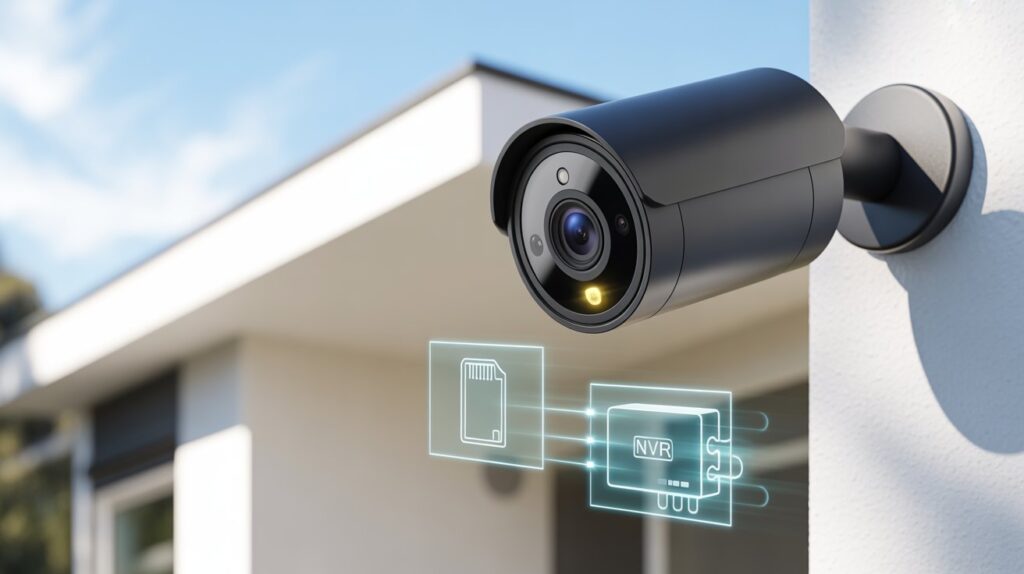
Continuous Recording vs Motion-Only Cameras: Key Differences
- A continuous recording security camera no subscription records video nonstop, capturing full timelines without gaps, while motion-only cameras record only when movement is detected.
- Continuous recording offers higher reliability in real-world situations, especially for driveways, streets, and front yards where activity may happen quickly or outside motion zones.
- Motion-only cameras can miss important details, such as the moments before an incident or fast-moving events, which often leads to incomplete footage.
- Continuous recording cameras provide better performance at night and in changing light conditions, where motion sensors may struggle or trigger late.
- Motion-based systems depend heavily on motion sensitivity settings, which can cause false alerts or missed recordings if not perfectly adjusted.
- A no-subscription continuous recording security camera usually stores footage locally, giving users full access without monthly fees, while motion-only cameras often rely on paid cloud storage.
- For U.S. homeowners who value transparency and peace of mind, continuous recording feels more dependable because it answers one simple question clearly: “What actually happened?”
Benefits of Using a Continuous Recording Security Camera Without a Subscription
Long-Term Cost Savings Without Monthly Pressure
A continuous recording security camera no subscription helps users avoid ongoing monthly fees that quietly add up over time. Instead of paying year after year just to access footage, homeowners make a one-time investment and keep full functionality. For many U.S. households, this approach feels more practical and financially predictable, especially when managing multiple home expenses.
Greater Privacy and Full Control Over Your Footage
One of the biggest advantages of a no-subscription system is data ownership. Footage is stored locally, not sent to third-party cloud servers. This means users control who sees their recordings and how long they are kept. For privacy-conscious Americans, especially families and remote property owners, this level of control builds trust and peace of mind.
Uninterrupted Recording Without Missed Moments
Continuous recording ensures nothing is skipped. Unlike motion-only systems, these cameras capture everything in real time, making it easier to review events exactly as they happened. A no-subscription continuous recording security camera is especially valuable for driveways, entrances, and overnight monitoring, where missing even a few seconds can matter.
Reliable Access Even When Internet Goes Down
Because footage is saved locally, users can still access recordings during internet outages. This reliability makes continuous recording cameras feel more dependable in real-world conditions, where power and connectivity are not always perfect. For users who want consistency without reliance on cloud services, this benefit stands out clearly.
Limitations You Should Know Before Choosing a No-Subscription Camera
While a continuous recording security camera no subscription offers strong advantages, it is important to understand its limitations before making a decision. These systems are designed for users who value control and long-term savings, but they also require a bit more responsibility compared to cloud-based options.
Common limitations to consider:
- Storage limits: Local storage can fill up over time, especially with 24/7 recording. Older footage is usually overwritten unless it is backed up manually.
- Maintenance responsibility: Users must occasionally check storage health, replace SD cards, or manage hard drives to keep recordings reliable.
- Initial setup complexity: Some no-subscription systems, especially DVR or NVR-based setups, may take longer to install and configure.
- No automatic cloud backup: Without a subscription, footage is not stored off-site unless the user sets up their own backup solution.
These trade-offs do not make no-subscription cameras unreliable, but they do shift control to the user. For many U.S. homeowners, this balance feels reasonable. A no-subscription continuous recording security camera works best when users understand both its strengths and responsibilities, allowing them to choose a system that fits their comfort level and security needs.
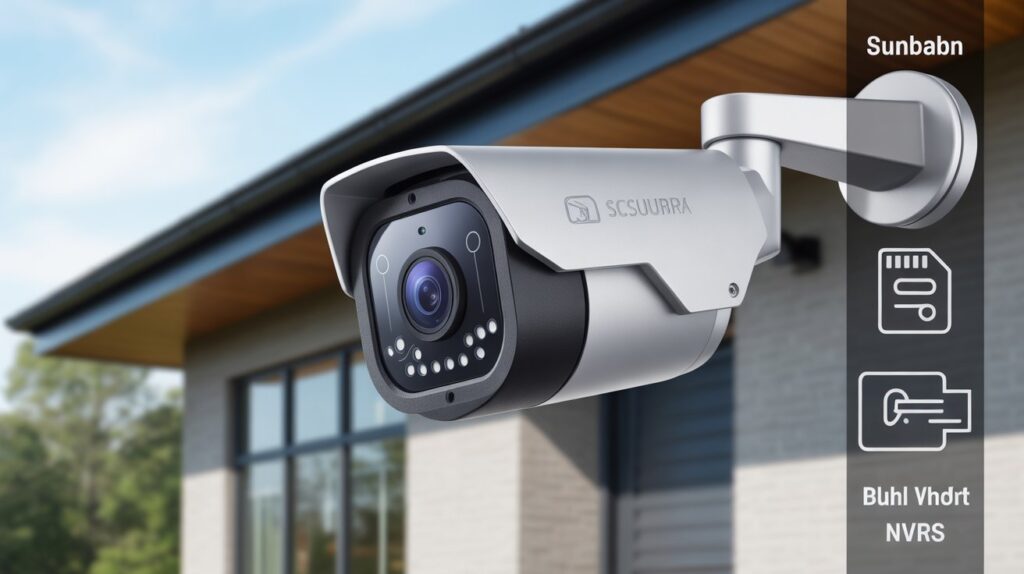
Local Storage Options Explained: SD Cards, NVRs, and Hard Drives
A continuous recording security camera no subscription system depends on local storage instead of paid cloud services. This allows homeowners to keep full control over their video footage while avoiding monthly subscription costs. Choosing the right storage option is important because it affects recording time, video access, and overall system performance.
SD Cards
SD cards are one of the simplest storage options for security cameras. They fit directly inside the camera and are commonly used for basic home setups.
- Easy to install and replace
- Good for single-camera use
- Stores footage directly on the device
- Older recordings are automatically overwritten when storage becomes full
This option works well for homeowners who want a simple and affordable setup.
NVR (Network Video Recorder)
An NVR system is designed for IP cameras connected through a network. It stores recordings in one central location, making it easier to manage multiple cameras around the property.
- Supports several cameras at once
- Handles high-quality video recording
- Allows organized playback and monitoring
- Ideal for full-home security coverage
Many U.S. homeowners prefer NVR systems because they provide better control and longer recording storage.
Hard Drives in DVR/NVR Systems
Hard drives offer larger storage capacity for continuous recording. They are commonly used in advanced home security systems and small business setups.
- Stores days or even weeks of footage
- Reliable for nonstop recording
- Installed securely inside DVR or NVR units
- Works without depending on cloud storage
This is a strong choice for users who need long-term video storage and uninterrupted monitoring.
The best storage option depends on how many cameras you use, how long you want to save recordings, and your overall security needs. A properly configured continuous recording security camera no subscription system can provide reliable protection, better privacy, and full access to your footage without ongoing monthly fees.
Privacy and Data Control: Why Subscription-Free Cameras Appeal to U.S. Users
Key Reasons U.S. Homeowners Prefer No-Subscription Systems
- Full Data Ownership:
- Footage is stored locally on SD cards, DVRs, or NVRs.
- Users retain complete control over who can access videos.
- Eliminates reliance on third-party cloud providers.
- Footage is stored locally on SD cards, DVRs, or NVRs.
- Reduced Cloud Exposure:
- No-subscription cameras avoid sending sensitive video over the internet.
- Minimizes the risk of hacks or data leaks.
- Offers peace of mind for families, renters, and small businesses.
- No-subscription cameras avoid sending sensitive video over the internet.
- Compliance With Privacy Expectations:
- Aligns with U.S. concerns around surveillance and personal data.
- Allows homeowners to control retention and deletion of recordings.
- Supports transparency in monitoring personal and public areas.
- Aligns with U.S. concerns around surveillance and personal data.
For many Americans, a continuous recording security camera no subscription is not just about cost—it’s about trust and privacy. By keeping footage under local control, users feel secure knowing that their data stays in their hands, free from third-party interference. This combination of uninterrupted monitoring and personal control makes subscription-free cameras especially appealing to privacy-conscious households across the U.S.
Who Should Use a Continuous Recording Security Camera With No Monthly Fees?
A continuous recording security camera no subscription system is a smart option for people who want reliable security without paying monthly cloud fees. These cameras provide nonstop monitoring, local video storage, and greater control over personal footage, making them useful for different types of users across the USA.
Homeowners
Many homeowners prefer continuous recording because it captures everything happening around the property, not just motion-triggered moments.
- Helps monitor driveways, porches, and backyards
- Provides 24/7 home surveillance
- Avoids ongoing subscription expenses
- Offers extra peace of mind for families
Renters
Renters often need flexible security options that do not require major installation changes or long-term contracts.
- Easy to set up in apartments or rental homes
- No expensive monthly monitoring plans
- Works well for temporary living situations
- Helps improve personal safety without permanent modifications
Small Business Owners
For small businesses, nonstop recording can help improve both security and daily monitoring.
- Useful for stores, offices, and storage areas
- Helps monitor employee and customer activity
- Keeps footage stored locally for easy access
- Reduces long-term security system costs
Rural or Remote Property Owners
Properties located in remote areas may experience unstable internet connections, making local recording especially important.
- Continues recording even during internet outages
- Stores footage safely on local devices
- Ideal for farms, cabins, and vacation homes
- Provides reliable monitoring in isolated locations
Privacy-Conscious Users
Some users simply want more control over their personal data and recordings.
- Keeps footage away from cloud-based servers
- Gives full ownership of recorded videos
- Reduces privacy concerns linked to online storage
- Allows secure local access anytime
A continuous recording security camera no subscription is ideal for anyone looking for dependable monitoring, stronger privacy, and long-term savings. Whether for a home, rental property, business, or remote location, these systems offer a practical and cost-effective security solution without recurring monthly fees.
Conclusion
A continuous recording security camera no subscription system offers more than simple video monitoring—it provides confidence, control, and reliable protection without ongoing monthly costs. Whether you are securing a home, apartment, office, or remote property, continuous recording helps ensure important moments are always captured and easily accessible when needed.
For many people across the USA, the biggest advantage is peace of mind. There are no recurring cloud fees, no dependence on constant internet access, and no worrying about missing critical footage. Everything stays under your control with dependable local storage and nonstop monitoring.At the end of the day, real security is about feeling safe and prepared wherever you are. A subscription-free continuous recording system gives you the freedom to protect what matters most while keeping your privacy, footage, and long-term costs in your own hands.
FAQs
Do any security cameras record without a subscription?
Yes, many continuous recording security cameras store footage locally without requiring a subscription.
What is the best security camera without a monthly fee?
The best options are cameras with local storage like SD cards, NVRs, or DVR systems for uninterrupted recording.
What camera can record longer than 30 minutes?
Most continuous recording cameras with SD cards or NVR/DVR setups can record for hours or even days, depending on storage size.
What cameras record for free?
Cameras that don’t require a subscription save footage locally, letting you record continuously without paying monthly cloud fees.
Is there a security camera that records continuously?
Yes, continuous recording security cameras capture video 24/7, ensuring no moments are missed.
What cameras can record without Wi-Fi?
Cameras with SD card storage, DVRs, or NVRs can record without internet or Wi-Fi connections.
Do security cameras still record without Wi-Fi?
Yes, local storage cameras continue recording even if Wi-Fi is disconnected.
How do security cameras without subscriptions work?
They save footage locally on SD cards, NVRs, or DVRs, giving users full control without monthly fees.
What are the disadvantages of wireless CCTV cameras?
Wireless cameras may face battery limits, signal interference, and sometimes shorter storage unless paired with local recording.