Introduction
Have you ever wondered if your home would give you enough warning during a fire? Fire safety is often overlooked—until it’s too late. That’s why knowing where to put smoke detectors in your home is one of the most important steps to protect your family and property.
Smoke alarms alert you early, giving you time to escape before smoke and flames spread. But even the best detector fails if placed wrong. Proper placement in bedrooms, hallways, kitchens, and living areas greatly improves fire safety and response time.
In this guide, you’ll learn the best smoke detector locations, common placement mistakes, and simple tips for a safer home.
Table of Contents
Why Smoke Detector Placement Matters More Than You Think
Most people install smoke alarms and assume the job is done. But where to put smoke detectors in your home is just as important as having them in the first place. A poorly placed detector can delay alerts, fail to sense smoke early, or trigger false alarms that people start ignoring. In real emergencies, those few lost seconds can mean the difference between escaping safely and being trapped by fast-moving smoke.
House fires don’t always start where you’d expect. An overloaded outlet in a living room, a space heater in a bedroom, or faulty wiring behind a wall can turn deadly while everyone is asleep. Smoke spreads faster than flames and often reaches sleeping areas before anyone smells or sees it. That’s why correct smoke detector placement is a critical part of your overall home security setup, not just a technical detail.
For U.S. families—especially homes with kids, seniors, or pets—early warning is everything. When alarms are installed in the right locations, they give you time to wake up, react, and escape. When they’re in the wrong spots, alerts may sound too late—or not at all. It’s also worth pairing smoke alarms with a reliable carbon monoxide detector for complete protection against both fire and gas hazards.
This isn’t about overdoing safety or following rules blindly—it’s about making smart, proven choices for real-life situations. Proper placement aligns with fire safety guidance used across the United States and remains one of the simplest steps to make your home genuinely safer every day.
How Smoke Detectors Work and Why Location Is Critical
- Smoke detectors sense smoke particles in the air and trigger a loud alarm before flames spread. This early warning system only works properly when detectors are placed where smoke naturally travels—which is why where to put smoke detectors in your home directly affects how quickly you’re alerted.
- In most U.S. homes, smoke rises and moves through hallways, stairwells, and open spaces long before fire becomes visible. If a detector is installed too low, too far from sleeping areas, or blocked by airflow, it may react late—reducing the time your family has to wake up and escape safely.
- Different fire scenarios produce different types of smoke, but all fires create dangerous conditions fast. Correct smoke detector placement ensures alarms sense smoke early, not after it has already filled key living areas—especially critical at night, when people rely entirely on alarms for warning.
- Proper location also helps prevent false alarms, which can make people start ignoring alerts over time. Pairing smoke alarms with a reliable home security camera system adds an extra layer of monitoring, so you get reliable warnings when it truly matters—building trust in your overall safety system.
Where to Put Smoke Detectors in Your Home for Maximum Safety
Knowing where to put smoke detectors in your home helps ensure alarms sound early, especially during the most dangerous moments—when people are asleep or moving through shared spaces. Proper placement follows how smoke travels and how families actually live, making alerts faster and more reliable in real emergencies.
Bedrooms and Sleeping Areas
Bedrooms are the most critical locations because fires often happen at night. Smoke can fill a room before anyone wakes up, so alarms must be close enough to alert sleepers instantly. Installing detectors in and near sleeping areas gives families precious seconds to react.
- Place a smoke detector inside every bedroom
- Install one outside each sleeping area, such as in a nearby hallway
- Ensure alarms are loud enough to wake children and heavy sleepers
Hallways and Common Living Spaces
Smoke usually spreads through hallways and open areas before reaching bedrooms. That’s why these spaces act as early warning zones. Correct placement here helps detect fires that start in living rooms, kitchens, or home offices.
- Install detectors in main hallways that connect bedrooms
- Place alarms in living rooms and shared family spaces
- Keep detectors away from vents or fans that can disrupt smoke flow
Every Level of the Home
Fires don’t limit themselves to one floor. Whether it’s a basement electrical issue or an upstairs heater, each level needs protection. This is a key rule when deciding where to put smoke detectors in your home for full coverage.
- Place a smoke alarm on each floor to cover all living spaces effectively.
- Include basements and finished attics
- Place alarms near stairways to catch rising smoke early
When smoke detectors are placed with purpose—not guesswork—they work as a complete safety system. This thoughtful setup aligns with U.S. fire safety guidance and gives your home the best chance of early warning when it matters most.
Best Places to Install Smoke Detectors Inside Bedrooms and Outside Sleeping
When deciding where to put smoke detectors in your home, sleeping areas should always be a top priority. Fires can spread quickly at night, and early warning gives families valuable time to escape safely.
Inside Bedrooms
Smoke detectors should be placed inside every bedroom for better nighttime protection.
- Install alarms on the ceiling or high on the wall
- Keep detectors clear of vents or strong airflow
- Especially important for children’s rooms and guest bedrooms
Outside Sleeping Areas
Hallways near bedrooms also need smoke detectors to catch smoke spreading from other parts of the house.
- Place alarms in hallway paths outside bedrooms
- Helps detect fires before smoke reaches sleeping areas
- Creates an extra layer of protection alongside your existing home security system
Proper placement around sleeping spaces improves safety, reduces risk, and helps ensure your family receives early warning during a fire emergency.
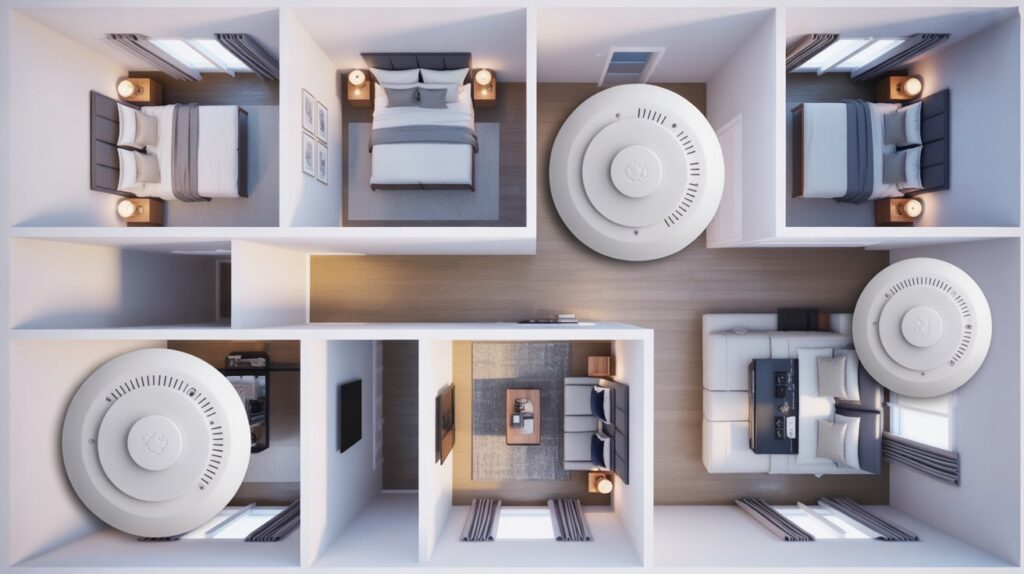
Where NOT to Install Smoke Detectors (Common Placement Mistakes)
Knowing where to put smoke detectors in your home is important, but understanding where not to place them matters just as much. Incorrect placement can cause false alarms or reduce a detector’s ability to respond quickly during a real fire emergency.
Avoid Installing Smoke Detectors in These Areas
- Inside Kitchens
Cooking smoke and steam can trigger frequent false alarms. Install detectors near the kitchen, not directly above stoves or ovens. - Bathrooms & Humid Areas
Steam from showers can affect smoke detector performance and cause unnecessary alerts. Place alarms outside bathroom doors instead. - Near Vents, Fans, or Windows
Strong airflow can prevent smoke from reaching the detector properly, delaying warnings during a fire. - Inside Garages
Vehicle exhaust and temperature changes may trigger false alarms. Install detectors near the entrance to the home rather than inside the garage.
According to the National Fire Protection Association (NFPA), smoke alarms should be installed away from these problem zones to reduce nuisance alarms while still meeting official U.S. fire safety code requirements.
Why Proper Placement Matters
Correct smoke detector placement improves reliability, reduces false alarms, and helps protect your family more effectively. Following recommended guidelines ensures your home safety system works properly when every second counts.
Smoke Detector Placement Rules Recommended by U.S. Fire Safety Experts
- Install smoke detectors on every level of the home, including basements and finished attics, to ensure full coverage in case smoke rises or spreads quickly.
- Place at least one smoke detector inside every bedroom and one outside each sleeping area so alarms can wake people in time, especially during nighttime fires.
- Mount smoke detectors on the ceiling or high on the wall, following manufacturer instructions, because smoke rises and collects near the top of a room first.
- Keep smoke detectors at least 10 feet away from kitchens to reduce false alarms while still maintaining early fire detection.
- Avoid installing alarms near air vents, ceiling fans, or windows, as airflow can push smoke away and delay the alert.
- Test smoke detectors once a month to confirm they are working properly and can alert your household without delay.
- Replace smoke detector batteries at least once a year, or sooner if the low-battery alert sounds.
- Replace the entire smoke detector unit every 10 years, as sensors lose accuracy over time.
- Following these expert-backed rules helps ensure where to put smoke detectors in your home meets U.S. safety standards and provides reliable, life-saving protection for your family.
How Often to Test and Maintain Smoke Detectors After Installation
Proper maintenance is just as important as correct placement when it comes to where to put smoke detectors in your home. A well-placed detector is only effective if it works reliably. Regular testing and upkeep ensure your alarms are ready to alert your family in real emergencies, giving you peace of mind and building trust in your home safety system.
- Test each smoke detector at least once a month by pressing the test button to ensure the alarm sounds.
- Replace batteries at least once a year, or immediately if the low-battery warning chirps.
- Clean detectors regularly to remove dust, cobwebs, or debris that could block smoke from reaching the sensor.
- Replace the entire smoke detector every 10 years, as sensor sensitivity can degrade over time.
- Keep a record of testing and maintenance to ensure your home safety system stays reliable.
Following these steps guarantees that your smoke detectors remain fully functional, enhancing the safety of everyone in your household while complying with recommended U.S. fire safety practices.
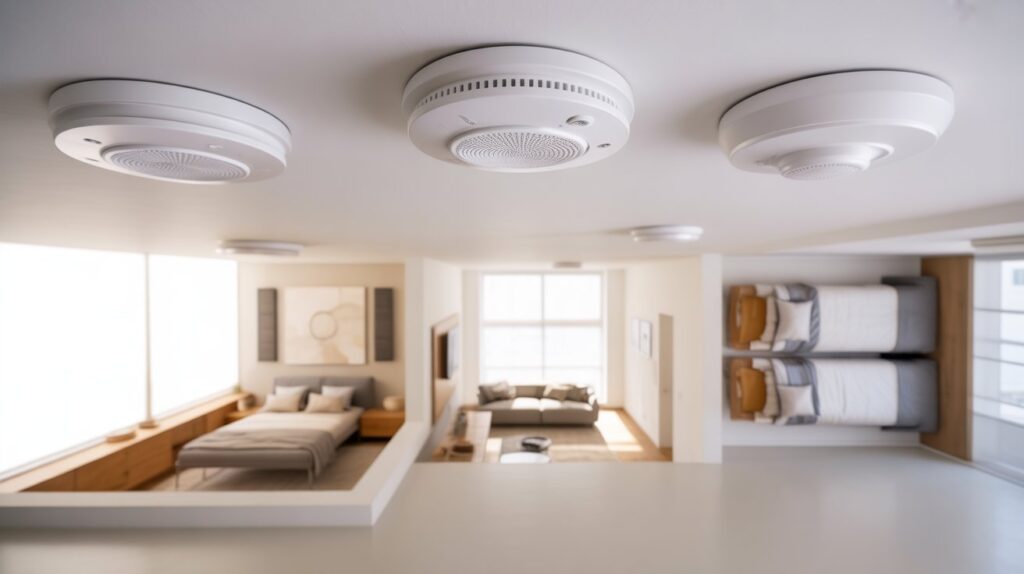
Conclusion
Properly knowing where to put smoke detectors in your home can mean the difference between a close call and a tragedy. Every bedroom, hallway, and level of your home deserves careful attention, ensuring your alarms detect smoke early and give your family precious seconds to act.
Take a moment to reflect: your home’s safety isn’t just about having smoke detectors—it’s about placing them wisely, testing them regularly, and maintaining them with care. Combining smart smoke alarm placement with a solid home security system gives your family complete, round-the-clock protection against both fire and intrusion risks.
A few thoughtful choices today can protect the lives you love tomorrow.
FAQs
1. How many smoke detectors do I need in my house?
At least one on every level, inside each bedroom, and outside every sleeping area for full coverage.
2. Can I install a smoke detector myself?
Yes, most battery-powered smoke detectors are easy to install with basic tools and manufacturer instructions.
3. Do smoke detectors work without electricity?
Yes, battery-operated smoke detectors work during power outages, which is why they’re a reliable backup option.
4. How far should a smoke detector be from a ceiling fan?
Keep it at least 3 feet away from ceiling fans to avoid airflow interference and delayed detection.
5. Are interconnected smoke detectors better than standalone ones?
Yes, interconnected alarms trigger all units simultaneously, giving faster whole-house warning during a fire.
About M Bilal
M Bilal has spent the last few years digging into home security products, smoke detectors, and fire alarm systems — not because it’s his job title, but because he’s genuinely tired of seeing bad advice online. He started writing for CrimTechHub after noticing how many “smoke detector placement” guides were copy-pasted from each other without anyone actually checking U.S. fire code requirements.
He spends most of his research time cross-checking NFPA guidelines, manufacturer installation manuals, and real incident reports to make sure what he writes actually holds up. He’s not a certified fire marshal, but he treats every article like someone’s safety depends on getting it right — because it usually does.
When he’s not writing, he’s probably testing a new smart lock, comparing camera specs, or arguing with someone in the comments about where exactly a smoke detector should go relative to a ceiling fan.
📩 Got a correction, question, or disagreement? Reach out here.