
Introduction
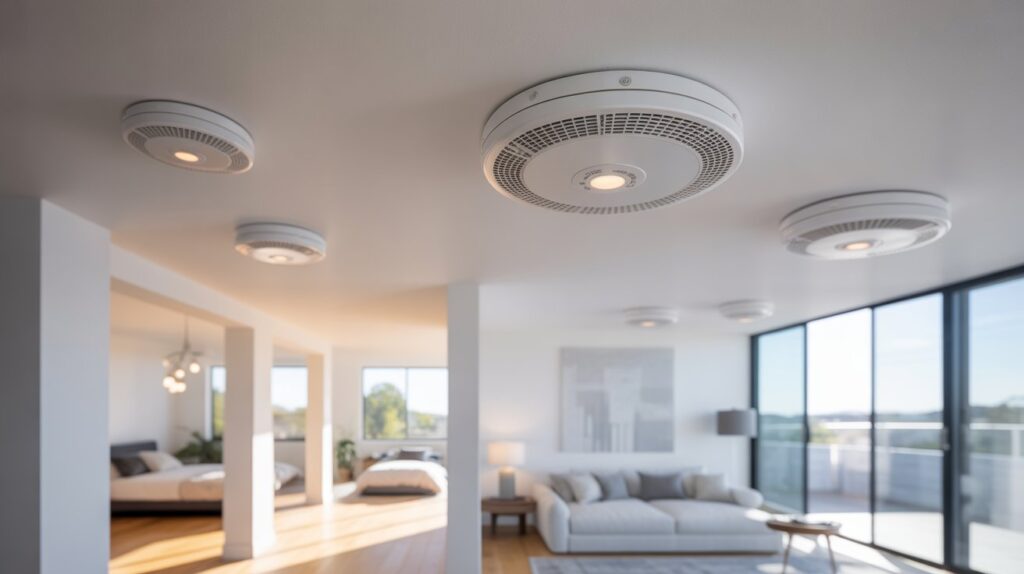
Have you ever wondered if your smoke alarms are truly protecting your family, or if they’re just decorative boxes on the ceiling? Fires can start in an instant, often while everyone is asleep, leaving precious little time to react. That’s why knowing where should you put smoke alarms in your house isn’t just a safety tip — it’s a life-saving decision.
In this guide, we’ll walk you through exactly how to position smoke alarms in every room, on every level, and near every sleeping area. By following these expert tips, you’ll ensure your alarms work when it matters most, giving you peace of mind and real protection for your loved ones.
Table of Contents
Why Smoke Alarm Placement Matters More Than You Think
Most people install smoke alarms just to meet building codes, but where should you put smoke alarms in your house is a life-or-death question — not a paperwork detail. A smoke alarm that’s placed correctly can give your family those critical extra seconds to wake up, react, and escape. A poorly placed one may stay silent until it’s too late, even though it technically “works.”
Think about a real situation: a small electrical fire starts late at night in a hallway. If the smoke alarm is installed in the right spot, it detects rising smoke early and alerts everyone before flames spread. But if that same alarm is placed too far away, blocked by airflow, or only on one level of the home, the warning may come dangerously late. This is why smoke detector placement matters just as much as having the device itself.
Proper smoke alarm placement is based on how smoke actually behaves inside a home. Smoke rises, spreads quickly through sleeping areas, and collects near ceilings. When alarms are installed in the right locations — especially near bedrooms and on every level — they work as an early warning system, not just a noisy box on the wall. Understanding where should you put smoke alarms in your house helps turn a simple device into real protection for your family, your home, and your peace of mind.
How Smoke Alarms Work and Why Location Is Critical
Smoke alarms are designed to react quickly, but they can only do their job when they’re placed where smoke actually travels. When a fire starts, smoke rises fast and spreads across ceilings before flames become visible. That’s why understanding where should you put smoke alarms in your house is essential for early detection. If an alarm sits too low, too far away, or in the wrong room, it may never sense danger in time.
Most modern smoke alarms detect either smoke particles or rapid changes in air caused by fire. When smoke reaches the sensor, the alarm sounds to warn everyone inside. However, improper smoke detector placement can cause serious problems. Alarms installed too close to kitchens or bathrooms often trigger false alarms, while alarms placed far from sleeping areas may miss the earliest warning signs when people are most vulnerable.
Correct placement balances sensitivity and accuracy. Smoke alarms should be positioned where smoke naturally collects but away from sources that cause frequent nuisance alerts. For example:
- Installing alarms near bedrooms ensures alerts are heard at night
- Placing them on every level of the home improves overall fire safety
- Avoiding vents and ceiling fans prevents disrupted airflow
When you understand how smoke behaves and how alarms respond, it becomes clear that location isn’t optional — it’s critical. Knowing where should you put smoke alarms in your house helps prevent false alarms while ensuring you never miss the warning that matters most.
Where Should You Put Smoke Alarms in Your House? (Room-by-Room Guide)
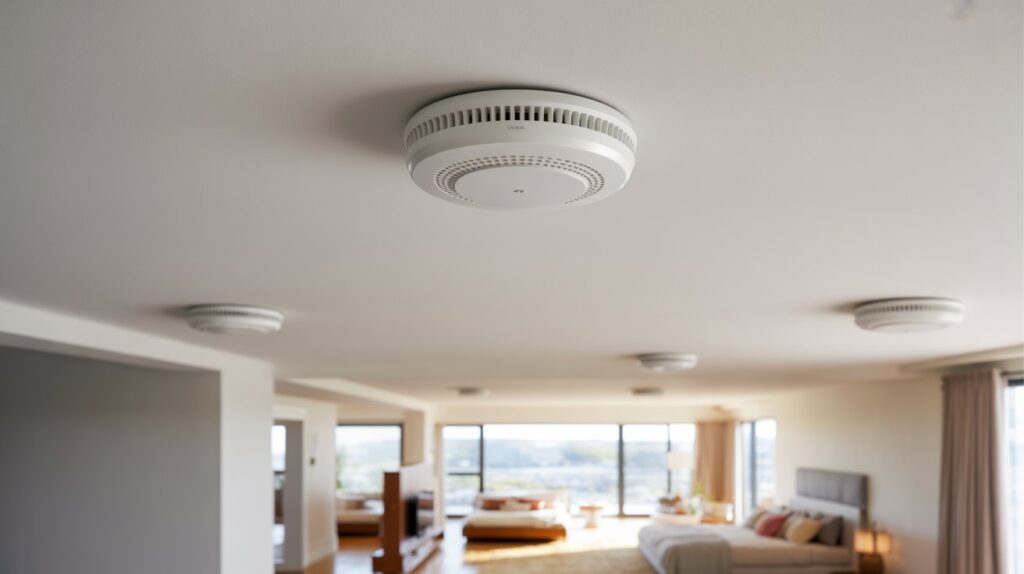
Knowing where should you put smoke alarms in your house becomes much easier when you look at your home room by room. Smoke spreads fast and silently, especially at night, so alarms must be placed where people live, sleep, and move through daily. Proper smoke alarm placement ensures warnings are heard early, giving everyone enough time to react and get out safely.
Required Smoke Alarm Locations Inside a Home
Bedrooms and Sleeping Areas
Smoke alarms should be installed inside every bedroom or sleeping space. Fires often start quietly at night from heaters, chargers, or electrical issues, and sleeping people may not notice smoke until it’s too late. Having alarms in bedrooms ensures the alert is loud and immediate, which is critical for protecting children, seniors, and deep sleepers.
Outside Sleeping Zones
Alarms must also be placed outside sleeping areas, such as in hallways that lead to bedrooms. This placement acts as a second line of defense if smoke begins in another part of the house. For many U.S. homes, hallway smoke alarms provide early detection before smoke reaches sleeping rooms.
Every Level of the House (Including Basement)
Every floor of the home needs at least one smoke alarm, including basements. Fires can start anywhere — from laundry rooms to stored items near furnaces. Installing alarms on each level ensures that no matter where a fire begins, the warning is heard quickly. Understanding where should you put smoke alarms in your house means covering every level, not just the most used rooms.
Best Placement on Walls vs Ceilings (What Experts Recommend)
- Smoke rises quickly, which is why safety experts generally recommend installing smoke alarms on the ceiling for the earliest detection
- Ceiling-mounted alarms should be placed at least a few inches away from walls to avoid dead air space where smoke may not reach right away
- When ceiling installation isn’t possible, wall-mounted smoke alarms work best when placed high on the wall, usually within 4–12 inches from the ceiling
- Installing alarms too low on the wall can delay detection, especially in fast-moving fires where smoke gathers above head level
- Proper wall or ceiling placement plays a major role in where should you put smoke alarms in your house to ensure alerts sound as early as possible
- Following manufacturer instructions and widely accepted U.S. safety standards helps prevent false alarms and improves overall home fire safety.
Where NOT to Install Smoke Alarms (Avoid These Costly Mistakes)
Knowing where should you put smoke alarms in your house also means understanding where they shouldn’t go. Poor placement doesn’t just cause annoying false alarms — it can lead people to disable alarms altogether, which is one of the biggest home fire safety risks in the U.S.
Kitchens (Too Close to Cooking Appliances)
- Smoke alarms placed too close to stoves or ovens often go off during normal cooking
- Frequent false alarms can train people to ignore warnings or remove batteries
- A better option is placing alarms several feet away from cooking areas while keeping them within hearing range
Bathrooms (Steam Interference)
- Steam from showers can trigger smoke alarms even when there’s no fire
- False alarms in bathrooms reduce trust in the system and lower response times
- Proper smoke detector placement avoids high-humidity areas entirely
Near Vents, Fans, or Windows
- Airflow from vents or ceiling fans can push smoke away from the alarm
- Open windows may pull smoke outside before it reaches the sensor
- These locations reduce accuracy and delay detection during real emergencies
Avoiding these common mistakes ensures your alarms work when it matters most. Understanding where should you put smoke alarms in your house helps create a system that’s reliable, trusted, and ready to protect your home and family.
U.S. Smoke Alarm Guidelines You Should Know (NFPA-Based)
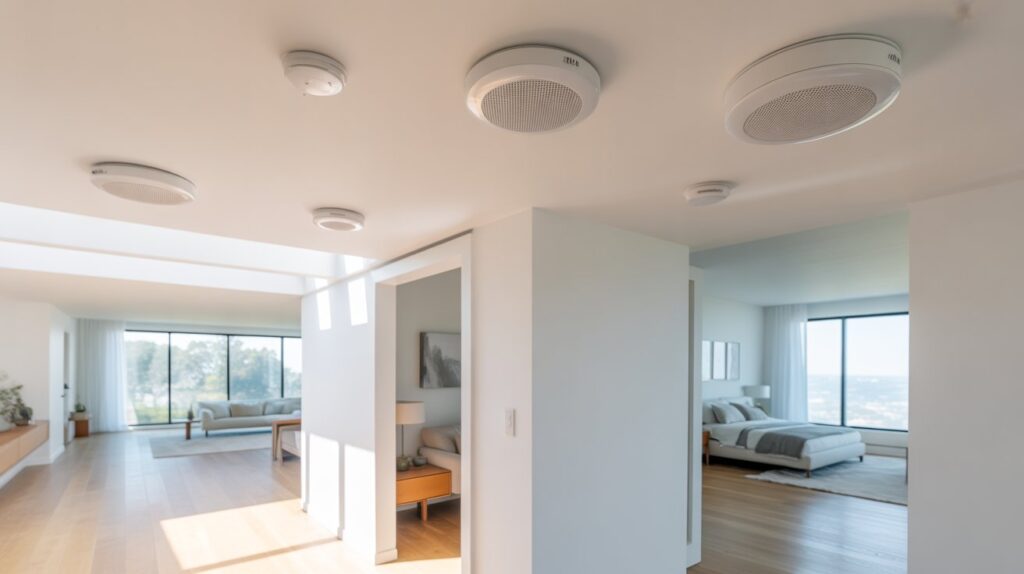
In the United States, smoke alarm recommendations are largely based on guidelines from the National Fire Protection Association (NFPA), a trusted authority in fire safety. These guidelines focus on early detection and clear warnings, not just meeting legal requirements. When people ask where should you put smoke alarms in your house, NFPA-based standards provide simple, proven answers that are designed to save lives, not complicate installation.
According to widely accepted U.S. safety practices, smoke alarms should be installed inside bedrooms, outside sleeping areas, and on every level of the home, including basements. This approach ensures that no matter where a fire starts, the alarm sounds early enough to alert everyone. These recommendations are built on real fire data and decades of research, which strengthens their reliability and trustworthiness.
Following NFPA-aligned guidance also means maintaining alarms properly. Working smoke alarms with correct placement significantly reduce the risk of fire-related deaths. Understanding where should you put smoke alarms in your house using these U.S. standards helps homeowners make informed, confident decisions that protect both property and lives without relying on technical jargon or guesswork.
Conclusion
Knowing where should you put smoke alarms in your house isn’t just about following rules — it’s about protecting the people you love. Correct placement turns a simple device into a powerful early-warning system that can save lives, prevent injuries, and give your family the precious time they need in an emergency.
Take a moment to look around your home today. Are your smoke alarms positioned to truly protect every bedroom, hallway, and level of your house? Small adjustments now can make a life-saving difference tomorrow.
Remember: a few careful steps in placing smoke alarms properly can be the difference between danger and safety — because when it comes to fire, every second counts.
FAQs
Where is the best place to put smoke detectors in a home?
On every level, inside bedrooms, and outside sleeping areas for maximum early warning.
Where is the best place to put a smoke alarm?
Ceilings or high on walls near bedrooms and hallways for fast detection.
Where not to put a smoke alarm?
Avoid kitchens, bathrooms, vents, fans, and drafty areas to prevent false alarms.
Where is the most suitable place to install a smoke alarm in a home?
In bedrooms, hallways outside sleeping areas, and on every floor, including basements.
Is it better to put a smoke detector on the wall or ceiling?
Ceiling placement is best, walls only if mounted high 4–12 inches below the ceiling.
Should smoke detectors be placed high or low?
High, because smoke rises and early detection saves lives.


