
Introduction
Are stun guns legal in New Jersey in 2026? For adults, stun guns can generally be legally purchased and possessed in New Jersey, even though the state statute still contains language prohibiting their possession. A 2017 federal court ruling found the outright ban unconstitutional, so that prohibition cannot be enforced as originally written.
This guide explains the current New Jersey rules on stun guns, including who can possess them, where restrictions may apply, and what legal issues you should understand before carrying or using one.
Table of Contents
Understanding New Jersey’s Stun Gun Laws in 2026
Understanding New Jersey stun gun laws can be confusing because the state statute still contains language that prohibits stun gun possession. However, a 2017 federal court order found that the outright ban on possessing electronic arms violated the Second Amendment, and the New Jersey Attorney General directed law enforcement not to enforce that prohibition as written.
For adults age 18 and older, New Jersey’s post-2017 rules allow the possession of stun guns, while restrictions still apply to minors and certain circumstances involving the sale, possession, location, or use of these devices. The New Jersey State Police also proposed rules in 2017 to formally recognize the continued prohibition on stun gun possession by people under 18.
How New Jersey’s Stun Gun Ban Changed
The change followed the U.S. Supreme Court’s 2016 decision in Caetano v. Massachusetts. The Court rejected a state law that imposed an outright ban on stun gun possession and held that stun guns are protected by the Second Amendment. New Jersey residents later relied on that decision in New Jersey Second Amendment Society v. Porrino. In 2017, a federal court entered a consent order declaring New Jersey’s blanket prohibition on possessing electronic arms unconstitutional and stating that it could no longer be enforced.
The New Jersey Attorney General subsequently issued guidance to prosecutors and law enforcement agencies explaining that the unconstitutional possession ban would no longer be enforced. This is why New Jersey’s current stun gun rules are different from the original statutory language.
What Changed and What Still Applies?
- Adults 18 and older: The former blanket prohibition on stun gun possession is no longer enforceable against adults.
- Minors: The 2017 state rulemaking specifically preserved restrictions on the sale and possession of stun guns by people under 18.
- Location restrictions: The 2017 changes did not remove other applicable New Jersey laws governing where weapons may be possessed or carried.
- Use of a stun gun: Legal possession does not mean every use is lawful. Using an electronic weapon outside a lawful self-defense situation can create separate criminal issues.
- Other prohibited-person rules: Additional restrictions may apply depending on a person’s criminal history and the specific circumstances. These rules should be reviewed separately rather than assuming that every restriction on firearms automatically applies in the same way to stun guns.
For a broader look at personal safety, self-defense, and modern protection options, you can also explore the CrimTechHub home page.
The key point is that New Jersey stun gun laws changed after the 2017 federal court order, but that does not mean stun guns are unrestricted in every situation. Age, location, possession circumstances, and lawful use still matter.
What You Need Before Buying a Stun Gun in New Jersey
There is no separate New Jersey stun gun permit or license application for adults to complete before purchasing one. Unlike firearms, buying a stun gun does not involve the state’s firearm purchase application process.
However, that does not mean every buyer can legally possess one. Age, criminal history, the seller’s policies, and the circumstances of possession can still matter.
What to Know Before Buying a Stun Gun in NJ
- You must meet the applicable age requirement – New Jersey’s 2017 rulemaking preserved restrictions involving the sale and possession of stun guns by people under 18. Adults are treated differently under the post-2017 legal framework.
- Check whether any legal restrictions apply to you – Certain criminal convictions or other circumstances may affect your ability to legally possess an electronic weapon. Do not assume that the absence of a permit requirement means possession is legal for everyone.
- Check the seller’s New Jersey policy – Online retailers may have their own shipping, age-verification, or state-specific restrictions. A seller refusing to ship a stun gun to New Jersey does not necessarily mean the item is prohibited under state law.
- There is no standard firearm-style purchase process – Stun gun purchases are not handled through the same permit and background-check system used for purchasing a firearm in New Jersey.
- Possession and use are separate issues – Even when possession is lawful, using a stun gun outside a legally justified self-defense situation can create criminal liability.
The main point is simple: New Jersey does not have a standard stun gun permit process for adults, but buyers still need to understand age limits, prohibited-person rules, seller restrictions, and lawful self-defense requirements before carrying an electronic weapon.

When Can You Legally Use a Stun Gun in New Jersey?
Being legally allowed to possess a stun gun does not mean you can use it whenever you feel threatened or during any personal dispute. In New Jersey, the circumstances surrounding the use of an electronic weapon matter.
A stun gun may be relevant in a lawful self-defense situation when a person reasonably needs to protect themselves from an unlawful threat or physical harm. The level of force used should be appropriate to the circumstances.
When Stun Gun Use May Be Justified
Depending on the facts of the situation, a stun gun may be used for lawful self-defense when:
- You are facing an immediate threat of unlawful physical harm.
- You reasonably believe defensive action is necessary to protect yourself.
- The circumstances justify the level of force used.
- The device is not being used to settle an argument, threaten someone, or commit another offense.
New Jersey’s rules also distinguish lawful possession from possession under circumstances that are not appropriate for a lawful use. The Attorney General’s guidance specifically identifies N.J.S.A. 2C:39-5(d) as continuing to apply to possession of a stun gun under circumstances not manifestly appropriate for its lawful uses.
Examples of Unlawful or Risky Use
A stun gun should not be treated as a tool for intimidation or retaliation. Potentially unlawful situations include:
- Using it during a verbal argument or personal dispute.
- Threatening someone who does not present an immediate unlawful threat.
- Using it for an unlawful purpose rather than legitimate self-defense.
- Carrying or possessing it in a prohibited location without the required authorization.
- Using it against another person when the circumstances do not support a lawful defensive use.
Penalties and Legal Restrictions
The 2017 change removed the enforceable blanket ban on adult stun gun possession, but other New Jersey weapons laws remained in effect. The New Jersey Attorney General specifically identified several provisions that continue to apply to stun guns.
These include:
- Certain-person restrictions: N.J.S.A. 2C:39-7(a) can prohibit certain individuals from purchasing, possessing, or controlling a stun gun.
- Unlawful-purpose possession: N.J.S.A. 2C:39-4(d) addresses possession of a weapon with a purpose to use it unlawfully against another person or their property.
- Improper circumstances: N.J.S.A. 2C:39-5(d) applies when a stun gun is possessed under circumstances not manifestly appropriate for its lawful use.
- School and educational property: N.J.S.A. 2C:39-5(e)(2) prohibits possession of a stun gun in or upon school, college, university, or other educational institution buildings or grounds without written authorization.
The exact criminal penalty can depend on the specific statute and circumstances, so it is better not to assume that every unlawful stun gun incident carries the same charge or sentence.
If you are also comparing stun guns for personal protection, see our guide to the best Streetwise stun guns to learn more about features, design, and practical considerations.
The key point is simple: legal possession and lawful use are two different issues. Before carrying a stun gun in New Jersey, understand the rules involving self-defense, prohibited locations, and restricted persons.

Comparative Analysis: Stun Guns vs. Tasers
While often used interchangeably, stun guns and Tasers represent distinct technologies with different legal classifications in New Jersey.
Stun Guns:
- Require direct physical contact with target
- Deliver electric shock through direct application
- Classified as defensive weapons
- Legal with proper permits and documentation
Taser Systems:
- Fire electrode projectiles up to 15 feet
- Deliver shock through connected wires
- Classified similarly to firearms under state law
- Subject to additional restrictions and licensing requirements
Legal Status Summary and Recommendations
Stun guns remain fully legal to own and carry in New Jersey in 2026 for adults 18 and over who aren’t otherwise barred from weapon possession. No permit, renewal, or ongoing paperwork applies — the state regulates who can have one and where, not licensing.
Practical recommendations:
- Confirm you’re not in a restricted category before purchasing — a past conviction or restraining order matters more here than any paperwork
- Get comfortable with the device before you actually need it; even without mandatory training, knowing how to use it safely matters
- Avoid carrying it into schools, government buildings, or other posted restricted zones
- Keep proof of age and ID handy if purchasing in person, since retailers are required to verify it
- If you’re unsure where you stand — an older conviction, a pending case, a pending restraining order — that’s worth a real conversation with a local attorney, not a guess
Important note: Laws can and do get revisited, especially around Second Amendment cases. This guide reflects the law as it currently stands; always verify current status before relying on it for a specific situation.
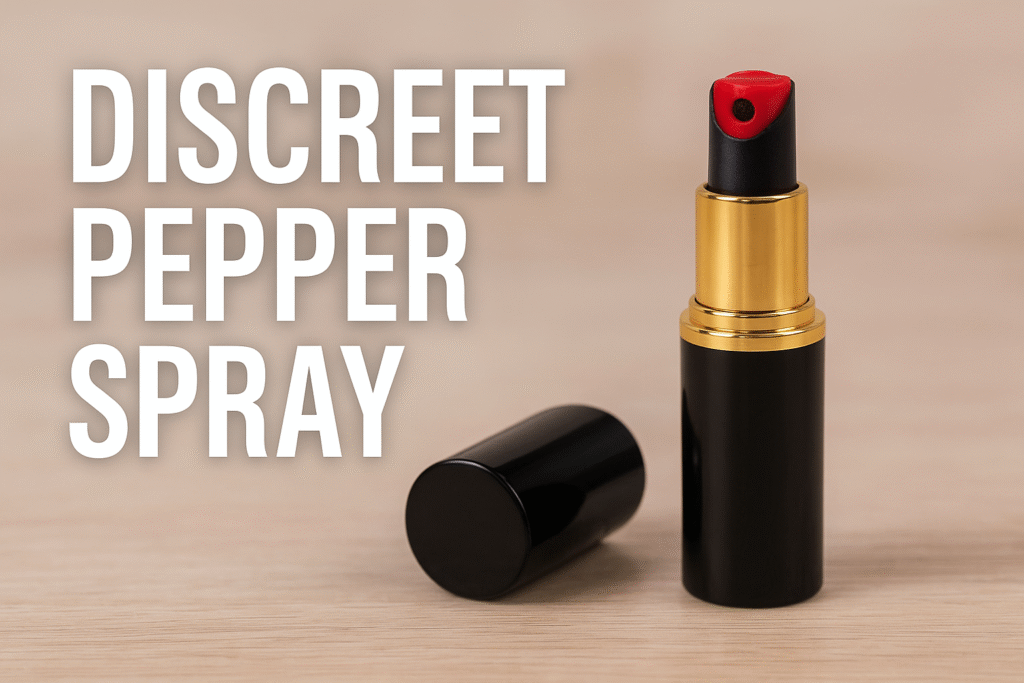
Beyond stun guns, pepper spray remains one of the most accessible self-defense options in New Jersey — worth comparing if you’re deciding what to actually carry.
FAQs
Are stun guns legal in New Jersey in 2026?
Generally, adults 18 and older may possess a stun gun after the 2017 federal court ruling that made New Jersey’s blanket possession ban unenforceable.
Do I need a permit to buy a stun gun in NJ?
No. New Jersey does not have a standard permit or license requirement for adults to purchase or possess a stun gun.
Can a convicted felon own a stun gun in New Jersey?
Not necessarily. Certain convictions and other legal restrictions can prohibit a person from possessing a stun gun. The specific circumstances matter.
Where can you not carry a stun gun in New Jersey?
Certain locations, including school and educational property, have specific restrictions. Always check the applicable law before carrying an electronic weapon into a restricted location.
Is a Taser the same as a stun gun under NJ law?
New Jersey law uses the term “stun gun” for electronic weapons, but the exact device and circumstances can matter. Do not assume every device is treated identically without checking the applicable law.
About the Author
M Bilal holds a BS in Criminology and writes about self-defense law, weapons regulations, and personal safety for CrimTechHub. His background in criminology informs how he researches and explains these topics — focusing on what the law actually says, not just what’s commonly assumed.
This guide was researched using official New Jersey Attorney General memoranda, state statutes (N.J.S.A. Title 2C), and federal court rulings, and is reviewed for accuracy before publishing. This content is for informational purposes only and does not constitute legal advice — for questions about your specific situation, consult a licensed New Jersey attorney.