Introduction
Have you ever watched a martial arts class and wondered why everyone wears a crisp white outfit with a belt around their waist? These traditional uniforms aren’t just for looks — they hold deep cultural and practical meaning. In this guide, we’ll explain what martial arts uniforms are called, why they’re important, and how they differ across popular martial arts styles.
Table of Contents
What Are Martial Arts Uniforms Called?
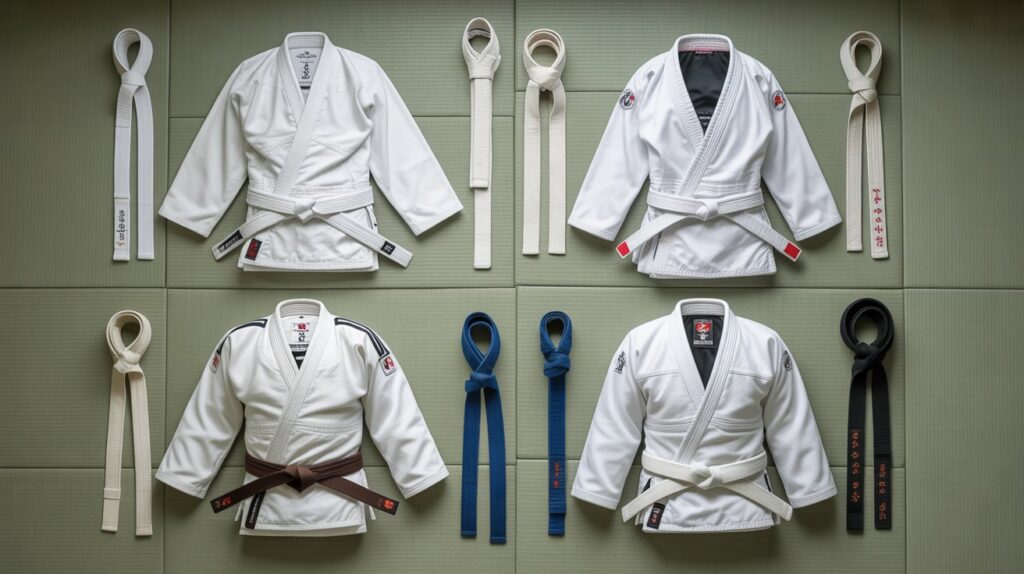
Martial arts uniforms are commonly called Gi, Dogi, or martial arts uniforms, depending on the fighting style and country of origin. In Japanese martial arts such as Karate and Judo, the traditional uniform is generally known as a Gi or Dogi. In Taekwondo, it is called a Dobok, while Brazilian Jiu-Jitsu practitioners wear a BJJ Gi.
Each uniform has a different design, fabric weight, and fit to support the movements used in that martial art. For example, a Karate uniform is usually lightweight for striking and kicking, while a Judo uniform has thicker fabric and reinforced stitching to withstand gripping, throwing, and grappling.
Understanding these names makes it easier to identify the right martial arts training uniform for different disciplines.
Different Types of Martial Arts Uniforms
Martial arts uniforms vary by discipline because each fighting style requires different movements, techniques, and levels of durability. Some uniforms are designed for striking and kicking, while others are made to handle gripping, throwing, and ground fighting.
Here are five common types of martial arts uniforms and their main features.
1. Karate Gi
- Known as: Karate Gi or Karate-gi (空手着)
- Description: A traditional Karate uniform usually consists of a jacket, loose-fitting pants, and a belt. Most beginner uniforms are lightweight cotton or cotton-blend fabric, commonly available in white.
- Purpose: Its lightweight construction allows students to perform punches, kicks, blocks, and forms (Kata) without unnecessary restriction.
- Belt: The belt, called an Obi (帯), represents the practitioner’s rank and progress.
Karate uniforms are available in different fabric weights. Lightweight options are suitable for beginners and regular practice, while heavier uniforms are often preferred for advanced training and competition.
2. Judo Gi
- Known as: Judo Gi or Judogi (柔道着)
- Description: A Judogi includes a thick jacket, reinforced collar, matching pants, and a belt. It is generally heavier and more durable than a basic Karate uniform.
- Purpose: Designed for gripping, throwing, pins, and grappling techniques used in Judo.
- Key feature: Reinforced stitching and a strong collar help the uniform withstand repeated pulling and gripping during practice.
Unlike a lightweight Karate uniform, a Judo Gi must handle considerable physical stress during training and competition.
3. Brazilian Jiu-Jitsu Gi (BJJ Gi)
- Known as: BJJ Gi or Jiu-Jitsu Gi
- Description: A BJJ uniform consists of a jacket, reinforced pants, and a belt. It comes in different weaves, including pearl weave, single weave, and double weave.
- Purpose: Designed for ground fighting, submissions, positional control, and grappling.
- Key feature: Reinforced stitching and durable fabric help the uniform withstand constant gripping and pulling.
A BJJ Gi may look similar to a Judo uniform, but its cut, fit, and competition requirements can differ. BJJ uniforms are commonly available in white, blue, and black, depending on academy and competition rules.
4. Taekwondo Dobok
- Known as: Dobok (도복)
- Description: A Taekwondo uniform usually includes a lightweight jacket and pants. Many modern versions feature a V-neck pullover top, although designs vary by organization and training level.
- Purpose: Its lightweight construction supports fast kicks, footwork, jumping techniques, and forms known as Poomsae.
- Belt: The belt is called Tti (띠) in Korean and indicates the student’s rank and progress.
Unlike traditional Japanese martial arts uniforms, a Taekwondo Dobok has a distinct Korean design. Its lightweight fabric helps practitioners move freely during sparring and technical training.
5. Kung Fu Uniform
- Known as: Kung Fu uniform or traditional Chinese martial arts uniform
- Description: Traditional Kung Fu clothing may include a jacket with frog buttons, loose-fitting pants, and a comfortable design. Some styles use cotton, while others feature silk or satin.
- Purpose: Suitable for practicing traditional forms, hand techniques, stances, and flowing movements.
- Key feature: Loose-fitting clothing allows flexibility and a wide range of motion.
The term Tangzhuang (唐装) refers to a style of traditional Chinese clothing and should not be treated as the universal name for every Kung Fu uniform. Different Chinese martial arts schools use different training outfits.

The Importance of Martial Arts Uniforms
Martial arts uniforms are important because they represent discipline, respect, tradition, and a practitioner’s connection to their training style. They also provide comfort and freedom of movement during practice, sparring, and competitions.
Here are the main reasons martial arts uniforms matter:
- Tradition and identity: Uniforms reflect the history and traditions of different martial arts, such as Karate, Judo, Taekwondo, and Brazilian Jiu-Jitsu.
- Discipline and respect: Wearing the proper uniform encourages students to follow training rules, respect instructors, and maintain a professional attitude.
- Unity and belonging: A standard training uniform creates a sense of community among students, regardless of their age, experience, or background.
- Freedom of movement: Properly designed martial arts clothing allows practitioners to perform kicks, punches, blocks, throws, and grappling techniques comfortably.
- Safety and practicality: A suitable uniform should fit correctly, stay secure during movement, and meet the requirements of the martial art being practiced.
For example, Karate students wear a Karate Gi during practice, while Taekwondo practitioners wear a Dobok. In Judo and Brazilian Jiu-Jitsu, uniforms are designed with stronger fabric to handle gripping and pulling.
Wearing the correct uniform also helps students prepare mentally for training. It signals that they are entering a learning environment where respect, focus, and consistent practice matter.
Choosing the Right Martial Arts Uniform
Choosing the right martial arts uniform depends on your discipline, experience level, body measurements, and training requirements. A good uniform should fit comfortably, allow unrestricted movement, and withstand regular practice.
Before buying a martial arts Gi or training outfit, consider these important factors:
- Choose the correct martial art uniform: Select clothing designed for your specific discipline. For example, a Karate Gi is made for striking practice, a Judogi supports gripping and throwing, and a Taekwondo Dobok is designed for fast kicks and footwork.
- Check the fabric weight: Lightweight uniforms are often suitable for beginners and regular practice. Heavier fabrics may provide greater durability for grappling styles such as Judo and Brazilian Jiu-Jitsu.
- Get the right fit: Your uniform should allow you to stretch, bend, kick, and move comfortably. Avoid excessively tight clothing or loose sleeves and pants that interfere with training.
- Consider the material: Cotton uniforms are comfortable and breathable but may shrink after washing. Polyester and cotton-polyester blends can offer easier care and better resistance to shrinking, depending on the fabric.
- Select the correct belt: Make sure the belt matches your current rank and follows your school’s requirements. Learn how to tie it securely so it stays in place during practice.
- Follow school and competition rules: Some martial arts schools and tournaments require specific uniform colors, designs, patches, or fabric standards. Check these requirements before purchasing.
- Consider washing and maintenance: Choose a uniform that is easy to clean and suitable for frequent washing. Follow the manufacturer’s care instructions to maintain its shape and durability.
What Size Martial Arts Uniform Should You Buy?
Most martial arts uniforms are sized according to height, weight, or manufacturer-specific measurements. Check the brand’s size chart before ordering because sizing can vary between Karate, Judo, and BJJ uniforms.
If you are buying a uniform for a growing child, leave enough room for comfortable movement without choosing an excessively large size. For adults, the uniform should fit properly without restricting kicks, stretches, or other training movements.
A well-fitted martial arts uniform makes training more comfortable and helps you focus on improving your techniques rather than adjusting your clothing.
Conclusion
Martial arts uniforms are commonly called Gi, Dogi, or Dobok, depending on the discipline. Karate and Judo practitioners wear a Gi, Brazilian Jiu-Jitsu students wear a BJJ Gi, and Taekwondo practitioners wear a Dobok. Each uniform is designed to support the movements, techniques, and traditions of its martial art.
Whether you are a beginner or an experienced martial artist, choosing the correct uniform helps you train comfortably and follow your school’s requirements. Understanding these different uniform names also makes it easier to find the right training outfit for your discipline.
FAQs
1. What is a martial arts uniform called?
It’s generally called a Gi, but the name varies by style, like Dobok for Taekwondo or Karate Gi for Karate.
2. What is a Gi made of?
A Gi is usually made from cotton or canvas, designed for comfort and durability during training.
3. What is the Taekwondo uniform called?
The Taekwondo uniform is called a Dobok, featuring a V-neck top and loose-fitting pants.
4. Why do martial artists wear uniforms?
They wear uniforms to show discipline, respect, and unity in their training.
5. Can I use one Gi for different martial arts?
Not recommended — each martial art has its own specific design and purpose for its uniform.
About the Author – M Bilal
M Bilal is a criminology graduate and security-focused content writer at CrimTechHub. He writes about personal safety, crime prevention, martial arts, and modern security practices. His goal is to make safety and security information easy to understand through clear, practical, and research-based content. He focuses on helping readers make informed decisions about personal protection and everyday safety.