Introduction
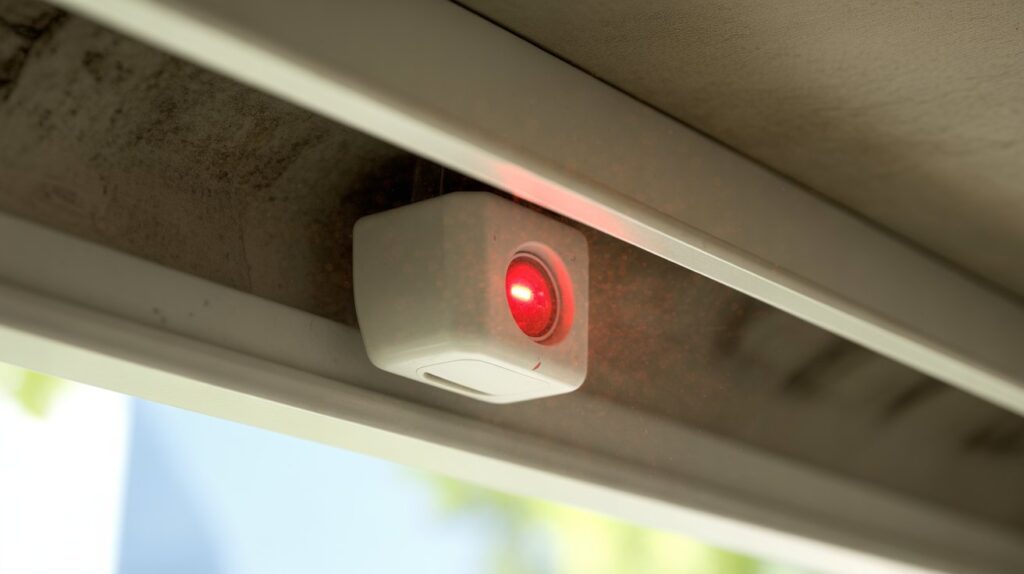
Have you ever pressed your garage door button, only to watch it stop halfway or not move at all? That frustrating moment often comes with a small, glaring clue: a solid red light on garage door sensor. For many homeowners in the U.S., it’s more than a technical issue—it’s a sudden reminder that something protecting your home might not be working as it should.
This red light is your garage door’s way of signaling a problem, whether it’s a simple misalignment, dirt on the sensors, or a sign of a failing component. Understanding what it means and how to fix it can save you stress, repair costs, and most importantly, keep your home safe. By the end of this guide, you’ll know exactly what to do when that red light appears—without guessing or risking safety.
Table of Contents
Why That Solid Red Light on Your Garage Door Sensor Shouldn’t Be Ignored
You’re in a rush, you hit the garage door button, and suddenly it won’t close. You try again—same result. Then you notice it: a solid red light on garage door sensor staring back at you. It’s a small detail, but it quickly turns into a frustrating moment, especially when you’re trying to leave for work or settle in for the night.
That solid red light isn’t just random. It’s your garage door’s way of telling you something isn’t right. In most modern U.S. homes, garage door safety sensors are designed to prevent accidents, so when there’s an issue—whether it’s alignment, blockage, or wiring—the system alerts you through these indicator lights. A steady red light usually means the sensor is receiving power but something is interfering with proper operation.
The good news? Most of the time, you can solve this issue with a few easy steps. It could be as minor as dust on the lens or slightly misaligned sensors. But sometimes, it points to a deeper problem like damaged wiring or a failing sensor. Ignoring it can lead to bigger issues, including a garage door that won’t close properly—or worse, a safety risk for your home and family.
Understanding what this warning means early can save you time, stress, and unnecessary repair costs.
What a Solid Red Light on a Garage Door Sensor Actually Means
Garage door sensors may look small, but they play a big role in keeping your home safe. These sensors sit near the bottom of your garage door tracks, facing each other. One sends an invisible beam, and the other receives it. When that beam is clear, your garage door closes smoothly. But if something interrupts it—or the sensors stop communicating—the system steps in to prevent the door from closing.
Under normal conditions, the sensor lights give you a quick status check. Most setups in U.S. homes show a steady light when everything is working properly—usually one green and one red. This means the sensors are aligned and communicating correctly. However, when something is off, those lights change. Flickering, blinking, or a solid red light on garage door sensor can signal a problem that needs attention.
So, what does that solid red light actually mean? In most cases, it points to one of three common issues:
- Power is reaching the sensor, but it’s not working as expected
- Sensor alignment is off, so the beam isn’t connecting properly
- Signal is blocked or weak, often due to dirt, objects, or interference
Think of it as a warning, not a failure. The system is still trying to work, but it’s telling you something isn’t right. Catching this early makes troubleshooting much easier and helps you avoid bigger garage door problems down the line.
Most Common Causes Behind a Solid Red Sensor Light
When you see a solid red light on garage door sensor, it usually means something is interrupting how the system should work. The good news is that most of these causes are common and easy to understand once you know what to look for.
Here are the most likely reasons behind the issue:
- Misaligned sensors
Even a slight shift can break the connection between the two sensors. This often happens if something bumps into them or over time with normal use. When they’re not perfectly facing each other, the system can’t detect the beam properly. - Dirt, dust, or obstructions
Garage spaces collect dust, spider webs, and debris faster than you think. If anything blocks the sensor lens—even a thin layer of dirt—it can interfere with the signal and trigger that warning light. - Loose or damaged wiring
Wires can become loose due to vibration or wear over time. In some cases, they may even get damaged. When the connection isn’t stable, the sensor may still have power but won’t function correctly. - Faulty or aging sensors
Like any home component, garage door sensors don’t last forever. Older units may start to fail, sending incorrect signals or showing a constant red light even when everything looks fine. - Sunlight interference
This is a common issue in many U.S. homes, especially garages that face direct sunlight. Strong sunlight can confuse the sensor beam, making it seem like there’s an obstruction when there isn’t.
Understanding these causes helps you narrow down the problem quickly. In most cases, the fix is simple once you identify what’s actually triggering the sensor warning.
How to Fix a Solid Red Light on Garage Door Sensor (Step-by-Step)
If you’re dealing with a solid red light on garage door sensor, the fix is often simpler than it looks. Most homeowners across the U.S. can handle this with a few careful adjustments—no special tools or technical skills needed. Follow these steps one by one, and you’ll likely get your garage door working again without stress.
Check and Realign the Sensors
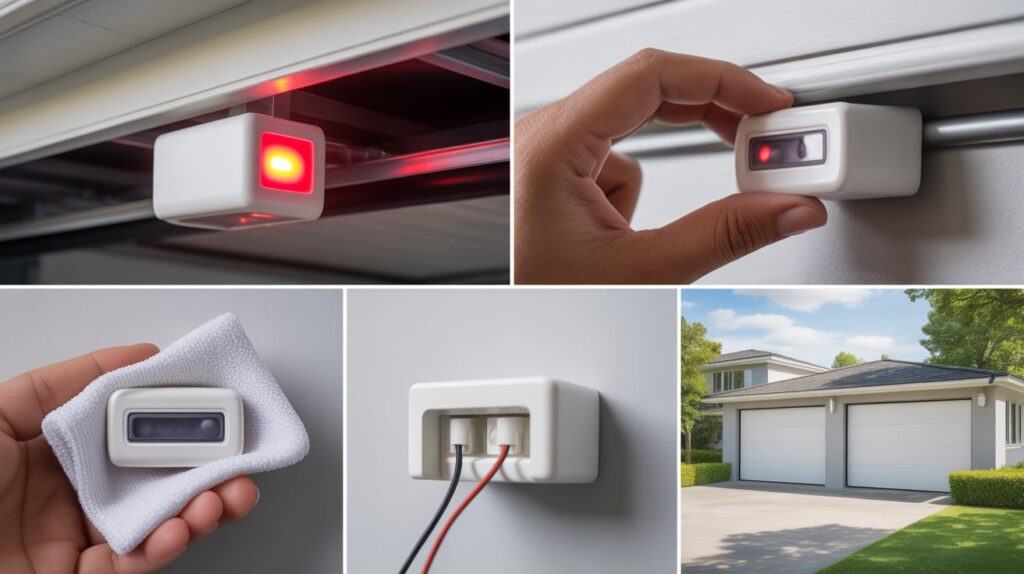
Start by looking at both sensors near the bottom of the garage door tracks. They should face each other directly at the same height. If one looks slightly off, gently adjust it until both are aligned. Even a small shift can break the connection, so take your time here. Once aligned, check if the light changes or stabilizes.
Clean the Sensor Lenses Properly
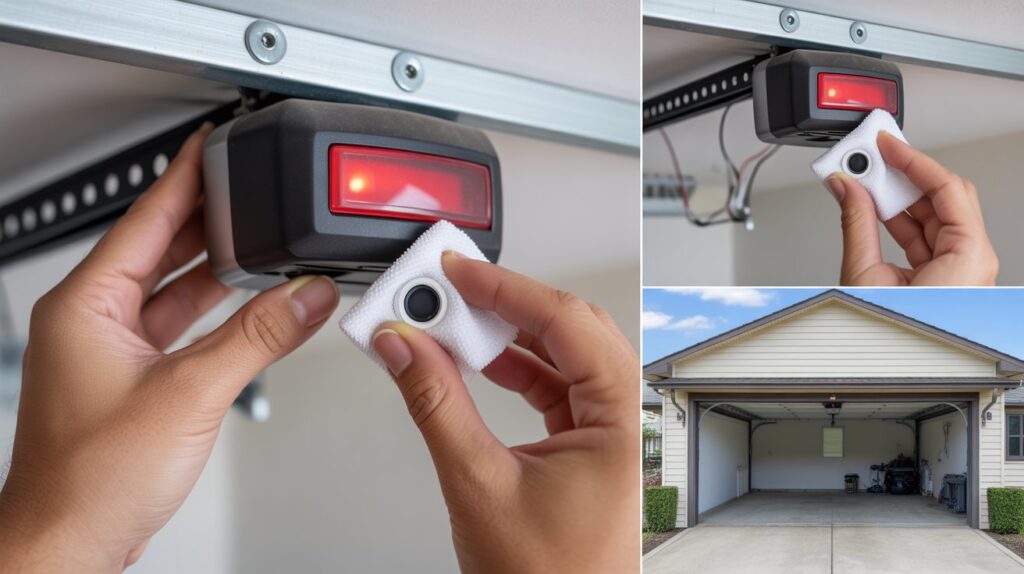
Next, inspect the sensor lenses. Dust, dirt, or even a thin layer of grime can block the signal. Use a soft, dry cloth to clean both lenses carefully. Avoid using harsh cleaners, as they can damage the surface. This simple step often fixes the issue faster than expected.
Inspect Wiring and Connections
If the light is still on, take a closer look at the wires connected to each sensor. Make sure nothing is loose, frayed, or disconnected. Garage vibrations over time can weaken these connections. If you notice any visible damage, it may need repair or replacement to restore proper function.
Test the System After Adjustments
Once everything looks good, test the garage door. Press the opener and watch how the system responds. If the sensors are working correctly, the door should close smoothly without hesitation. The warning light should also return to its normal state.
Fixing a sensor issue doesn’t have to feel overwhelming. In many cases, a few small adjustments are all it takes to clear that red light and restore peace of mind.
When It’s Time to Replace or Call a Professional
Sometimes, even after trying the basic fixes, the solid red light on garage door sensor just won’t go away. That’s usually a sign the issue is deeper than simple alignment or cleaning. Knowing when to stop troubleshooting and take the next step can save you time—and prevent bigger problems.
Here are clear signs the problem may not be DIY-fixable:
- The red light stays on after all adjustments
If you’ve cleaned, aligned, and checked everything but the light doesn’t change, the sensor itself may be failing. - Garage door behaves unpredictably
If the door starts reversing randomly or won’t close at all, it points to a sensor communication issue that needs expert attention. - Wiring looks damaged or worn out
Exposed, frayed, or broken wires are not just a performance issue—they can become a safety risk if ignored.
Safety should always come first. Garage door sensors are designed to prevent accidents, especially around children, pets, and vehicles. If your door is not reversing properly when something is in its path, it’s no longer safe to rely on. This is one situation where calling a professional is the right move, not a delay.
There are also times when replacing the sensors is simply the smarter option:
- Older sensors with repeated issues
- Visible physical damage to the units
- Inconsistent performance even after fixes
In many U.S. homes, replacing garage door sensors is affordable and can restore full system reliability. If the solid red light on garage door sensor keeps coming back, it’s often a sign that a fresh, reliable set is the better long-term solution.
Final Thoughts: Don’t Ignore the Warning Signs
A solid red light on garage door sensor might seem like a small issue, but it’s often your system’s way of asking for attention. Whether it’s a simple alignment problem or a sign of a deeper fault, catching it early can save you from bigger headaches—and keep your home safe.
The truth is, garage door sensors are there to protect what matters most. Ignoring warning signs can lead to inconvenience at best and safety risks at worst. Taking a few minutes to check, fix, or replace the issue can bring back that sense of control and peace of mind every homeowner needs.
Now take a moment to think—when was the last time you checked something small before it became a bigger problem?
FAQs
1. How do I fix the red light on my garage door sensor?
Check alignment, clean the lenses, and inspect wiring; replacing a faulty sensor may be needed if the light persists.
2. How to reset sensor on garage door?
Power off the opener for 30 seconds, then turn it back on—this usually recalibrates the sensors.
3. Why is there a solid red light on my Genie garage door opener?
It often indicates misalignment, obstruction, or a wiring problem that prevents proper sensor communication.
4. What color should the lights be on my garage door sensors?
Typically, one light is green and the other red, showing power and signal; blinking or constant red signals an issue.
5. Do both garage sensor lights need to be green?
Not necessarily—what matters is the sensors communicate and the beam is clear.
6. How to tell if a garage door sensor is bad?
Persistent red light, random reversals, or failure to close even after adjustments are common signs of a bad sensor.
7. Will a garage door work without sensors?
Modern doors usually won’t close without working sensors for safety reasons; bypassing them is unsafe.
8. How long does a garage door sensor last?
Most sensors last 5–10 years, depending on quality, use, and exposure to dust or moisture.
9. How do I know if my garage door sensors are aligned?
Both sensors should face each other directly; a stable light and smooth door operation indicate proper alignment.