
Introduction
A self defence kit for ladies should include practical safety tools that help women recognize potential threats, call for help, and respond to dangerous situations. Common options include a personal safety alarm, a flashlight, a whistle, and legally permitted self-defense products.
The right kit depends on your daily routine, travel habits, local laws, and personal comfort. For example, women who commute at night may benefit from carrying a personal alarm and a compact flashlight, while those who drive regularly may want additional safety items in their car.
This guide explains which personal safety tools to consider, how to choose them, important safety precautions, and what to know about US laws before carrying certain self-defense products. The goal is to help you build a practical safety kit without relying on unnecessary or potentially restricted items.
Table of Contents
Why Every Woman Should Consider a Personal Safety Kit
Personal safety is important at home, at work, while commuting, and when traveling alone. A few practical safety items can help women stay prepared, recognize potential risks, attract attention, and contact someone for assistance during an emergency.
A personal safety kit is not a guarantee against assault or other crimes. However, choosing useful everyday safety tools and knowing how to use them can make it easier to respond when a situation becomes uncomfortable or threatening.
Here are some reasons to consider carrying basic personal protection equipment:
- Better emergency preparedness: A personal alarm, flashlight, and charged phone can help you respond to unexpected situations.
- A way to attract attention: A loud safety alarm or whistle can alert people nearby when you need assistance.
- Improved visibility: A compact flashlight helps you see dark parking areas, sidewalks, stairwells, and building entrances.
- Easier access to help: Emergency contacts and location-sharing features can help trusted people know when you need assistance.
- More confidence during daily activities: Having a simple safety plan can reduce uncertainty when commuting, walking alone, or traveling.
A practical approach to women’s personal safety focuses on preparation rather than fear. Consider these everyday habits:
- Stay aware of your surroundings.
- Keep your phone charged and accessible.
- Plan your route before traveling to an unfamiliar place.
- Identify nearby public places where you can ask for help.
- Share your travel plans with someone you trust when appropriate.
Remember, responsibility for preventing an assault always belongs to the person who commits it, not the person who experiences it. Safety equipment is only one part of a broader personal protection plan.
RAINN: Strategies to Reduce Risk and Increase Safety — useful for safety planning and risk awareness.
What Exactly Is a Personal Safety Kit for Women?
A personal safety kit for women is a collection of everyday safety items designed to help with emergency communication, visibility, and personal protection. It may include a personal alarm, compact flashlight, emergency contact information, whistle, and other legally permitted safety devices.
The contents depend on your lifestyle, travel routine, and local laws. Someone who regularly walks home after work may need different items from someone who mainly drives or travels by public transportation.
Unlike an ordinary handbag, a safety kit keeps important emergency items organized and easy to reach.
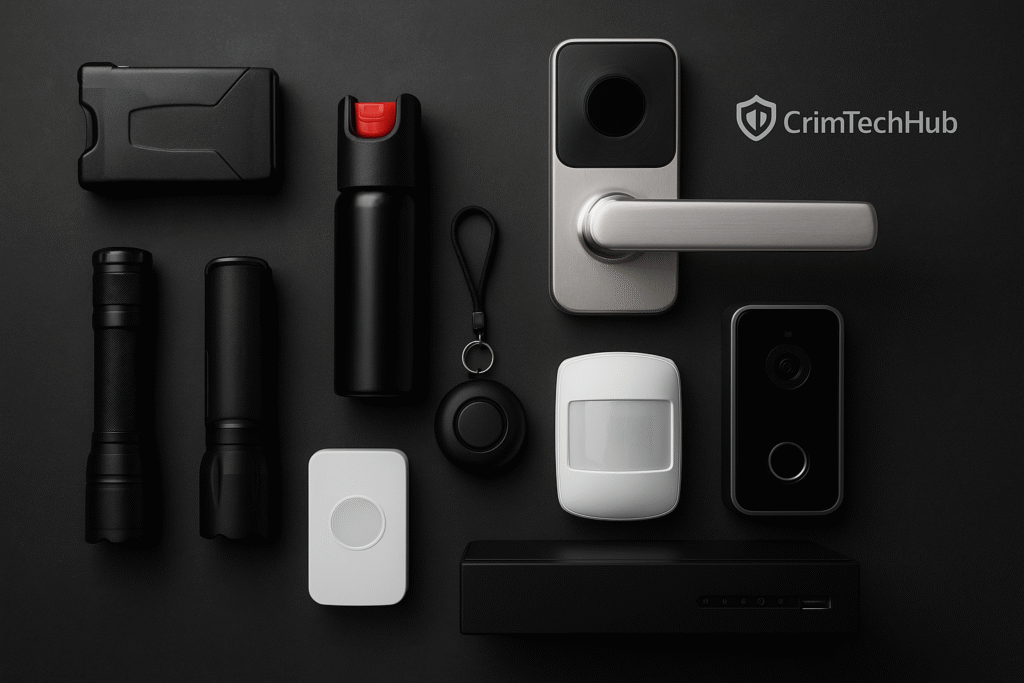
Common items include:
- Personal safety alarm: Produces a loud sound to attract attention when activated. Learn how a personal alarm works and what to consider before carrying one.
- Whistle: Provides a simple way to signal for help without relying on a phone.
- Compact flashlight: Helps illuminate dark walkways, parking lots, and entrances.
- Emergency contact card: Stores important phone numbers in case your phone is unavailable.
- Portable phone charger: Helps keep your phone powered during long trips or emergencies.
- Pepper spray: A defensive spray that may be carried where permitted by state and local law.
- Self-defense keychain: Some designs provide a convenient way to carry everyday safety accessories, although certain impact-style tools may be regulated.
- Stun gun or electronic control device: An optional device that requires careful legal research, safe handling, and an understanding of its limitations.
Not every woman needs all these items. The most useful equipment is easy to carry, accessible when needed, and appropriate for the places where you live, work, and travel.
Before choosing any defensive device, check its legal status, age restrictions, carrying rules, and permitted uses in your state.
Must-Have Tools to Consider for a Women’s Personal Safety Kit
Building an effective safety kit does not mean purchasing every available self-defense product. Start with practical items that support four basic needs: visibility, communication, emergency signaling, and personal protection.
The following tools can help you prepare for different everyday situations.
Personal Alarm and SOS Devices
A personal safety alarm produces a loud sound when activated. Its main purpose is to attract attention and alert people nearby when someone needs assistance.
Useful features to consider include:
- A simple activation button or pull-pin mechanism.
- A loud alarm that is easy to hear nearby.
- A compact design for keys, purses, or backpacks.
- A battery indicator or rechargeable battery.
- Easy access without opening your bag.
Some electronic SOS devices also connect to a smartphone and can notify selected emergency contacts. Depending on the device and phone settings, certain models may share location information.
Safety Tip: Attach the alarm to an accessible part of your bag or keychain. Read the manufacturer’s instructions and check the battery regularly. An alarm cannot guarantee that someone will respond, so keep other emergency options available.
Compact Flashlight
A compact flashlight is useful when walking through poorly lit areas or searching for keys near a vehicle. It can also help you identify obstacles, locate entrances, and see your surroundings more clearly.
Consider these features when choosing an everyday flashlight:
- A comfortable, easy-to-hold design.
- Sufficient brightness for your intended environment.
- A rechargeable or replaceable battery.
- A simple on/off switch.
- A durable body suitable for regular use.
A flashlight is primarily a visibility tool, not a guaranteed self-defense device. Its effectiveness depends on the lighting conditions and the distance from the object being illuminated.
Safety Tip: Keep your flashlight somewhere accessible and check its battery before leaving home, particularly when traveling at night.
Whistle and Emergency Signaling Tools
A whistle is a simple emergency signaling device that does not depend on a mobile phone or battery. It can help attract attention if you need assistance in a public area or during an outdoor activity.
Reasons to consider carrying one include:
- Lightweight and easy to attach to a keychain.
- No battery or charging required.
- Simple operation.
- Useful during hiking, commuting, and outdoor activities.
Choose a durable whistle that is comfortable to carry and easy to access. Remember that its usefulness depends on whether other people are close enough to hear it.
Self-Defense Keychains and Kubotans
Self-defense keychains come in different designs, including personal alarms, whistles, and impact-style accessories. Their appearance and intended use can vary considerably.
Before purchasing one, consider:
- Whether the item has a practical everyday purpose.
- Whether it is comfortable to carry.
- Whether its design creates a safety risk.
- Whether possession and carrying are permitted under applicable laws.
Some impact-style keychains and kubotans may be classified as weapons under state or local laws. Do not assume that a small size or keychain design makes an item legal everywhere.
Safety Reminder: Avoid relying on pressure-point techniques or improvised strikes without appropriate professional training. A safety tool should support your emergency plan, not replace awareness, escape options, or professional self-defense instruction.
Pepper Spray (Where Legally Permitted)
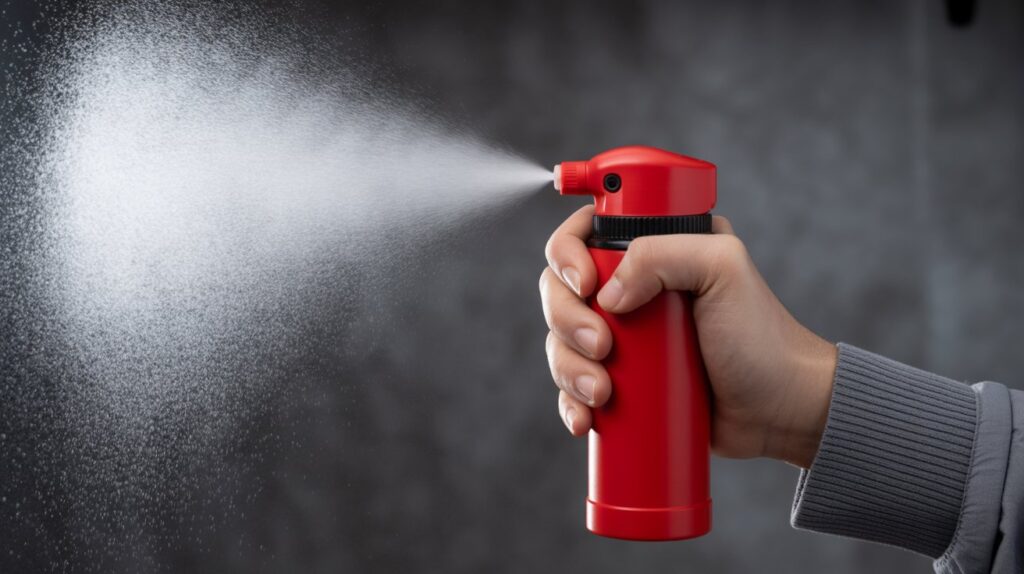
Pepper spray is a chemical self-defense product that contains an irritant commonly known as oleoresin capsicum (OC). It is designed for personal protection, but its effects are not guaranteed and may vary depending on exposure and individual circumstances.
Some women consider carrying pepper spray when walking alone, commuting, or traveling. However, before purchasing or carrying it, understand the legal restrictions and safety requirements in your area.
Important points to consider include:
- Container restrictions: Some states limit the permitted size or formulation of pepper spray canisters.
- Age requirements: Certain jurisdictions restrict possession or purchase based on age.
- Purchase rules: Some states require purchases through authorized sellers or impose specific purchasing conditions.
- Restricted locations: Schools, government buildings, airports, and other locations may prohibit carrying defensive sprays.
- Lawful use: Using pepper spray outside legally justified self-defense circumstances may result in criminal or civil consequences.
Legal Note: Pepper spray laws vary across the United States. For example, New York has specific restrictions on the possession and purchase of self-defense spray under Penal Law § 265.20. These rules include conditions relating to age and purchasing requirements. You can review the official legislation through the New York Penal Law § 265.20.
Do not assume that pepper spray is legal under the same conditions in every state. Check your state’s current laws and local restrictions before purchasing or carrying this product.
Safety Reminder: Read the manufacturer’s instructions, understand the product’s limitations, and store it securely away from children. Pepper spray should never replace situational awareness, emergency planning, or contacting law enforcement when necessary.
Stun Guns and Electronic Self-Defense Devices
Stun guns and other electronic self-defense devices are optional products that some adults consider for personal protection. These devices deliver an electrical shock, but their effects are not guaranteed, and they can cause injuries.
Before considering one, check:
- State and local possession restrictions.
- Minimum age requirements.
- Permit or licensing requirements, if applicable.
- Restrictions on carrying the device in public places.
- Rules covering schools, government buildings, workplaces, and transportation.
Legal and Safety Reminder: Laws governing electronic self-defense devices differ between jurisdictions. Never assume that a device is legal simply because it is available for sale online. Read the manufacturer’s safety instructions and avoid handling or testing it on another person.
A balanced personal safety kit should prioritize practical everyday items such as an alarm, flashlight, whistle, and emergency communication tools. Defensive products are optional and should only be considered after checking their legal status and understanding their limitations.

How to Choose the Right Personal Safety Kit for Women
Choosing personal safety equipment is not about buying the largest number of products. It is about selecting practical tools that match your daily routine, are comfortable to carry, and are legal in your location.
A college student, night-shift worker, and frequent traveler may have different safety needs. Before purchasing anything, consider where you spend most of your time and which emergency situations you want to prepare for.
Key Features to Look For
A practical personal safety kit should include items with the following features:
- Compact design: Choose lightweight safety accessories that fit comfortably in a purse, backpack, pocket, or keychain.
- Easy operation: Personal alarms, flashlights, and emergency devices should have simple controls that are easy to understand.
- Reliable construction: Look for durable materials, dependable batteries, and products from established manufacturers.
- Legal compliance: Check state and local regulations before purchasing pepper spray, stun guns, electronic control devices, or impact-style accessories. For more information, read our guide on how stun guns work and their safety considerations.
- Convenient access: Emergency equipment should be easy to reach without searching through multiple compartments.
- Clear instructions: Choose products with understandable manufacturer instructions, safety warnings, and maintenance guidance.
Reliability is particularly important. A safety device with a weak battery, damaged casing, or complicated controls may not perform as expected when needed.
What to Avoid When Buying Personal Safety Equipment
Not every product advertised as a self-defense tool is suitable for everyday use. Be careful with products that have questionable quality or unrealistic marketing claims.
Avoid:
- Cheap devices with poor construction or unreliable activation buttons.
- Electronic alarms with short battery life or unclear charging instructions.
- Defensive sprays without clear labeling or expiration information.
- Bulky accessories that are uncomfortable to carry regularly.
- Products advertised as guaranteed protection against attackers.
- Weapon-style keychains without checking their legal classification.
- Electronic devices without clear safety instructions or manufacturer information.
Be cautious of exaggerated claims such as guaranteed protection, instant incapacitation, or complete protection against physical attacks. No personal safety product can promise these results.
How to Select the Right Kit for Your Daily Routine
Before purchasing personal protection products, ask yourself three important questions:
- Can I carry these items comfortably every day?
- Can I access the emergency equipment quickly?
- Do I understand how each item works and its safety limitations?
You can also follow these practical steps:
- Keep your personal alarm attached to an accessible part of your bag or keychain.
- Choose a flashlight that provides sufficient visibility for your regular travel environment.
- Keep your mobile phone charged and emergency contacts readily available.
- Read the manufacturer’s instructions before using any defensive product.
- Check battery levels, charging requirements, and product expiration dates.
- Review local laws before carrying regulated self-defense equipment.
The right safety kit is not necessarily the most expensive or complicated one. It is a collection of useful items that you understand, maintain, and can carry consistently.
How to Use Personal Safety Items Safely and Responsibly
Carrying emergency equipment is only one part of personal safety. Understanding its purpose, limitations, and proper handling is equally important.
Each item has a different role. Some help attract attention, others improve visibility, and certain defensive products may provide an additional option in an emergency.
Safety Guidelines for Each Item
Pepper Spray
Pepper spray is a defensive chemical spray containing an irritant commonly known as oleoresin capsicum (OC). Its effects are not guaranteed and exposure can cause serious irritation.
Before carrying it:
- Read the manufacturer’s operating instructions.
- Understand the product’s safety warnings and limitations.
- Check the expiration date and storage requirements.
- Keep it secured away from children.
- Confirm that possession and carrying are permitted under your state and local laws.
Avoid testing the product around other people or in enclosed spaces.
Personal Alarm and SOS Devices
Personal alarms are designed to produce a loud sound that can attract attention during an emergency.
For safe and practical use:
- Learn how the activation button or pull-pin mechanism works.
- Keep the alarm somewhere accessible.
- Check its battery or charging status regularly.
- Understand how connected SOS features share emergency information.
- Review the device’s instructions before relying on it.
Some smartphone-connected devices require an active phone connection, location permissions, or a subscription to provide certain features.
Compact Flashlight
A flashlight helps improve visibility in dark or poorly lit environments.
Follow these basic guidelines:
- Check the battery before leaving home.
- Keep the flashlight in an accessible location.
- Choose a suitable brightness level for your regular surroundings.
- Avoid shining bright light directly into another person’s eyes unnecessarily.
- Follow the manufacturer’s charging and maintenance instructions.
A flashlight is primarily a visibility tool and should not be treated as a guaranteed method of stopping an attacker.
Self-Defense Keychains and Kubotans
Self-defense keychains come in several forms, including alarms, whistles, and impact-style accessories.
Before carrying one:
- Understand its intended purpose.
- Read any available safety instructions.
- Check whether its design is restricted under local weapon laws.
- Avoid relying on untrained physical techniques.
- Consider non-weapon alternatives such as alarms and whistles.
Some impact-style keychains may be classified as weapons depending on the jurisdiction and circumstances.
Stun Guns and Electronic Control Devices
Electronic self-defense devices require additional care because they can cause injuries and may be subject to specific legal restrictions. Understanding how stun guns work and their safety features can help you make a more informed decision before considering one.
Before purchasing one:
- Review state and local possession laws.
- Check age and permit requirements.
- Read the manufacturer’s safety instructions.
- Follow the recommended storage and charging guidelines.
- Keep the device away from children.
- Never test it on yourself or another person.
Do not assume that a stun gun is legal to carry simply because an online retailer sells it. Always verify the current rules in your state and any locations where you plan to carry it.

Everyday Situations Where Personal Safety Planning Helps
Personal safety equipment works best as part of a broader emergency plan. Consider these everyday situations:
Walking Alone at Night
Choose well-lit routes, remain aware of your surroundings, and keep your phone and personal alarm accessible. If you feel uncomfortable, move toward a populated business or another safe public location.
Commuting After Work
Plan your journey before leaving. Keep emergency contacts available and consider sharing your trip details with someone you trust.
Traveling Through Parking Lots
Pay attention to your surroundings when entering or leaving your vehicle. Keep your keys accessible and avoid becoming distracted by your phone.
Using Public Transportation
Stay aware of your surroundings, identify available help points, and know where to find station staff or security personnel if you need assistance.
When Someone Makes You Feel Unsafe
Trust your judgment and avoid unnecessary confrontation. Move toward other people, enter a safe public place, and contact emergency services if you believe you are in danger.
These precautions cannot eliminate every risk, but they can help you make informed decisions and respond more effectively to unexpected situations.
Legal and Safety Considerations in the United States
Before purchasing or carrying personal protection equipment, understand the laws that apply where you live.
Important considerations include:
- Pepper spray regulations: States may impose restrictions on container size, age, formulation, purchasing, and possession.
- Stun gun laws: Some jurisdictions regulate electronic weapons through age limits, permits, or location restrictions.
- Keychain weapon laws: Certain impact-style accessories may fall under local weapon regulations.
- Restricted locations: Schools, government buildings, airports, and other facilities may have additional restrictions.
- Lawful self-defense: Using a defensive device must comply with applicable self-defense laws. Carrying a device does not automatically make every use lawful.
For example, New York Penal Law § 265.20 contains specific exemptions and conditions relating to self-defense spray possession. Review the official New York Penal Law § 265.20 before relying on general information about pepper spray laws.
Laws can change, and requirements differ between states and cities. Check current official state legislation or consult a qualified legal professional if you are unsure.
Final Safety Reminder: Personal safety equipment should support your emergency plan, not encourage confrontation. Prioritize avoiding dangerous situations, finding a safe exit, attracting attention, and contacting emergency services when necessary.
Legal Considerations Before Carrying Personal Safety Equipment
Before carrying personal protection equipment, women should understand the laws that apply in their state and local area. Different safety devices can have different possession, purchasing, and carrying requirements across the United States.
An item that is permitted in one state may be restricted in another. Some locations also have additional rules about bringing defensive equipment onto their premises.
Understanding these legal requirements can help you make informed decisions and avoid problems when choosing everyday safety accessories.
Which Personal Safety Items May Have Legal Restrictions?
Not every safety accessory is treated the same way under US law. Some items are ordinary everyday equipment, while others may be classified as weapons or defensive devices.
Here is a general overview:
- Personal alarms: Electronic alarms are commonly used to attract attention during emergencies. Check individual venue policies before carrying them into restricted facilities.
- Flashlights: Ordinary portable flashlights are generally everyday accessories and are not usually regulated as weapons.
- Whistles: These are simple emergency signaling devices that do not normally require special permission.
- Pepper spray: State laws may regulate container size, formulation, age requirements, purchasing, and possession.
- Stun guns and electronic control devices: These products may have specific restrictions involving age, permits, possession, or carrying in certain locations.
- Impact-style keychains and kubotans: Their legal classification may depend on their design, intended purpose, and applicable state or local weapon laws.
Do not assume that an item is legal simply because it is small, sold online, or marketed as a personal safety accessory.
Responsible Use of Personal Protection Devices
Carrying a defensive device also comes with responsibility. Its purpose should be personal safety during a legally justified emergency, not intimidation, retaliation, or unnecessary confrontation.
Follow these basic safety principles:
- Understand the device: Read the manufacturer’s instructions and learn its limitations before carrying it.
- Respect legal boundaries: Use defensive equipment only when permitted by applicable self-defense laws.
- Avoid unnecessary confrontation: Leave an unsafe situation whenever a safe opportunity is available.
- Store equipment securely: Keep potentially dangerous devices away from children and unauthorized users.
- Maintain your equipment: Check batteries, charging requirements, product condition, and expiration dates where applicable.
- Prioritize escape: The main objective during an emergency should be reaching a safe place and contacting emergency services when necessary.
The legal justification for using force depends on the circumstances and applicable law. Simply carrying a defensive device does not automatically make its use lawful.
Why Self-Defense Laws Differ Between US States
The United States does not have one universal set of rules covering every personal protection device. State statutes, local ordinances, and location-specific policies can affect what a person may legally purchase, possess, or carry.
For example:
- Pepper spray regulations: Requirements involving minimum age, canister size, product specifications, and purchasing conditions can differ between states. Read our guide to pepper spray safety and legal considerations in the United States for more information.
- Electronic defense devices: Stun guns and other electronic control devices may be subject to different possession and carrying restrictions.
- Weapon classifications: Certain impact-style accessories may fall under state or local weapon laws.
- Restricted properties: Schools, government facilities, airports, and private businesses may impose additional restrictions.
- Transportation rules: Carrying defensive equipment on public transportation or through security-controlled areas may involve separate requirements.
These are general legal considerations, not a state-by-state explanation. Before purchasing or carrying a particular device, review current official legislation and the rules of the location where you plan to take it.
For specific legal questions, consult a qualified attorney or the appropriate local authority.
Important: This article provides general educational information, not legal advice. Laws can change, and the rules applicable to one state should not be assumed to apply elsewhere.
Understanding personal safety laws helps women choose appropriate equipment, respect local restrictions, and make more informed decisions about everyday security. Responsible preparation should always include legal awareness, safe handling, and a clear plan for getting help during an emergency.
Final Thoughts
A self defence kit for ladies should include practical safety tools that support everyday personal protection. A personal alarm, flashlight, whistle, and legally permitted defensive devices can help you prepare for unexpected situations.
Choose items that fit your routine, understand local laws, and learn how to use each device safely. Remember, the goal is to avoid confrontation, reach a safe place, and get help when needed.
FAQs
Q1: What should a personal safety kit for women include?
A practical kit may include a personal alarm, flashlight, whistle, emergency contacts, and legally permitted safety devices.
Q2: How many items should a safety kit contain?
There is no fixed number. Choose essential items based on your daily routine, travel habits, and personal safety needs.
Q3: Are self-defense tools legal in every US state?
No. Pepper spray, stun guns, and certain impact-style accessories may have different state and local restrictions.
Q4: How can I keep personal safety equipment reliable?
Check batteries, charging requirements, expiration dates, and product condition. Follow the manufacturer’s instructions.
Q5: Should I carry personal safety equipment every day?
Choose compact, practical items that you can comfortably carry and access when needed. Make sure you understand their safe and lawful use.
About This Guide
This guide is written by M Bilal, who holds a Bachelor’s degree in Criminology and has an academic background in understanding crime, personal safety, and real-world threat situations.
Choosing a personal safety kit involves more than comparing product features. This guide explains the purpose, practical limitations, and safe use of common self-defense tools so readers can make informed decisions based on their daily routines and personal safety needs.
The information also considers relevant US legal restrictions and guidance from established safety and government sources. At CrimTechHub, our goal is to provide clear, practical, and research-based information that helps readers make responsible personal safety decisions.