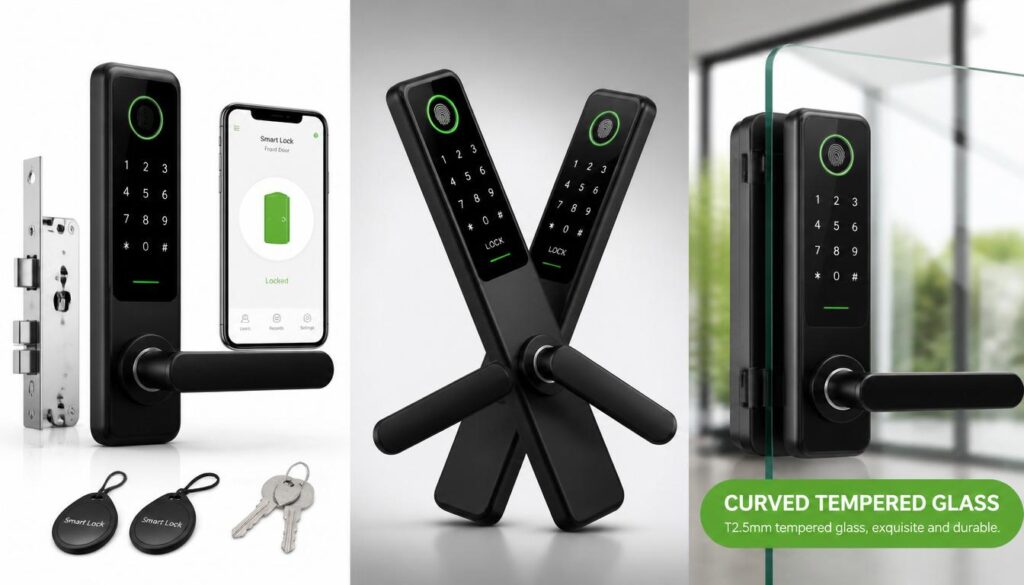
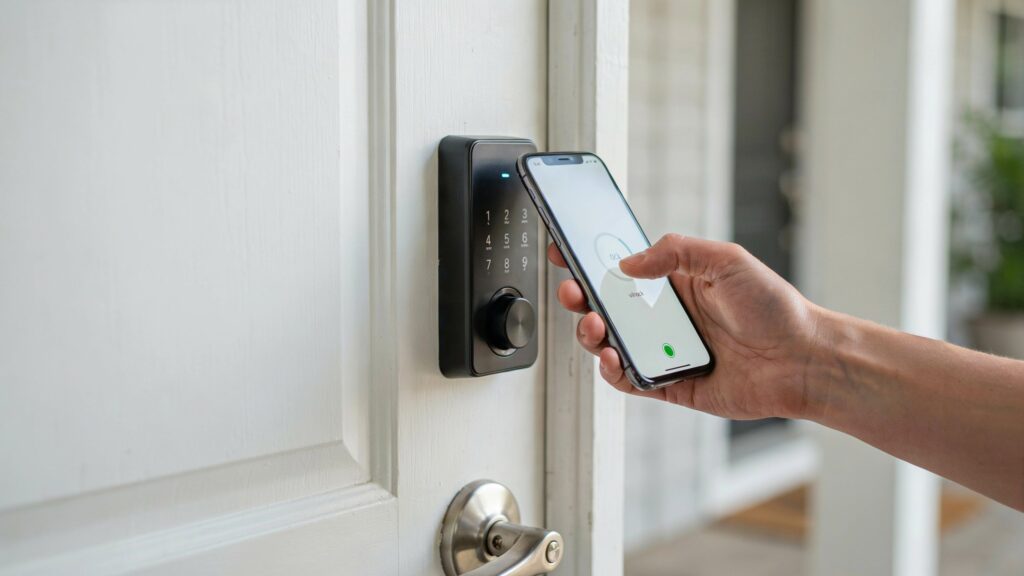
Smart locks are built to stay “on” around the clock, so most homeowners never think about turning one off until they actually need to. Maybe you’re selling the house and want the next owner to start fresh. Maybe the app is glitching and a full reset is the only fix. Or maybe you’re just swapping the lock out for something new and don’t want it pairing with your phone anymore.
Whatever the reason, deactivating a smart lock isn’t a single button — it depends on how “off” you actually need it to be. Below is a breakdown of every method, from a quick temporary disable to a full factory wipe, along with what each one actually does to your data, your app pairing, and your door.
Table of Contents
Why People Deactivate a Smart Lock
A few common situations come up again and again:
- Moving out or selling the home – you want the lock wiped of your codes, fingerprints, and app access before handing over keys.
- Switching smart home platforms – moving from one hub or app ecosystem to another usually requires unpairing the lock first.
- Troubleshooting glitches – unresponsive keypads, failed auto-lock, or a lock that won’t sync with the app often need a reset to clear the problem.
- Extended travel – some people prefer to disable remote/app access temporarily and rely only on the physical key while away.
- Battery or hardware maintenance – removing power briefly to replace batteries or internal components.
Each of these calls for a different level of “deactivation,” so it’s worth matching the method to the actual goal instead of jumping straight to a factory reset.
Method 1: Disable Remote or App Access (Temporary)
If you just want to stop the lock from being controlled remotely — without erasing anything — this is the lightest option. It leaves the lock’s local functions untouched and only switches off the features that rely on your phone or an internet connection.
Why Choose This Method
- You’re not comfortable with remote control — some users prefer that the door can only be locked or unlocked in person, not from across town.
- You’re troubleshooting a connectivity issue — turning off remote access temporarily can rule out whether app glitches are caused by the network or the lock itself.
- You’re lending the property short-term — disabling geofencing and auto-unlock stops the lock from reacting to anyone’s phone location while a guest is staying over.
- You want the reliability of local access — this is the same principle behind how smart locks continue operating without WiFi: the keypad, fingerprint reader, and physical key don’t depend on a network connection to work.
How to Turn Off Remote Access
- Open the lock’s companion app and go to its device or lock settings.
- Turn off remote access, auto-unlock, or geofencing features individually — most apps list these as separate toggles rather than one master switch.
- Leave user codes and fingerprints intact so the lock still works locally.
- Double-check the app afterward to confirm remote unlock is greyed out or disabled, not just hidden from the main screen.
This is the right move if you want the convenience features paused but still want to use the keypad, fingerprint reader, or physical key normally.
Method 2: Turn Off Auto-Lock and Notifications
Some users only want to stop the automatic behaviors — not the lock itself. Auto-lock and constant push alerts are convenience features, but they can get in the way just as often as they help, especially if you’re in and out of the door frequently or don’t want your phone buzzing every time someone comes home.
Why Turn Off Auto-Lock
- Frequent door use — if you’re moving in and out constantly (deliveries, kids, pets), auto-lock can end up locking you out mid-task.
- Notification fatigue — a lock/unlock alert every single time the door opens gets old fast and can bury more important notifications.
- Battery life — auto-lock relies on the lock’s motor and sensors staying active, which draws more power than a lock that only responds when triggered manually.
- False lockouts — some auto-lock timers trigger before everyone inside has actually closed the door, which can jam the latch against the frame.
How to Disable It
- In the app, locate the auto-lock timer setting and switch it off, or extend the delay if you want a longer grace period instead of turning it off completely.
- Go to notification preferences and disable alerts for lock, unlock, or door-open/close events individually — most apps let you keep security alerts (like tamper or forced-entry warnings) on while muting routine ones.
- Keep Bluetooth or Wi-Fi connectivity on if you still want app access later; this method only changes behavior, not connectivity.
This keeps the lock fully functional but stops it from locking itself or pinging your phone every time the door opens — the codes, fingerprints, and remote access all stay exactly as they were.
Method 3: Remove the Lock From the App or Hub
This is the standard step before selling a home, switching ecosystems, or handing the property to a new owner.
- Open the app and select the lock from your device list.
- Choose the option to remove, unpair, or forget the device.
- If the lock is also connected to a smart home hub (SmartThings, Google Home, Apple Home, etc.), remove it from that platform separately — unpairing from the lock’s own app doesn’t always clear the hub connection.
- Confirm the lock no longer appears as an active device in any app.
Removing it from the app stops remote control but usually doesn’t erase codes stored directly on the lock hardware — that’s because smart locks can keep functioning independently of the app or WiFi, so a full factory reset is the only way to clear that stored data.
Method 4: Factory Reset the Lock
A factory reset is the most complete way to deactivate a smart lock. It wipes stored user codes, fingerprints, paired app accounts, and network credentials, returning the lock to out-of-the-box condition.
General steps (exact process varies by brand):
- Open the battery compartment, usually on the interior side of the door.
- Locate the small reset button or reset pinhole near the batteries.
- Press and hold the reset button for 5–10 seconds until the LED blinks or you hear a confirmation tone.
- Release the button and wait for the lock to reboot.
- Confirm in the app (if still paired) that the device now shows as unlinked or offline.
Keep in mind this step is usually irreversible — all saved users, codes, and pairing history are gone once the reset completes. If you plan to re-add the lock to a new app or account afterward, you’ll need to set it up again from scratch.
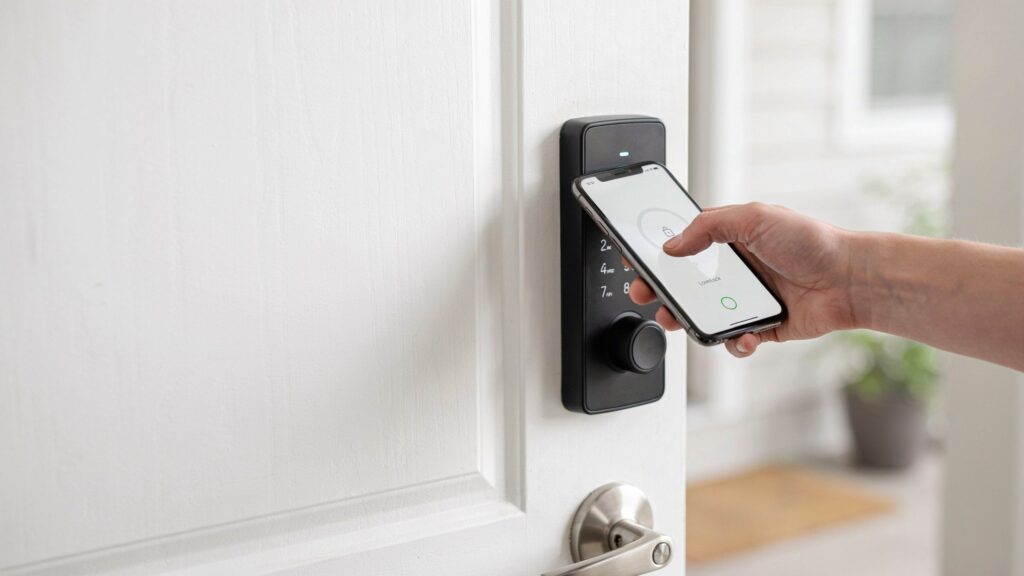
Method 5: Disconnect the Power Source
Pulling the batteries is the fastest way to stop a smart lock from functioning electronically, though it’s meant to be temporary rather than a true deactivation.
- Pop off the interior battery panel and slide the batteries out of their tray.
- The lock will no longer respond to the keypad, app, fingerprint reader, or Bluetooth signal.
- Most smart locks still allow manual operation with a physical backup key — this is the same fallback design that lets smart locks keep working during power or WiFi outages, so confirm you have that key before cutting power, otherwise you could lock yourself out.
- Store the batteries safely; reinserting them typically brings the lock back online with its previous settings intact (this does not erase data the way a factory reset does).
This method is mainly useful for troubleshooting or short-term situations, not for permanently retiring a lock.
witching to Manual-Only Mode
Many smart locks include a setting that disables the electronic keypad, fingerprint reader, or app control while keeping the mechanical key function active. This gives you a working, secure door without any of the connected features running in the background — a middle ground between a temporary app disable and a full factory reset.
When Manual Mode Makes Sense
- You’re not comfortable with a keypad, fingerprint sensor, or app controlling the door, but don’t want to replace the hardware.
- The lock’s electronics are glitching and you need a reliable way in while you sort out the issue.
- You’re renting out the property short-term and want a single mechanical key in circulation instead of digital codes.
- You want to cut down on battery drain from Bluetooth/Wi-Fi radios that stay active even when the smart features aren’t being used.
At its core, a smart lock is still built around the same electromechanical locking design as a standard deadbolt, with the electronics layered on top rather than replacing the physical mechanism entirely. That’s why almost every model keeps a mechanical pathway available — the “smart” part is meant to add convenience, not remove the fallback that traditional locks have relied on for generations. Choosing manual mode simply puts you back on that original, non-connected layer of the lock without touching anything else about the hardware.
How to Turn On Manual Mode
- Open the lock’s app and look under device settings for an option labeled “manual mode,” “mechanical override,” or “lock mode.”
- Toggle off keypad entry, fingerprint access, and auto-unlock individually if there’s no single combined switch.
- Leave Bluetooth or Wi-Fi connected if you still want the option to flip back to smart mode later without re-pairing.
- Test the mechanical key in the deadbolt before relying on manual mode full-time, so you’re not caught out if the backup key doesn’t turn smoothly.
Manual Mode vs. a Full Reset
If you’re only pausing the smart functions temporarily, manual mode is the safer, more reversible option of the two.
Manual mode keeps your stored codes, fingerprints, and app pairing in place — it just stops them from being used.
A factory reset erases all of that data permanently, so it’s a poor choice if you might want the smart features back later.
Things to Check Before You Deactivate
- Backup access — confirm you have a physical key or an alternate way in before disconnecting power or resetting.
- Linked accounts — some locks tie into a broader security system or subscription; deactivating the lock alone may not cancel the service.
- Warranty and support — a factory reset is usually safe, but check the manufacturer’s instructions if the lock is still under warranty, since brand-specific steps can differ.
- New owner setup — if you’re handing the lock over to someone else, a full factory reset is the safest way to remove your personal data before they set it up under their own account.
FAQs
Does removing the batteries erase my codes?
No. Pulling the batteries only cuts power temporarily. Stored user codes and settings return once power is restored. Only a factory reset clears that stored data.
Can I deactivate a smart lock without the app?
Yes — most locks have a physical reset button inside the battery compartment that works independently of the app, which is useful if you’ve lost app access or forgotten your login.
Will deactivating the lock affect my smart home hub?
It can. If the lock is linked to a hub like SmartThings, Google Home, or Apple Home, you may need to remove it from that platform separately, even after resetting the lock itself.
Is a factory reset reversible?
Generally no. Once a smart lock is reset, stored codes, fingerprints, and app pairings are erased, and the lock needs to be set up again as if it were brand new.