Introduction
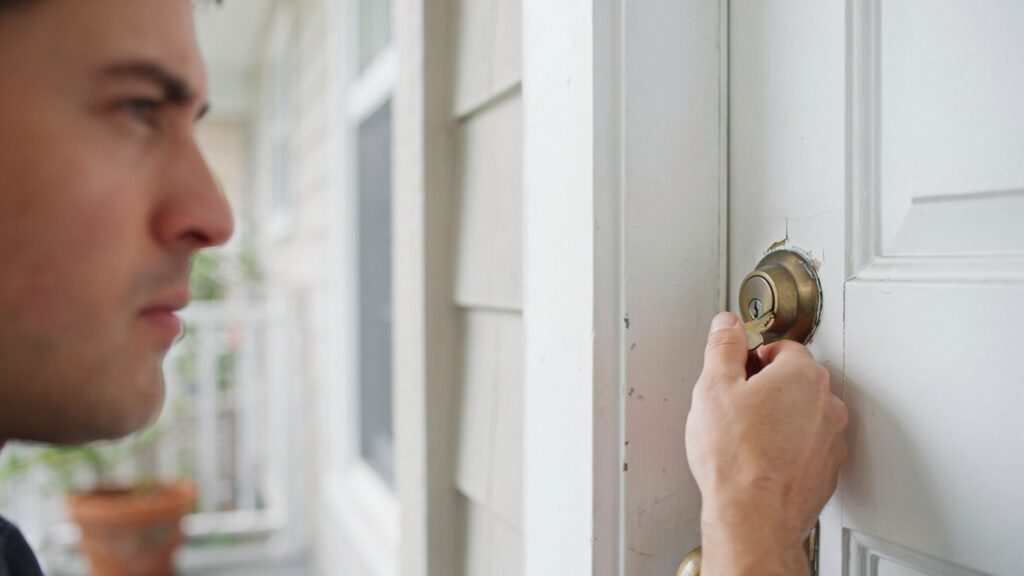
You turn the key, and nothing happens, your door lock is stuck in the locked position, and now you’re standing outside wondering if you’re locked out of your own home. It’s a more common problem than it feels like at the moment, and it’s usually caused by something simple: a shifted frame, a worn key, or a dirty cylinder. This guide walks through why it happens, how to tell what’s actually causing it, and the exact steps to get it moving again.
Table of Contents
What Causes a Deadbolt to Get Stuck When Locked
A door lock gets stuck in the locked position for one of four reasons: the door has shifted out of alignment, the key is worn down, the cylinder is dirty, or a part inside the lock has broken. Once you know which one you’re dealing with, the fix usually takes minutes, not hours.
Misaligned Strike Plate or Door Frame
More often than not, it’s the door frame, not the lock. Wood frames shift with humidity and temperature changes, and even a millimeter of movement can throw off the bolt’s alignment with the strike plate. When that happens, the bolt jams against the metal edge instead of sliding through. Older homes or ones with settling foundations see this often, especially after a humid summer or cold snap. To check, close the door and look at the strike plate hole, if the bolt lands off-center, the frame has shifted.
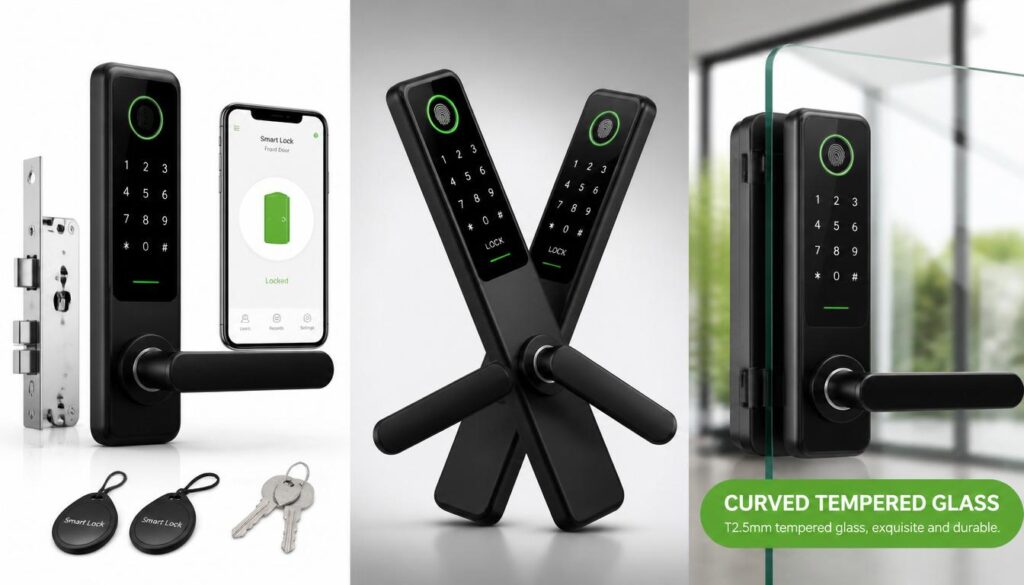
If this keeps happening on the same door, it might be worth exploring an upgrade instead of repeatedly realigning the frame, our Smart Locks for Sliding Glass Doors roundup covers options built to handle frequent shifting and heavy daily use.
Worn or Bent Key
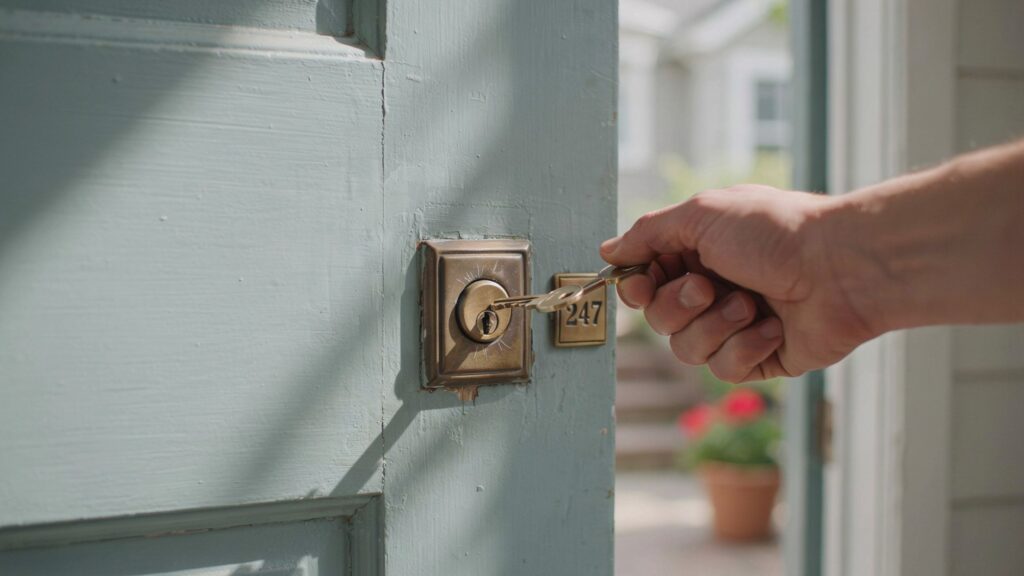
Keys wear out faster than most people expect, usually somewhere around the two-to-three-year mark with daily use. The metal ridges that grip the lock pins wear down gradually, and a key that looks fine to the eye can still be off by a fraction of a millimeter, enough to leave a pin slightly raised inside the cylinder. When that happens, the bolt throws but doesn’t fully seat, so it stays locked instead of releasing. A bent key causes the same problem faster; forcing a slightly bent key into the cylinder can jam the deadbolt on the very next turn. If a spare key from the same set works fine, the original key is almost always the culprit.
Dirty or Rusted Lock Cylinder
Dust, pollen, and old lubricant residue build up inside a lock cylinder over time, and in coastal or humid regions, that buildup often turns into surface rust on the pins. This grime doesn’t just make the key harder to turn, it can physically block the pins from returning to their resting position after the bolt locks, leaving the whole mechanism seized. Locks near entryways that see a lot of foot traffic, or ones exposed to weather, tend to show this problem within a year or two if they’re never cleaned out. A dry lubricant flushed into the keyway is usually enough to tell whether grime is the actual cause.
Broken Internal Springs or Pins
Inside every deadbolt, a small spring pushes the bolt and pins back into position once the key releases, and that spring can weaken or snap after years of daily use. When it fails, the bolt has nothing pulling it back, so it stays extended and locked no matter how the key is turned. This is the one cause that isn’t a quick DIY fix, since it means opening the lock body to replace an internal part. It’s also the reason a lock that’s ten or more years old is more likely to need full replacement than repair, especially if it’s started sticking on and off over the past few months rather than failing all at once.
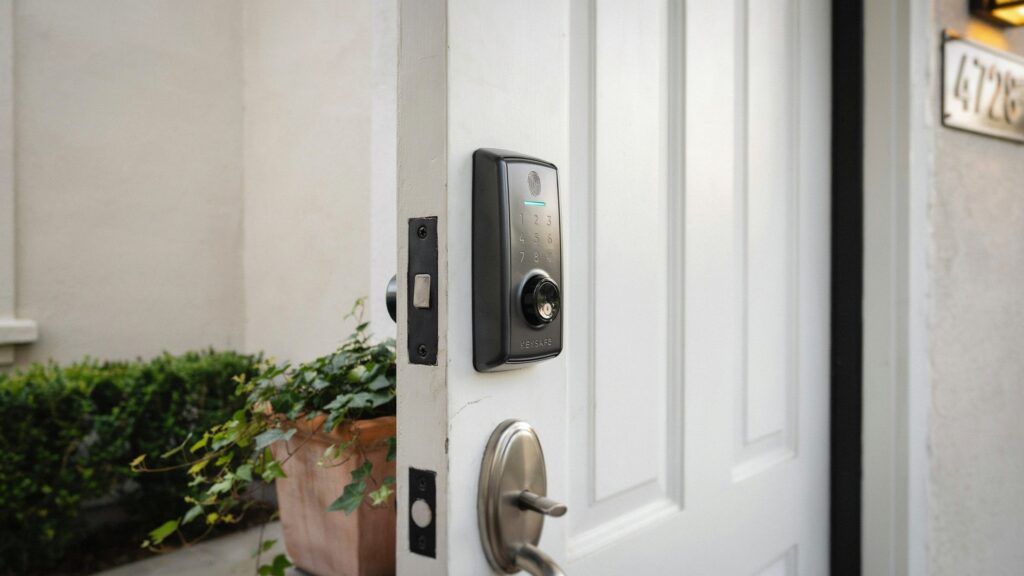
If the deadbolt is part of a smart lock system, worn internal components can show up differently, sometimes as motor errors instead of a jammed bolt, which is worth keeping in mind before assuming it’s a mechanical issue.
How to Tell If It’s the Lock or the Door Itself
The quickest way to know is this: unscrew the strike plate and try locking the bolt with the door open. If the deadbolt moves smoothly with the door open but jams the moment the door is closed, the frame is the problem, not the lock. If it still binds either way, the issue is inside the lock itself. This one test saves a lot of guesswork before you decide whether to grab a screwdriver or call a locksmith.
A few signs point clearly in one direction or the other:
- Points to the door/frame: the bolt only sticks when the door is closed, you notice the door dragging on the carpet or sticking at the top, or the problem got worse after a season change (humid summer, cold winter)
- Points to the lock itself: the bolt is stiff even with the door wide open, the key feels gritty or scratchy going in, or the same bolt worked fine a year ago with no change to the door
- Points to a worn key: a spare key turns the lock without any resistance while the main key struggles
Take a close look at the door edge and frame while you’re at it. A door that’s dropped slightly on its hinges, even by a few millimeters, is one of the most common reasons a deadbolt is stuck in the locked position despite the lock hardware being in perfect condition. Hinge screws that have loosened over time are usually behind this, and tightening them is often enough to bring the bolt back into alignment with the strike plate.
If this diagnostic points to the door and not the lock, it’s worth checking whether the same misalignment is affecting other hardware on the door, like a lever handle or an added smart lock module, since a shifted frame tends to cause more than one problem at once.
Step-by-Step Fixes to Unstick a Locked Deadbolt
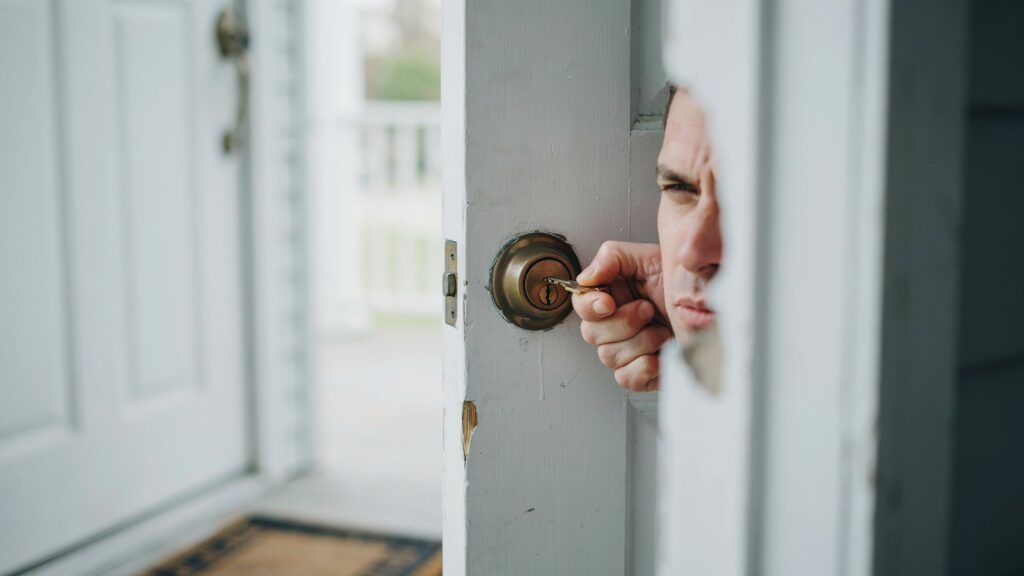
Most cases of a door lock stuck in the locked position can be fixed in under fifteen minutes with tools already sitting in a kitchen drawer. Start with the door itself, move to cleaning the cylinder, and only then try working the key. Skipping straight to force is how a stuck lock turns into a broken one.
Check Door Alignment First
Before touching the lock, rule out the door. Open the door fully and try locking the bolt with nothing in its way. If it slides in and out smoothly, the frame is likely pressing against the bolt when the door is closed, not the lock mechanism itself.
- Look at the hinges and tighten any screws that turn easily with a screwdriver
- Check if the strike plate lines up with the bolt when the door is shut; a gap of even 2-3 millimeters is enough to cause binding
- If the plate is slightly off, loosen its screws and shift it a fraction before retightening, rather than filing down the frame
This single check resolves the problem in a large share of cases, since a shifted frame is more common than an actual lock failure, especially in homes more than five or ten years old where wood has had time to settle.
Lubricate the Lock Cylinder
If the door lines up fine and the bolt still won’t release, the cylinder itself likely needs attention. Dust and old lubricant residue thicken inside the keyway over months of use, and that buildup is enough to keep pins from resetting properly.
- Use a dry lubricant like powdered graphite or a PTFE-based spray, never household oil, which attracts more dust and makes the problem worse over time
- Spray a small amount directly into the keyhole, then insert and remove the key several times to spread it through the pins
- Wipe off any excess so it doesn’t drip onto the door finish
This step alone clears up sticking that’s been building for weeks, and it’s worth doing as routine maintenance every six to twelve months, not just when the lock is already stuck.
Try the Key at a Slight Angle
If the door is aligned and the cylinder is clean but the bolt still won’t move, the key itself may be slightly worn. A key that’s lost a fraction of a millimeter off its ridges sometimes won’t seat pins correctly when inserted straight, but will when angled just slightly upward or downward.
- Insert the key about halfway, then gently rock it up or down while applying light turning pressure
- Never force a hard twist, since that’s the fastest way to snap a weakened key inside the cylinder
- Test a spare key if one exists; if it turns easily where the main key doesn’t, the key is the problem, not the lock
If none of these three steps free the bolt, the issue is likely a broken internal spring or pin, which typically means the lock body needs to be opened up or replaced rather than repaired at home. If you’re stuck in the meantime and need to get through the door another way, our How to Open a Door Lock Without a Locksmith guide covers safe options while you sort out the repair.
When Force Makes the Problem Worse
Forcing a stuck deadbolt almost never fixes it, and in most cases it turns a simple repair into an expensive one. The moment a key stops turning smoothly, that resistance is the lock telling you something is misaligned or worn, not a signal to push harder.
The most common outcome of forcing a jammed lock is snapping the key off inside the cylinder. This happens more often than people expect, especially with keys that are already a few years old and slightly weakened at the shoulder. Once a broken key is lodged inside the pins, what started as a stuck deadbolt becomes a full cylinder replacement, since removing a snapped key without damaging the pins usually isn’t a DIY job.
Pushing hard on the bolt itself carries its own risks:
- Bent bolt or throw mechanism: applying pressure while the bolt is misaligned with the strike plate can bend the bolt itself, which means the lock won’t seat correctly even after the door is realigned
- Worn-down pins: forcing a key that won’t seat right speeds up pin wear, and a lock in that state can eventually stop responding to any key at all, even a brand-new one
- Cracked strike plate or frame wood: repeatedly slamming or wrenching the door to force the bolt through can crack the wood around the strike plate, which then needs frame repair before the lock will ever sit right again
A good rule of thumb: if a key or bolt doesn’t move with light, steady pressure, stop and go back to checking the door alignment or cleaning the cylinder rather than adding force. This lines up with guidance from the Associated Locksmiths of America, which notes that if lubrication alone doesn’t resolve a stuck lock, a professional locksmith may need to rekey, replace the latch, or replace the entire lock. Locksmiths see this pattern constantly, a lock that could have been fixed with a $10 can of graphite lubricant instead needs a full cylinder replacement because someone kept twisting a resistant key. This is also where DIY and professional help genuinely part ways, since diagnosing whether a lock is salvageable versus damaged beyond repair is exactly the kind of judgment call worth getting a second opinion on before deciding to force anything further.
Smart Locks vs Traditional Locks: Does the Stuck Issue Differ?
Yes, but the cause shifts from mechanical to electronic. A traditional deadbolt gets stuck in the locked position from a misaligned frame, worn key, or dirty cylinder, while a smart lock usually jams because of a motor error, low batteries, or a firmware glitch, even when the mechanical bolt itself is fine.
That difference changes how you troubleshoot:
- Traditional deadbolt: stuck bolt almost always means a physical issue, alignment, lubrication, or a worn key, and the fixes above apply directly
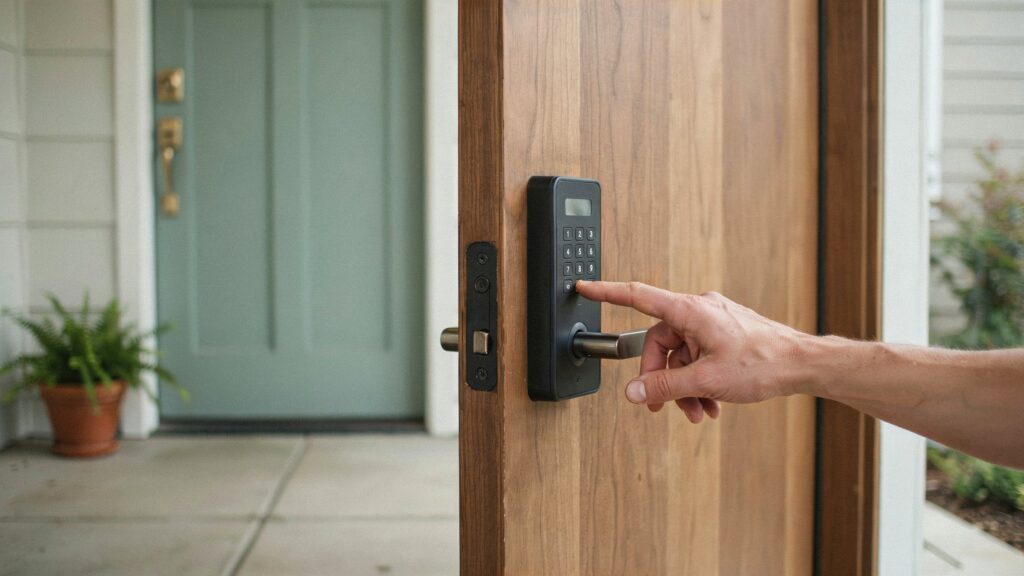
- Smart lock: a bolt that won’t retract despite good batteries often points to the motor failing mid-cycle, which app notifications or an error code on the keypad will usually flag
- Both types: a shifted door frame can jam either lock the same way, since the strike plate problem exists outside the lock itself
One added wrinkle with smart locks is that a stuck bolt can sometimes be cleared with a manual override or app reset, something a traditional lock simply doesn’t offer. Anyone deciding between the two, or wondering if a smart lock is worth the switch after dealing with a jammed deadbolt, can get a fuller side-by-side breakdown in our Smart Lock vs Traditional Lock: Pros and Cons guide.
When to Call a Locksmith Instead of DIY-ing It
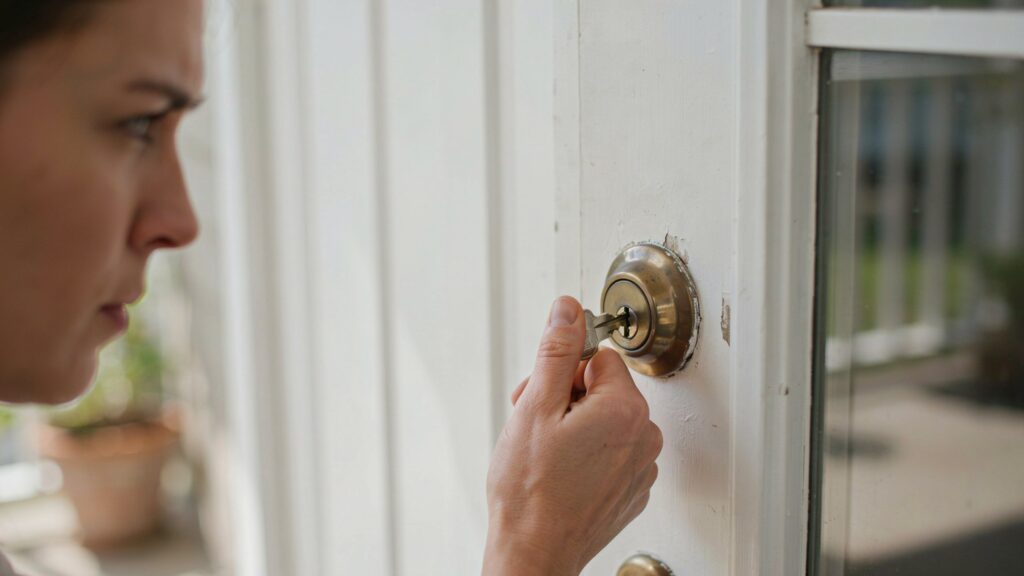
Call a locksmith once the door alignment, cleaning, and key checks are ruled out and the deadbolt is still stuck in the locked position, that combination almost always means an internal part has failed. At that point, opening the lock body without the right tools risks damaging it further, and a professional fix costs less than a botched attempt followed by a full replacement anyway.
A few situations point clearly toward calling in help rather than continuing to troubleshoot:
- The bolt won’t move even with the door open and the cylinder cleaned, which usually means a broken spring or pin inside the lock body
- A key has already snapped off inside the cylinder, since removing it without scratching the pins takes tools most homes don’t have
- The lock is original to the house and over ten years old, where internal wear is common enough that a locksmith can often spot a second failing part before it strands you again
- It’s the only working entry point, like a back door deadbolt that’s now the sole lock on the house after a front lock swap, where getting it wrong isn’t worth the risk
A licensed locksmith typically diagnoses and fixes a stuck deadbolt in under an hour, and most carry replacement cylinders on hand for common brands, so it rarely means living without a working lock overnight. According to the Associated Locksmiths of America, professional locksmiths routinely handle rekeying, lock replacement, and door hardware repair as standard services, not just emergency lockouts. This is also a reasonable moment to consider whether the whole unit is worth upgrading rather than repairing again, especially for anyone who’s already been weighing a move to keyless entry after dealing with one too many jammed keys.
Preventing This Problem Before It Happens Again
A little routine maintenance twice a year is usually all it takes to keep a deadbolt from getting stuck in the locked position again. Most of the causes covered earlier, frame shifts, dirty cylinders, worn keys, build up slowly, which means they’re just as easy to catch early as they are to fix after the fact.
A simple seasonal check covers most of it:
- Lubricate the cylinder every six months with a dry lubricant like graphite, ideally once before summer humidity sets in and once before winter cold
- Check the strike plate alignment after major temperature swings, since that’s when wood frames shift the most
- Replace keys showing visible wear every few years rather than waiting for one to jam, especially the main key used daily
- Tighten hinge screws during the same check, since loose hinges are one of the quietest ways a door drifts out of alignment over time
Keeping a spare key on hand also helps catch problems early. If a spare turns smoothly while the main key struggles, that’s a clear sign the key is wearing out before it actually breaks or jams for good.
For homes already considering an upgrade instead of ongoing upkeep, it’s worth comparing how a keyless or smart lock setup holds up over the same stretch of time, since some of these mechanical failure points, like a jammed cylinder, don’t apply the same way once a lock relies on a keypad or app instead of a physical key.
Final Thoughts
A door lock stuck in the locked position is frustrating, but rarely serious. It almost always comes down to one of four causes: a shifted frame, a worn key, a dirty cylinder, or a weak spring. Working through them in order, checking alignment first, then the cylinder, then the key, usually gets the bolt moving again without forcing anything.
A quick lubrication check twice a year keeps this from becoming a repeat problem. And if repairing it again feels less practical than replacing it, our smart lock vs traditional lock guide can help decide which way to go.
FAQs
How to fix a door lock that is stuck in the locked position?
Start by checking the door alignment, then clean the cylinder with a dry lubricant, and test a spare key before assuming the lock itself is broken.
Why is my latch not retracting?
A latch usually won’t retract because of a misaligned strike plate, dried-up lubricant inside the mechanism, or a weakened return spring.
How to remove a door lock that won’t open?
Unscrew the interior faceplate and mounting screws to access the lock body, then gently work the bolt free rather than forcing the door itself.
How to unlock a lock that is jammed?
Try the key at a slight angle while applying light, steady pressure, since a jammed lock often just needs the pins to seat correctly rather than more force.
What causes a door lock to jam?
Jamming typically comes from a shifted door frame, dirt buildup in the cylinder, or a key that’s worn down from years of daily use.
What to do when a lock gets stuck?
Rule out the door first by testing the bolt with it open, then clean and lubricate the cylinder before calling a locksmith if it’s still stuck.