Introduction
A fire alarm system should help you identify danger quickly and alert people when a potential fire is detected. A conventional fire alarm system uses separate zones to monitor different areas of a building, making it a practical option for many small properties. In this guide, you’ll learn how these systems work, their main components, key benefits and limitations, and how they compare with addressable systems.
Table of Contents
What Is a Conventional Fire Alarm System?
A conventional fire alarm system uses designated zones to monitor different areas of a building for signs of fire. When a connected smoke detector, heat detector, or manual pull station activates, the fire alarm control panel indicates the zone reporting the alarm and activates the configured warning devices.
Unlike an addressable fire alarm system, which can identify an individual device, a conventional system typically identifies the zone where the alarm originated rather than the exact detector. This makes it a practical option for some small offices, retail stores, and other buildings with relatively simple layouts.
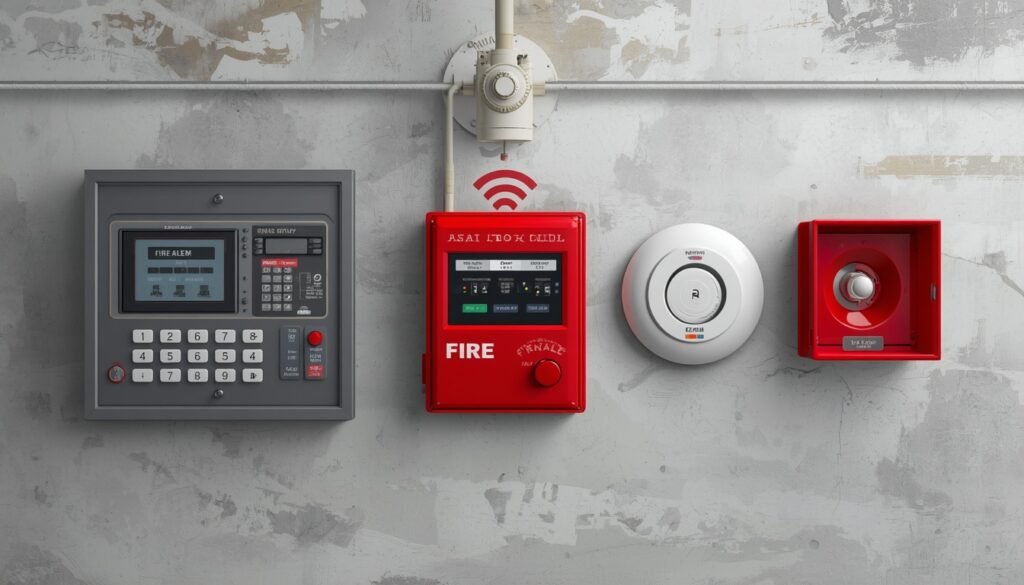
A conventional fire alarm system generally includes these components:
- Fire alarm control panel: Receives signals from connected devices and indicates the affected zone.
- Smoke detectors: Sense airborne particles produced by smoke and send a signal to the fire alarm system when smoke is detected.
- Heat detectors: Trigger an alarm when heat reaches a set level or rises rapidly, depending on the detector design.
- Manual pull stations: Allow occupants to activate the fire alarm manually.
- Notification appliances: Horns, bells, and strobes alert occupants when the system activates.
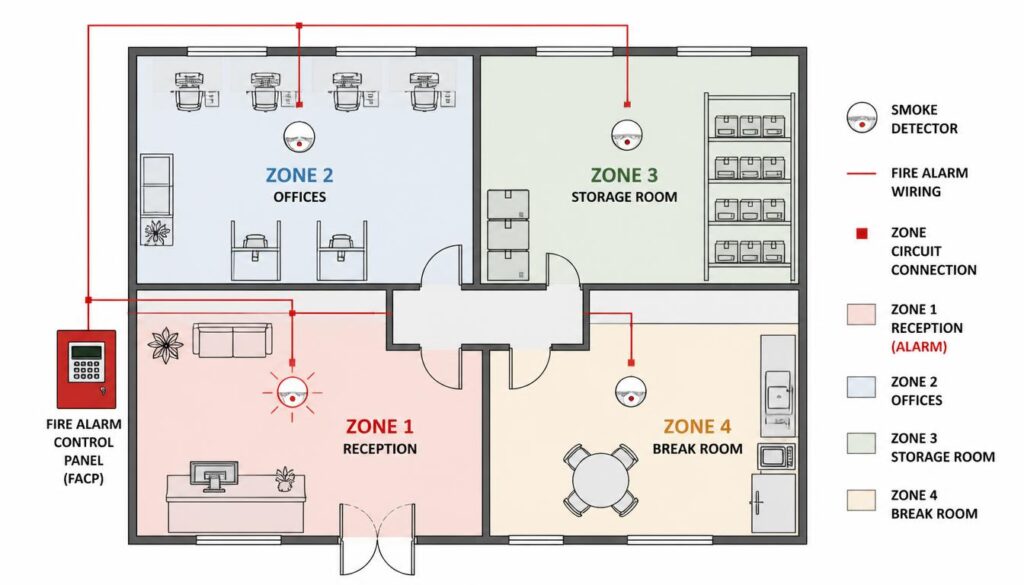
For example, imagine a small office divided into four fire alarm zones: reception, offices, storage, and the break room. If a smoke detector activates in the storage area, the control panel identifies that zone, helping staff and emergency responders understand where the alarm originated. The system may not identify the exact detector, so further investigation is necessary.
Zone-based fire detection can be a practical option for smaller buildings, depending on the property’s size, layout, fire safety requirements, and applicable U.S. codes. Professional installation, routine inspections, and proper testing help keep the equipment working reliably.
For related fire safety information, read our guide on smoke detector and carbon monoxide detector requirements in California, which explains detector requirements and installation considerations for residential properties.
How Does a Conventional Fire Alarm System Work?
A conventional fire alarm system monitors different building zones for signs of fire. When a smoke detector, heat detector, or manual pull station activates, the control panel identifies the affected zone and triggers the connected alarms.
The system works through three main steps:
- Detection: Smoke detectors sense smoke, while heat detectors respond to specific temperature changes. Manual pull stations allow people to raise an alarm.
- Signal processing: The fire alarm control panel receives the signal and indicates the zone reporting the alarm.
- Occupant warning: Connected horns, bells, or strobe lights alert people to the potential fire.
For example, if a smoke detector activates in a store’s stockroom, the panel indicates the corresponding zone so staff know which area needs attention. The exact detector may not be identified.
What Are the Main Components of a Conventional Fire Alarm System?
A zone-based fire detection setup includes a control panel, smoke and heat detectors, manual pull stations, and alarm notification devices. Each component plays a role in detecting fire indicators, showing the affected area, and alerting people inside the building.
1. Fire Alarm Control Panel
The fire alarm control panel is the central unit that receives signals from connected devices and indicates which zone has an alarm or fault condition. It also controls alarm notifications according to the system’s design and configuration.
2. Smoke and Heat Detectors
Smoke detectors sense airborne particles associated with smoke, while heat detectors respond to temperature conditions specified by their design. Both help identify signs of a potential fire, but they work differently.
- Smoke detectors: Commonly installed in areas where early smoke detection is needed.
- Heat detectors: May be suitable for certain locations where smoke detectors could be affected by dust, fumes, or normal operating conditions.
Detector selection and placement should follow the manufacturer’s instructions and applicable fire codes.
3. Manual Pull Stations
Manual pull stations allow someone to activate the fire alarm after noticing smoke, flames, or another sign of fire. They are commonly placed near exits and other accessible locations according to applicable requirements.
4. Notification Appliances
Horns, bells, and visual strobe devices alert occupants when the system enters an alarm condition. Audible and visual notifications can help people recognize an emergency, including in noisy environments or where a person may not hear a conventional alarm sound.
5. Wiring and Zone Circuits
Wiring connects detectors, manual pull stations, and other compatible devices to the fire alarm control panel. In a conventional system, devices are arranged into zone circuits so the panel can indicate the general area associated with an alarm.
6. Backup Power Supply
A fire alarm system typically includes a primary power source and standby batteries. Backup power helps the system continue operating during a building power outage, provided the batteries are properly maintained and the system is designed and installed correctly.
For additional context on residential detection devices, read CrimTechHub’s guide to smoke detector and carbon monoxide detector requirements in California. It explains the separate roles of smoke alarms and carbon monoxide detectors in home safety.
What Are the Different Zones in a Conventional Fire Alarm System?
A zone-based fire detection network separates a building into designated areas monitored by connected devices. When a smoke detector, heat sensor, or manual call point is triggered, the control panel displays the zone in alarm, helping staff identify the general location of the potential fire.
How Fire Alarm Zones Work
Each zone connects compatible initiating devices through designated circuits to the fire alarm control panel. The panel monitors these circuits and indicates alarm or trouble conditions according to the system’s design.
For example, a small commercial building might use four zones:
- Zone 1 – Reception: Covers the entrance and front office.
- Zone 2 – Work areas: Covers offices and meeting rooms.
- Zone 3 – Storage: Covers the stockroom or storage area.
- Zone 4 – Break room: Covers the staff kitchen and nearby space.
If a smoke detector in the storage room activates, the panel indicates an alarm in Zone 3. Staff can use that information to identify the area that needs attention. However, the panel may not identify the exact detector, so the reported zone must be investigated.
Why Are Fire Alarm Zones Important?
Zone-based detection helps building staff identify the area reporting a fire alarm without checking the entire property. It also helps technicians trace wiring faults, troubleshoot the fire alarm system, and perform routine maintenance more efficiently.
The main benefits include:
- Clearer alarm location: Identifies the general area where an alarm originated.
- Simpler troubleshooting: Helps technicians narrow down the circuit or area requiring inspection.
- Practical system organization: Groups detectors and manual pull stations according to the building layout and applicable requirements.
How Many Zones Does a Conventional Fire Alarm System Need?
The number of zones depends on the building’s size, layout, occupancy, fire protection requirements, and applicable codes. A small property may need fewer zones than a building with several floors or distinct fire risk areas. There is no single zone count that suits every building.
Zones should be planned so that the control panel provides useful location information and meets applicable requirements. A qualified fire alarm professional can determine the appropriate arrangement for a specific property.
For a related look at how alarm panels work with different sensors, see CrimTechHub’s guide to the Gemini home alarm system and its control panel. Although it covers a different type of alarm system, it provides useful background on alarm components and system operation.
What Are the Advantages and Disadvantages of a Conventional Fire Alarm System?
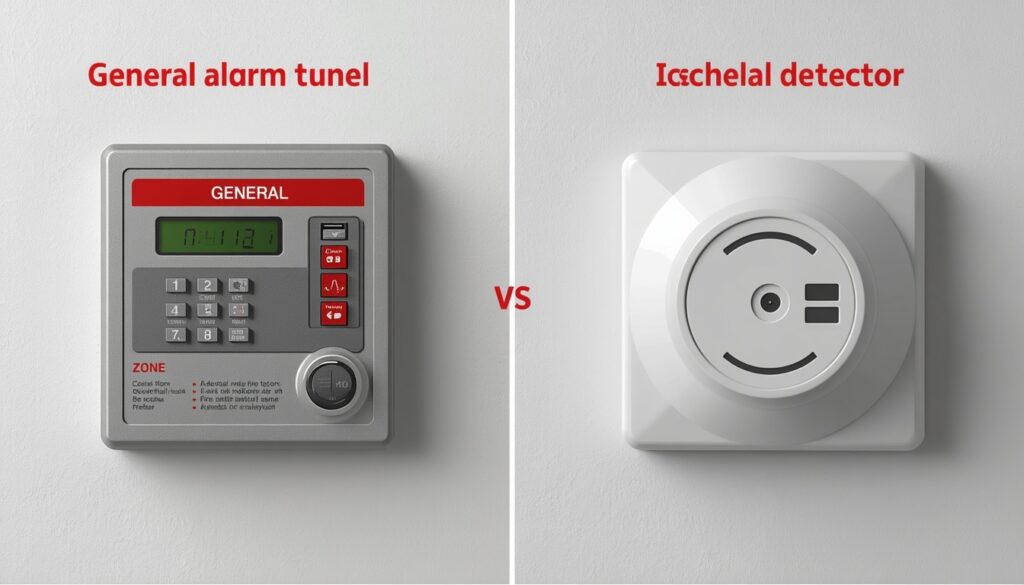
Zone-based fire detection is often suitable for small buildings because it uses a simple control panel and clearly defined detection areas. However, the system reports the affected zone rather than the individual device, so technicians may need to check several detectors to locate the source of an alarm.
Advantages of a Conventional Fire Alarm System
For properties with straightforward layouts, zone-based fire detection can offer a practical way to monitor for fire hazards without the extra complexity of identifying each individual detector.
Its main advantages include:
- Straightforward operation: The control panel indicates which zone has an alarm, making the information easier to understand.
- Ideal for smaller buildings: Small offices, neighborhood shops, and other compact properties may work well with zone-based fire detection, where identifying the affected area is often sufficient for locating a potential fire.
- Zone-based troubleshooting: Technicians can narrow down an alarm or wiring fault to the affected zone before investigating further.
- Potentially lower initial cost: Conventional equipment may cost less than comparable addressable equipment, although the total installed cost depends on wiring, labor, building layout, and code requirements.
- Established technology: Conventional systems have a long history of use in commercial fire detection and can be maintained by qualified fire alarm technicians.
Disadvantages of a Conventional Fire Alarm System
The main trade-off is limited location detail. As a building grows or its layout becomes more complex, identifying the source of an alarm can take more time.
Important limitations include:
- Limited device identification: The panel generally reports the zone, not the exact smoke detector or manual pull station.
- More investigation during alarms: Staff or technicians may need to check several devices within the affected zone.
- Less flexibility for expansion: Adding devices or changing zone arrangements may require additional circuit work and careful system planning.
- Potentially more complex troubleshooting in large buildings: A zone containing many devices can take longer to inspect than a system that identifies individual devices.
- Building-specific limitations: A conventional system may not meet the needs or applicable code requirements of a larger or more complex property.
Is a Conventional Fire Alarm System Worth It?
It can be a sensible option when a building has a straightforward layout and zone-level identification meets its fire protection needs. For example, a small shop with three clearly separated areas may be easier to manage than a multistory office with dozens of rooms.
The decision should consider installation costs, future expansion, maintenance, and local fire codes—not just the equipment price. A qualified fire alarm professional can help determine whether a conventional or addressable system is appropriate.
For broader context on alarm monitoring and connected security equipment, see CrimTechHub’s guide to how the Alliance home security system works.
How Is a Conventional Fire Alarm System Used in Real Buildings?
Zone-based fire detection is often considered for properties where connected devices can be organized into clearly defined areas and the control panel provides enough information to locate an alarm. Depending on the building layout, occupancy, and local fire safety requirements, this setup may suit some small offices and retail spaces.
Small Offices
A small office may divide its reception area, workspaces, and storage room into separate fire alarm zones. If a detector activates in the storage area, the control panel indicates that zone, helping staff and emergency responders focus their attention.
The actual number and arrangement of zones depend on the building’s design and applicable requirements.
Retail Stores
A neighborhood store may have a sales floor, stockroom, and back office. Grouping devices by area can help staff understand where an alarm originated without searching every part of the property.
For stores with multiple floors or complex layouts, the designer must assess whether zone-level identification provides enough detail.
Small Commercial Buildings
Some small commercial properties use conventional fire alarm panels to connect smoke detectors, heat detectors, manual pull stations, and notification appliances. The system can provide building-wide warning while identifying the zone reporting the alarm.
However, a building’s size alone does not determine which system is acceptable. Occupancy type, building codes, local amendments, and fire protection requirements all matter.
Existing Buildings and Renovations
A conventional fire alarm system may also be considered when upgrading an older building, but existing wiring and equipment must be assessed before reuse. Compatibility, circuit condition, system capacity, and current code requirements can affect the decision.
A qualified fire alarm contractor should inspect the existing installation and determine whether an upgrade or a different system design is needed.
What Should Building Owners Consider Before Installation?
Before choosing a conventional fire alarm system, building owners should review:
- Building layout: Can staff and responders identify the affected area quickly from the zone information?
- Occupancy and fire risks: What type of activity takes place in each area?
- Code compliance: What do the locally adopted fire and building codes require?
- Installation and upkeep: Check whether qualified fire alarm technicians are available to install, inspect, test, and maintain the equipment according to applicable safety codes.
- Future changes: Will renovations or expansion make more detailed device identification useful?
A conventional system should be selected based on the property’s actual fire protection needs, not simply because it appears less expensive.
For related information about how alarm panels and sensors work together, read CrimTechHub’s guide to the Gemini home alarm system and its operation. Although it covers a different type of alarm system, it offers additional background on control panels, sensors, and alarm signals.
What Is the Difference Between Conventional and Addressable Fire Alarm Systems?
A zone-based setup shows which section of a building has triggered an alarm, whereas an addressable system pinpoints the individual smoke detector, heat sensor, or other device that reported the problem to the control panel.
Both systems can detect signs of fire and alert building occupants. The right choice depends on the building layout, required location detail, installation costs, and applicable fire codes.
How Conventional and Addressable Systems Compare
| Feature | Conventional Fire Alarm System | Addressable Fire Alarm System |
| Alarm location | Identifies the affected zone | Identifies the individual device |
| Device identification | Limited to zone-level information | Provides device-specific information |
| Building suitability | Often considered for smaller, simpler properties | Often useful in larger or more complex buildings |
| Troubleshooting | May require checking several devices in one zone | Helps technicians identify the reporting device |
| Installation cost | May have a lower initial equipment cost | May have a higher initial equipment cost |
| Expansion | Depends on available zones and circuit capacity | Depends on panel capacity, device limits, and system design |
Actual costs and capabilities vary by manufacturer, building design, wiring requirements, and installation conditions.
How Alarm Location Identification Works
Consider a small retail store with three zones: the sales floor, stockroom, and office. If smoke is detected in the stockroom, a conventional panel indicates the affected zone. A technician may then need to check the detectors in that area to identify the exact source.
An addressable system can display the specific device reporting the alarm, such as a smoke detector in the stockroom. This additional detail can help staff and technicians locate the reported problem more quickly.
Which System Is Better for Different Buildings?
A conventional fire alarm system may suit a small office, shop, or other property with a straightforward layout, provided it meets applicable requirements. An addressable system may be more practical for a multistory office, hotel, school, or large commercial building where identifying individual devices is especially useful.
The right option depends on the building’s size and use, required fire safety standards, installation costs, and whether the system may need to support additional devices in the future.
How Do You Choose the Right Conventional Fire Alarm System?
Choosing the right conventional fire alarm system means matching the control panel, detection devices, zone layout, and backup power to the building’s fire safety needs. Before comparing equipment prices, consider the building’s size, occupancy, applicable fire codes, and the level of alarm location detail required.
1. Consider the Building Size and Layout
Start by reviewing the number of rooms, floors, exits, and areas that need fire detection. A small, single-story retail store may be easier to divide into zones than a multistory office with several departments.
Ask whether staff can quickly identify the affected area from the control panel’s zone indication. If a zone covers too many rooms or a large floor, locating the source of an alarm may take longer.
2. Plan the Fire Alarm Zones
Each zone should provide useful information about the area reporting an alarm. Zone planning must account for building layout, detector locations, circuit limits, and applicable code requirements.
Before installation, confirm that:
- Each zone covers an appropriate area for the building’s design.
- The control panel clearly indicates alarm and trouble conditions.
- The proposed arrangement meets applicable fire code requirements.
3. Check Device and Panel Compatibility
Not every smoke detector, heat detector, or manual pull station works with every fire alarm panel. Devices must be compatible with the control equipment and approved for the intended application.
Check the manufacturer’s documentation for supported devices, wiring requirements, circuit capacity, and notification appliance compatibility. This can prevent installation problems and costly changes later.
4. Compare Installation and Long-Term Costs
The initial price is only one part of the total cost of a fire alarm system. Wiring, labor, control panel capacity, notification appliances, inspections, and future maintenance can affect the final expense.
When comparing quotes, look at the complete installation rather than the panel alone. A lower equipment price may not result in a lower overall cost if the building needs extensive wiring or additional circuits.
5. Review Backup Power and Maintenance
A properly designed system needs a suitable standby power supply to maintain operation during a power outage. Battery capacity and other requirements depend on the system design and applicable codes.
Ask the installer about routine testing, inspection schedules, battery replacement, and access to qualified service technicians. Regular maintenance helps identify faults before the system is needed in an emergency.
6. Confirm Local Fire Code Requirements
Fire alarm requirements in the United States vary according to building use, occupancy, construction, and local regulations. The locally adopted codes and the authority having jurisdiction determine which requirements apply to a particular property.
Before purchasing equipment, consult a qualified fire alarm contractor and the relevant local building or fire department. They can help determine whether a conventional system is permitted and whether additional detection, notification, monitoring, or other features are required.
For more background on security system planning, see CrimTechHub’s guide to understanding how home security systems work. If professional monitoring is also part of your property’s safety plan, our article on Ring alarm professional monitoring explains how a monitored security system handles alerts.
The best option is one that matches the property’s size, layout, and fire safety needs rather than focusing on upfront cost alone. Proper system design, compatible detection devices, and routine maintenance help ensure dependable fire monitoring and clear identification of the affected zone when an alarm is triggered.
How Should a Conventional Fire Alarm System Be Tested and Maintained?
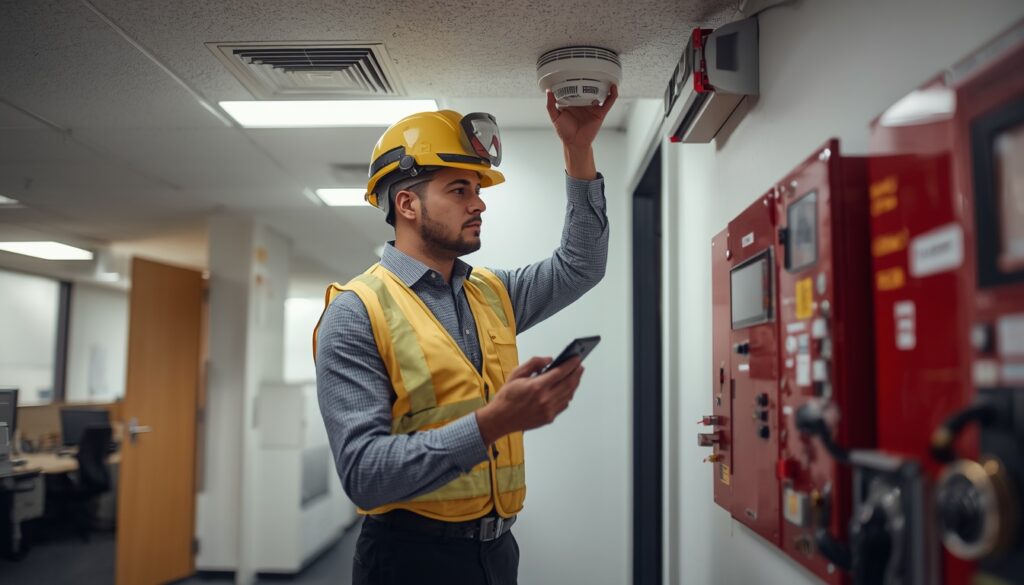
A conventional fire alarm system should be inspected, tested, and maintained on a regular schedule to confirm that its detectors, control panel, alarm signals, and backup power work as intended. Testing should follow the manufacturer’s instructions, applicable fire codes, and the requirements set by the local authority having jurisdiction.
Routine maintenance matters because a detector, wiring fault, or depleted backup battery can affect system performance even when the control panel appears normal.
What Should Be Checked During a Fire Alarm Inspection?
A qualified fire alarm technician should examine the system for visible damage, trouble signals, and signs of deterioration. The inspection should cover the main components and confirm that they remain suitable for the building.
Key checks include:
- Fire alarm control panel: Check for active trouble indicators, abnormal conditions, and proper panel operation.
- Smoke and heat detectors: Inspect and functionally test devices according to the manufacturer’s instructions and applicable requirements.
- Manual pull stations: Confirm that the stations are accessible, clearly visible, and operating correctly.
- Notification appliances: Verify that required horns, bells, and visual strobes operate as intended.
- Wiring and zone circuits: Look for damage, loose connections, ground faults, or other reported circuit problems.
- Backup batteries: Check battery condition and standby power performance according to the system’s specifications and required testing procedures.
The exact inspection and testing requirements depend on the system, building type, and applicable codes.
How Often Should a Conventional Fire Alarm System Be Tested?
Testing frequency depends on the type of device, building occupancy, adopted fire codes, and manufacturer instructions. There is no single schedule that applies to every conventional fire alarm system.
Building owners should maintain a written inspection and testing schedule that covers the control panel, initiating devices, notification appliances, and backup power.
For example, if a small office develops a wiring fault, the control panel may display a trouble signal. A technician should investigate the cause, correct the problem, and verify that the affected circuit operates properly rather than simply clearing the warning.
Why Should a Qualified Technician Handle Fire Alarm Testing?
A fire alarm system involves electrical circuits, detection devices, notification equipment, and sometimes connections to other building safety systems. Testing these components incorrectly can cause false alarms or leave part of the system unable to respond as intended.
A qualified technician can:
- Test detectors and manual pull stations using approved procedures.
- Confirm that the control panel receives and displays the correct signals.
- Check audible and visual notification appliances.
- Inspect wiring, zone circuits, and backup batteries.
- Document faults, repairs, and test results.
Before testing begins, notify the relevant building staff and monitoring service to help prevent unnecessary emergency responses. Once testing is complete, confirm that the system has been restored to normal operation and that any temporarily disabled functions have been returned to service.
Follow Fire Codes and Keep Maintenance Records
In the United States, NFPA 72, National Fire Alarm and Signaling Code, provides requirements for fire alarm system installation, inspection, testing, and maintenance. The requirements that apply to a particular property depend on the locally adopted code, amendments, and authority having jurisdiction.
For authoritative guidance, read the National Fire Protection Association’s explanation of fire alarm codes and standards. It explains how NFPA 72 relates to fire alarm system design, operation, and ongoing maintenance.
Keep records of inspections, test dates, identified faults, corrective work, and the technician responsible. These records help building managers track recurring problems and demonstrate that maintenance has been addressed.
The bottom line: Regular inspection and testing help keep a conventional fire alarm system ready to respond when needed. Follow the required schedule, use qualified technicians, correct faults promptly, and verify that every tested component is returned to normal operation.
Should You Choose a Zone-Based Fire Alarm System for Your Property?
A conventional fire alarm system may be a good choice for small offices, retail stores, and other buildings with simple layouts where zone-level alarm identification meets fire safety requirements. An addressable fire alarm system may be more suitable for larger buildings that need to identify individual detectors quickly.
Before choosing a system, consider:
- Building size: How many rooms and areas need fire detection?
- Alarm location: Is identifying the affected zone enough, or is individual device identification important?
- Budget and maintenance: What are the installation costs and long-term service needs?
- Fire codes: Does the system meet local requirements for your building’s occupancy and use?
For example, a small shop with three clearly defined areas may work well with a conventional system, while a multistory office may benefit from an addressable system.
The best option depends on your building’s layout, fire protection needs, and applicable codes. For more information about protecting your property, explore CrimTechHub’s guide to home security systems
FAQs
1. What is a conventional fire alarm system?
A conventional fire alarm system divides a building into zones and indicates which zone has detected a possible fire. It typically uses smoke detectors, heat detectors, manual pull stations, and a fire alarm control panel.
2. What is the difference between a conventional and addressable fire alarm system?
A conventional system identifies the affected zone, while an addressable system can identify the individual device reporting an alarm. Addressable systems are often useful in larger or more complex buildings.
3. What are the three types of fire alarm systems?
The three commonly discussed categories are conventional, addressable, and wireless fire alarm systems. These differ in how devices communicate with the control panel and how the system is installed.
4. What are the 5 types of commercial fire alarm systems?
There is no single standard classification of exactly five types. Commercial systems may be described as conventional, addressable, wireless, hybrid, or intelligent addressable, depending on their design and terminology.
5. What are L1, L2, L3, and L4 fire alarm systems?
L1–L4 are categories used in UK fire alarm design standards to describe levels of automatic fire detection coverage:
L1: Detection throughout all areas, subject to specified exceptions.
L2: Detection in defined high-risk areas and escape routes.
L3: Detection to provide warning along escape routes and in rooms opening onto them.
L4: Detection in escape routes only.
These classifications are associated with UK standards and should not be confused with U.S. fire alarm system types.
6. What is a Type 4 fire alarm system?
The meaning depends on the standard being used. In some UK fire alarm terminology, Type 4 refers to a manual fire alarm system with manual call points and sounders, without automatic fire detection. Always check the applicable standard because terminology can vary.
About the Author: M. Bilal
M. Bilal holds a BS in Criminology and has an interest in home security, crime prevention, and safety awareness. He writes practical, research-based content to help readers understand security systems and make informed decisions about protecting their homes and families.