Introduction
You push the handle down, but the door won’t budge, and now you’re stuck on the wrong side of it. Knowing what to do when a door latch is stuck closed can save you a locksmith bill and a damaged frame. In most cases, the cause is simple: dirt, a dry mechanism, or a misaligned strike plate. This guide walks you through safe fixes, an emergency method, and when to call a pro.
Table of Contents
What to Do When a Door Latch Is Stuck Closed: Easy Fixes
A stuck door latch can turn a simple task into a frustrating problem, especially when the door will not open even though the handle seems to work normally. This can happen because of a misaligned door, worn latch parts, a damaged spring, pressure against the door frame, or a problem with the lock mechanism.
If you are wondering what to do when the door latch is stuck closed, start with simple, non-destructive steps before trying to remove the hardware. In many cases, you can release the latch without damaging the door, frame, or lock. If you also want to improve the overall protection of your entry door, understanding the role of door security devices can help you identify additional ways to strengthen your home’s security.
Why Does a Door Latch Get Stuck?
A door latch is designed to move smoothly when you turn the handle or lever. When it stops retracting, something may be preventing the latch mechanism from moving correctly.
Common causes include:
- Door or frame misalignment
- A loose or damaged door hinge
- Dirt or debris inside the latch
- A worn internal spring
- A bent latch bolt
- Pressure between the door and frame
- A damaged door handle or lever
- Corrosion inside the hardware
- A faulty lock mechanism
Sometimes the problem is not the latch itself. A door can shift slightly over time, causing the latch bolt to press tightly against the strike plate.
What to Do When Door Latch Is Stuck Closed
Before taking the lock apart, try the following steps in order.
1. Try the Door Handle Again
Turn the handle or lever slowly while gently pulling the door toward you. If that does not work, try pushing the door inward while turning the handle.
Changing the pressure on the door can help release a latch that is binding against the strike plate.
Do not force the handle aggressively. Excessive force can damage the spindle, handle, or internal latch mechanism.
2. Check for Door Pressure
If the door is closed tightly against the frame, the latch may be under pressure.
Try these combinations:
- Push the door firmly toward the frame while turning the handle.
- Pull the door slightly toward you while turning the handle.
- Lift the door handle slightly, then turn it to retract the stuck latch.
- If the door has sagged, gently lift it while operating the handle.
This is particularly useful when the hinges have loosened or the door has shifted slightly.
3. Lubricate the Latch
If the latch feels stiff or the handle does not move smoothly, lubrication may help.
Apply a small amount of a suitable lock or latch lubricant around the exposed latch area. Then operate the handle several times.
Avoid flooding the mechanism with lubricant. Excess products can collect dust and debris and may eventually make the problem worse.
4. Inspect the Door Handle
A broken handle can make it appear that the latch itself is stuck.
If the handle moves unusually loosely, does not return to its normal position, or turns without retracting the latch, the internal connection may have failed.
In this situation, the latch may need to be accessed through the handle assembly or replaced.
What to Do When a Door Latch Is Stuck Closed (Step-by-Step)
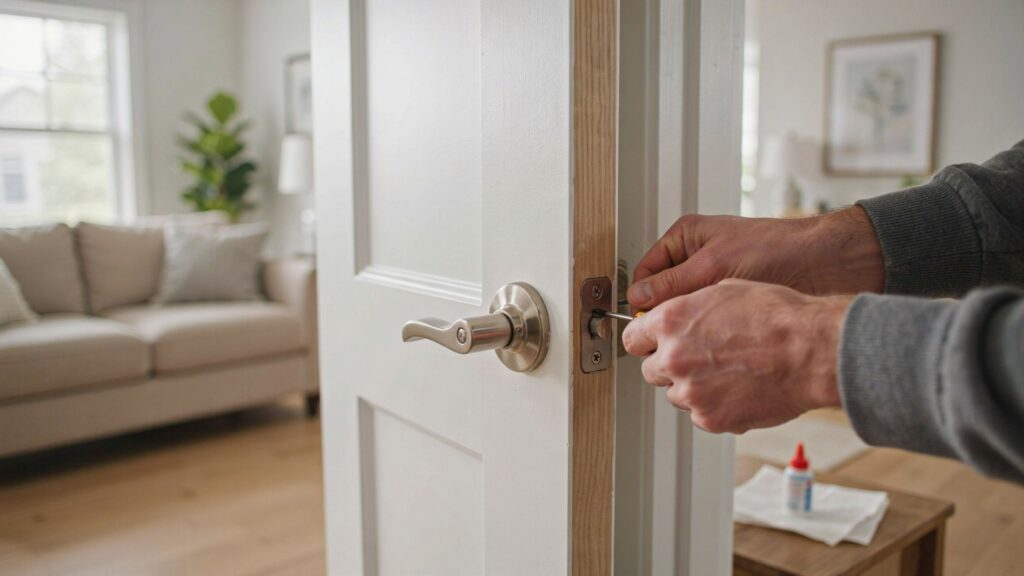
If the basic steps do not work, look at how the latch meets the strike plate. The latch bolt should move into the door frame opening without excessive friction. If it is rubbing heavily against the strike plate, the door may be misaligned.
For a helpful explanation of latch alignment and common door hardware problems, see this door latch repair guide from This Old House.
Check for:
- Scrape marks around the strike plate
- A door latch sitting too high or too low, so it misses the strike plate
- Loose hinge screws
- A door that appears to sag
- A strike plate that has shifted
Tightening loose hinge screws may correct minor alignment problems. However, avoid making major changes to the door frame unless you understand how the hardware is installed.
Can a Credit Card Open a Stuck Door Latch?
You may see advice online suggesting that a plastic card can be used to bypass a spring latch. However, this technique is not suitable for every door and can damage the weather stripping, paint, door edge, or lock hardware.
It also should not be used to bypass a lock on a property you do not have permission to access.
For your own home, apartment, or office, it is safer to troubleshoot the latch normally or contact the property owner, building manager, or a licensed locksmith when necessary.
When to Replace a Door Latch That Keeps Getting Stuck
A latch may need replacement when the internal mechanism is worn, broken, bent, or repeatedly sticks after adjustment.
Consider replacing the latch if:
- The latch does not retract fully.
- The handle feels loose or disconnected.
- The latch sticks repeatedly.
- The metal is visibly damaged.
- Lubrication does not improve movement.
- The door remains misaligned after basic adjustments.
A replacement latch should match the existing door hardware and the correct backset measurement. If you are unsure about compatibility, check the manufacturer’s specifications or ask a hardware professional.
When to Call a Locksmith
Some stuck door latch problems are better handled by a professional locksmith. Contact a licensed locksmith if the door remains locked and you cannot safely access the latch, the lock mechanism is damaged, or attempts to open the door could cause significant damage.
A locksmith can determine whether the problem is caused by the latch, cylinder, handle, door alignment, or another component.
If someone is trapped inside, there is a medical emergency, a fire, or another immediate danger, contact emergency services rather than spending time troubleshooting the door.
How to Keep a Door Latch From Sticking (Simple Maintenance Tips)
Regular maintenance can reduce the chance of another latch problem.
Keep the latch and surrounding hardware clean, check that the hinges remain tight, and pay attention to changes in how the door closes. If the door begins rubbing against the frame or requires extra force to close, address the alignment issue early.
You should also avoid slamming the door repeatedly because this can place unnecessary stress on the latch, hinges, and strike plate.
Final Thoughts
Knowing what to do when the door latch is stuck closed can help you solve a frustrating door problem without immediately replacing the entire lock. Start by reducing pressure on the latch, checking the handle, inspecting alignment, and using appropriate lubrication when needed.
If the latch is damaged or the door remains inaccessible, avoid excessive force. Professional help can prevent unnecessary damage to the door, frame, and locking hardware. Once the issue is resolved, you can also explore door security devices to add another layer of protection to your home.
FAQs
Why is my door latch not retracting completely?
A door latch may not retract fully because of door misalignment, a worn spring, dirt, or a damaged handle mechanism.
How do I reset a door latch?
Close the door, operate the handle several times, and check that the latch moves freely. If it still sticks, the latch may need adjustment or replacement.
How to open a door if the latch is broken?
If the latch is broken, avoid forcing the door. Check the handle and hinges first, or contact a locksmith if the door cannot be opened safely.
What to do if my door lock is jammed?
Try gently operating the key or handle while reducing pressure on the door. If the lock remains jammed, use an appropriate lock lubricant or contact a locksmith.
How can I fix a stuck door latch?
Check door alignment, tighten loose hinges, clean the latch, and apply a small amount of suitable lubricant. Replace the latch if it is damaged.
How to loosen a jammed lock?
Use a suitable lock lubricant and gently move the key or handle. Do not force it, as excessive pressure can damage the lock mechanism.
About the Author
Muhammad Bilal Shahid is a criminology graduate and security-focused content writer who researches practical home safety, door security, and modern protection solutions. His articles are based on reliable sources and practical safety guidance, written to help homeowners make informed decisions.