Introduction
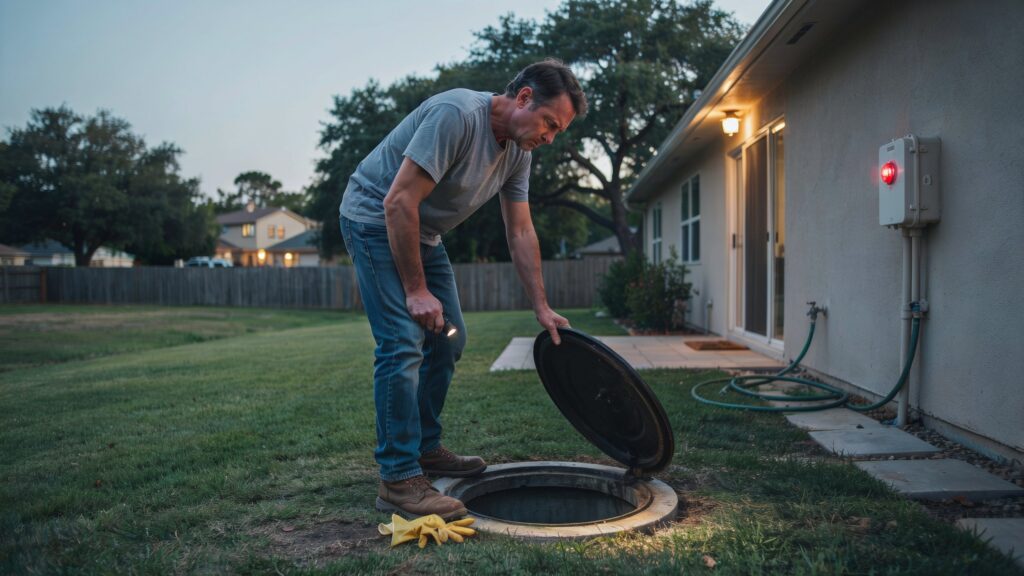
It’s 10 PM, the house is quiet, and suddenly an alarm goes off outside. Your mind jumps straight to sewage backups, flooding, and expensive repairs. If you’ve ever had a septic system alarm going off unexpectedly, you’re not alone. It happens to homeowners across the USA, and the first reaction is usually panic.
But the alarm isn’t your enemy. It’s an early warning, designed to protect your home before a small issue becomes a costly one. In this guide, you’ll learn what the alarm means, what to check first, and when to call a professional.
Table of Contents
What Does It Mean When Your Septic System Alarm Goes Off?
Most homeowners freeze when they hear that alarm. It’s loud and unexpected, but a septic system alarm going off is not a disaster. It’s a warning, much like a smoke detector. It doesn’t mean the damage is done. It means something needs your attention now, before it gets worse.
In most cases, the beeping means the water level in your septic tank is higher than it should be. If you ignore it, that extra water has nowhere to go, and a small alert can turn into an expensive, unpleasant problem. The good news is that most septic alarms have fixable causes. A calm response and a few quick checks can save you thousands in repairs and protect your yard, your home, and your family’s health.
So before you search for “emergency septic repair near me,” take a breath. If you also want to understand how other alarm systems protect your home, see our guide to home security alarm systems. Then keep reading to learn exactly what to do first.
How a Septic System Alarm Actually Works
Your septic system isn’t just a buried tank — it’s a small, self-contained wastewater management system. And like any system, it has a way of telling you when something’s off.
Here’s how the alert process works, step by step:
- Float Switch — A small device inside the tank that rises and falls with the water level. Once water crosses that threshold, the alarm kicks in.
- Pump — Moves wastewater out at a steady pace under normal conditions. If the pump slows down or fails, water backs up fast.
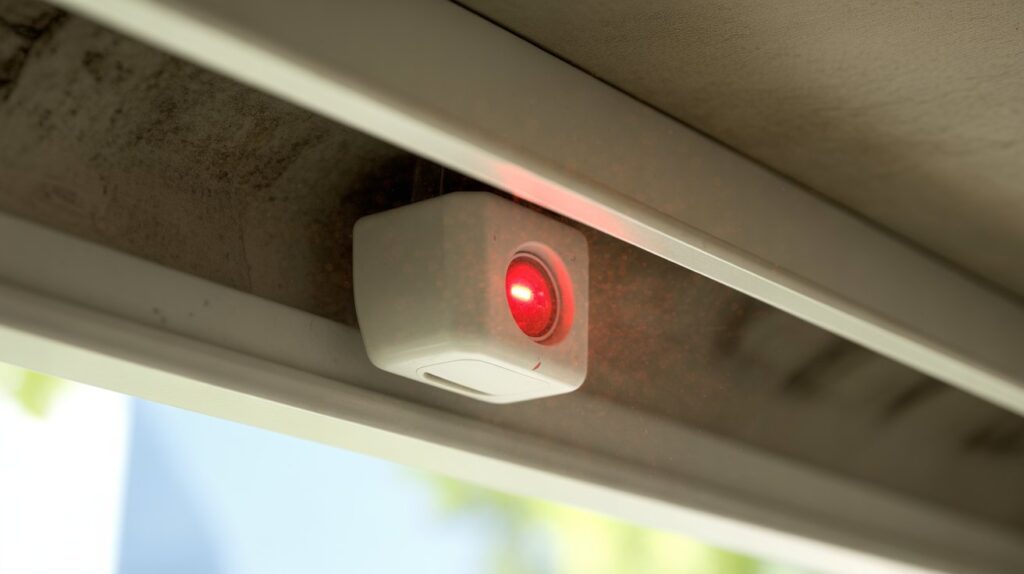
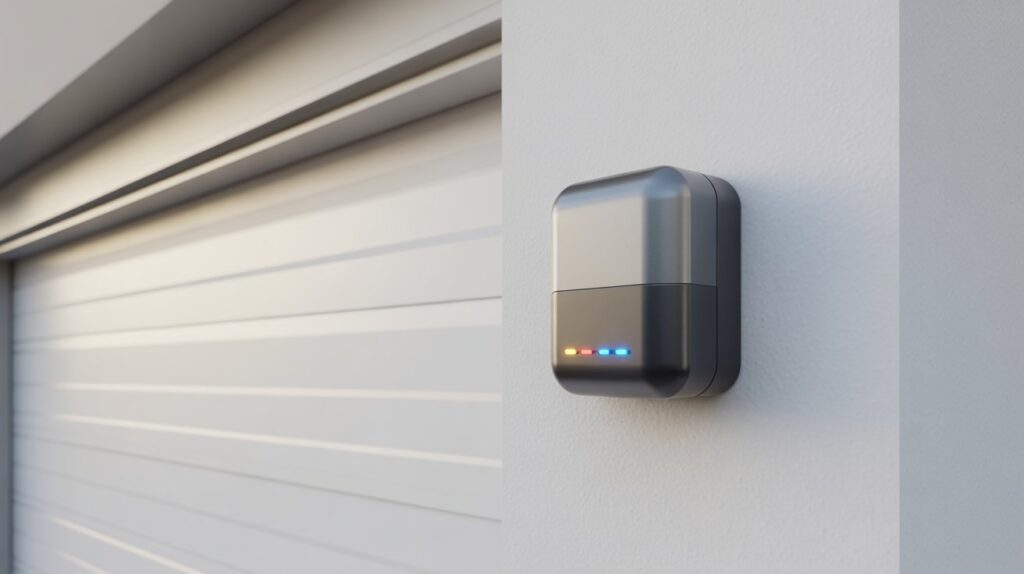
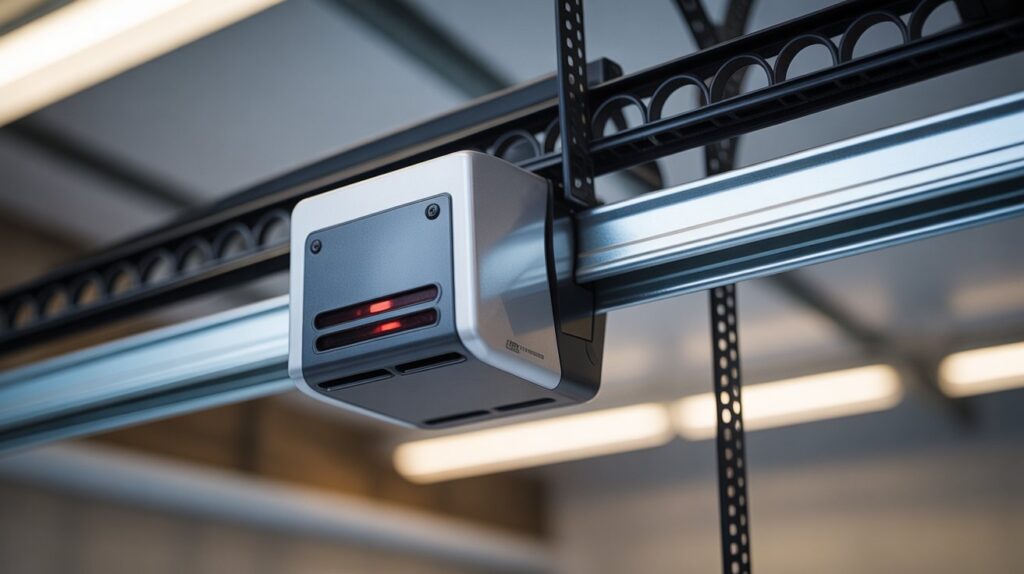
- Control Panel — Usually mounted in your garage or utility area.It signals you through both a visible light and an audible alert. A red light means high water — that’s your signal to act.
- High-Water Alert — The alarm fires before the tank overflows, giving you a window of time to respond before it turns into a real problem.
Think of it like a low-fuel warning in your car. It’s not saying you’re stranded — it’s saying don’t wait too long.
The septic system alarm going off is actually a well-designed safety feature. Once you understand how it works, it’s a lot less scary and a lot more manageable.

Common Reasons Your Septic Alarm Is Going Off
A septic system alarm going off rarely has just one cause, but a handful of problems show up again and again in homes across the USA. Knowing them helps you respond smarter, not just faster.
- Heavy Water Usage: Guests, back-to-back laundry loads, or several appliances running at once can fill the tank faster than the pump can handle.
- Septic Pump Failure: If the pump stops working, wastewater has nowhere to go. Water levels rise quickly and the alarm fires.
- Clogged Drain Field: A saturated or blocked drain field can’t absorb effluent properly, so water backs up into the tank and triggers the high-water alert.
- Power Outage: No power means no pump. Even a brief outage can raise water levels enough to set off the alarm once power returns.
- Float Switch Malfunction: A float switch stuck in the “up” position can cause a false alarm. It’s the simplest fix, but you should still check it before dismissing the alert.
Identify which cause you’re dealing with before you take action.
What to Do When Your Septic Alarm Goes Off
Ignoring the alarm is the worst move, and panicking is the second worst. Follow these steps instead.
Step 1: Reduce Water Use Right Away
Stop all non-essential water use: no laundry, long showers, or dishwasher cycles. If the issue is minor, this alone can bring the water level down within 24 hours.
Step 2: Check the Septic Control Panel
Find your control panel, usually in the garage or utility room, and look for a red light or alarm indicator. Most panels have a silence button. Press it to mute the beeping, but remember that silence doesn’t mean the problem is fixed. The light stays on until the issue is resolved.
Step 3: Wait and Watch
Give the system 6 to 8 hours after cutting water use. If the water level drops, the alarm light should turn off on its own. If it stays on or comes back, something deeper is wrong.
When to Stop DIY and Call a Septic Professional
Stop and call a professional if you notice any of these:
- The alarm keeps returning after a reset
- A sewage smell near the tank or drain field
- Wet or soggy patches in your yard
- A pump failure warning on the panel
At this point, your septic alarm is no longer a minor alert. It’s a sign you need professional help right away.
When to Call a Licensed Septic Professional
Some septic problems are simple. Others are not, and trying to fix the wrong one yourself can turn a routine service call into a major repair, or a health hazard for your household.
If your septic system alarm going off comes with any of these signs, stop what you’re doing and call a licensed septic technician right away:
- Sewage smell inside or outside your home: This is never normal. It means waste is backing up or escaping somewhere it shouldn’t.
- Gurgling drains or slow flushes: Your plumbing is telling you the tank is full or the drain field is failing.
- Soggy, unusually green patches in your yard: Effluent may be surfacing, which points to serious drain field failure.
- Alarm returns after reset: A recurring alarm means the root cause hasn’t been fixed. Don’t keep silencing it.
- Pump failure warning on the control panel: Pumps don’t fix themselves, and a failed pump needs prompt replacement.
Septic Failure: Health and Legal Risks
Septic failure isn’t just a property problem. Raw sewage contains harmful bacteria and pathogens that can contaminate groundwater and nearby wells. Many U.S. states also hold homeowners responsible for untreated septic failures, and ignoring repair deadlines can bring fines and legal trouble.
A licensed professional will inspect the pump, float switch, drain field, and tank levels, then give you a clear diagnosis. That one call protects your home, your family, and your legal standing.
How to Prevent Septic Alarms From Going Off in the Future
The best way to avoid that jarring beep is to start well before any warning appears. Most septic failures don’t happen overnight. They build slowly through neglect, bad habits, and missed maintenance. The good news is that keeping your system healthy takes only consistency and a little awareness.
Stick to a Regular Septic Tank Pumping Schedule
This is the single most important step. A tank that never gets pumped eventually fills up, and the alarm is the least of your problems.
- Pump your septic tank about every 3 to 5 years, as the EPA recommends for a typical household
- Larger households and heavy water users may need pumping more often, since tank size, household size, and water use all affect the schedule
- Keep a written record of every pump-out and inspection, which also helps protect your home’s resale value
- Don’t skip a scheduled pump-out just because the system seems fine, because prevention costs far less than repair
Build Smarter Water Habits
Everyday water use directly affects your septic system. Overloading the tank with too much water at once is one of the most common reasons septic alarms go off.
- Spread laundry loads across the week instead of doing them all in one day
- Fix leaky faucets and running toilets right away, since a single leaky toilet can add up to 200 gallons of water a day to your tank
- Install water-efficient fixtures like low-flow toilets and showerheads
- Limit garbage disposal use, because food waste breaks down slowly and speeds up sludge buildup
Schedule Professional Septic Inspections
Pumping alone isn’t enough. A licensed septic professional should inspect the whole system, including the pump, float switch, drain field, and control panel. Systems with pumps, float switches, or other mechanical parts, which are the kind that have alarms, should generally be inspected once a year.
- Regular inspections catch early warning signs before they trigger alarms or cause failure
- Float switch and pump checks confirm the alarm mechanism itself works
- Drain field assessments spot soil saturation or blockages long before they surface in your yard
- Control panel testing confirms your alarm will actually alert you, because a faulty alarm is as risky as no alarm
Stay ahead of your septic system’s maintenance needs and you’ll rarely, if ever, hear that alarm again.

Conclusion
A septic system alarm going off is never a comfortable moment, but it doesn’t have to be a scary one. You now know what triggers the alarm, what to do first, when to call a licensed septic professional, and how to prevent it from happening again. That puts you ahead of most homeowners.
Your septic system works quietly every day to protect your home and family. The least it asks is a little attention when it speaks up. So when was your last septic inspection? If you can’t remember, it’s time to schedule one. Don’t wait for the alarm. Take care of your system now, and you’ll never have to panic.
FAQs
What should I do if my septic alarm is going off?
Stop all water use immediately, check your control panel for a red light, silence the buzzer, and monitor the system for the next few hours.
Does a septic alarm mean my tank is full?
Not always — it means the water level is higher than normal, which could be from heavy usage, a pump issue, or a clogged drain field.
How long do you have after a septic alarm goes off?
You typically have 24 to 48 hours before it becomes a serious problem — but reducing water use immediately buys you more time.
Will a septic alarm go off by itself?
Yes, if the water level drops back to normal on its own, the alarm will reset automatically without any action needed.
How urgent is a septic alarm?
Treat it as urgent — not a full emergency, but something that needs attention within the same day, not next week.
Who do I call if my septic alarm is going off?
Call a licensed septic system technician or your local septic service company as soon as DIY checks don’t resolve it.
How much does septic alarm repair cost?
Costs vary widely — a simple float replacement may run $100 to $300, while pump failure or drain field repairs can cost significantly more.
What triggers a septic alarm?
High water levels inside the tank — caused by pump failure, heavy water use, power outages, or a malfunctioning float switch.
Can you unclog a drain field?
In some cases yes — hydro-jetting or aeration can help — but severe drain field failure often requires professional assessment or full replacement.