Introduction
California’s privacy laws set clear boundaries for apartment security cameras, and knowing them protects both tenants and landlords from disputes. A camera aimed at your own front door is almost always legal — but the moment it captures a shared hallway, a neighbor’s window, or audio without consent, you’re in different legal territory.
This guide covers exactly where that line sits: what tenants can install without landlord approval, what requires sign-off, and where California’s privacy rules draw a hard stop. It also flags what landlords themselves need to watch for when managing cameras in shared spaces. By the end, you’ll know how to secure your apartment fully within what California law allows.
Table of Contents
Why Apartment Security Camera Laws Matter More Than Ever
Apartment living has changed the security equation for renters. Package theft, unfamiliar visitors in hallways, and parking lot break-ins push more tenants and landlords toward cameras — but privacy expectations have grown just as fast, and in shared buildings the two often collide.
In a typical apartment, this tension shows up in a few clear ways:
- Your safety needs don’t stop at your door — monitoring deliveries or your entrance is a reasonable priority
- Your neighbor’s privacy starts right where yours ends — hallways, shared parking, and common walkways aren’t “your” space to record
- California enforces this boundary legally, not just socially
California has one of the strictest privacy frameworks in the country. Under the state’s two-party consent law (Penal Code 632), recording audio in an area where someone has a reasonable expectation of privacy — even a shared hallway — can carry legal consequences regardless of intent. Video-only recording has more flexibility, but placement still matters.
Most violations aren’t intentional. A renter installs a doorbell camera without checking its audio range or field of view, and it ends up capturing more of a neighbor’s space than expected. Knowing the actual rules — not general assumptions — is what prevents that.
Are Security Cameras Legal in California Apartments?
Yes — with clear conditions. California permits video security cameras in apartments as long as they’re placed in areas where a person has no reasonable expectation of privacy. That’s the legal test courts actually apply, and it’s why a camera aimed at your own door, patio, or package area is generally fine, while one aimed at a neighbor’s window is not.
The bigger legal risk isn’t video — it’s audio. Under Penal Code 632, recording sound in a space where someone expects privacy requires consent from all parties involved, not just one. A camera that also captures audio in a shared hallway can cross this line even if the video portion alone would’ve been legal.
In practice, a compliant setup follows these boundaries:
- Cameras should not capture bathrooms, bedrooms, or any space not owned by you — including a neighbor’s
- Audio recording without all-party consent is illegal in most apartment settings
- Camera angles should stay within your own doorway, patio, or entry point — not a neighbor’s door or window
- Common areas (lobbies, parking lots, shared hallways) usually fall under landlord authority, not individual tenants
A smart lock paired with a properly angled camera is often the safest way to cover your entry point without drifting into a neighbor’s space. Getting these details right protects you legally and avoids the kind of dispute that often starts with a simple misaligned camera angle.
California Privacy Laws That Directly Affect Apartment Cameras
Beyond the basic placement rule, a few specific legal provisions shape how apartment cameras must operate:
- California Civil Code 1708.8 addresses invasion of privacy through recording — it applies even when the camera owner didn’t intend harm, meaning accidental overreach (a camera angle drifting into a neighbor’s window) can still create liability.
- Homeowners associations and landlords can impose stricter rules than state law requires — a camera that’s technically legal under state privacy law can still violate your lease if the property has its own camera policy.
- Shared spaces need documented authority. Recording a hallway or lobby usually requires landlord sign-off, clear signage, or an HOA policy — not just a tenant’s personal decision.
- Default audio settings are the most common violation point. Most doorbell and security cameras record audio unless manually disabled, so checking your device settings matters as much as knowing the law itself.
- Camera footage storage and sharing also carry legal weight — footage that captures a neighbor’s private activity can create liability even after the fact, if shared or stored improperly.
These provisions exist for one reason: security and privacy aren’t opposing goals, but achieving both requires attention to details most people overlook when setting up a camera.
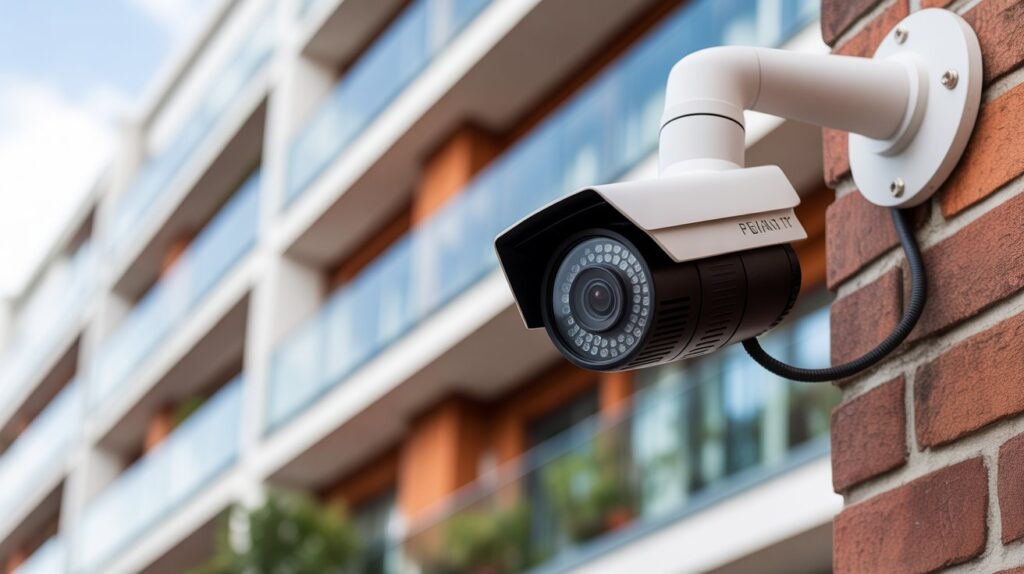
Where You Can Legally Install Security Cameras in an Apartment
Placement is what separates a compliant setup from a legal problem. The rule of thumb: if the camera only sees space you control, you’re on solid ground.
Inside Your Apartment Unit
You can freely install cameras in spaces you fully control — living rooms, kitchens, home offices. The one hard boundary is spaces where guests or roommates expect privacy, like bathrooms or bedrooms that aren’t yours to monitor.
Entry Points and Front Doors
A camera aimed at your own doorway is standard practice for package theft and visitor monitoring, and it’s legal in almost every case. The line gets crossed when the camera’s field of view extends into a neighboring unit’s entrance or captures another resident going about their day.
Balconies and Patios
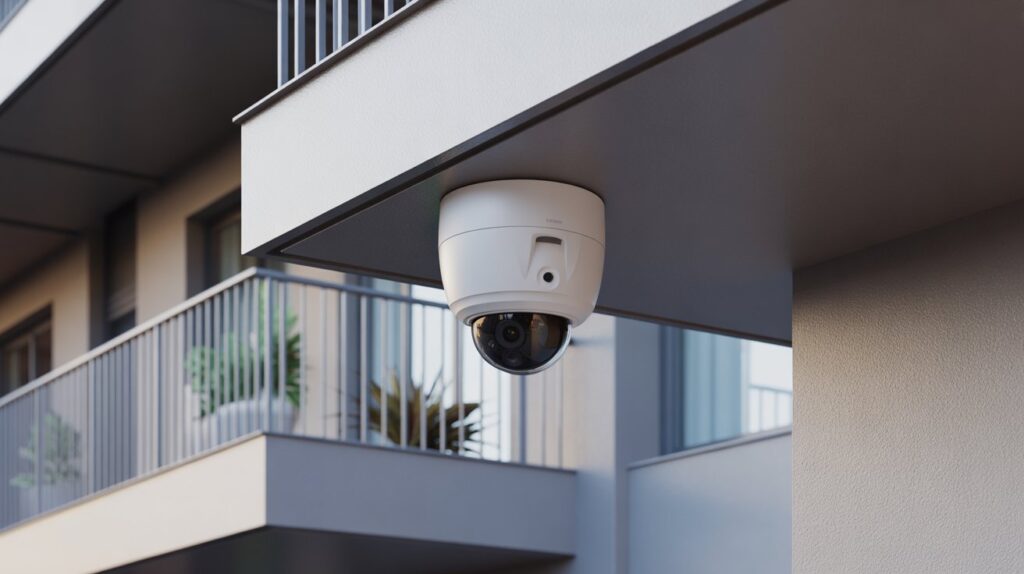
A private balcony or patio can have a camera too — but direction matters more than location here. Angle it inward, toward your own space, not outward toward a neighbor’s balcony or a shared walkway. This single adjustment prevents most patio-camera disputes before they start.
Personal Control and Camera Settings
Legal compliance isn’t only about where you point the camera — it’s also about what it captures. Turn off audio recording unless you’ve confirmed all-party consent, narrow the motion zones to your own space, and periodically check that a firmware update hasn’t reset your privacy settings back to default.
Places Where Apartment Security Cameras Are Not Allowed
Just as important as knowing where cameras are permitted is knowing where they’re flatly off-limits — regardless of intent.
- Bathrooms and Restrooms: No exceptions, even in your own unit if it’s shared with roommates. Recording here isn’t just a privacy violation — it can rise to criminal liability under California law.
- Bedrooms Not Fully Controlled by You: In a shared apartment or rented room, a housemate’s sleeping area is off-limits, even if the camera is technically inside “your” unit.
- Shared Common Areas: Hallways, laundry rooms, gyms, and lobbies belong to the building, not the individual tenant. Installing a camera here without landlord or HOA approval risks both a lease violation and a privacy complaint.
- Neighboring Units or Windows: A camera doesn’t need intent to cause a problem — if its field of view happens to catch a neighbor’s window or doorway, that’s enough to trigger a dispute.
- Any Area Outside Your Direct Control: If you don’t have legal authority over a space, you don’t have the right to record it — audio or video, accidental or not.
The pattern across all of these is the same: authority over the space, not just physical access to it, is what determines whether a camera placement is legal.
What Landlords Can and Cannot Do With Security Cameras
Landlords play a key role in apartment safety, but California’s privacy rules still apply — cameras are a useful tool for protecting property and residents, but misuse can lead to legal consequences and erode tenant trust.
Landlords can legally:
- Install cameras in common areas such as lobbies, hallways, parking lots, or building entrances to enhance security
- Use cameras for property protection and monitoring unauthorized access, theft, or vandalism
- Inform tenants about camera placement, purpose, and recording policies to maintain transparency
- Ensure cameras are video-only, disabling audio to comply with California’s two-party consent law
Landlords cannot:
- Place cameras in private tenant spaces, including apartments, bathrooms, or bedrooms
- Record audio in private areas without consent
- Install cameras in a way that captures neighbors’ units or windows, invading privacy
- Fail to disclose camera installation policies or changes, since transparency is legally required and builds trust
A landlord who wants added coverage without crossing these lines can pair common-area cameras with a motion sensor light at entrances — it improves visibility without expanding what’s actually being recorded. Following these rules lets landlords provide effective security while respecting tenant privacy, keeping the property compliant and residents confident in the system.
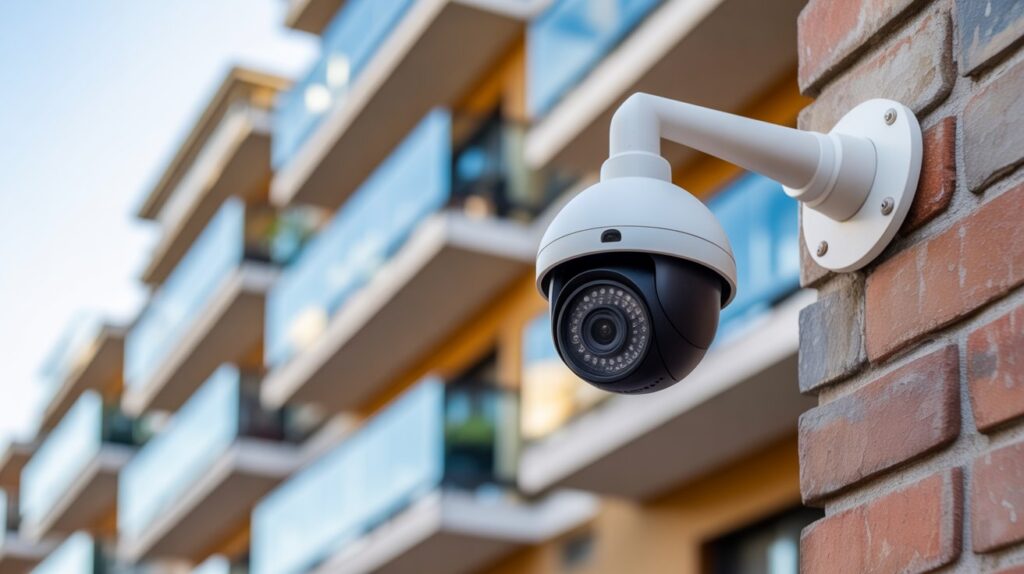
How to Stay Safe Without Violating California Camera Laws
Good security and legal compliance aren’t in tension — they just require a slightly more deliberate setup than plugging in a camera and pointing it wherever’s convenient.
- Keep the field of view tight to your own property. Front door, balcony, or patio — not the walkway beyond it. Most cameras let you draw a custom detection zone; use it.
- Default to video-only unless you’ve confirmed consent. If a camera’s audio can’t be disabled, check the settings menu specifically — many brands bury this option rather than making it a toggle.
- Layer your security instead of relying on one camera. A smart lock on your door plus a package lockbox often solves the same problem a wide-angle camera would, without the privacy exposure.
- Give shared-space neighbors a heads-up. If your camera’s motion zone could plausibly catch a shared hallway edge, a short conversation (or a note to your landlord) prevents a complaint before it happens.
- Set a recording retention limit. Footage sitting indefinitely on cloud storage is a liability if it’s ever subpoenaed or leaked — most apps let you cap storage to 7–30 days.
Handled this way, a camera protects your apartment without ever becoming the reason you end up in a dispute with a neighbor or your landlord.
By applying these practical steps, you can maximize safety while staying fully compliant with apartment security camera laws in California. Smart planning, responsible camera use, and respect for privacy help create a secure environment without overstepping legal boundaries.
Conclusion
Camera placement — not ownership — is what California law cares about. Point it at your own space, keep audio off without consent, and get sign-off for shared areas.
Do this, and your camera protects your apartment instead of starting a dispute with a neighbor. Pair it with a smart lock for extra security without the privacy risk.
This is general guidance, not legal advice — consult a local attorney for specific disputes.
FAQs
Q1: Can tenants install security cameras in a California apartment?
Yes. Tenants can install cameras in their own unit or private outdoor space — like a patio or front door — as long as the camera doesn’t capture a neighbor’s space or record audio without consent.
Q2: Can I put a security camera on my apartment balcony?
Yes, but it must face inward toward your own space. Angling it toward a neighbor’s balcony or a shared walkway crosses into a privacy violation.
Q3: Is audio recording legal on an apartment security camera in California?
Only with consent from everyone being recorded. California’s two-party consent law (Penal Code 632) applies even to a shared hallway picked up by your camera’s mic.
Q4: Can my landlord install cameras in common areas without telling tenants?
No. Landlords can monitor lobbies, hallways, and parking lots, but they’re required to disclose camera placement and recording policies to tenants.
Q5: Can I sue someone for recording me without permission in California?
Yes. If someone records you in a space where you have a reasonable expectation of privacy, without consent, you can pursue legal action under California’s privacy laws.
About the Author
M. Bilal holds a degree in Criminology and writes about home security, surveillance law, and privacy rules for renters and homeowners across the U.S. His background in criminology shapes how he approaches topics like apartment camera placement — looking at both the legal boundaries and the practical security trade-offs involved. He researches California’s privacy statutes directly from primary sources, including the state’s penal and civil codes, before writing on them.