Introduction
Before you mount a camera in a rental, it’s worth knowing where the legal lines actually are. Apartment security camera laws for tenants cover what you can record, where you can place a camera, and when your landlord’s permission is required — and getting it wrong can mean a lease violation or worse.
This guide breaks down your rights as a tenant, common landlord restrictions, and how to set up cameras that keep your space secure without crossing any legal or privacy boundaries.
Table of Contents
Apartment Security Camera Laws for Tenants – What You Need to Know
Installing a security camera as a tenant isn’t as simple as buying one and mounting it — you’re working within limits set by your lease, your landlord, and state privacy law. Getting the placement or scope wrong can turn a safety measure into a legal problem.
More renters are adding cameras to watch entrances, hallways, or packages, and most of the time this is fine. But recording a shared hallway or a neighbor’s doorway without permission can cross into a privacy violation, even if the intent was just protection.
Tenants generally have the right to secure their own living space, but rules vary by state, and federal privacy protections set the outer limits on what can be recorded — especially involving neighbors or common areas. Knowing your tenant rights alongside your landlord’s camera rules before installing is what keeps a camera setup both effective and compliant.
Why Tenants Are Considering Security Cameras
Shared entrances, hallways, and parking areas leave many apartment renters feeling exposed to package theft, vandalism, or unwanted visitors. A camera gives tenants a practical way to monitor their own space — as long as it’s done within the legal limits.
Main reasons tenants are adding cameras:
- Package theft and suspicious activity — cameras act as both a deterrent and a record if something goes wrong near the unit
- Protecting property and family — monitoring valuables and checking in remotely on kids or pets, especially when paired with a broader home security setup
- Balancing reassurance with privacy — cameras help tenants feel secure, but placement has to respect neighbors’ privacy and stay within local rules
Used correctly, cameras strengthen a tenant’s security without creating conflicts with neighbors or landlords.
Understanding Tenant Rights and Privacy Laws
Understanding where a tenant’s rights end and privacy law begins doesn’t have to be complicated once you know how the framework is split. Federal law sets a baseline, but most of the actual rules on camera placement, audio recording, and consent are decided state by state — which is why what’s fine in one state can be a violation in another.
- Each state handles audio recording, camera placement, and consent differently
- Recording conversations is where states diverge most, so it’s worth checking local rules before enabling audio on any camera
- Reviewing your specific state’s law before installing avoids fines or disputes later
Federal vs. State Regulations
- Federal law sets the minimum standard for recording conversations, requiring the consent of at least one party to a conversation before it can legally be recorded — this comes from 18 U.S.C. §§ 2510, 2511, which sets the nationwide floor, though individual states are free to impose stricter rules Reporters Committee for Freedom of the Press
- States build on top of that floor differently — most U.S. states only require one party’s consent to record a conversation, but a smaller group of states require consent from everyone involved, sometimes called “two-party” or all-party consent laws
- Because the gap between one-party and all-party states is significant, tenants should confirm their specific state’s rule before enabling audio recording on any apartment camera, especially if it might pick up a hallway or shared space
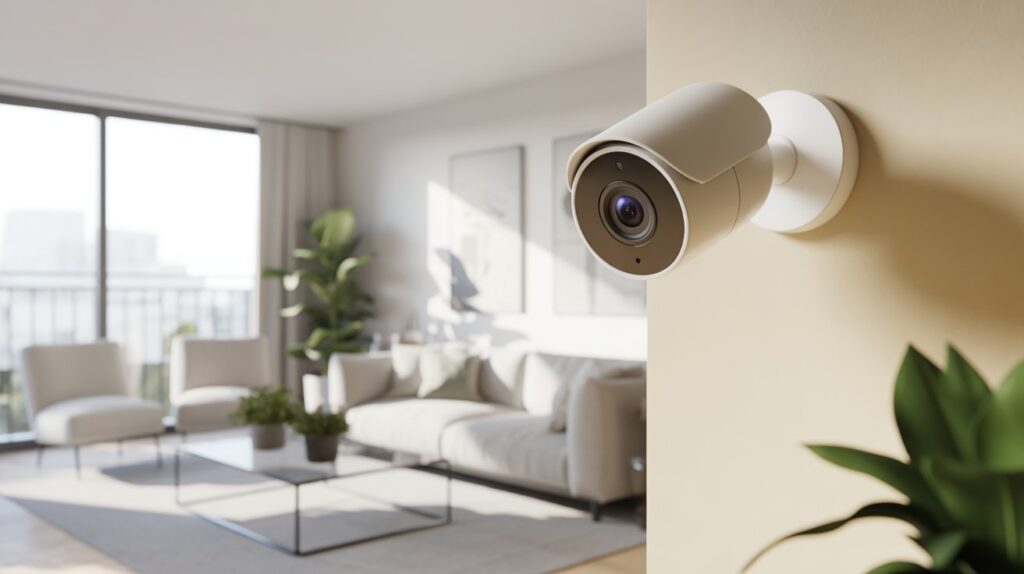
What Tenants Can Legally Record Inside and Outside Their Apartment
- Inside your unit — full rights to record here, since it’s your private space
- Outside your unit — recording common areas or shared spaces usually needs landlord permission to stay compliant
- Audio vs. video — audio carries stricter rules; some states require consent from everyone being recorded, not just one party
Limits on Recording Common Areas
- Hallways, lobbies, and shared amenities are off-limits for recording neighbors without their explicit consent
- Keep the camera’s field of view focused on your own entrance or areas that directly affect your safety
- A few states require visible signage when recording is active in shared spaces
Staying inside these limits is what keeps a camera setup both legal and respectful of everyone else in the building.
Landlord Restrictions and Permissions
Understanding your rights only covers half the picture — landlords set their own rules too, usually through the lease, and ignoring them can create conflict even when the law is on your side.
- Check your lease first — many rental contracts limit property changes, which can extend to mounting cameras or drilling for installations. Some landlords are fine with indoor cameras but restrict outdoor setups or anything covering shared hallways
- Where landlords can say no — installations affecting shared spaces, other tenants’ privacy, or requiring structural changes can be denied outright. Ignoring this risks fines, an eviction notice, or a lease violation
- Get permission in writing — for anything outside your unit, a written request protects both sides. Note the camera’s location, what it records, and how long footage is kept, so there’s no ambiguity later
Pairing landlord approval with a well-placed home security setup is the safest way to add coverage without risking your lease.
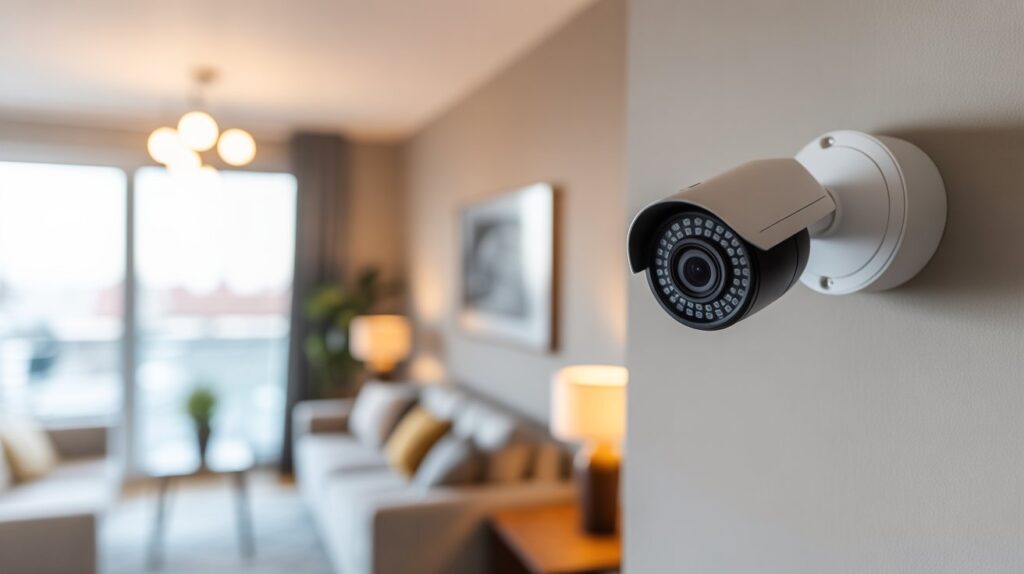
Legal Guidelines for Installing Security Cameras
Installing security cameras as a tenant comes with legal responsibilities. Knowing where and how to place your cameras ensures safety while respecting the law. Following apartment security camera laws for tenants helps you avoid conflicts with landlords, neighbors, or authorities.
Placement Rules (Indoor vs. Outdoor)
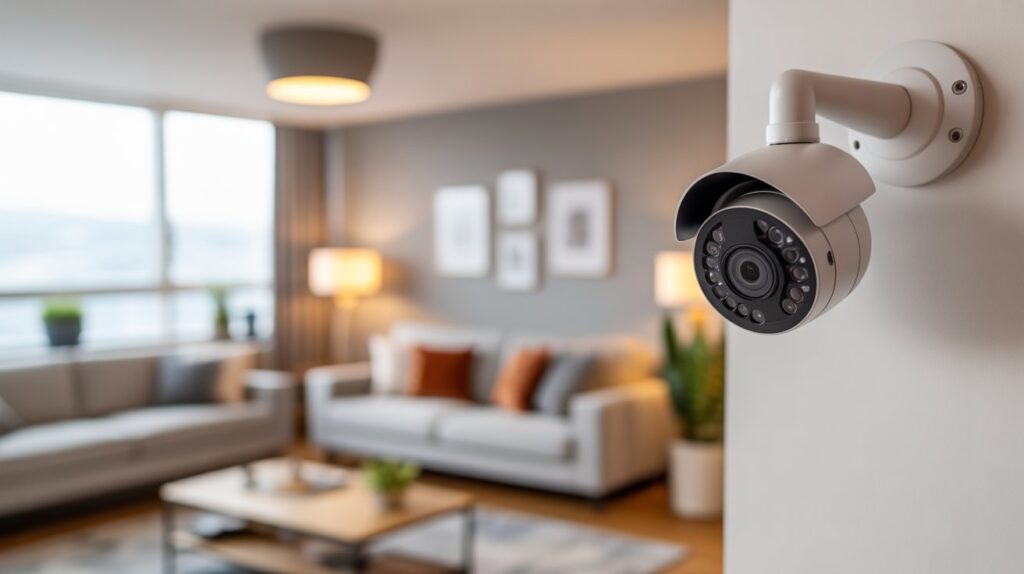
- Indoor cameras: Tenants can freely install cameras inside their apartments to monitor entrances, valuables, or family members. Ensure cameras do not inadvertently record shared walls or neighboring units.
- Outdoor cameras: Outdoor installation is more sensitive. Only place cameras where they monitor your own property, such as your doorway or balcony, without capturing areas beyond your lease. Improper placement may violate privacy laws or lease agreements.
- Height and angle: Mount cameras at a level that captures your unit’s entry points without intruding on others’ private spaces.
Avoiding Recording Neighbors or Private Areas
- Never record neighbors through windows, walls, or shared spaces. Even accidental recording can lead to legal disputes.
- Avoid capturing private areas such as bathrooms, bedrooms, or private balconies of other tenants.
- Focus cameras only on your property or public areas where monitoring is legally allowed.
Audio Recording Laws and Consent
- Audio recording is often more strictly regulated than video. Many states require all-party consent for recording sound.
- Before using microphones or audio-enabled cameras, check local and state laws to avoid fines or lawsuits.
- If audio recording is essential, obtain written consent from all individuals who may be recorded in your apartment or common areas.
By following these legal guidelines, tenants can enjoy the benefits of security cameras while staying fully compliant with laws. Proper placement, respecting privacy, and understanding audio restrictions ensure both safety and legality.
Best Practices for Tenants to Stay Compliant
A few habits keep a camera setup compliant without much extra effort:
- Inform your landlord upfront — even if your lease doesn’t require it, a brief written notice creates a record that you took the proper steps, and avoids surprises if a neighbor complains
- Choose privacy-conscious cameras — models with selective recording zones or motion masking let you exclude shared hallways or a neighbor’s window from the frame automatically
- Add signage where required — a few states require notice in shared areas when recording is active; even where it’s not required, visible signage builds trust with neighbors
These steps take minutes to set up and remove most of the friction that turns a security camera into a lease dispute.
Consequences of Violating Apartment Security Laws
Skipping the rules isn’t just a technicality — it carries real financial and legal risk:
- Fines and civil liability — recording private areas, hallways, or neighbors without consent can lead to state fines or civil lawsuits, even when the violation wasn’t intentional
- Lease termination or eviction — ignoring lease clauses on camera installation can escalate from a warning to a full lease violation, and in some cases eviction
- Protecting yourself from disputes — written permissions, a documented lease review, and correct placement give you a paper trail if a landlord or neighbor ever raises an issue
If you’re weighing indoor options that stay well within these limits, our guide to wireless indoor and outdoor camera systems covers setups built for exactly this kind of compliant, low-risk use.
Tips to Maximize Security Without Breaking the Law
Staying secure as a tenant isn’t just about having a camera — it’s about setting it up in a way that holds up if it’s ever questioned.
- Secure your cloud storage — most modern cameras store footage in the cloud, so use a strong, unique password and enable two-factor authentication where available. This keeps your recordings from becoming a liability themselves if the account is ever compromised, and prevents unauthorized access to footage that may include private moments inside your unit.
- Keep footage only as long as you need it — many camera apps let you set automatic deletion after a set number of days. Shorter retention limits your exposure if a dispute ever arises over what was recorded and reduces the amount of personal data sitting in the cloud.
- Review your camera’s field of view regularly — furniture gets moved, blinds get left open, and neighbors’ schedules change. A quick check every few months makes sure the camera hasn’t started picking up a shared hallway, a neighbor’s window, or anything outside your own space.
- Build awareness beyond the camera — a camera catches what happens after the fact; knowing your neighbors and staying aware of building patterns helps you notice problems before they happen. Community watch groups or even a simple group chat with neighbors adds a layer of security no camera alone provides.
Together, these habits keep your setup both effective and low-risk — solid coverage of your own space, without creating a compliance headache down the line.
Conclusion
Protecting your apartment goes beyond just installing a camera — it’s about knowing where your rights end, respecting your neighbors’ privacy, and staying within what your lease and state law actually allow. Get that right, and a camera adds real security without creating legal risk.
If you’re planning your setup, our guide to Honeywell door sensors is a solid next step for entry-point coverage that works alongside a camera, without the same placement restrictions.
This article is for general informational purposes and isn’t legal advice — for questions specific to your lease or state, check with your landlord or a local attorney.
FAQs
Q1: Can I put a camera in my apartment living room?
Yes — recording inside your own unit is generally fully within your rights, since it’s your private space.
Q2: Do I have to tell people I have a security camera?
If it covers shared areas like a hallway, some states require notice or signage; for a camera pointed only inside your own unit, disclosure usually isn’t required.
Q3: Can I put a camera on my apartment balcony?
Yes, as long as it’s angled to capture only your own property and doesn’t record a neighbor’s balcony, window, or shared walkway.
Q4: Is it illegal to install a camera without my landlord’s permission?
It depends on placement — an indoor camera pointed at your own space usually doesn’t need permission, but anything covering shared areas or requiring mounting/drilling often does under most leases.
Q5: Can my landlord make me remove a security camera?
Yes, if it violates your lease terms or captures shared spaces or other tenants without consent — landlords can require removal or take further lease action.
About the Author
M. Bilal is the founder of CrimTechHub and holds a BS in Criminology, with a focus on how security decisions intersect with legal and privacy rules. He writes about home and rental security from a compliance-first angle, helping tenants and homeowners understand not just how to secure their space, but how to do it within the law.