
Introduction
Are Tasers legal in Louisiana? Louisiana does not have a separate civilian licensing system specifically for Tasers, but carrying and using these devices may involve state weapon laws and location restrictions. The legal rules can depend on the type of device and the circumstances.
This guide explains Louisiana Taser laws, restricted locations, responsible use, potential legal consequences, and alternative self-defense options so you can make informed decisions about personal safety.
Table of Contents
Are Tasers Legal in Louisiana? What You Need to Know
Tasers and other electronic self-defense devices are not specifically prohibited for ordinary civilian possession under a general Louisiana Taser licensing law. However, carrying one can raise legal questions under Louisiana’s concealed-weapons and dangerous-weapon statutes.
Louisiana Revised Statutes §14:95(A)(1)(a) addresses the intentional concealment of firearms and other instruments commonly used or intended for use as dangerous weapons. Subsection (M) provides an exception for people who are at least 18 years old and are not prohibited from possessing firearms under applicable state or federal law. Whether a particular Taser or electronic device falls within these provisions depends on its design and the circumstances.
Before carrying an electronic self-defense device, Louisiana residents should understand:
- Age and eligibility: The concealed-carry exception under R.S. 14:95(M) applies to eligible individuals aged 18 or older.
- Restricted locations: Louisiana law prohibits dangerous weapons in certain locations, including school campuses, courthouses, detention facilities, and the State Capitol.
- Lawful use: Using an electronic control device against another person may result in criminal or civil consequences if the circumstances do not justify the force.
- Device type: Projectile-firing Tasers and contact stun guns operate differently and should not automatically be treated as identical devices.
For the current legal wording, consult the Louisiana Revised Statutes §14:95 – Illegal Carrying of Weapons.
Understanding Tasers and How They Work
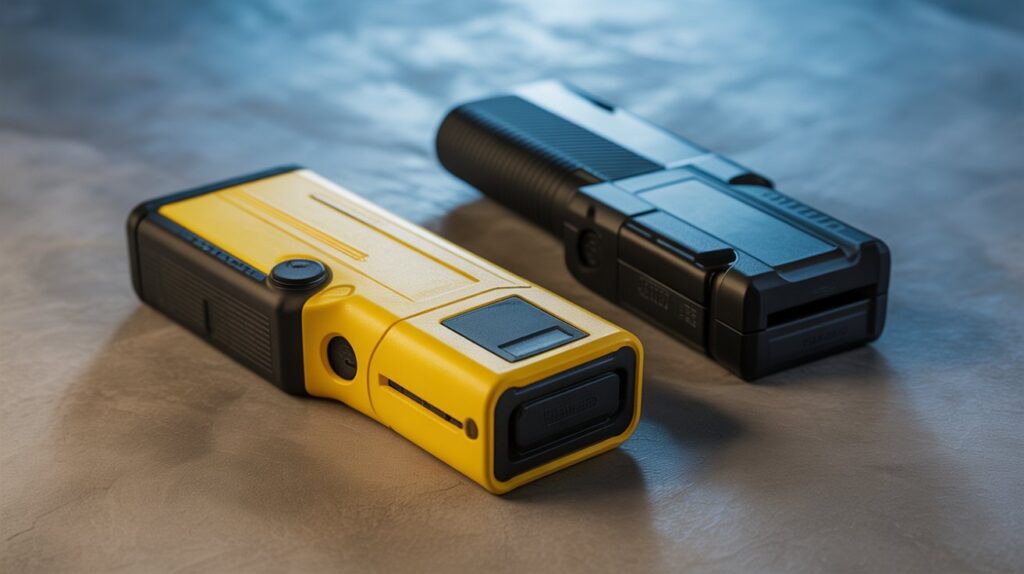
A Taser is an electronic control device designed to deliver an electrical discharge that can temporarily disrupt a person’s muscle control. Some models fire small probes connected by wires, while traditional stun guns deliver electricity through direct contact.
These devices are commonly known as conducted energy devices (CEDs). They are considered less-lethal alternatives to firearms, but they are not risk-free and can cause serious injuries. To understand how contact-based devices work, read our guide on how stun guns work.
How Does a Taser Work?
A projectile-firing Taser generally works through the following process:
- The device launches two small probes toward a target.
- The probes remain connected to the device through thin wires.
- An electrical discharge travels through the wires and probes.
- The electrical current can temporarily interfere with voluntary muscle control.
The actual effect depends on the device, probe placement, contact, and other circumstances. Serious injuries can occur, so these devices should never be treated as risk-free.
Types of Electronic Self-Defense Devices
Not every electrical self-defense device works in the same way. The main categories include:
- Projectile-firing Tasers: Use wired probes to deliver an electrical discharge from a short distance.
- Contact stun guns: Require direct physical contact between the device’s electrodes and the person.
- Other electronic control devices: Include different electrical devices designed for temporary incapacitation or pain compliance.
Taser vs. Stun Gun: What’s the Difference?
| Feature | Taser | Contact Stun Gun |
|---|---|---|
| Operating method | Fires connected probes | Direct contact |
| Effective distance | Short distance | Physical contact required |
| Main function | Electrical muscle disruption | Electrical shock and pain |
| Device design | Usually cartridge-based | Usually handheld |
Understanding these differences matters when researching electronic self-defense devices, their safety limitations, and applicable Louisiana laws.

Louisiana’s Laws on Tasers
Louisiana does not have a separate civilian licensing law specifically for Tasers or stun guns. However, carrying or using an electronic self-defense device may still involve state weapons laws, age and eligibility requirements, and restrictions on certain locations.
Under Louisiana Revised Statutes §14:95(M), the concealed-weapon exception applies to eligible individuals who are at least 18 years old and are not prohibited from possessing a firearm under state or federal law. This provision relates to the concealed-carry offense in §14:95(A)(1)(a); it does not provide permission to carry a device everywhere. Whether a particular electronic device falls under a weapons provision depends on its design and the circumstances.
Where Electronic Self-Defense Devices May Be Restricted
Louisiana law identifies certain places where possessing or using a dangerous weapon can be illegal. These include:
- School property: State law restricts dangerous weapons on school campuses, at school-sponsored functions, and in certain school-related areas.
- Courthouses and courtrooms: Possessing or using a dangerous weapon in these locations is prohibited under specific provisions.
- Detention facilities: Prisons, jails, and detention facilities are among the restricted locations.
- Law enforcement buildings: Weapons restrictions also apply to law enforcement offices, stations, and buildings.
- State Capitol: Louisiana law includes the State Capitol building among restricted locations.
These restrictions appear in Louisiana Revised Statutes §14:95 and §14:95.2. A device’s legal classification can depend on how it is designed and used, so do not assume every electronic device is automatically treated the same way.
Private businesses and property owners may also set their own rules about weapons and electronic self-defense devices. Check workplace policies and posted property restrictions before bringing a device onto private premises.
Differences Between Private and Public Spaces
The rules for keeping an electronic self-defense device at home can differ from the rules that apply when carrying it outside. Louisiana’s weapons statutes focus on specific conduct, device classification, and restricted locations rather than creating one simple rule for every setting.
At Home
Keeping a device at home for personal protection is different from carrying or using it in public. Store it securely, follow the manufacturer’s instructions, and keep it away from children and anyone who should not operate it.
At Work
Workplace rules often depend on the employer. A business may prohibit electronic self-defense devices on its property, even when state law does not specifically prohibit civilian possession. Review your employee handbook or ask your employer before bringing a Taser to work.
In Public Places
Carrying a Taser in public requires attention to state weapons laws and location-specific restrictions. Schools, courthouses, detention facilities, law enforcement buildings, and the State Capitol are important locations to check before carrying a device that may qualify as a dangerous weapon.
Rules can also differ for other personal protection devices. For another Louisiana-specific example, read our guide on pepper spray laws in Louisiana.
Practical Tips for Responsible Carrying
- Check Louisiana state law and applicable local rules before carrying an electronic self-defense device.
- Review the rules of schools, workplaces, and private properties you plan to visit.
- Understand the difference between a projectile-firing Taser and a contact stun gun.
- Follow the manufacturer’s safety, storage, and handling instructions.
- Use force only when legally justified; carrying a device does not automatically make its use lawful.
Understanding these rules can help Louisiana residents make informed decisions about personal safety devices. For the latest statutory language, consult the official Louisiana State Legislature website.

Safety and Responsible Use of Tasers
Knowing how to handle a Taser safely is an important part of responsible ownership. An electronic self-defense device can cause injury if it is handled carelessly or used in a situation that does not justify force. Treat the device as a serious safety tool, follow the manufacturer’s instructions, and keep it away from children and unauthorized users.
Before carrying a Taser, read its operating instructions and understand its safety features, battery requirements, and storage recommendations. If the manufacturer offers safety training, consider completing it so you understand the device’s limitations and risks. Remember that a Taser is not guaranteed to stop an attacker, and its effects can vary depending on the device and circumstances.
Common Taser Safety Mistakes to Avoid
- Relying on the device too much: A Taser is not a guarantee of protection. Stay aware of your surroundings and consider how to move away from danger.
- Ignoring restricted locations: Check applicable laws and property rules before taking an electronic self-defense device into a school, courthouse, detention facility, or other restricted location.
- Skipping safety instructions: Read the manufacturer’s guidance before handling or carrying the device.
- Unsafe storage: Store the device securely, away from children, visitors, and anyone who is not authorized to access it.
- Using force unnecessarily: An electronic control device should never be used to threaten, punish, or intimidate another person.
Responsible handling helps reduce accidental injuries and avoidable legal problems. To compare the features and limitations of different personal protection options, read our guide on Taser gun vs. pepper spray.
Potential Legal Consequences in Louisiana
Owning a Taser does not give someone the right to use it whenever they feel threatened. In Louisiana, the legality of carrying or using an electronic self-defense device depends on the circumstances, the type of device, the location, and the applicable state laws.
Louisiana Revised Statutes §14:95 addresses illegal carrying of weapons and identifies certain restricted locations, including school campuses during regular school hours, school buses, law enforcement buildings, detention facilities, courthouses, courtrooms, and the State Capitol. However, whether a particular Taser falls within the statute’s definition of a dangerous weapon or other covered instrumentality depends on its characteristics and the circumstances.
Using a Taser against another person can also create criminal or civil liability if the force was not legally justified. Louisiana’s self-defense law requires force to be reasonable and apparently necessary under the circumstances. A person should not assume that carrying a self-defense device makes every use of it lawful.
Tips to Avoid Legal Problems
- Check Louisiana laws before carrying an electronic self-defense device.
- Avoid locations where dangerous weapons are prohibited.
- Follow workplace rules and private property policies.
- Read the manufacturer’s safety instructions and storage guidance.
- Use force only when the circumstances legally justify it.
- Seek legal advice if you are unsure whether a particular device can be carried in a specific location.
Understanding the difference between lawful possession and justified use can help Louisiana residents make safer decisions. A device may be legally owned but still create legal problems if it is carried or used in prohibited circumstances.
For the legal standard governing self-defense, consult Louisiana Revised Statutes §14:19 – Use of Force or Violence in Defense.
Alternatives to Tasers for Self-Defense
A Taser is not the only option for personal protection. Other self-defense tools, including pepper spray, contact stun guns, and personal alarms, offer different features and limitations. The right choice depends on your comfort level, daily routine, surroundings, and the laws that apply where you live.
Pepper Spray
Pepper spray is a compact personal safety product that releases an irritant intended to affect an attacker’s eyes and skin. It may create an opportunity to move away and seek help, but its effectiveness can vary. Wind, distance, product design, and the user’s ability to handle the spray can all affect its performance.
- Pros: Portable, lightweight, and available in several spray patterns.
- Cons: Wind and environmental conditions can affect where the spray travels.
Contact Stun Guns
Unlike projectile-firing Tasers, contact stun guns require direct physical contact with a person. They use electrical current through contact electrodes and have different operating limitations from devices that fire probes.
- Pros: Compact designs are available, and they do not require a projectile cartridge.
- Cons: They require close contact, which may increase the user’s exposure to danger.
Personal Alarms
Personal alarms produce a loud sound intended to attract attention during an emergency. They do not physically stop an attacker, but they may help alert nearby people and encourage the user to seek assistance.
- Pros: Lightweight, easy to carry, and do not require physical contact with another person.
- Cons: Their effectiveness depends on whether someone nearby hears and responds to the alarm.
Comparing Self-Defense Options
Each personal protection tool serves a different purpose. Pepper spray creates distance through an irritant, contact stun guns require close contact, and personal alarms focus on attracting attention. Projectile-firing Tasers use electrical probes and have their own operating requirements and limitations.
No self-defense device guarantees safety. Before choosing one, compare its instructions, practical limitations, storage needs, and applicable legal restrictions. For a broader overview of spray designs and their differences, see our guide to types of pepper spray.
Key Takeaways for Louisiana Residents
Understanding Louisiana’s rules for electronic self-defense devices can help residents make informed decisions about ownership, carrying, and responsible use. The legal position may depend on the type of device, the location, and the circumstances in which it is carried or used. Do not assume that every Taser or stun gun is covered by the same rules.
Before carrying a device, keep these important points in mind:
- Check legal restrictions: Review applicable Louisiana laws and location-specific rules before carrying an electronic self-defense device.
- Understand restricted locations: Schools, courthouses, detention facilities, and certain government properties may have weapon restrictions.
- Know the difference between devices: Projectile-firing Tasers and contact stun guns operate differently and may raise different legal questions.
- Practice responsible handling: Read the manufacturer’s instructions and store the device securely.
- Understand lawful self-defense: Owning a Taser does not automatically make every use of force legally justified.
Personal safety involves more than choosing a self-defense device. Knowing its limitations, understanding Louisiana law, and making responsible decisions can help reduce unnecessary risks. When legal questions arise, consult the current state statutes or a qualified Louisiana attorney rather than relying on general assumptions.
Conclusion
Are Tasers legal in Louisiana? Their legality depends on the device, where it is carried, and how it is used. Understanding Louisiana’s weapon laws, following safety instructions, and using force only when legally justified can help you avoid unnecessary legal problems.
Before carrying an electronic self-defense device, check current state and local restrictions. Responsible decisions, proper handling, and awareness are essential for protecting yourself and others.
For another self-defense option, explore our guide to types of stun guns for self-defense.
FAQs
1. Can you legally carry a Taser in Louisiana?
Louisiana law does not provide a separate civilian Taser licensing system. However, carrying restrictions may apply depending on the device, location, and circumstances.
2. Are stun guns legal in Louisiana?
Stun guns are not specifically covered by a general civilian licensing requirement. However, applicable weapon laws and restrictions on certain locations still matter.
3. What self-defense weapons are legal in Louisiana?
Pepper spray, personal alarms, and electronic self-defense devices are commonly used for personal protection. Their possession and use must comply with applicable state and local laws.
4. Can you use a Taser in self-defense in Louisiana?
A Taser may be used only when the circumstances legally justify the use of force. Louisiana law considers whether the force was reasonable and apparently necessary for self-defense.
Written by: M Bilal
Criminology Graduate & Personal Safety Content Writer
Legal Disclaimer
This article is provided for general informational and educational purposes only. It is not legal advice and should not be considered a substitute for guidance from a qualified attorney. Louisiana laws regarding Tasers and other electronic self-defense devices may change, and restrictions can vary depending on the device and circumstances. Always verify current laws through official Louisiana government sources before carrying or using a self-defense device. The information in this guide is intended to promote legal awareness and responsible personal safety.