Introduction
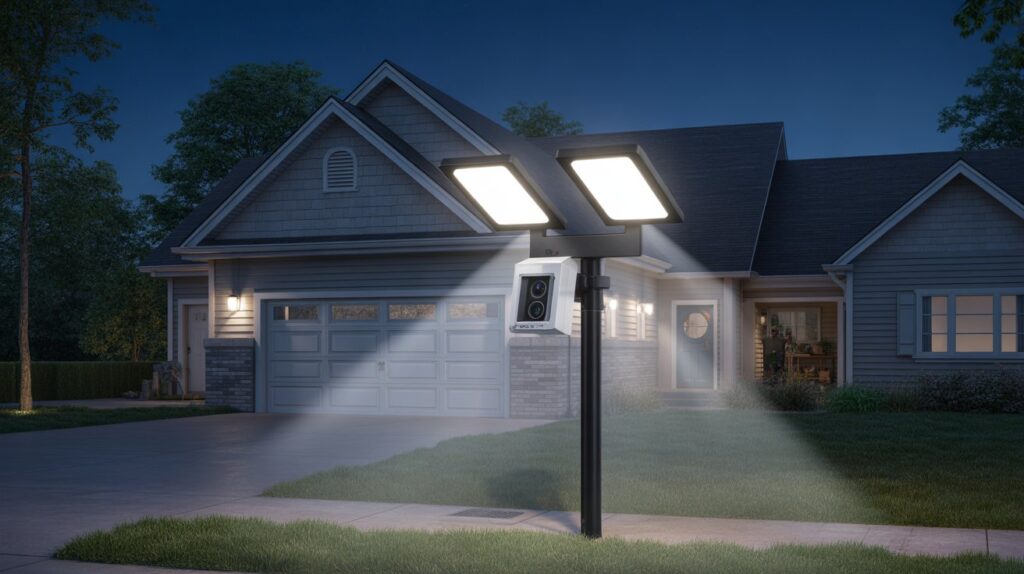
A motion light flicking on at 2 AM can mean a raccoon — or someone testing your porch. That split-second uncertainty is exactly why outdoor security lights with motion sensor and camera have become a standard upgrade for US homeowners, not just an extra.
Package theft, dark driveways, and unlit side entrances give intruders an easy window. A plain bulb doesn’t fix that — but a light that detects movement, floods the area instantly, and streams live footage to your phone does. Within seconds, you know if it’s the wind or someone who shouldn’t be there.
These systems work because they combine three things most homes lack on their own: instant visibility, recorded proof, and a live alert — covering your driveway, porch, garage, or backyard the moment the sun goes down.
Table of Contents
Why Homeowners Are Upgrading Their Outdoor Security
Porch lights alone don’t stop package theft — they just tell a thief someone’s home. That’s the shift happening across US neighborhoods right now: families are replacing single-purpose lights with systems that light up and record, so a dark garage or side yard stops being a blind spot.
What’s driving the switch:
- Rising package theft and “porch piracy” incidents
- Blind spots — garages, side yards, backdoors — that stay dark at night
- Wanting an alert the moment motion is detected, not after the fact
- Checking on the house remotely instead of guessing
- Better nighttime visibility for kids, pets, and guests walking outside
- This isn’t just a homeowner preference — the National Crime Prevention Council specifically recommends lighting entry points and eliminating shadowed hiding spots as a core burglary-deterrence strategy, which is exactly what these systems automate.
If you’re comparing options before buying, our guide on the best wired outdoor motion sensor lights breaks down which models hold up best for driveway and entryway coverage.
This shift isn’t a trend — it’s homeowners closing the gap a plain porch light always left open.
How Outdoor Security Lights With Motion Sensor and Camera Actually Work
The moment something crosses your driveway or backyard, a PIR sensor picks up the heat and movement — light snaps on, camera starts rolling, and your phone buzzes with a live clip. No manual switch, no delay.
That instant reaction does two jobs at once. The light alone is often enough to make someone think twice and leave. If they don’t, the camera keeps recording — footage you can pull up later on your phone, not just a memory of “something moved out there.”
This is where smart systems pull ahead of old-style floodlights that either stay on all night or need a manual flip. They fire only when triggered, cutting wasted energy while giving you sharper coverage. For picking a camera that handles low light well, our night vision and infrared camera guide covers what actually matters in real conditions.
Key Features That Matter Most
Some features make a bigger difference when choosing outdoor security lights with motion sensor and camera systems:
- Motion activation helps lights respond instantly when movement is detected.
- HD video quality makes it easier to recognize faces, vehicles, or suspicious activity.
- Two-way audio allows homeowners to speak through the camera using a smartphone.
- Night vision keeps important areas visible even in complete darkness.
- Mobile app connectivity gives quick access to live video, alerts, and recordings.
- Weather resistance helps the system handle rain, snow, heat, and changing outdoor conditions.
Together, these features create a smarter and more reliable way to protect modern homes without making security feel complicated.
Benefits of Installing Smart Outdoor Security Lights
Coming home to a dark driveway or hearing unexpected movement outside at night can make anyone uncomfortable. That is why many homeowners are switching to outdoor security lights with motion sensor and camera systems. These smart lights instantly brighten outdoor spaces, record activity, and help families feel more secure day and night.
One of the biggest advantages is prevention. Most intruders avoid homes that are well-lit and protected by visible cameras. As soon as movement is noticed, the security light activates and the camera begins capturing footage, helping homeowners spot unusual activity more quickly.
These modern outdoor lighting systems not only improve security but also add extra comfort and convenience to daily life around the house. Areas like garages, porches, walkways, and backyards stay easier to see at night, which helps reduce accidents and improves visibility for family members and visitors.
Why Homeowners Love Smart Outdoor Security Lights
- Motion-activated lighting reacts instantly to movement
- Built-in cameras help monitor activity around the house
- Real-time smartphone alerts keep homeowners updated
- Bright lighting improves nighttime visibility and safety
- Remote access allows monitoring from anywhere
- Helps protect packages, vehicles, and entry points
- Helps families feel more relaxed, secure, and confident at home.
Unlike traditional outdoor floodlights, smart outdoor security lights with motion sensor and camera features combine convenience, visibility, and protection in one system. For many families in the USA, they have become a simple but powerful part of everyday home security.
What to Look for Before Buying Outdoor Security Lights
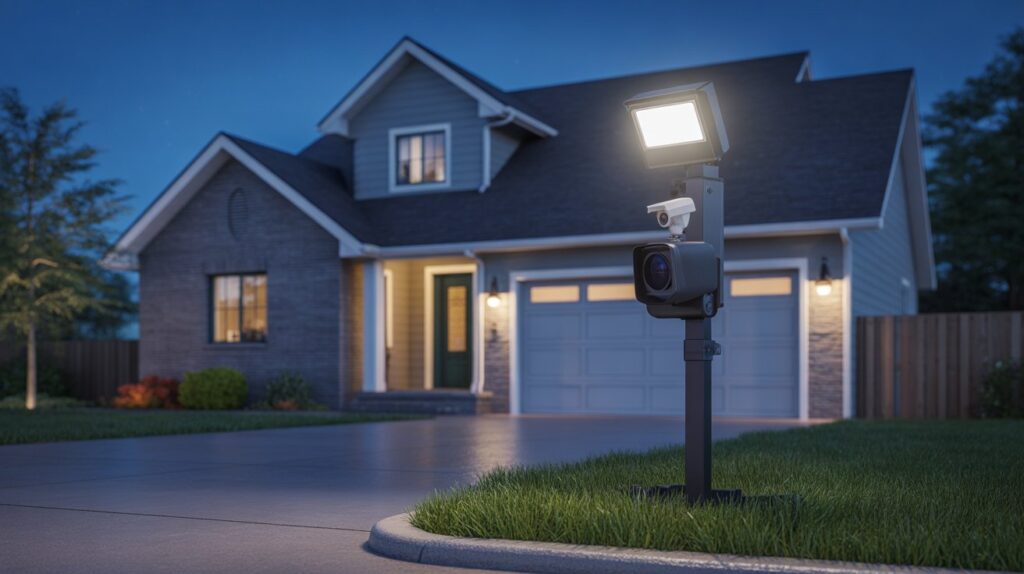
Price and looks are the easy part — the features below decide whether the light actually earns its keep once it’s mounted outside.
Brightness and Camera Quality
A light that’s too dim leaves gaps in coverage; one that’s too harsh creates glare that washes out the camera’s own footage. Balance matters more than raw brightness.
- Match brightness to the area — driveways need more coverage than a side door
- HD or 2K footage for faces and license plates, not just movement
- Confirm night vision actually holds detail in full darkness, not just grainy outlines
Wired vs. Wireless
Wired setups draw steady power and rarely need attention once installed. Wireless units go in faster but shift the maintenance burden to you.
- Wired: stable, no charging, better for permanent placements
- Wireless: flexible, easy to reposition, ideal for renters
- Battery models: convenient short-term, but need regular recharging
Smart Features and Compatibility
A camera that can’t talk to the rest of your setup is just a standalone gadget.
- Alexa or Google Home compatibility if you already use one
- A responsive app — laggy alerts defeat the purpose
- Smooth live-view access without buffering
Weather Resistance and Motion Detection
Outdoor units live outside permanently, so their protection rating matters as much as their smart features. Fixtures rated IP65 are built to handle direct rain and dust without failing — this IP rating breakdown explains exactly what each digit in the rating means before you buy.
- Aim for IP65 or higher for full outdoor exposure
- Place units near entry points and dark corners, not just anywhere convenient
- Reliable detection beats extra “smart” gimmicks you’ll never use
A light that works consistently in bad weather protects a home better than one loaded with features it can’t sustain outdoors.
Common Mistakes Homeowners Should Avoid
Even the best outdoor security lights with motion sensor and camera systems may not work properly if they are installed the wrong way. Many homeowners spend money on smart security devices but overlook small details that can affect performance, visibility, and reliability.
Installing Lights in the Wrong Position
Placement plays a major role in outdoor security. A camera mounted too high or pointed in the wrong direction may miss important movement around the home.
- Avoid placing lights too high above entry points
- Make sure cameras cover driveways, porches, and walkways clearly
- Test motion detection angles before final installation
Ignoring Wi-Fi Signal Strength
Many smart outdoor security lights depend on a stable internet connection for alerts, live video, and app controls.
- Weak Wi-Fi can cause delayed notifications or video lag
- Check signal strength near garages, gates, and backyards
- Use a Wi-Fi extender if outdoor coverage is poor
Choosing Low-Quality Cameras
Cheap cameras may seem attractive at first, but poor video quality can become frustrating during real situations.
- Low-resolution cameras make faces and details difficult to recognize
- Weak night vision reduces visibility after dark
- Choose reliable outdoor cameras with clear HD recording
Forgetting About Storage and App Quality
A smart security system should be easy to use every day, not complicated or confusing.
- Check whether video storage is cloud-based or local
- Make sure the mobile app is simple and responsive
- Look for quick access to alerts, recordings, and live footage
Fixing these small details — placement, Wi-Fi strength, camera quality — is what separates a security light that just sits there from one that actually catches what matters. If your garage entry is one of those weak spots, our guide on the best garage door motion sensors covers that blind spot specifically.
Conclusion
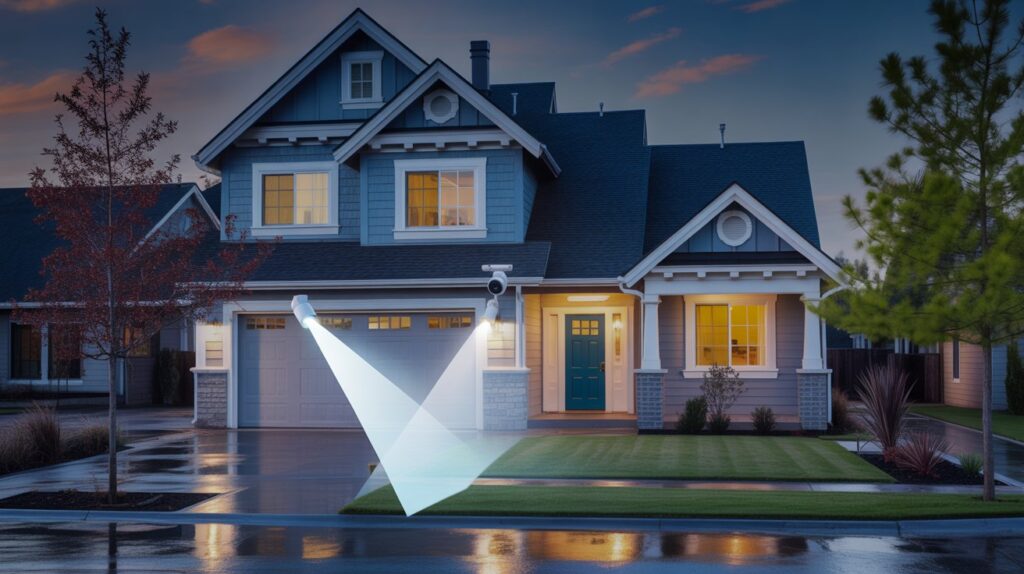
Outdoor security lights with motion sensor and camera aren’t just an upgrade anymore — they’re what actually stands between a quiet night and a problem caught before it starts. A light snapping on at the right second often does more than any lock.
If you’re setting this up as part of a bigger home security plan, our home security alarm systems guide covers what pairs well with outdoor lighting for full-home coverage.
So — does your current setup actually give you that instant awareness, or just a light that turns on?
FAQs
What is the disadvantage of outdoor motion sensor lights?
False triggers from pets, wind-blown branches, or passing cars are the most common complaint. Poor sensor placement or too wide a detection angle usually causes this — narrowing the sensitivity range fixes most cases.
What is the best outdoor security camera with floodlight?
The strongest combo units pair 2K+ resolution with an IP65 weather rating and a wide-angle floodlight — resolution and weatherproofing matter more than extra app features you’ll rarely use.
How many lumens are good for an outdoor flood light?
700–1,300 lumens covers most driveways and entryways. Larger yards or long driveways benefit from 1,500+ lumens, but oversized lighting near a camera can wash out footage with glare.
Do motion sensor lights work in daylight?
Most only trigger from dusk to dawn — a built-in light sensor keeps them from switching on during the day, even if the motion sensor detects movement.
Can outdoor security lights work without Wi-Fi?
Yes — the light and motion sensor function independently of internet. Only the camera’s live view, alerts, and cloud recording need a Wi-Fi connection; without it, the light still activates normally.
How far should motion sensor lights be from the ground?
Most manufacturers recommend mounting between 6–10 feet high. Lower placement improves detection accuracy; higher placement reduces the risk of tampering but can weaken motion sensitivity.
About the Author
M Bilal holds a BS in Criminology and writes CrimTechHub’s home security guides through that lens — looking at outdoor lighting and camera setups the way security research actually frames them: as deterrence tools, not just gadgets. Every guide is researched against manufacturer specs, industry standards (like IP ratings), and established crime-prevention guidance before publishing.
Have a specific setup in mind? Ask in the comments — I review and respond to each one personally.