Introduction
Have you ever wiped down your garage door sensors, only to press the button and watch the door refuse to close? It’s a small, frustrating moment — and one many U.S. homeowners run into right after routine cleaning.
If your garage door isn’t closing after cleaning the sensor, don’t panic. It’s usually a simple fix — tiny misalignments, leftover moisture, or a loose wire are the most common culprits.
This guide covers the causes, quick fixes, and easy prevention tips so you can get your door working smoothly again — without guesswork.
Table of Contents
Garage Door Not Closing After Cleaning Sensor? Here’s What’s Really Going On
You cleaned your garage door sensors expecting a quick fix — but now the door won’t close at all. Frustrating, right? It’s actually a very common issue homeowners across the U.S. run into, especially when handling simple maintenance on their own.
The truth is, the problem usually isn’t serious — but it is specific. Garage door safety sensors are extremely sensitive. Even a small change during cleaning — a slight bump, moisture left behind, or a tiny shift in position — can break the invisible beam that tells the door it’s safe to close.
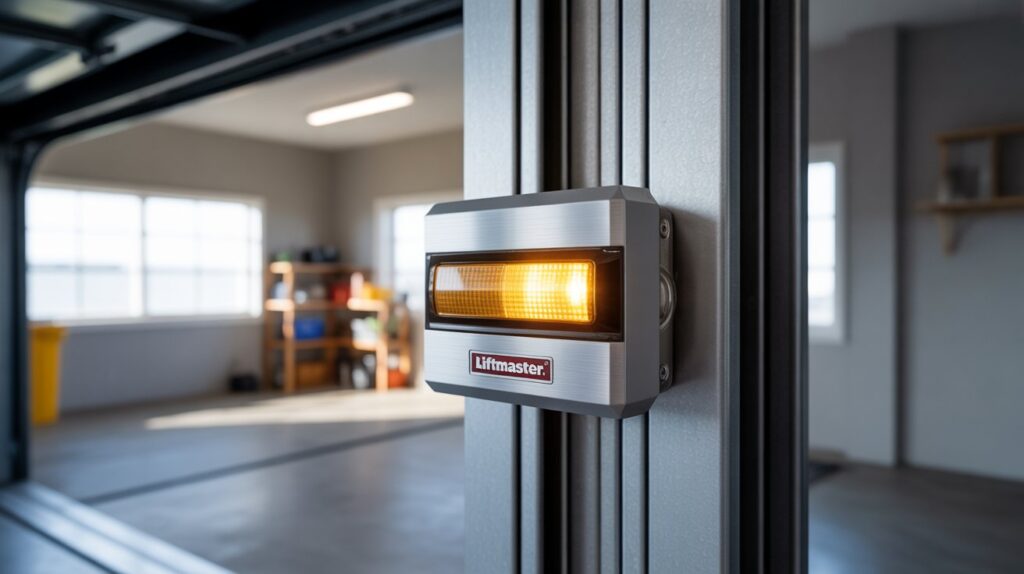
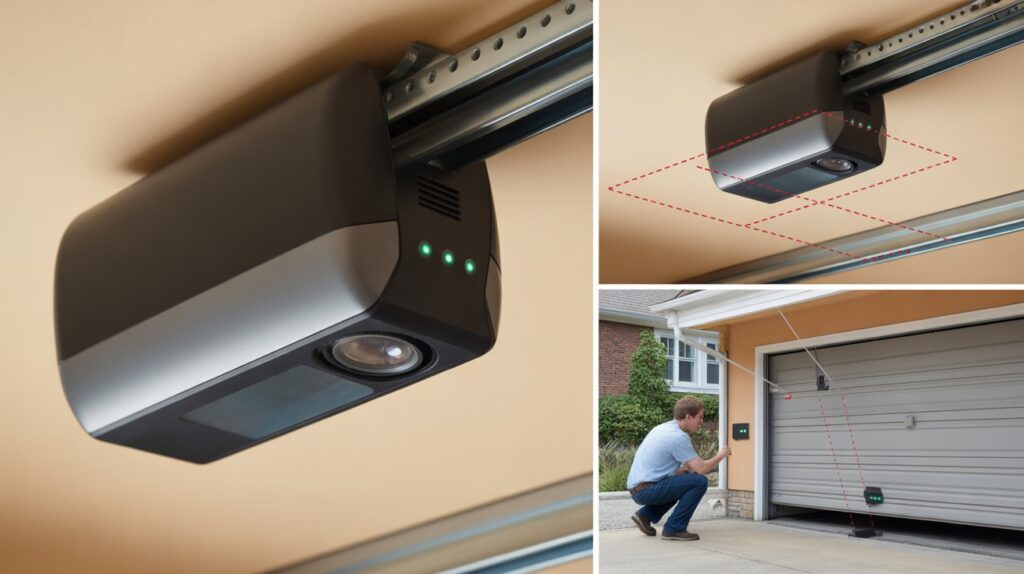
Here’s how it works in simple terms: two sensors face each other near the bottom of the track, sending an invisible signal across. If that signal gets interrupted, even slightly, the system assumes something is in the way and stops the door — a built-in safety feature designed to protect people, pets, and objects. So when cleaning disrupts that signal, the door reacts the only way it knows how: it refuses to shut.
In real-life situations, this often happens when:
- You wipe the sensor and accidentally shift it a little
- Cleaning solution leaves a light film on the lens
- A cloth nudges the sensor slightly out of alignment
A secure sensor bracket can help reduce this kind of accidental drift, since a loose or worn mount is often what lets a light touch turn into a real misalignment.
It might feel like the cleaning made things worse, but in most cases, it just exposed how precise these sensors really are. The good news? This is usually easy to fix once you understand what went wrong — and that’s what we’ll walk through next.
Common Reasons Your Garage Door Won’t Close After Cleaning Sensors
There’s usually a small but important reason behind it. Garage door safety sensors are precise, and even a tiny change during cleaning can interrupt their function — here’s what typically goes wrong.
Sensor Misalignment After Cleaning
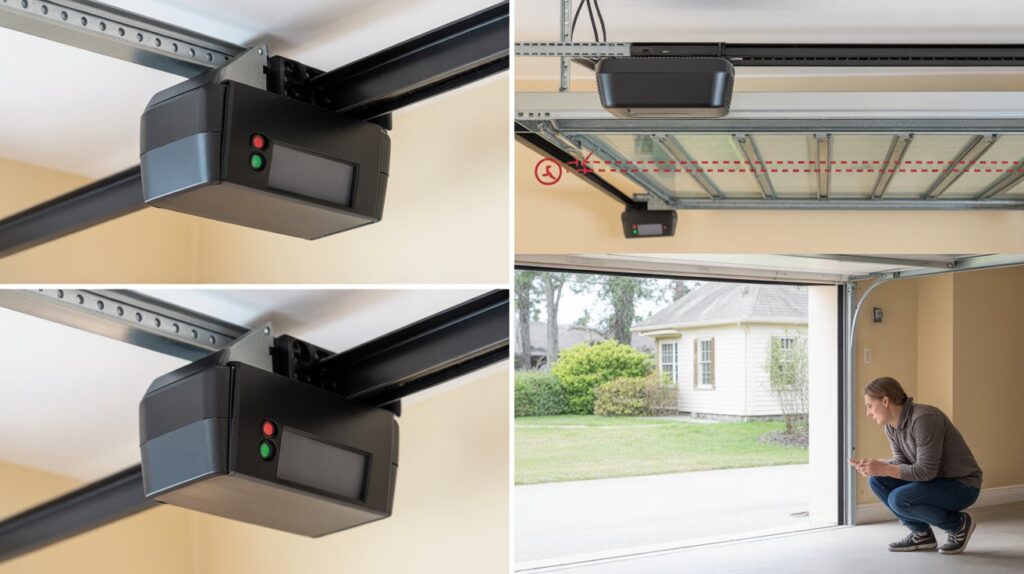
The most common culprit is simple misalignment. A light touch while cleaning is often enough to shift a sensor’s position slightly, and these units need to face each other perfectly to work at all.
Think of it like pointing two flashlights directly at each other — move one even slightly, and the connection breaks. The same happens here: once the beam is disrupted, the system assumes something is blocking the path and won’t let the door close.
That sensitivity is by design — it’s what makes the door stop the moment something’s actually in the way. But it also means even a small shift during cleaning can be enough to trigger the same response.
Moisture or Residue on the Sensor Lens
Another common issue is leftover moisture or cleaning residue. After wiping the sensor, a thin layer of water or cleaner can stay on the lens. It may look clean, but that invisible layer can block or weaken the sensor beam.
This is where many homeowners get confused. The sensor looks spotless, but the garage door still won’t close. That’s because even a tiny smudge can interfere with the signal.
If your garage door not closing after cleaning sensor, always consider what’s left behind—not just what you cleaned off.
Loose or Disturbed Wiring
While cleaning around the sensors, it’s easy to accidentally move or loosen a wire. These wires connect the sensors to the garage door opener, and if they’re not secure, the signal won’t transmit properly.
You don’t need technical skills to notice this. Some simple signs include:
- Flickering sensor lights
- One light turning off completely
- Door reversing immediately after trying to close
In many U.S. homes, wiring near the garage floor can already be slightly exposed, so even light contact during cleaning can cause a small disruption.
Sunlight or Light Interference
Sometimes, the issue isn’t the cleaning itself—it’s the timing. Bright sunlight can hit the sensor directly, especially in garages that face east or west. This strong light can interfere with the infrared beam between the sensors.
So even if you cleaned everything correctly, the sensor may struggle to “see” the other side because of glare. It can feel confusing because the problem seems random, but it’s actually very common.
If your garage door not closing after cleaning sensor, and it happens during certain times of the day, sunlight interference could be the hidden cause.
Step-by-Step Fixes You Can Try Right Now
- Realign the Sensors Properly
Gently adjust both units so they face each other directly — even a slight tilt breaks the beam and stops the door from closing. Once aligned, the indicator lights should stay steady rather than blinking. - Dry and Clean the Lenses the Right Way
Wipe each lens with a soft, dry cloth to remove moisture or residue. Avoid spraying cleaner directly onto the sensor — even a faint film left behind can be enough to block the beam. - Check What the Indicator Lights Mean
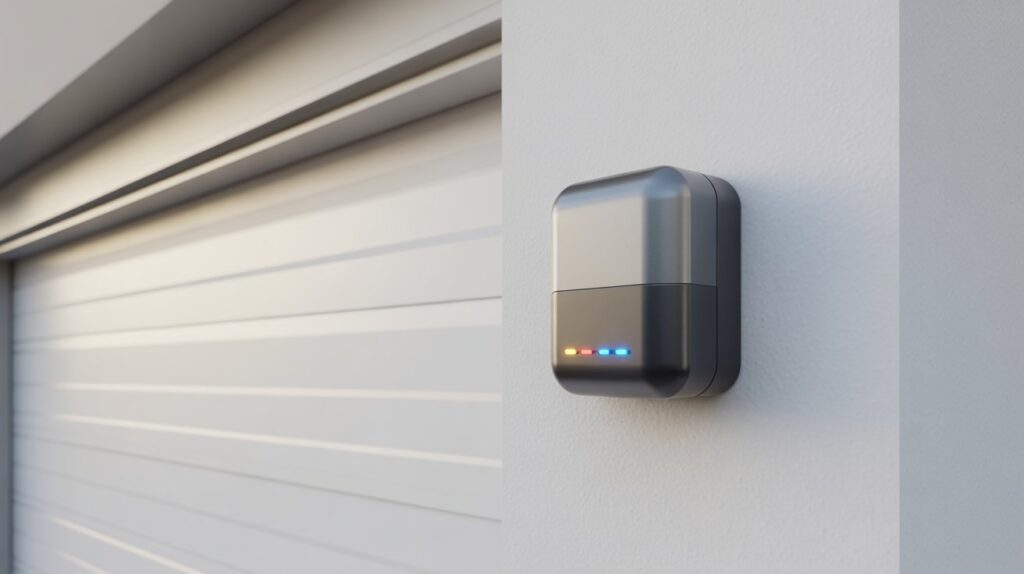
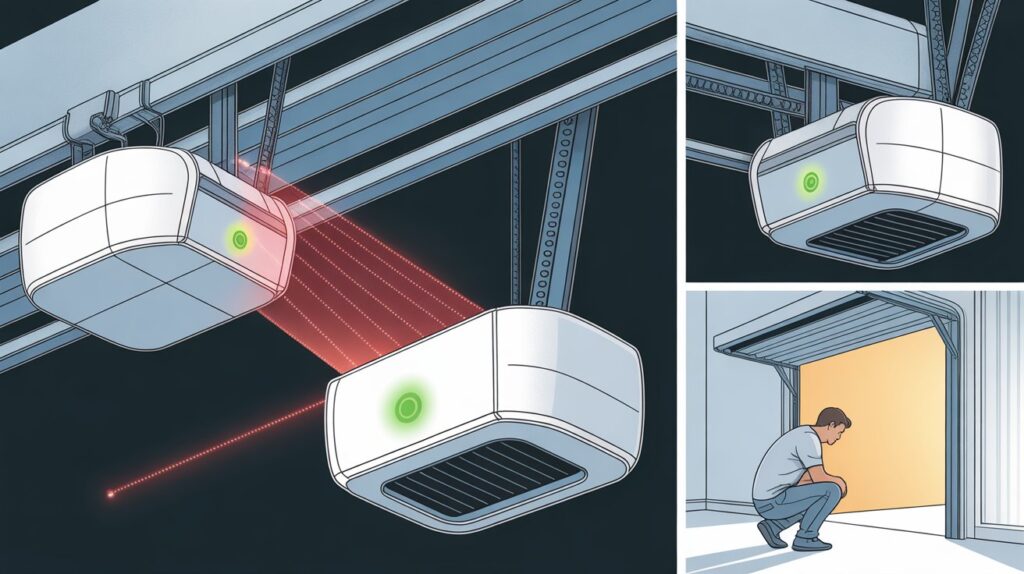
Each sensor has a small LED that reflects its current status:- Solid green — the receiving sensor is aligned and picking up a clear signal
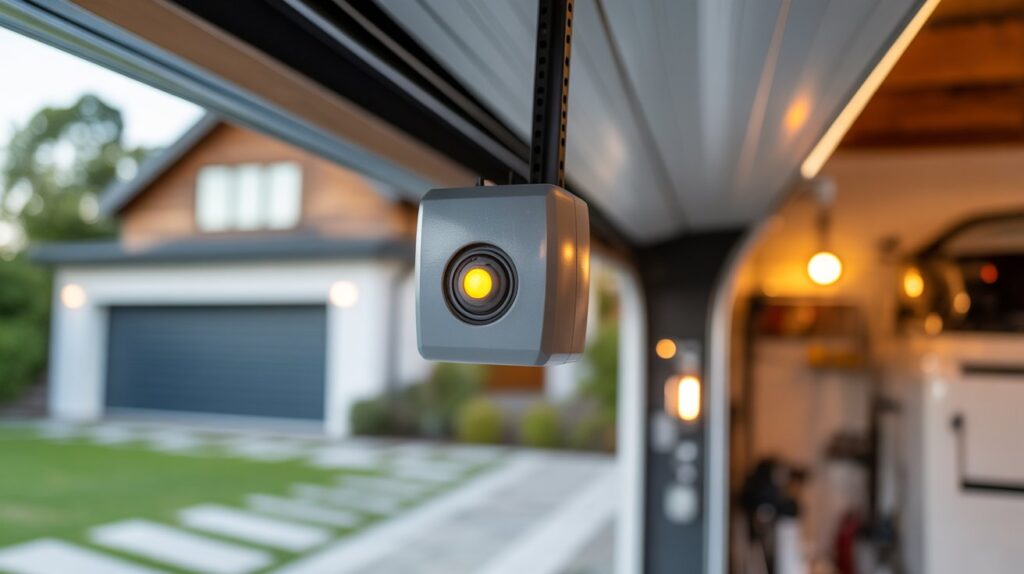
- Solid amber/yellow — the sending sensor is powered and transmitting
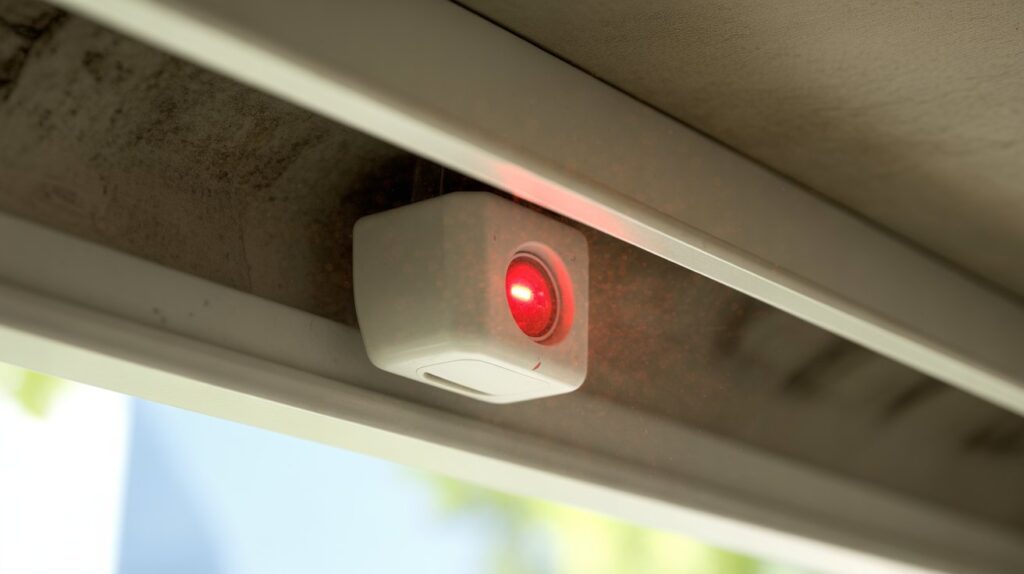
- Blinking light — misalignment or something obstructing the beam
- Inspect Wiring Connections
Look for loose, bent, or disconnected wires near the sensors. Flickering lights or a light that’s completely off often points to a wiring issue rather than dirt or alignment. - Test the Door Safely
After making adjustments, close the door using the wall button and watch how it behaves. A smooth close means the fix worked; if it reverses, recheck alignment and lens cleanliness before moving on.
When It’s Not the Sensors — Other Hidden Causes
Sometimes the issue goes beyond cleaning. If everything looks aligned and clean but the door still won’t close, the real problem may be somewhere else entirely — this is where many homeowners get stuck, because the sensors seem fine yet the door still refuses to shut.
One common cause is obstructions on the track. Even a small object — dirt buildup, a loose screw, or debris — can block smooth movement. The system is designed to stop or reverse the moment it senses resistance, treating it as a safety precaution.
Another possibility is the opener’s force and travel limit settings. Manufacturers note that adjusting these force or travel limit controls means the safety reversal system needs to be checked again afterward — so if these settings drift out of range, the door may stop short or reverse suddenly, which can easily look like a sensor problem when it’s actually a calibration issue. CPSC
In some cases, the sensors themselves may simply be failing internally. They don’t last forever — wear, weather exposure, or internal damage can cause them to stop working reliably even when they look fine from the outside.
Lastly, there could be a power or logic board issue inside the opener itself. If the system isn’t processing signals correctly, it may block the door from closing as a precaution. This is less common, but it does happen — especially in older systems still running in many U.S. homes.
If alignment and cleaning haven’t solved it, these hidden causes are worth ruling out before assuming the worst.
How to Prevent This Problem in the Future
Safe Cleaning Methods
- Use a soft, dry microfiber cloth on the sensor lens — nothing abrasive, nothing wet
- Avoid spraying water or cleaner directly onto the sensors
- Hold each sensor lightly while cleaning; don’t push or twist it out of position
- Clean gently — a rushed wipe is often what causes misalignment in the first place
How Often to Clean Sensors
- Every 1–2 months is enough for most homes
- Increase frequency if your garage collects dust, dirt, or pet hair
- Do a quick check after storms or seasonal changes common in many U.S. regions
- A sensor guard can cut down how often cleaning is even needed by keeping dust and sun exposure off the lens
Quick Maintenance Tips for Homeowners
- Visually confirm both sensors face each other directly
- Make sure indicator lights stay steady, not blinking
- Keep the sensor area clear of storage items or clutter
- Check wires occasionally for looseness or wear
- Test the door monthly to catch small issues early
A little consistency goes a long way — these habits keep the system working smoothly year-round without repeat trips back to the sensors.
Conclusion
Dealing with a garage door that won’t close after cleaning the sensors can feel frustrating, but most causes are small and fixable. From misalignment to leftover residue or a loose wire, understanding the root cause makes troubleshooting simple and stress-free.
Taking the time to clean, check, and maintain your sensors doesn’t just restore your door’s function — it protects your home and family from real hazards. These small, consistent habits prevent bigger headaches down the road. If your sensors are prone to picking up dust or sun glare often, a garage door sensor guard can make that upkeep even easier.
A little care today saves both time and hassle tomorrow — keep your sensors clean, your alignment steady, and your garage door running the way it should.
FAQs
Q1. Can cleaning solution damage garage door sensors?
Most solutions won’t damage the sensor itself, but leftover residue on the lens can block the beam and stop the door from closing.
Q2. How long after cleaning should sensors work normally again?
Usually immediately — if the door still won’t close, the cleaning likely shifted the alignment slightly.
Q3. Is it normal for sensors to need realignment after every cleaning?
No — if you’re gently wiping without pushing on the unit, alignment shouldn’t shift each time.
Q4. What’s the safest way to clean sensors without disturbing alignment?
Hold the sensor housing steady with one hand while wiping the lens lightly with the other.
Q5. Can a wet cloth cause the same issue as cleaning spray?
Yes — any leftover moisture on the lens, water or spray, can weaken the beam the same way.
About the Author
M Bilal runs CrimTechHub, where he writes about garage door safety, sensors, and home protection systems for U.S. homeowners. He studied Criminology (BS), and that background shows up in how he approaches these guides — less about repeating a manual, more about spotting where an everyday habit, like cleaning a sensor, quietly turns into a security gap if done the wrong way.
Every article on this site goes through the same filter: would this actually help someone standing in their garage right now, confused and pressed for time? If the answer’s no, it doesn’t get published.