Introduction
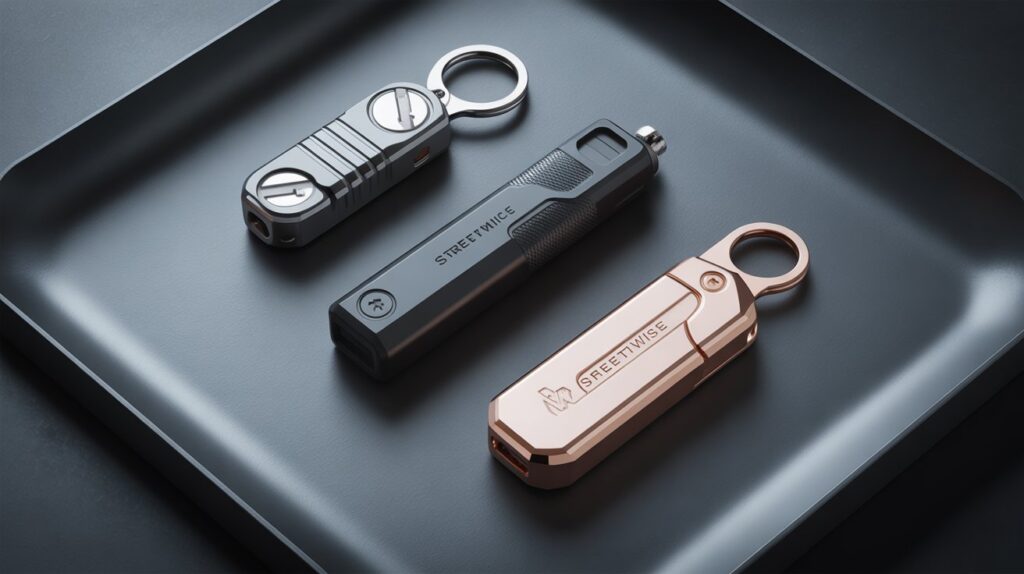
Types of stun guns for self-defense vary more than most people realize — from ones that look like an ordinary pen to compact keychain models and multi-feature versions with a built-in alarm and flashlight. Each format trades off differently between discretion, power, and convenience, so the right choice depends on your daily routine more than anything else.
This guide breaks down the main types available, what to look for in each, and the buying and legal factors worth knowing before you carry one.
Table of Contents
Pen-Style Stun Guns
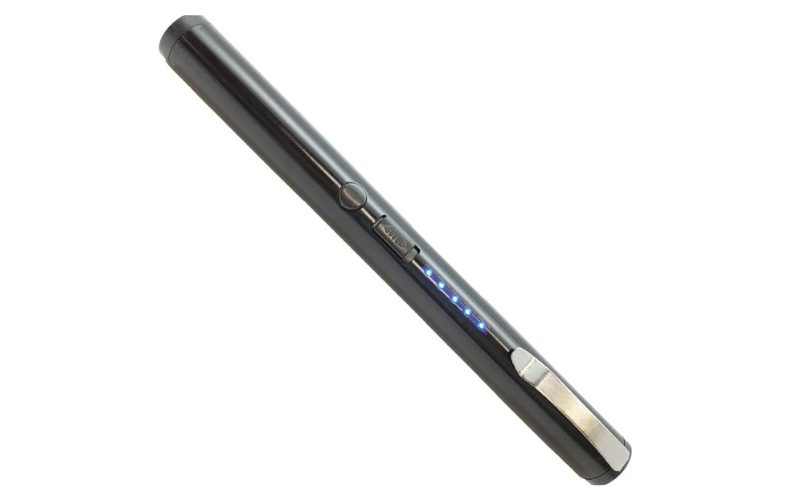
Pen-style stun guns are built around one idea: staying discreet without giving up power. Shaped like an ordinary pen, they slip into a pocket, bag, or desk drawer without drawing attention — which is exactly why they’ve become popular with office workers and night-shift commuters who don’t want to carry anything that looks like a weapon.
Key Features to Look For
- High voltage output — most pen-style models range well into the millions of volts, giving strong stopping power despite the small size.
- Discreet form factor — the pen shape means it doesn’t read as a self-defense tool at a glance.
- Rechargeable battery — avoids the ongoing cost and hassle of replacing disposable batteries.
- Safety switch — prevents accidental activation while it’s sitting in a pocket or bag.
- Durable metal housing — holds up to daily carry better than plastic-bodied alternatives.
Who This Type Suits Best
Pen-style stun guns work well for anyone who wants protection that stays completely out of sight — useful in workplaces or settings where carrying a visible self-defense device isn’t practical. For a deeper look at how the internal mechanism actually delivers a shock, see our guide on how stun guns work.
Pros
- Extremely discreet — looks like an ordinary pen, not a weapon
- Strong voltage output despite the compact size
- Easy to carry in hand, pocket, or bag without drawing attention
Cons
- No built-in flashlight or alarm
- Small size makes it easy to misplace or lose track of
Best Suited For
A pen-style stun gun works well when staying completely unnoticed matters more than anything else. The combination of high voltage and an ordinary-looking shape makes it a practical fit for office workers, night-shift employees, or anyone who wants reliable protection without carrying something that visibly reads as a weapon.
Keychain Stun Guns
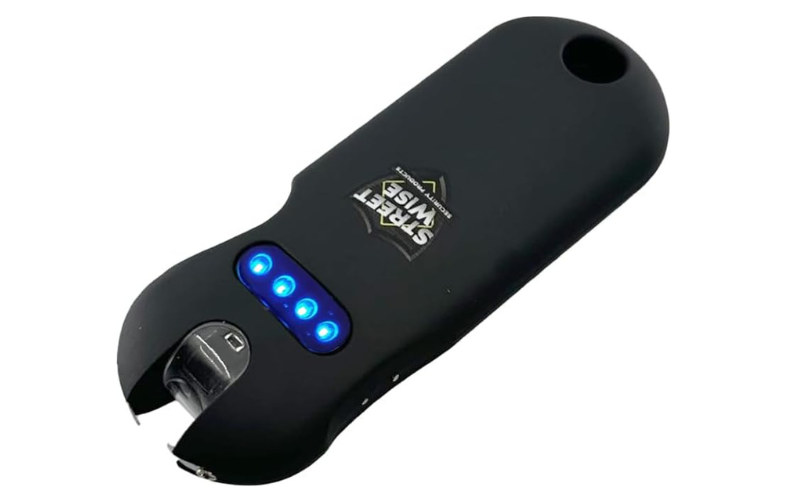
Keychain-style stun guns solve a simple problem: the best self-defense tool is the one you actually have on you. By attaching directly to your keys, this format guarantees you’re never without it — no separate bag pocket to dig through, no forgetting it at home.
Key Features to Look For
- Solid voltage output — many keychain models reach into the tens of millions of volts despite their small size.
- Built-in flashlight — adds visibility in dark parking lots or unlit walkways, useful beyond just self-defense.
- Keychain attachment — keeps it physically tied to something you already carry every day.
- Safety switch — prevents accidental discharge while it’s bouncing around with your keys.
Who This Type Suits Best
Keychain stun guns are a strong fit for anyone whose routine involves a lot of walking to and from a car — students, commuters, and runners in particular. Because they’re so compact, they pair well with other everyday-carry safety items; our guide on keychain self-defense tools covers other compact options worth considering alongside one.
Pros
- Always within reach — attached directly to your keys
- Compact and lightweight, easy to carry daily
- Quick to draw in an urgent moment
Cons
- Smaller battery capacity than larger models
- Less visually intimidating, which can matter as a deterrent on its own
Best Suited For
Keychain-style stun guns work well for runners, students, and commuters who want protection without carrying anything bulky. Because it’s already attached to your keys, it’s quick to draw and easy to keep in hand during a walk or a nighttime commute — no extra step of pulling it out of a bag.
Multi-Feature Stun Guns with Alarm and Light
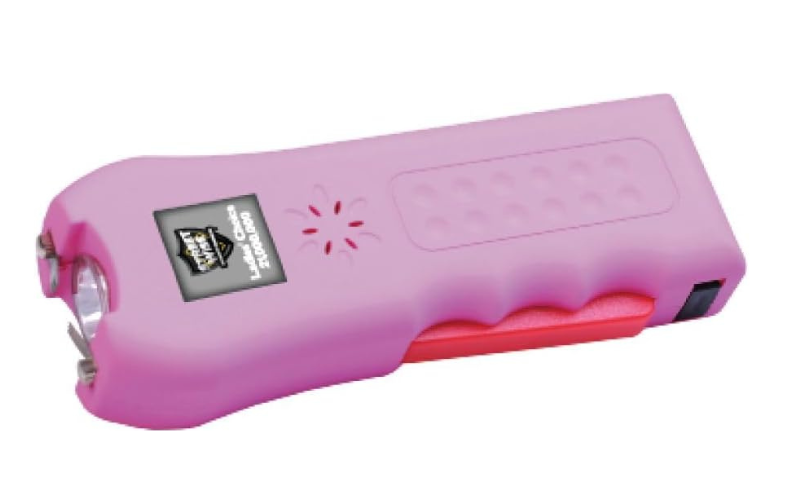
Some stun guns combine multiple safety tools into one device — pairing the shock function with a loud alarm and flashlight so you have more than one way to respond if something feels wrong. These multi-feature models tend to run slightly larger than a keychain or pen-style unit, but the added tools make up for the size.
Key Features to Look For
- Built-in alarm — a loud personal alarm can draw attention and startle a threat before you even need to use the stun function.
- LED flashlight — useful for visibility in dark areas, and doubles as a way to disorient an attacker briefly.
- Disable pin — an added safety layer that can deter someone from using the device against you if it’s grabbed.
- Holster and wrist strap — keeps the device secure and accessible during movement.
- Rechargeable battery — one charge covers repeated use without needing replacement batteries.
- Multiple color and style options — lets you pick a design that fits your daily carry preference.
Who This Type Suits Best
This style suits anyone who wants a single device covering several bases at once — alarm, light, and shock — rather than carrying separate tools. It works particularly well for commuters, students, and gym-goers who want one item that handles multiple scenarios.
Pros
- Combines shock, alarm, and flashlight in a single device
- Loud alarm can draw attention before physical contact is even needed
- Holster and wrist strap keep it secure during movement
Cons
- Bulkier than a keychain or pen-style unit
- Alarm feature can drain the battery faster with frequent use
Best Suited For
This type of device works well for anyone who wants power, alarm, and light combined in a single tool rather than carrying separate items — a practical fit for runners, college students, and commuters who want one reliable daily-carry option.
Buying Guide: How to Choose the Right Stun Gun
Choosing between stun gun types comes down to your daily routine — where you go, how you carry things, and what situations you’re actually preparing for. Here’s what to weigh before deciding:
1. Power Output
Voltage affects how quickly a device can stop an attacker, but higher isn’t automatically better if it comes at the cost of size or ease of use. Most reputable stun guns, regardless of voltage rating, deliver enough of a shock to create an opening to get away — the real differentiator is usually how reliably and quickly you can deploy it.
2. Portability & Size
If you want something always within reach without thinking about it, a keychain-style device works best since it’s physically attached to something you already carry daily. If discretion matters more than instant access, a pen-style unit blends in better but requires a conscious decision to pull it out.
3. Safety Features
Look for:
- Disable pins — stop the device from being used against you if it’s grabbed during a struggle.
- Safety switches — prevent accidental activation while it’s sitting in a pocket or bag.
- Wrist straps and holsters — keep the device secure and quick to access without fumbling.
These features matter more than raw power in a real confrontation, since a device that misfires or gets knocked away does you no good.
4. Extra Tools
Flashlights and built-in alarms add practical value beyond the shock function itself — a flashlight helps in dark areas regardless of a threat, and an alarm can draw attention before you even need physical contact.
5. Rechargeability
A built-in rechargeable battery avoids the recurring cost and inconvenience of replacing disposable batteries, and it means one less thing to forget before you head out.
6. Comfort & Grip
A device you’re not comfortable holding is one you’ll hesitate to use. Whatever style you choose, make sure it feels natural in your hand — that familiarity matters under stress.
7. Legal Considerations
Stun gun laws vary significantly by state — a few states restrict or ban civilian possession entirely, while most allow it with basic conditions like a minimum age. World Population Review’s state-by-state legal reference is a useful starting point for checking where you stand. If you plan to travel with one, note that the TSA prohibits stun guns and similar electro-shock devices in carry-on luggage — they must go in checked baggage, rendered inoperable.
Conclusion
Choosing the right stun gun comes down to matching the format to your actual routine — a pen-style device for discretion, a keychain model for constant reach, or a multi-feature option if you’d rather have an alarm and flashlight built in. None of these types is universally “best”; the right one is whichever you’ll actually carry and know how to use without hesitation.
If you want to understand more about how these devices work internally before deciding, our guide on how stun guns work breaks down the mechanism in more detail. And since carrying one still comes with legal responsibility, it’s worth pairing that knowledge with a broader understanding of why self-defense preparedness matters in the first place.
FAQs
1. What’s the difference between a stun gun and a taser?
A stun gun requires direct contact with an attacker, while a taser fires probes from a distance — both deliver an electric shock to disable the threat temporarily.
2. Are stun guns legal to carry in the US?
Legality varies by state — most allow civilian possession for adults 18+, though a few states restrict or ban them entirely.
3. Which stun gun type is best for everyday carry?
A keychain-style model works best for constant reach, while a pen-style device suits anyone who wants complete discretion.
4. Do stun guns work through thick clothing?
Effectiveness can drop with heavy clothing since the shock needs skin or close contact to disrupt muscle control fully.
5. Can I bring a stun gun on a flight?
No — the TSA prohibits stun guns in carry-on luggage; they can only be packed in checked baggage, rendered inoperable.
6. How often should I charge a rechargeable stun gun?
Check it monthly and recharge fully before carrying it daily, since a partially charged device delivers weaker output when you need it most.
About the Author
M. Bilal holds a BS in Criminology and writes on personal safety and self-defense topics for CrimTechHub. His criminology background shapes how he approaches this content — focusing on how these tools actually function within real threat scenarios and legal boundaries, rather than just listing specs. Each guide is researched against current state laws and device mechanics before publishing.
Have a correction or question about this article? Get in touch.