Introduction
What if your building was already on fire — and not a single alarm had gone off yet?
It sounds unlikely. But it happens more than most people realize. Smoke starts small. It builds slowly, silently, in places no ceiling-mounted detector can reach in time. And by the time the alarm triggers, the damage is already done.
That’s the problem the VESDA fire alarm system was built to solve. It doesn’t wait for smoke to rise — it goes looking for it, pulling air samples continuously and analyzing them with laser precision.For hospitals, data centers, and commercial buildings across the USA, this isn’t just a smarter detector. It’s the difference between a close call and a catastrophe.
Table of Contents
What Is a VESDA Fire Alarm System?
At its core, VESDA — Very Early Smoke Detection Apparatus — is built around one idea: catch fire before it starts. It’s not your average smoke alarm. While a standard detector sits on your ceiling and waits for smoke to reach it, VESDA actively pulls air from the room and analyzes it — constantly, quietly, and with extreme precision.
The system was developed by Xtralis, an Australian fire safety company, and has since become the global standard for high-risk environments. It’s now a go-to solution for demanding environments — data centers, museums, hospitals, and airports that simply can’t afford a slow response.
Here’s the key difference: a conventional smoke detector reacts. VESDA predicts. It can detect smoke particles at concentrations so low that the human eye — and nose — can’t detect anything yet. That means you get a warning long before a fire has a chance to grow.
For any building where downtime, damage, or data loss isn’t an option, that kind of early warning isn’t a luxury. It’s a necessity.
How Does a VESDA System Work?
Think of it like this — your nose can smell smoke when it’s already close. VESDA smells it when it’s still just an idea.
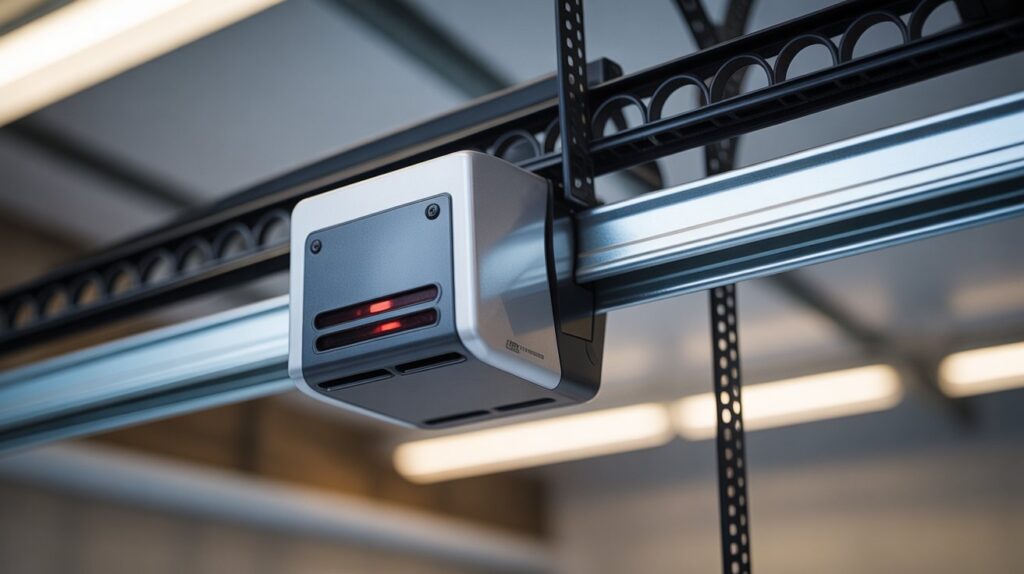
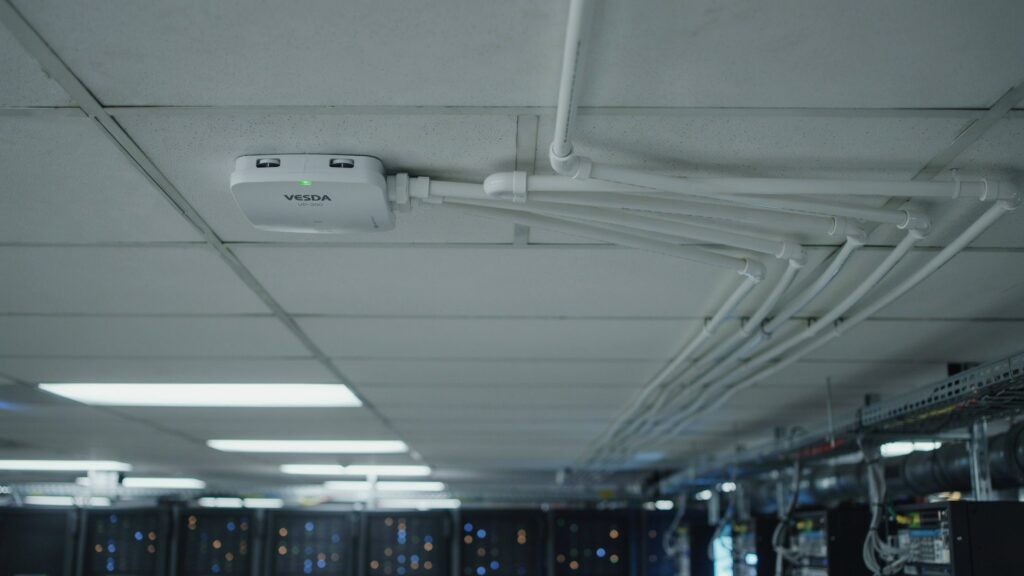
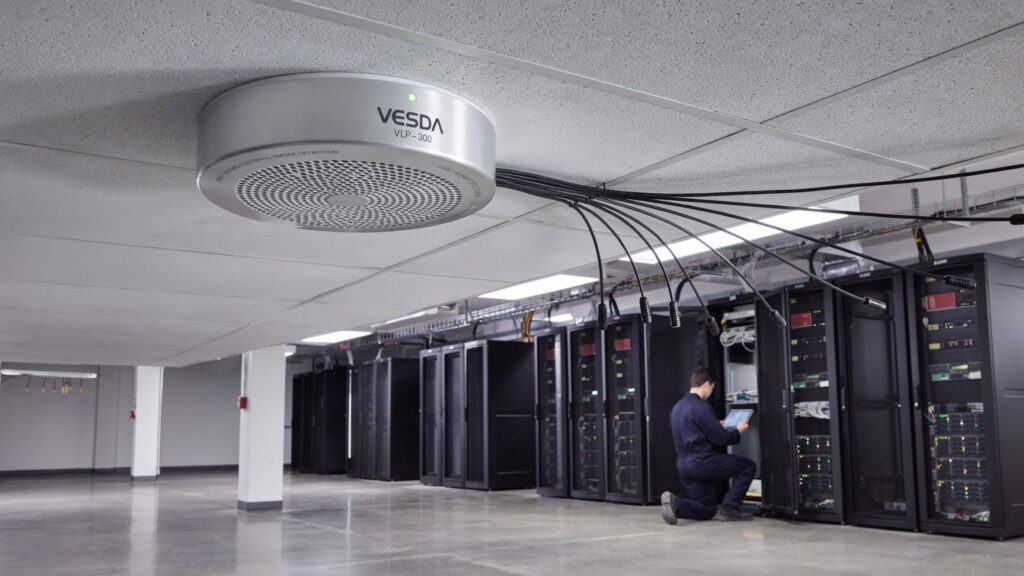
The system uses a network of small pipes installed throughout a building. These pipes continuously draw air samples from the protected space and pull them into a central detection unit. Inside that unit sits a laser detection chamber — and this is where the magic happens. The laser scans the air for microscopic smoke particles, particles too small to trigger any conventional detector.
What makes it smarter is the four-stage alert system:
- Alert — Something unusual is in the air. Worth watching.
- Action — Smoke particles are increasing. Investigate now.
- Fire 1 — Confirmed smoke presence. Initiate response.
- Fire 2 — Critical level. Full emergency response required.
This staged approach means your team isn’t scrambling at the first sign of a dust particle. You get time — and in a fire situation, time is everything.
No guessing. No false panic. Just precise, layered detection that gives you the chance to act before the situation gets out of hand.
Where Is VESDA Used — and Why?
Some spaces simply cannot afford to wait. When a conventional detector finally goes off, the damage in these environments is already done.
VESDA fire alarm systems are built for places where the stakes are too high for a slow response:
- Data centers — A small electrical fire can wipe out millions in servers and irreplaceable data within minutes.
- Hospitals — Patients on life support can’t be evacuated fast. Early detection buys critical time.
- Museums and archives — Priceless artwork and historical records don’t survive smoke damage, let alone fire.
- Server rooms — Even a brief fire event means hours or days of downtime and serious financial loss.
- Warehouses — Large open spaces with high ceilings where smoke travels far before reaching a standard detector.
Here’s the hard truth about conventional detectors — by the time they trigger, smoke has already built up enough to cause harm. In a server room, that’s corrupted data. In a hospital, that’s a delayed evacuation. In a museum, that’s a loss that can never be replaced.
VESDA doesn’t wait for smoke to rise. It finds the problem at the source, giving building managers and safety teams a real window to act.
VESDA vs. Conventional Smoke Detectors
A standard smoke detector does its job — for a home, a small office, a basic space. But put it in a data center or a hospital, and its limitations become a serious problem.
Here’s how the two compare where it actually matters:
| Feature | VESDA | Conventional Detector |
| Detection Speed | Catches smoke at earliest stage | Reacts after visible smoke builds |
| Sensitivity | Extremely high — parts per million | Low to moderate |
| False Alarm Rate | Very low — staged alert system | Higher — dust, steam can trigger it |
| Coverage Area | Large, flexible pipe network | Limited to ceiling-mounted radius |
| Best For | Critical commercial spaces | Residential and basic commercial |
The cost difference is real — VESDA systems require a higher upfront investment. But for USA building owners managing high-value assets, the math is straightforward. One prevented fire event, one avoided server crash, one early evacuation can save far more than the system ever costs.
A conventional detector protects a room. VESDA protects what’s inside it.
Is a VESDA System Worth the Investment?
The honest answer — it depends on what you’re protecting. But for most commercial and industrial spaces in the USA, the answer is yes, and by a wide margin.
The long-term ROI is clear. A single fire incident in a data center or warehouse can cost hundreds of thousands in damage, lost data, legal liability, and operational downtime. VESDA catches the problem early enough to prevent that outcome entirely. The system pays for itself the moment it stops one serious event.
Insurance and compliance are real advantages too. Many US insurers offer lower premiums for buildings equipped with advanced fire detection systems. On top of that, certain industries — healthcare, finance, government facilities — are required to meet strict fire code compliance. VESDA often satisfies those requirements better than conventional systems.
Who should seriously consider it:
- Commercial building owners with high-value assets or equipment
- IT and data center managers where downtime is not an option
- Healthcare facility directors responsible for patient safety
- Museum and archive managers protecting irreplaceable collections
- Industrial warehouse operators covering large, hard-to-monitor spaces
If your building holds something that can’t be replaced — or can’t afford to go offline — VESDA isn’t an upgrade. It’s the right call.
Final Thoughts
Fire doesn’t warn you. It just starts.
By the time a standard alarm goes off, the damage is already happening. VESDA changes that — it detects what your eyes can’t see and your nose can’t smell, giving you time to act before a small problem becomes a catastrophe.
For any building where people, data, or irreplaceable assets are at stake — this isn’t a luxury purchase. It’s the responsible one.
The most dangerous fire is the one you didn’t see coming. VESDA makes sure you always do.
FAQs
What is VESDA in fire alarm?
VESDA is an advanced air-sampling smoke detection system that actively pulls air from a space and analyzes it for smoke particles — long before a standard alarm would react.
What is the difference between a VESDA and a fire alarm system?
A traditional fire alarm reacts to smoke. VESDA predicts it. It detects smoke at microscopic levels, giving you a warning minutes — sometimes hours — earlier.
How much does a VESDA system cost?
Installation typically ranges from $3,000 to $30,000+ depending on building size and complexity. It’s a premium system built for high-value spaces.
How long does a VESDA system last?
With proper maintenance, a VESDA system can reliably last 10 to 20 years — making it a solid long-term investment.
Is VESDA difficult to maintain?
Not really. Basic filter replacements and occasional inspections are all it takes, done by a qualified fire safety pro.
Do I need an electrician to change hardwired smoke detectors?
Yes. Hardwired detectors involve live wiring — always hire a licensed electrician for safety and code compliance.
How often do VESDA filters need to be replaced?
Typically every 6 to 12 months, depending on the environment. Dusty or industrial spaces may require more frequent changes.