Introduction
you press the garage door remote, expecting it to close — instead, it stops, and that orange light stares back at you. It’s a small problem that turns into real frustration, especially when you’re in a hurry — and understanding why garage door sensor is orange and how to fix it is the first step to getting past it.
If you’re wondering how to fix orange light on garage door sensor, you’re not alone — it’s a common issue in U.S. homes, and it usually shows up at the worst possible time. The good news: it’s rarely complicated or expensive to fix. With a few simple steps, you can get your garage door working smoothly again.
Table of Contents
Why That Orange Light on Your Garage Door Sensor Shouldn’t Be Ignored
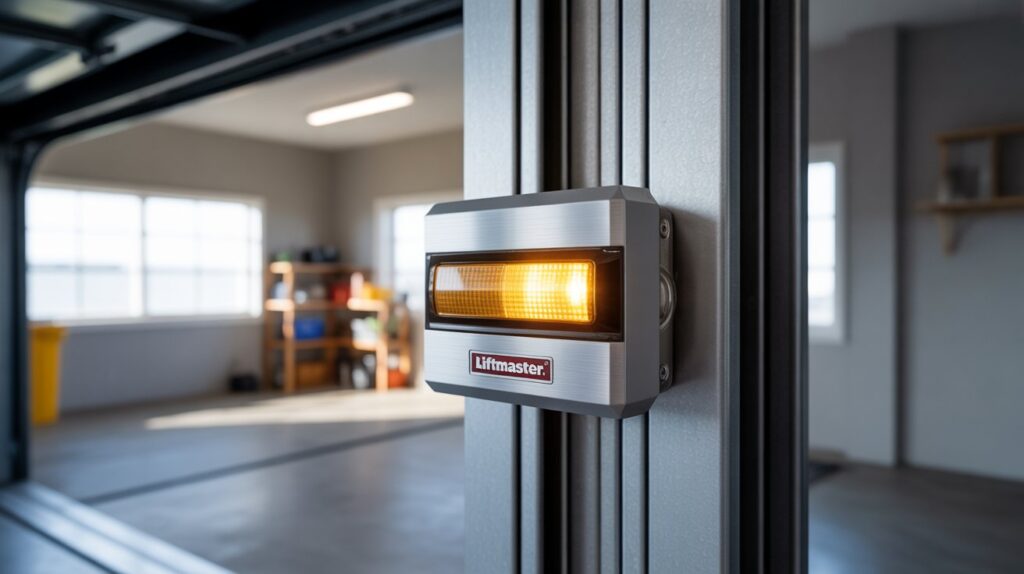
You press the remote expecting the door to close like always — instead, it stops halfway or won’t move at all. Then you notice it: a steady or blinking orange light on one of the sensors. Understanding why garage door sensor is orange and how to fix it matters here, because it’s a small detail that turns into real frustration fast, especially when you’re rushing out the door.
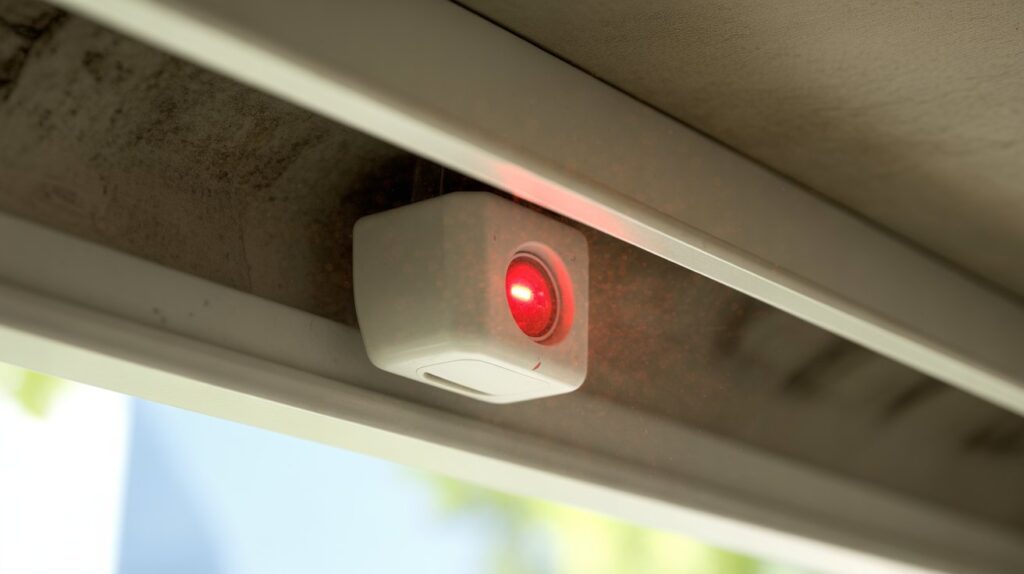
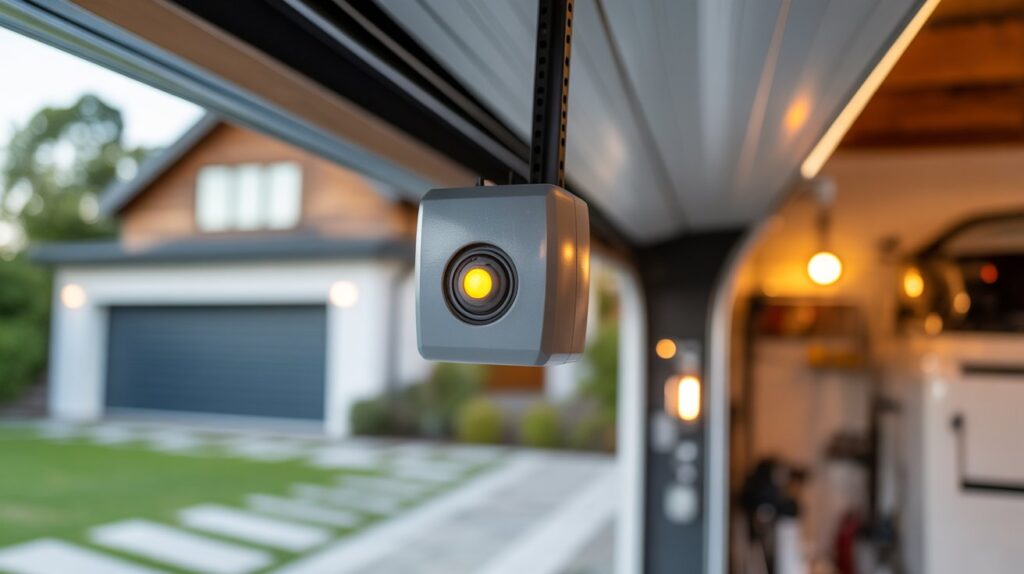
That orange light isn’t random. In most U.S. garage systems, it usually means the sending sensor is active, but something’s off with the connection or alignment — your safety sensors aren’t communicating properly. These sensors exist to stop the door from closing on people, pets, or objects, so when something’s wrong, the system halts as a built-in safety measure.
Ignoring it can cost you more than convenience. A garage door that won’t close properly leaves your home exposed, and it turns something as simple as leaving the house into a daily hassle. If the issue traces back to a worn or failing sensor rather than just dirt or misalignment, a replacement wireless garage door sensor kit compatible with major brands can restore normal function faster than repeated troubleshooting.
Understanding how to fix orange light on garage door sensor isn’t just about clearing a blinking light — it’s about restoring safety and reliability. Once you know what the signal means, the fix becomes far less intimidating.
What Causes the Orange Light on Garage Door Sensors?
If you’re trying to figure out how to fix orange light on garage door sensor, the first step is understanding what’s actually causing it. In most U.S. homes, it comes down to a few common problems affecting how your safety sensors communicate.
Here are the main causes:
- Sensor misalignment — Garage door sensors must face each other precisely to work. Even a slight bump — from a trash bin or daily use — can knock them out of alignment, causing the system to detect a broken safety beam and stop the door from closing.
- Dirt or debris on the lens — Dust, spider webs, or moisture can block the lens. Even a thin layer can interrupt the signal, especially in garages that aren’t cleaned often.
- Wiring or power issues — Loose wires or minor electrical faults can cause the sending sensor to show orange while the receiving sensor fails to respond, disrupting the whole safety system.
- Sunlight interference — In west- or south-facing garages, direct sunlight hitting the sensor at certain times of day can create glare that confuses the beam and triggers the orange light.
These sensors exist for a federally regulated reason — as CPSC’s garage door safety documentation explains, U.S. law has required external entrapment protection systems like photoelectric sensors on residential garage door openers since 1993, specifically to stop the door from closing on people, pets, or objects. When the system senses a problem, it halts operation as a built-in safety measure — that’s exactly why your door won’t close properly when a sensor isn’t working correctly.
Understanding these causes makes it much easier to move forward and fix the problem with confidence instead of guesswork.
How to Fix Orange Light on Garage Door Sensor (Step-by-Step)
If your garage door refuses to close and that orange light is staring back at you, don’t worry — most fixes are simple and take just a few minutes. The key is working through the most common causes first, in order, rather than guessing. Once you understand why garage door sensor is orange and how to fix it, the process becomes far less frustrating.
1. Check and realign the sensors
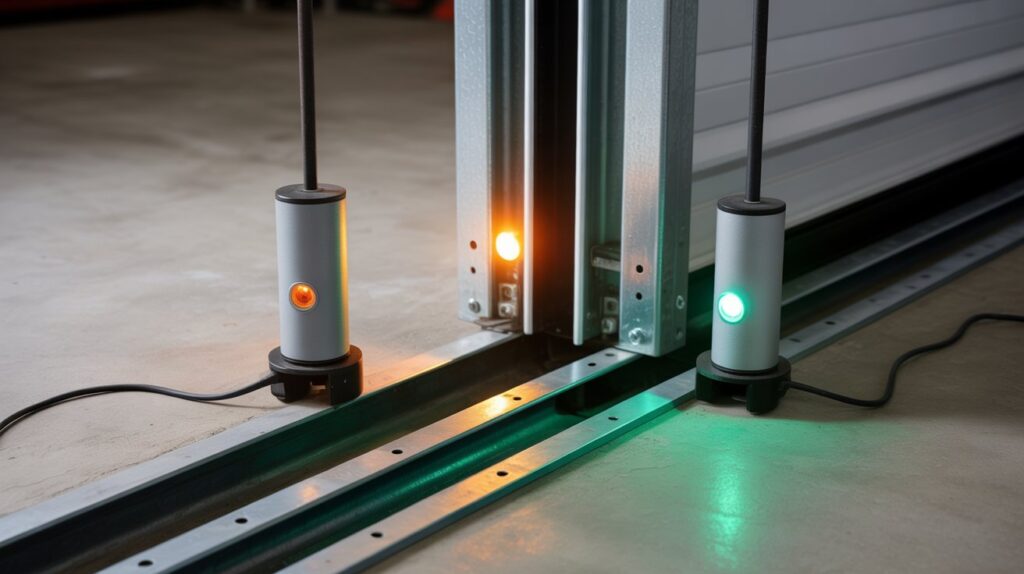
Look at both sensors near the bottom of your garage door tracks. They should face each other directly, at the same height, with nothing blocking the space between them. If one has shifted even slightly, gently loosen its mounting bracket and adjust it until both lights sit steady. A small nudge is often all it takes to restore the beam.
2. Clean the sensor lenses properly
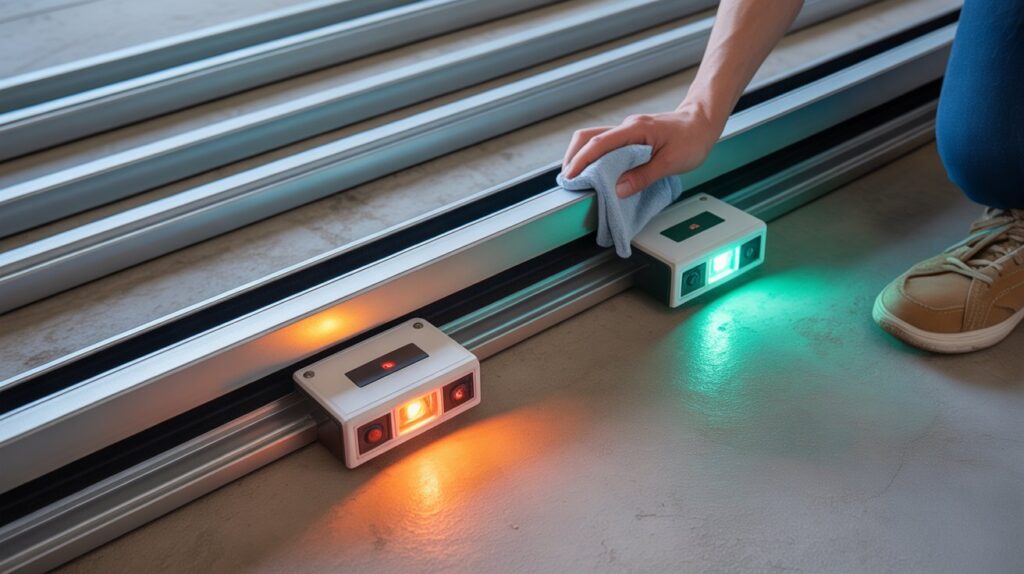
Wipe both lenses with a soft, dry or slightly damp cloth to remove dust, dirt, or spider webs. Avoid glass cleaners or harsh chemicals, which can leave a residue that scatters the infrared beam instead of letting it pass cleanly.
3. Inspect wiring connections
Follow the wires from each sensor back to the opener unit, checking for loose connections, frayed insulation, or spots where wiring has been pinched or chewed. A damaged wire can cause exactly this kind of intermittent orange signal, even when the sensors themselves are fine.
4. Reset the garage door system
Unplug the opener for 30–60 seconds, then plug it back in. This clears minor electronic glitches and gives the sensors a clean restart, often resolving issues that alignment or cleaning alone didn’t fix.
According to DASMA’s garage door safety guidelines, regular monthly checks on your door and opener system are one of the simplest ways to catch small sensor or alignment issues before they turn into bigger safety problems — a habit worth building alongside these fixes.
If you’d rather stay ahead of these issues instead of troubleshooting them repeatedly, a garage door motion sensor upgrade can add an extra layer of reliable detection alongside your existing safety sensors.
These steps solve most garage door sensor problems without needing professional help — the goal is a clear, uninterrupted signal between both sensors so your door can operate safely again.
How to Test Your Garage Door Sensors After Fixing
Once you’ve gone through the fixes, it’s important to make sure everything is working correctly.
- Check the LED lights: typically, one sensor shows green, and the other may show orange or amber, but both should be steady (not blinking).
- Close the garage door using your remote or wall button—watch for smooth, uninterrupted movement.
- Place an object (like a box) in the path of the door. The door should stop and reverse immediately when the beam is blocked.
If the lights stay stable and the door responds properly, your sensors are back to normal. This quick test gives you confidence that your garage door safety system is working exactly as it should.
If you find yourself running this test often, it may be worth upgrading instead of repeatedly troubleshooting — our guide to the best garage door alarm sensors covers reliable, easy-to-install options built for long-term dependability.
When You Should Call a Professional (And Why It Matters)
Sometimes, even after trying the basic steps, the problem doesn’t go away. You may still see that orange light, or your garage door simply won’t respond the way it should. This is the point where figuring out how to fix orange light on garage door sensor on your own may not be enough—and that’s completely okay.
There are a few clear situations where calling a professional is the smarter and safer choice:
- Wiring looks damaged or complex
If you notice frayed wires, exposed connections, or anything that doesn’t look right, it’s best not to handle it yourself. Electrical issues can be risky without proper tools and experience. - Sensors are aligned and clean, but still not working
When basic fixes don’t solve the problem, there may be an internal fault in the sensor or garage door opener system that requires expert diagnosis. - Garage door behaves unpredictably
If the door reverses randomly, won’t close fully, or acts inconsistently, it could signal a deeper issue with the safety system or motor. - You’re unsure or uncomfortable with the repair
There’s no harm in choosing safety over guesswork. Garage doors are heavy, and even small mistakes can lead to injury or costly damage.
In the U.S., it’s very common for homeowners to rely on licensed garage door technicians for anything beyond simple maintenance. These professionals are trained to handle garage door safety sensors, electrical systems, and mechanical parts safely and efficiently. More importantly, they ensure your system meets standard safety expectations — something that matters for both your family’s protection and your home’s security.
Before calling in a professional, though, it’s worth ruling out the basics yourself — our step-by-step guide to aligning garage door sensors walks through the most common fix, which resolves the issue in many cases without any repair cost at all.
At the end of the day, this isn’t just about fixing a light. It’s about making sure your garage door works reliably every single day without putting anyone at risk. If the issue feels bigger than a quick fix, bringing in a professional is the right move.
Yeh raha ek naya, strong section — prevention-focused, jo abhi tak article mein missing tha aur real value add karta hai (aur doosre color-variant articles se overlap bhi nahi karta, cannibalization ka risk nahi):
How to Prevent Garage Door Sensor Issues Before They Start
Fixing the orange light once is easy — keeping it from coming back is what actually saves you time in the long run. Most sensor problems build up gradually, not overnight, which means a few small habits can prevent the issue almost entirely.
Do a monthly visual check. Every few weeks, glance at both sensors — confirm the lights are steady, the lenses look clear, and nothing (a bike, a storage bin, a garden hose) has been left leaning against the bracket. In many homes, this single habit catches misalignment before it ever becomes a “door won’t close” moment.
Watch for seasonal shifts. Garages that face direct morning or evening sun often see sensor issues spike during specific months, when the sun angle lines up directly with the beam path. If your orange light tends to appear around the same time each day, that’s usually a sunlight pattern, not a hardware failure — a small sun shield or slight sensor angle adjustment can fix it permanently.
Keep the area around the sensors clear. Garages accumulate clutter fast, and it’s easy to forget that a sensor sitting 6 inches off the ground is exactly where boxes, bikes, and bins tend to land. Giving each sensor a clear, untouched zone prevents most accidental misalignment.
Test the safety reverse function occasionally. Beyond just checking the lights, place an object in the door’s path and confirm it stops and reverses. This one habit — recommended directly by garage door safety guidelines — confirms your entire safety system is working, not just the sensor lights.
Homeowners who build these checks into a normal routine tend to deal with this issue once, not repeatedly every few months.
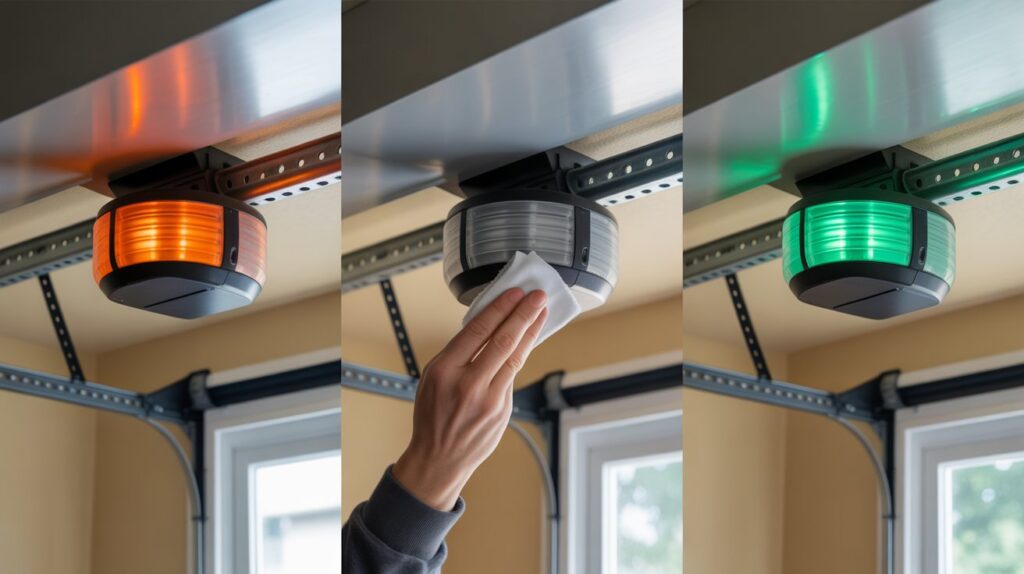
A garage door that won’t close and an orange sensor light can feel minor — but it quickly becomes a daily hassle and a real safety concern. Once you understand how to fix orange light on garage door sensor, most issues come down to simple fixes: alignment, cleaning, or a quick reset.
Your safety sensors exist for a reason — they protect your home and the people you care about. Ignoring that warning light today can lead to bigger problems tomorrow. For routine upkeep that prevents this from happening again, our garage door sensor cleaning guide covers the simple habits that keep your system reliable long-term.
Is your garage door system truly working the way it should? Real safety isn’t something you notice when it works — it’s something you feel when it never fails.
FAQs
Q1: Why is my garage sensor light orange?
An orange light usually means the sending sensor has power but isn’t properly aligned or communicating with the receiving sensor.
Q2: How do I reset garage door sensors?
Unplug the garage door opener for about 30–60 seconds, then plug it back in to reset the system and test the sensors again.
Q3: Can I fix a garage door sensor orange light myself?
Yes, in most cases. Realigning the sensors, cleaning the lenses, or resetting the system resolves the issue without professional help.
Q4: Does sunlight really cause a garage door sensor orange light?
Yes. Direct sunlight hitting the sensor at certain times of day, especially in west- or south-facing garages, can create glare that disrupts the beam.
Q5: How long does it take to fix an orange garage door sensor light?
Most fixes, like alignment or cleaning, take just a few minutes. Wiring issues or a faulty sensor may take longer and could require a technician.
Q6: Is it safe to ignore an orange garage door sensor light?
No. The light signals a break in your safety system, meaning the door may not stop or reverse properly if something is in its path.
About This Guide
This guide was researched and written by M Bilal, who holds a Bachelor’s degree in Criminology with a focus on how physical security systems function and fail in real-world home settings. Garage doors represent one of the most overlooked entry points into a home, which is why understanding sensor behavior — not just the light color, but what it signals about the safety system as a whole — is treated here as a security issue, not just a maintenance one.
The troubleshooting steps and safety information in this guide are grounded in official sources, including CPSC’s federal safety standards for garage door entrapment protection and DASMA’s industry safety guidelines, rather than generic advice. This approach reflects CrimTechHub’s broader commitment to giving homeowners accurate, practical information they can act on with confidence.