Introduction
A garage door that stops closing or reverses on its own is almost always a sensor alignment problem, not a motor issue. Misaligned sensors are one of the most common reasons homeowners across the U.S. run into this, and it’s usually an easy fix.
Learning how to align garage door sensors takes just a few minutes and can save you an unnecessary service call. This guide covers why it happens, the warning signs to watch for, the exact steps to realign your sensors, and the mistakes that make the problem worse. By the end, you’ll be able to handle this simple home maintenance task on your own.
Table of Contents
Why Your Garage Door Won’t Close — The Hidden Sensor Problem
When your garage door starts to close and then suddenly stops or reverses, it’s rarely the motor or remote causing the problem. In most cases, the real cause is a pair of small safety sensors near the bottom of your garage door tracks.
These sensors work by sending an invisible beam between each other. If they’re even slightly out of position, that beam breaks—and your system reads it as something blocking the door, even when the path is completely clear. This is especially common after bumps from parked cars, lawn equipment, or seasonal temperature shifts that can shift the sensor brackets out of place.
The fix doesn’t require a technician visit. Learning how to align garage door sensors is usually all it takes to resolve the issue in minutes, once you understand what’s actually going wrong.
What Garage Door Sensors Do (And Why Alignment Matters)
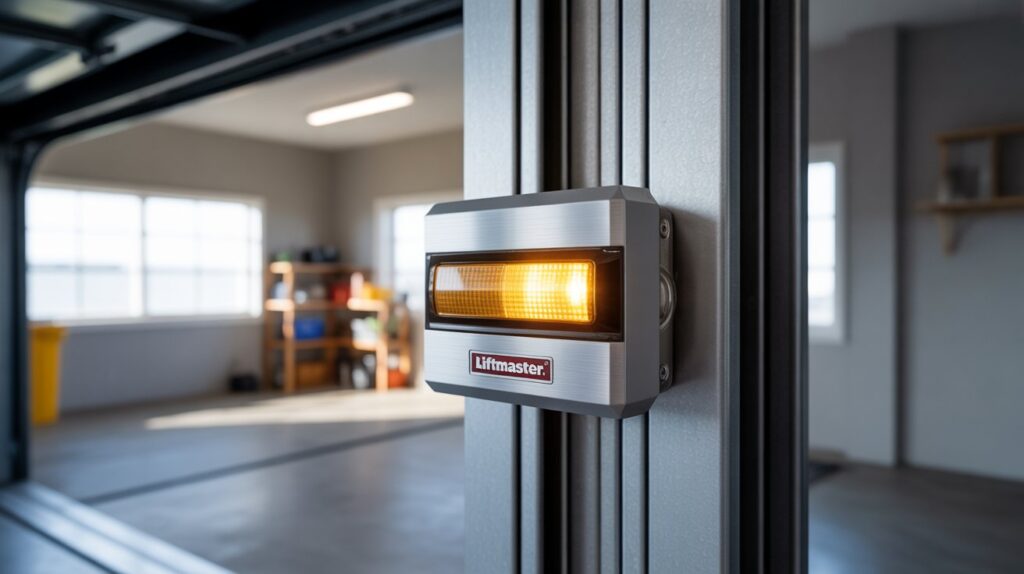
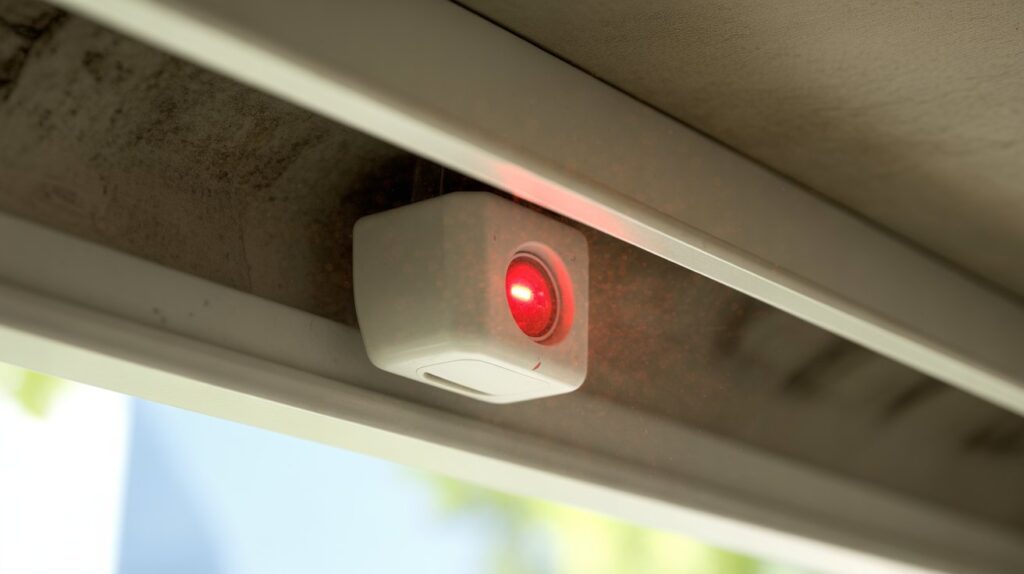
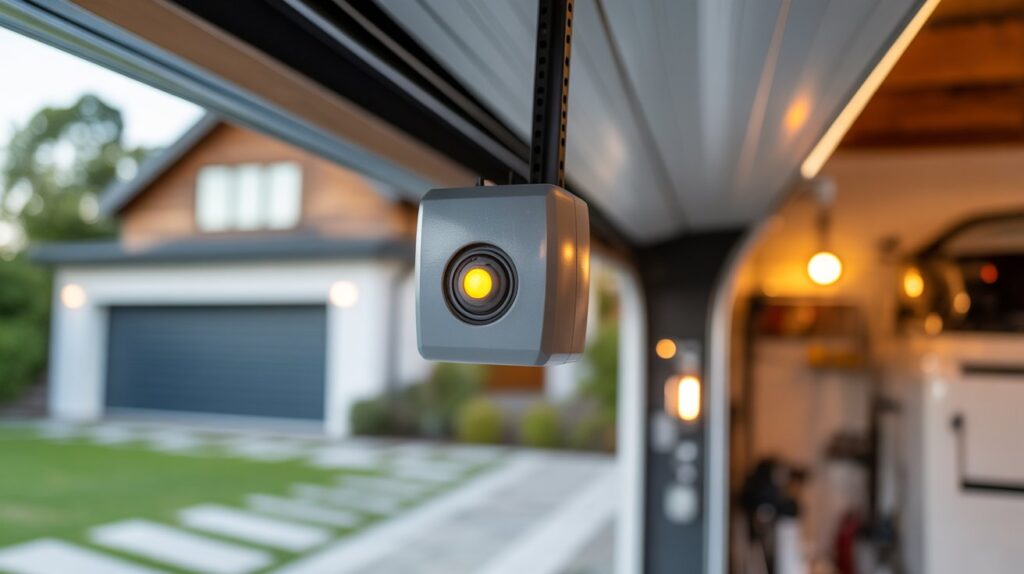
Garage door sensors are safety devices installed near the bottom of both sides of your garage door track. They send an invisible infrared beam from one sensor to the other — as long as that beam stays clear, the door closes normally. The moment anything blocks it, even briefly, the system stops the door from closing to prevent damage or injury.
This is why the Consumer Product Safety Commission requires automatic garage door openers to include this kind of entrapment-protection sensor system, since it’s what stops a closing door from harming a child, pet, or anything else in its path.
When sensors drift even slightly out of alignment, they lose their line of sight to each other. The system then reads this as an obstruction, even though the path is completely clear — causing the door to refuse to close, reverse mid-way, or behave inconsistently. Understanding how to align garage door sensors matters here, since a small adjustment is usually all it takes to restore normal, safe operation.
Signs Your Garage Door Sensors Are Out of Alignment
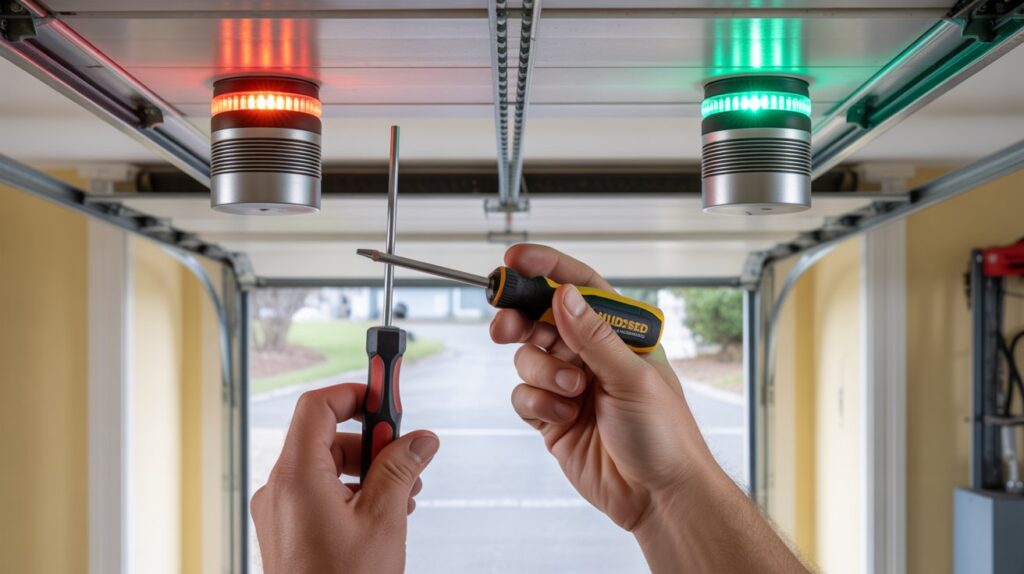
- Blinking or flickering sensor lights — A solid light means the sensor has a clear connection to its pair. Flashing or blinking means the beam isn’t reaching the other side, which almost always points to misalignment.
- Garage door starts closing, then suddenly reverses — The door shuts partway and then goes back up, as if something’s blocking it, even when nothing is there. This happens because a broken beam triggers the safety-reverse feature automatically.
- Door won’t close unless you hold the wall button — Holding the button overrides the safety sensors. If this is the only way your door closes, it’s a strong sign the sensors aren’t communicating properly.
- Loose or shifted sensor brackets — A bump from a car, bike, or lawn equipment can tilt a sensor just enough to throw off the beam, even if it looks only slightly off.
- Inconsistent door behavior — The door works fine sometimes and fails other times. This on-and-off pattern usually comes from a minor misalignment rather than a hardware failure.
Spotting these signs early makes it easy to fix the issue yourself. In most cases, learning how to align garage door sensors is all it takes to resolve it without calling a professional.
How to Align Garage Door Sensors (Step-by-Step Guide)
This is a simple DIY fix that takes about 10–15 minutes. Follow these steps in order:
- Turn Off Power for Safety — Unplug the garage door opener or switch off the breaker before you start. This prevents any unexpected movement while you’re working near the door.
- Locate and Inspect the Sensors — Find the sensors on both sides of the garage door, usually a few inches above the ground. Check that they’re facing each other directly, and look for dirt, dust, or spiderwebs blocking either lens.
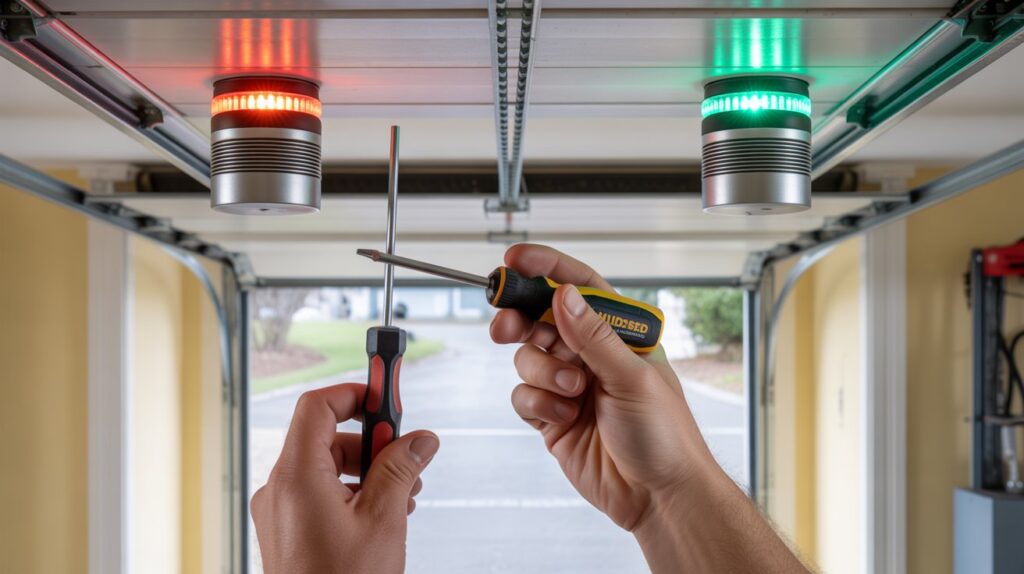
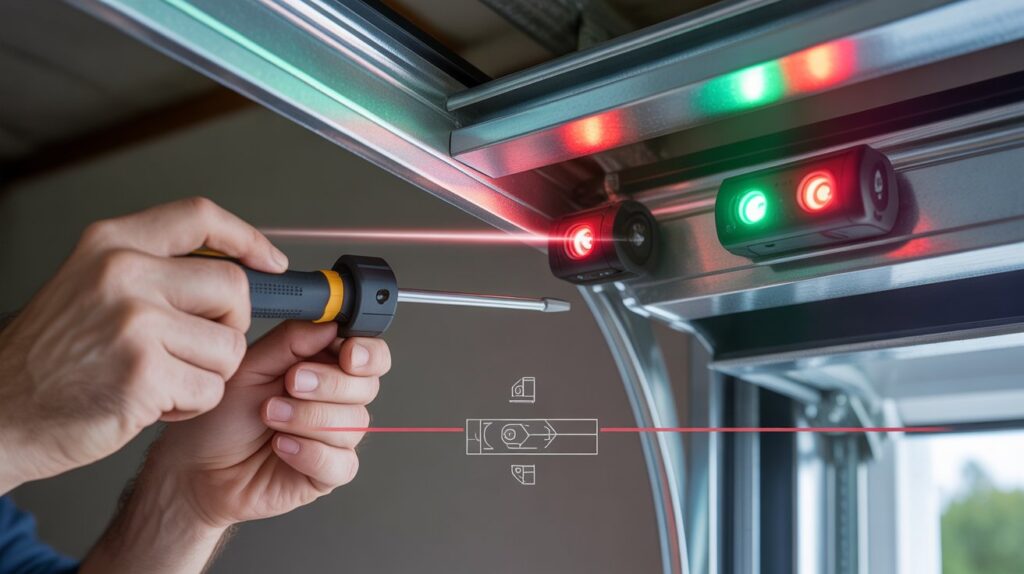
- Adjust the Sensors Until the Lights Are Stable — Each sensor has a small indicator light. Gently move the sensors up, down, or sideways until both lights turn solid and steady instead of blinking. A steady light means the sensors are properly aligned and reading each other again.
- Tighten and Secure the Brackets — Once aligned, tighten the screws or brackets holding the sensors in place. Do this carefully — over-tightening can shift the sensor slightly and undo the alignment.
- Test the Garage Door — Restore power and test the door using your remote or wall button. If it closes smoothly without reversing, the alignment worked. If not, repeat the adjustment in small increments until it does.
Once this is done, your garage door should close reliably without false reversals.
Common Mistakes to Avoid When Aligning Sensors
Small errors during this process are what usually cause repeat problems. Watch out for these:
- Over-tightening brackets — Excess force can shift the sensor slightly or even crack the bracket, undoing the alignment you just fixed.
- Ignoring dirt or debris on lenses — A speck of dust or a cobweb across the lens is enough to block the beam and cause unpredictable behavior, even with perfect alignment.
- Not checking wiring issues — Loose or damaged wires can mimic misalignment symptoms. Always inspect the cables before assuming it’s a positioning problem.
- Skipping the final test — Adjusting the sensors without testing afterward can leave the issue unresolved. Always run a full open-and-close cycle to confirm the fix worked.
Avoiding these mistakes keeps your sensors working reliably and saves you from repeating the same fix next week.
Conclusion
A misaligned garage door sensor is a small issue, but it directly affects your door’s safety and reliability. With the steps above, most homeowners can fix it in under 15 minutes without a service call.
If the lights stay steady but your door still won’t close properly, the problem may be something else — check out our guide on why your garage door sensor is orange for the next troubleshooting step. Otherwise, learning how to align garage door sensors properly the first time keeps your door — and everyone who uses it — safe.
Q: How do I fix misaligned sensors on my garage door?
A: Gently adjust the sensors until their LED lights are solid, then secure the brackets in place.
Q: How to mount and align garage door sensors?
A: Install sensors facing each other on both sides of the door, then fine-tune alignment until lights stay steady.
Q: How do you line garage door sensors?
A: Shift each sensor slowly until the beam connects and the LED lights turn solid, indicating proper alignment.
Q: How do I reset my garage door sensors?
A: Turn off the power, unplug the opener, then replug and test the sensors to restore default settings.