
1. Introduction
Is pepper spray legal in Utah? Pepper spray may be carried for personal protection, but its possession and use must follow applicable laws and restrictions. Understanding these rules can help you avoid legal problems and make informed safety decisions.
This guide explains Utah pepper spray laws, carrying restrictions, lawful self-defense, and safe handling practices.
Table of Contents
2. What Is Pepper Spray and How Does It Work?
Pepper spray is a personal safety product designed to help a person protect themselves during a threatening situation. Most civilian formulations contain oleoresin capsicum (OC), an irritating substance derived from hot peppers. It is commonly available in small aerosol canisters for personal protection.
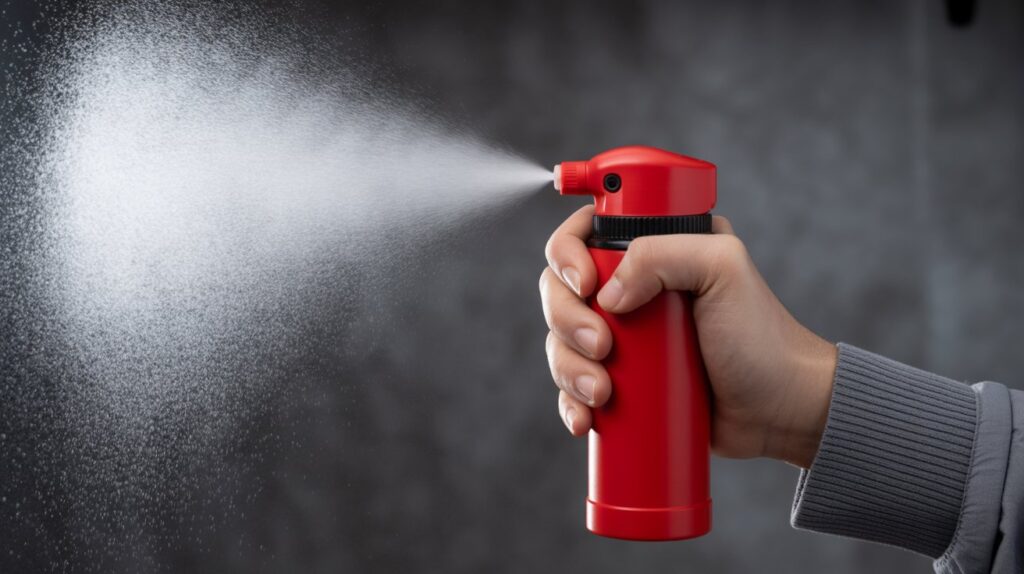
When released, the spray irritates the eyes, skin, and respiratory system. Exposure can cause temporary discomfort that may make it harder for an exposed person to see clearly or respond normally.
How Pepper Spray Affects the Body
The effects depend on the formulation, amount of exposure, distance, and individual sensitivity. Common reactions include:
- Eye irritation: Burning, excessive tearing, redness, and difficulty keeping the eyes open.
- Skin irritation: Burning sensations, redness, and discomfort where the spray contacts the skin.
- Respiratory irritation: Coughing, throat irritation, and difficulty breathing normally.
- Temporary disorientation: Eye and respiratory irritation can interfere with normal vision and concentration.
Most effects are temporary, but exposure can sometimes cause more serious reactions, particularly in people with existing respiratory conditions or those exposed in poorly ventilated areas.
Important Safety Considerations
Pepper spray is not guaranteed to stop an attacker, and its effects vary from person to person. Wind, enclosed spaces, accidental exposure, and improper handling can also affect how the product performs.
Anyone carrying a personal defense spray should understand its operating instructions, safety mechanism, expiration date, and storage requirements.
For additional guidance, read our pepper spray safety tips to learn about responsible handling, safe storage, and precautions against accidental exposure.
3. Pepper Spray Regulations in Utah Explained
Utah’s weapons laws do not establish a clearly stated, general 18-year minimum age or a two-ounce maximum canister size specifically for ordinary civilian pepper spray. However, residents should understand that lawful possession, misuse, and location-specific restrictions are separate legal issues.
Before purchasing or carrying an OC spray product, consider the following points.
Age and Possession Requirements
Utah does not provide a clearly stated, pepper-spray-specific minimum purchasing or possession age in the general weapons provisions reviewed for this guide.
Do not confuse age restrictions for firearms with rules for other personal safety products. Different laws may apply depending on the type of device, the person’s circumstances, and the way it is used.
Parents and guardians should also consider manufacturer instructions and appropriate safety precautions when keeping these products in a home with minors.
Canister Size and Product Restrictions
Utah law does not establish a verified general two-ounce maximum for ordinary civilian pepper spray.
Products may come in different sizes and spray formulations, including stream, fog, and gel. Buyers should check the product label, manufacturer specifications, and applicable federal transportation requirements before selecting or carrying a particular canister.
Do not assume that a product is lawful in every situation simply because it is sold commercially.
Restricted Locations and Carrying Rules
Location matters when carrying personal safety products. Schools, airports, government facilities, and private properties may have different legal requirements or facility policies.
Utah’s weapons statutes include restrictions involving dangerous weapons at certain school premises and secure airport areas. However, these provisions should not automatically be treated as a blanket prohibition on every ordinary pepper spray product.
For example, Utah Code Section 76-11-101 defines a dangerous weapon using factors that include the object’s design, intended use, and the circumstances in which it is used or possessed. Therefore, it is important not to assume that every personal safety spray automatically falls into the same legal category as a firearm or another dangerous weapon.
Before entering a restricted facility, check its posted rules and contact the responsible authority if the policy is unclear.
For further legal details, consult these official Utah sources:
- Utah Code § 76-11-101 – Definitions
- Utah Code § 76-11-205 – Carrying a Dangerous Weapon at an Elementary or Secondary School
- Utah Code § 76-11-205.5 – Openly Carrying a Dangerous Weapon at an Institution of Higher Education
- Utah Code § 76-11-218 – Possession of a Dangerous Weapon in an Airport Secure Area
Responsible Use and Legal Considerations
Possessing a personal safety spray and using it against another person are two different legal matters. Using an irritant against someone without lawful justification can create criminal or civil consequences.
A person should only consider defensive force when the circumstances justify it under applicable law. Utah’s self-defense provisions under Utah Code § 76-2-402 provide additional information about the legal use of force in defense of a person.
Understanding these distinctions helps Utah residents make informed decisions about personal protection while avoiding unnecessary legal risks.

4. Who Can Carry Pepper Spray in Utah?
Utah does not establish a separate statewide licensing or background-check requirement specifically for ordinary civilian pepper spray. However, possession rules can depend on the product, the person’s circumstances, and how the device is used.
Before carrying a personal defense spray, understand these important legal considerations.
Age and Possession Rules
Utah does not establish a general 18-and-older minimum age specifically for ordinary civilian pepper spray in the statutes reviewed.
However, Utah Code § 76-11-211 addresses possession of dangerous weapons by minors. Its application depends on whether the particular item meets the state’s legal definition of a dangerous weapon. An ordinary pepper spray canister should not automatically be treated as a firearm or another dangerous weapon without considering the statutory definition and circumstances.
Parents and guardians should keep personal safety products secured and prevent unauthorized access by children.
Read the official Utah Code § 76-11-211 – Possession of a Dangerous Weapon by a Minor for the applicable provisions.
Background Checks and Licensing
Utah does not establish a general background-check or permit requirement specifically for purchasing or carrying ordinary civilian pepper spray.
Do not confuse firearm purchase requirements or concealed firearm permits with rules for personal defense sprays. These are different types of products and are governed by different legal provisions.
Product Restrictions and Responsible Possession
Choose a commercially manufactured product with clear labeling and safety instructions. Check the manufacturer’s guidance for storage, expiration dates, and handling.
Avoid modifying the canister or using it for purposes other than its intended function. Misuse can create legal and safety problems, even when possession itself is lawful.
5. How to Legally Use Pepper Spray in Utah
Utah law permits the use of reasonable defensive force when a person reasonably believes it is necessary to protect themselves or another person against the imminent use of unlawful force.
The main legal provision is Utah Code § 76-2-402, which explains when force may be justified in defense of a person.
When Can Pepper Spray Be Used for Self-Defense?
Using a personal defense spray may be legally justified when the circumstances meet Utah’s requirements for defensive force.
Important considerations include:
- Immediate threat: Another person must present an imminent threat of unlawful physical force.
- Reasonable belief: You must reasonably believe that defensive action is necessary to protect yourself or another person.
- Appropriate response: The force used must be justified under the circumstances.
- Protection of another person: Utah law also recognizes the use of justified defensive force to protect someone else.
The legality of using pepper spray depends on the actual circumstances. Simply feeling uncomfortable or having a disagreement with someone does not automatically justify using force.
When Can Using Pepper Spray Become Illegal?
Using pepper spray to threaten, intimidate, punish, or retaliate against another person may result in criminal charges or civil liability.
Examples of potentially unlawful conduct include:
- Spraying someone during an ordinary argument without a justified threat.
- Using an irritant against someone after the immediate threat has ended.
- Attacking someone out of anger or revenge.
- Using force against a person when the circumstances do not justify defensive action.
Utah law also considers whether the person initially provoked the confrontation or was the aggressor. These circumstances can affect whether a self-defense claim is legally available.
What Does Utah Law Say About Self-Defense?
Under Utah Code § 76-2-402 – Force in Defense of Person, a person may use force when they reasonably believe it is necessary to defend themselves or another person against the imminent use of unlawful force.
The statute also addresses situations involving serious bodily injury, provocation, and the use of force by an aggressor.
Pepper spray use should be evaluated under the applicable self-defense standard rather than treated as automatically lawful whenever someone claims personal protection.
6. Where Can You Carry Pepper Spray in Utah?
Utah does not establish a blanket statewide prohibition on carrying every ordinary civilian pepper spray product in public places. However, certain locations have specific weapons laws, security requirements, or property policies that may affect possession.
Before entering a restricted facility, check its rules and confirm whether the particular product is permitted.
Schools and Educational Campuses
Utah Code § 76-11-205 addresses carrying a dangerous weapon at elementary and secondary schools. Section 76-11-205.5 addresses openly carrying a dangerous weapon at institutions of higher education.
These provisions depend on the legal definition of a dangerous weapon and the circumstances involved. They should not automatically be interpreted as a blanket ban on every ordinary pepper spray canister.
Schools and colleges may also establish their own safety and security policies. Check with the institution before bringing a personal defense product onto campus.
Official legal references:
- Utah Code § 76-11-205 – Elementary and Secondary Schools
- Utah Code § 76-11-205.5 – Institutions of Higher Education
Government Buildings and Secure Facilities
Some government buildings maintain designated secure areas where dangerous weapons are prohibited. Security screening, posted restrictions, and facility-specific policies may also apply.
Do not assume that every government building follows the same rules. Check the applicable restrictions before entering with a personal safety device.
Airports and Secure Airport Areas
Utah Code § 76-11-218 addresses possession of a dangerous weapon in an airport secure area.
The statute covers designated secure areas beyond the main public ticketing, check-in, and baggage-claim areas. It also provides for security screening and restrictions on prohibited items.
A separate legal assessment may be necessary to determine whether a particular chemical spray falls within the applicable statutory definitions.
For the exact state provision, read Utah Code § 76-11-218 – Possession of a Dangerous Weapon in an Airport Secure Area.
Travelers should also check current airport security and airline requirements before bringing pepper spray on a flight.
Private Businesses and Property
Private businesses, employers, and property owners may establish rules about personal safety devices on their premises.
For example, a business may restrict certain items inside its building or require visitors to follow posted security instructions.
Before entering a private property, review its policies and follow any lawful instructions from the property owner or authorized staff.
Safe Storage and Handling
Responsible storage helps prevent accidental discharge, unauthorized access, and unnecessary exposure.
Follow these basic precautions:
- Secure the safety mechanism: Keep the canister’s safety feature engaged when it is not in use.
- Keep it away from children: Store personal defense sprays in a secure location that minors cannot access.
- Follow temperature recommendations: Use the manufacturer’s recommended storage temperature.
- Avoid excessive heat: Do not leave the canister inside a hot vehicle for extended periods.
- Check expiration dates: Replace expired or damaged products according to manufacturer instructions.
- Prevent accidental discharge: Avoid placing the canister where other objects can press its trigger.
Proper storage and responsible handling help reduce the risk of accidental exposure and keep personal safety products in suitable condition.

8. Tips for Choosing the Best Pepper Spray
Choosing a personal defense spray involves more than comparing canister size or advertised strength. Consider the spray pattern, portability, safety mechanism, product specifications, and storage requirements before making a decision.
Utah residents should also understand applicable state laws and check whether a particular product is permitted in locations they regularly visit.
1. Choose a Suitable Canister Size
Pepper spray products come in different sizes, including compact keychain models and larger handheld canisters.
Smaller products are generally easier to carry in a pocket, purse, or everyday bag. Larger canisters may contain more solution, but their weight and dimensions can make them less convenient for daily use.
Compare the container capacity, operating instructions, and manufacturer’s specifications rather than assuming that a larger product is always more effective.
For additional guidance, read our guide to choosing pepper spray for self-defense.
2. Understand the Formula and Spray Pattern
Personal defense sprays use different delivery systems. Common options include stream, gel, foam, and fogger formulations.
Each spray pattern has different characteristics:
- Stream spray: Releases a narrow, focused stream and requires more precise direction.
- Gel spray: Uses a thicker formulation designed to reduce airborne dispersion compared with traditional mist sprays.
- Foam spray: Releases a thicker substance that adheres to surfaces.
- Fogger spray: Disperses a wider mist, increasing the possibility of airborne exposure and wind blowback.
No spray pattern is ideal for every situation. Consider the intended environment, product instructions, and potential exposure risks before choosing a particular design.
Learn more in our complete guide to the different types of pepper spray.
3. Check the Safety Mechanism
A reliable safety mechanism helps reduce the risk of accidental discharge during storage and everyday carrying.
Before choosing a product, check for:
- A secure safety lock or protective cap.
- A clearly marked activation mechanism.
- An easy-to-understand operating design.
- A comfortable grip that allows controlled handling.
- Clear manufacturer instructions and safety warnings.
Do not rely on appearance alone. Read the product documentation to understand how its safety mechanism works.
4. Review Expiration Dates and Storage Requirements
Pepper spray canisters have expiration dates, and their performance may change as the product ages or is stored incorrectly.
Before purchasing, check the expiration date and manufacturer recommendations.
Follow these storage precautions:
- Keep the canister away from excessive heat and direct sunlight.
- Avoid leaving it inside a hot vehicle.
- Protect it from physical damage and accidental pressure.
- Store it away from children and unauthorized users.
- Replace expired or damaged products according to manufacturer instructions.
Proper storage helps maintain product condition and reduces the risk of accidental discharge.
5. Verify Product Information and Utah Legal Requirements
Before purchasing or carrying a personal defense spray, review the manufacturer’s specifications and applicable laws.
Check the following information:
- Product ingredients and labeling.
- Canister capacity and spray formulation.
- Manufacturer’s safety and handling instructions.
- Age-related or possession restrictions that may apply to the circumstances.
- Rules for schools, secure facilities, and other restricted locations.
Utah’s dangerous-weapon laws use specific statutory definitions. Do not assume that every pepper spray product automatically falls into the same legal category as a firearm or another weapon.
For additional information, consult Utah Code § 76-11-101 – Definitions.
You should also understand the legal requirements for defensive force under Utah Code § 76-2-402.
6. Compare Manufacturer Specifications
Do not judge a personal defense spray only by its advertised strength or marketing claims.
Compare the actual product specifications, including:
- OC formulation and disclosed ingredient information.
- Spray pattern and stated operating range.
- Container capacity.
- Number of discharges, if specified.
- Safety features and activation design.
- Expiration date and storage instructions.
A higher advertised concentration does not automatically mean a product will perform better. Consider the complete formulation and manufacturer’s documented specifications.
Making an Informed Choice
The right personal safety product depends on portability, handling preferences, product design, and the circumstances in which it may be carried. Review the safety instructions and Utah’s applicable legal requirements before making a decision.
For additional information about responsible handling and everyday carrying precautions, read our pepper spray safety guide.
9. Conclusion: Is Pepper Spray Legal in Utah?
Is pepper spray legal in Utah? Generally, ordinary civilian pepper spray is legal to possess for personal protection, subject to applicable laws and location-specific restrictions.
Before carrying it, check Utah’s weapons laws, follow safety instructions, and understand when defensive force is legally justified.
For details, review Utah Code § 76-2-402 on self-defense.
FAQs About Pepper Spray in Utah
1. Can I carry pepper spray in Utah for self-defense?
Pepper spray may be carried for personal protection in Utah, but possession and use must follow applicable laws and restrictions.
2. Are there places where pepper spray is restricted in Utah?
Some locations may have security rules or restrictions on defensive sprays. Check the rules for schools, government facilities, airports, and private property before carrying pepper spray.
3. Can minors carry pepper spray in Utah?
Do not assume minors can carry pepper spray without restrictions. Check applicable laws and product requirements before allowing a minor to possess it.
4. What happens if I misuse pepper spray in Utah?
Using pepper spray to threaten, harass, or unlawfully harm someone may lead to criminal or civil consequences. Its use should be limited to situations where self-defense is legally justified.
5. Can I use pepper spray against someone in Utah?
Pepper spray should only be used when the circumstances legally justify defensive force. Using it during an argument or as a threat may create legal problems.
Legal Disclaimer
This article is for general informational and educational purposes only. It is not legal advice. Utah laws and regulations may change, and restrictions can depend on the circumstances and location. Always check current official Utah laws or consult a qualified attorney before carrying or using pepper spray. CrimTechHub does not encourage the misuse of self-defense products.
About the Author
Written by M. Bilal
Criminology Graduate & Personal Safety Content Writer
M. Bilal holds a Bachelor’s degree in Criminology and writes about personal safety, self-defense laws, and crime prevention. He focuses on providing clear, research-based information to help readers understand safety practices, legal restrictions, and responsible use of personal protection products.