Introduction
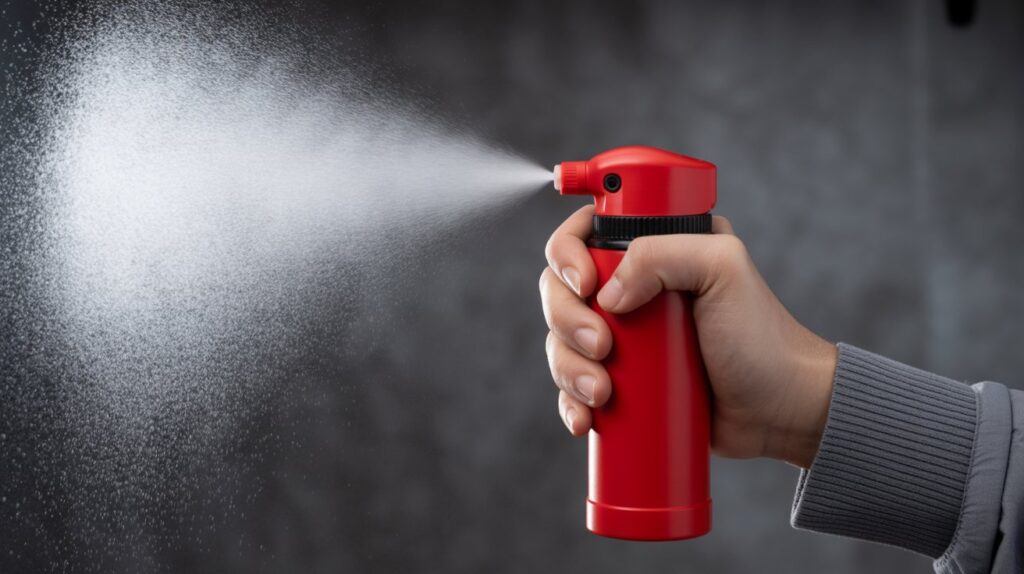
How long does pepper spray last? This is an important question for anyone who stores or carries pepper spray for personal protection. Like many pressurized products, a canister can become less reliable over time as its contents and pressure change.
In this guide, you’ll learn about pepper spray shelf life, expiration dates, signs of an aging canister, proper storage, and safe disposal. Understanding these factors can help you determine when an old canister should be replaced and how to store a new one correctly.
Whether you keep pepper spray at home or carry it where legally permitted, checking its condition and following the manufacturer’s recommendations are important parts of responsible ownership.
Table of Contents
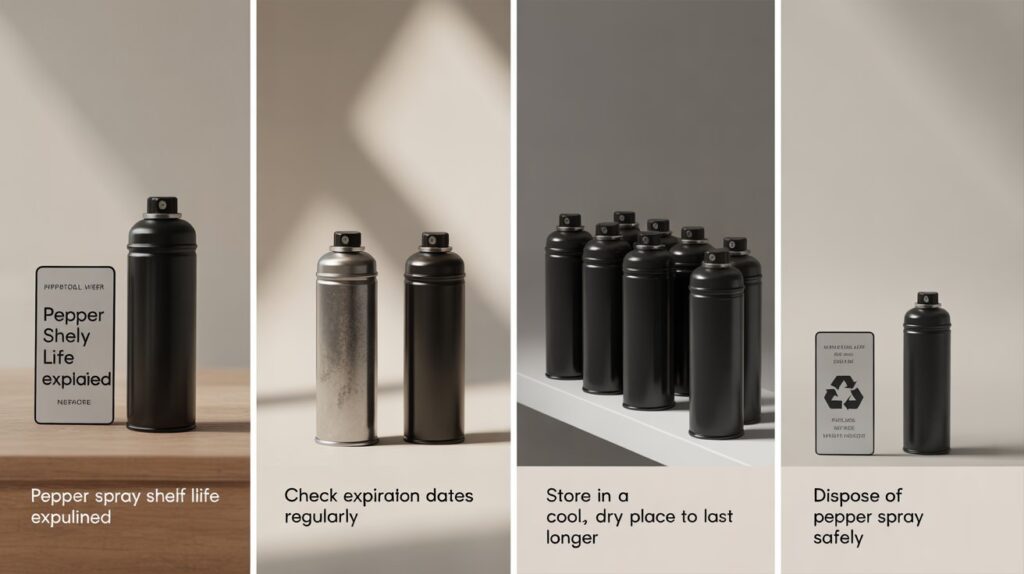
Understanding Pepper Spray Shelf Life
The shelf life of pepper spray refers to how long a canister is expected to remain within the manufacturer’s recommended period of use. Most products include an expiration or replacement date, but the actual lifespan can vary depending on the formulation, canister construction, storage conditions, and manufacturer.
The shelf life is mainly influenced by three factors:
Formula Type
The OC formulation and other ingredients can affect how a product is stored and maintained over time. Rather than relying only on the type or concentration of the formula, always follow the expiration date and storage recommendations provided by the manufacturer.
Canister Quality
The condition of the canister, seals, valve, and propellant system can affect whether the product maintains its intended pressure. Damage, corrosion, leaks, or a compromised seal can be reasons to replace a canister even before its printed expiration date.
Usage and Storage
Frequent testing can reduce the amount of product remaining in the canister. Exposure to extreme heat, freezing temperatures, direct sunlight, or physical damage may also affect the container and its contents. Store the product according to the manufacturer’s instructions and avoid leaving it in environments with significant temperature fluctuations.
Instead of regularly testing a live canister, check the expiration date, physical condition, and manufacturer’s guidance. If the canister is expired, damaged, leaking, or otherwise compromised, replace it rather than relying on it for personal protection.
For a better understanding of different formulations and delivery methods, read our guide to Types of Pepper Spray.
Understanding shelf life and proper storage can help you recognize when an older canister may need replacement and ensure it is handled responsibly.
Understanding Pepper Spray Shelf Life
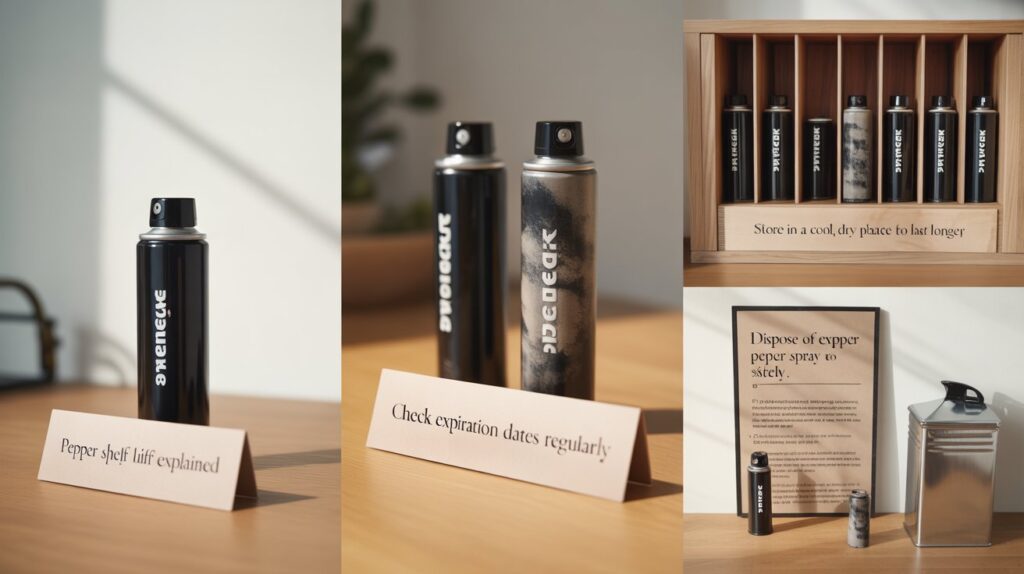
The shelf life of pepper spray refers to how long a canister is expected to remain within the manufacturer’s recommended period of use. Most products include an expiration or replacement date, but the actual lifespan can vary depending on the formulation, canister construction, storage conditions, and manufacturer.
The shelf life is mainly influenced by three factors:
Formula Type
The OC formulation and other ingredients can affect how a product is stored and maintained over time. Rather than relying only on the type or concentration of the formula, always follow the expiration date and storage recommendations provided by the manufacturer.
Canister Quality
The condition of the canister, seals, valve, and propellant system can affect whether the product maintains its intended pressure. Damage, corrosion, leaks, or a compromised seal can be reasons to replace a canister even before its printed expiration date.
Usage and Storage
Frequent testing can reduce the amount of product remaining in the canister. Exposure to extreme heat, freezing temperatures, direct sunlight, or physical damage may also affect the container and its contents. Store the product according to the manufacturer’s instructions and avoid leaving it in environments with significant temperature fluctuations.
Instead of regularly testing a live canister, check the expiration date, physical condition, and manufacturer’s guidance. If the canister is expired, damaged, leaking, or otherwise compromised, replace it rather than relying on it for personal protection.
For a better understanding of different formulations and delivery methods, read our guide to Types of Pepper Spray.
Understanding shelf life and proper storage can help you recognize when an older canister may need replacement and ensure it is handled responsibly.
How to Store Pepper Spray for Maximum Shelf Life
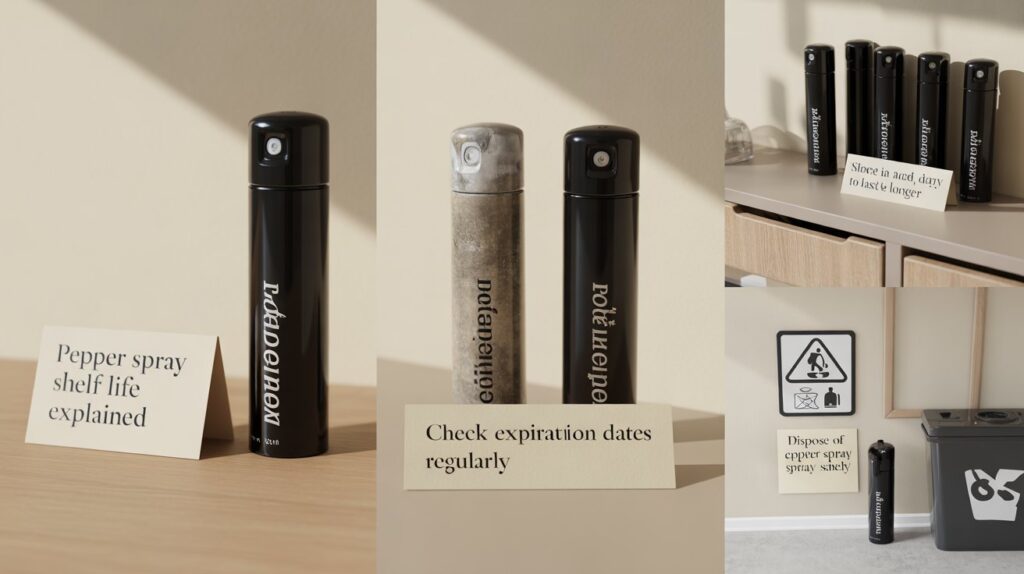
Proper storage can help maintain the condition of a pepper spray canister throughout its recommended shelf life. Temperature, sunlight, moisture, and physical damage can all affect a pressurized aerosol container, so following the manufacturer’s storage instructions is important.
Store It in a Suitable Environment
Keep the canister in a cool, dry location and within the temperature range specified by the manufacturer. Avoid places exposed to extreme heat or cold. Some manufacturers specifically advise keeping pepper spray between 32°F (0°C) and 120°F (48.9°C).
Avoid Leaving It in a Hot Car
A vehicle can experience significant temperature changes, particularly during hot or cold weather. Excessive temperatures may affect the canister’s pressure or integrity. For this reason, avoid storing pepper spray in a vehicle unless the manufacturer’s instructions specifically allow it.
Keep It Away From Direct Sunlight
Long-term exposure to direct sunlight can increase the temperature of the canister. Store it somewhere protected from direct sunlight, such as an appropriate cabinet or storage area.
Protect the Canister From Moisture
Keep the container away from excessive moisture and inspect it periodically for rust, corrosion, leaks, or other physical damage. A damaged canister should not be relied upon for personal protection.
Keep It Secure
Store the canister where children and unauthorized people cannot access it. A secure storage location can also help prevent accidental discharge or physical damage.
Check the Canister Periodically
Inspect the expiration date, nozzle, seals, and overall condition from time to time. If the manufacturer recommends periodic testing, follow its instructions rather than testing the canister unnecessarily.
Keep the Label and Instructions
Do not remove the original product label or discard the manufacturer’s instructions. They may contain important information about expiration, storage temperature, handling, and replacement.
For additional safety information about storage and expiration, see SABRE’s Pepper Spray FAQ.
Proper storage does not guarantee that a canister will remain usable indefinitely. Always follow the manufacturer’s stated shelf life and replace the product when recommended.
What to Do With Expired Pepper Spray
When your pepper spray has reached its expiration date or you notice it’s weakened, don’t just toss it in the regular trash. Here’s how to dispose of expired pepper spray safely and responsibly:
Knowing how long does pepper spray last helps you plan for replacement before it becomes unreliable. Once it’s expired or weakened, handling it carefully ensures safety for yourself and others. Proper disposal through hazardous waste centers or recycling programs keeps your old spray out of the environment while giving you peace of mind that your self-defense tool remains effective.
- Do not puncture, crush, or burn the canister. Compressed gases and remaining product can be dangerous.
- Check local hazardous-waste rules. Many municipalities treat pepper spray as household hazardous waste; your local waste or sanitation department will have guidance.
- Use a hazardous-waste drop-off or special collection day. Many cities have collection centers or periodic events for items like aerosols and chemicals.
- Retail take-back or recycling programs. Some outdoor stores or recycling centers accept aerosol cans — call ahead to confirm.
- Wrap and secure if required. If local rules allow disposal in trash, tape the nozzle and place the canister inside a sealed bag or box so it won’t accidentally discharge. (Only do this if local rules explicitly permit it.)
- Don’t donate expired cans. Expired spray may fail in an emergency and is unsafe to give away.
- Ask local law enforcement (if unsure). Some police stations accept expired self-defense sprays for safe disposal.
Handling expired pepper spray carefully protects sanitation workers, the environment, and your neighbors.
FAQs
Q1: How long does pepper spray last after opening?
A: Opening or briefly testing a can doesn’t usually shorten its printed shelf life, but repeated full discharges or leaks can. Treat the expiration date on the can as your best guide.
Q2: Can expired pepper spray still work in an emergency?
A: Sometimes it may still produce a spray, but it’s unreliable. Expired units can have low pressure or reduced potency — don’t depend on them for safety.
Q3: How can I test if my pepper spray still works?
A: Outdoors and downwind, give a very short test burst (1 second) to check pressure and spray pattern. Keep a safe distance and avoid people, pets, and face exposure.
Q4: Does police-grade pepper spray last longer?
A: Not necessarily. “Police-grade” may refer to concentration or formulation, but shelf life still depends on propellant and storage. Always check the expiration date.
Conclusion
Understanding how long pepper spray lasts helps you know when a canister may need replacement. Check the expiration date, inspect for leaks or damage, and store it away from extreme temperatures and direct sunlight.
If the canister is expired, damaged, or shows unusual changes, replace it according to the manufacturer’s guidance. For more information, see our guide to Types of Pepper Spray.
About the Author
Muhammad Bilal Shahid is a criminology graduate and security-focused content writer with an interest in personal safety, crime prevention, and security technology. He researches safety-related topics to provide clear, practical, and responsible information for readers.
At CrimTechHub, he covers security products, self-defense topics, and safety practices using research-based information and general safety guidance.