Introduction
Ever installed a security camera, only to realize the first thing an intruder does is look for it — and disable it? That fear is exactly why so many homeowners across the U.S. are learning how to hide an outdoor security camera instead of mounting it in plain sight. A visible camera can scare off casual trouble, but a hidden one keeps watching long after someone thinks the coast is clear. In this guide, we’ll walk through real, practical ways to conceal your camera without sacrificing the coverage that actually keeps your home safe.
Table of Contents
Hidden vs. Visible Cameras — Which Actually Works Better
When I first started helping homeowners plan their camera setups, this was the question that came up almost every time: should the camera be out in the open, or tucked away where no one can spot it? Honestly, there’s no single right answer — it depends on what you’re trying to protect against.
A visible camera does one job really well: it makes trouble think twice. Most people looking to break in or steal a package aren’t professionals. They’re opportunists, and opportunists avoid anything that looks like it’s watching. A camera mounted right at eye level near your front door sends a clear message before anything even happens.
But here’s the catch. A camera that anyone can see is also a camera anyone can tamper with. Experienced criminals know exactly what to look for, and once they spot the lens, they either avoid it or disable it. That’s where hiding an outdoor security camera earns its place. A hidden camera doesn’t stop someone from stepping onto your property — but it keeps recording after they’ve already decided the coast is clear, which is exactly when you need real evidence the most.
So which one actually works better? In real-world use, neither wins on its own:
- Visible cameras are best for prevention — stopping trouble before it starts
- Hidden cameras are best for proof — capturing what happens when someone thinks no one’s watching
The setups that hold up best in the long run usually use both. One camera in plain sight to discourage casual troublemakers, and one hidden nearby to catch anything the first one misses. It’s not about choosing a side — it’s about knowing what each option is actually good at, and using that to your advantage.
Best Natural Hiding Spots Around Your Property
The easiest way to hide an outdoor security camera isn’t buying some fancy gadget — it’s using what’s already sitting in your yard. Most American homes already have trees, bushes, eaves, and gutters that can double as the perfect cover, and the best part is nobody looks twice at them.
Trees and bushes are probably the most natural option out there. A small camera tucked between branches or nestled in a thick hedge just blends into the background. I’ve seen homeowners run into one issue here, though — wind. Leaves shift constantly, and if your camera relies on motion detection, you’ll end up with a flood of false alerts every time a breeze picks up. The fix is simple: angle the lens so it’s not staring directly into moving foliage, and trim back anything that could block the view over time.
Eaves and rooflines work well for a different reason — height. People rarely look up, and a camera mounted under an eave or along the edge of your roofline sits above where most eyes naturally travel. This spot also keeps the camera protected from rain and direct sun, which helps it last longer outdoors.
Gutters are another underused hiding spot. Since gutters already run along the entire perimeter of a house, a small camera clipped near one just looks like part of the structure. It’s a smart choice for covering long stretches like a driveway or side yard without adding anything that looks out of place.
Beyond that, everyday exterior decorations offer some of the best cover:
- Garden statues or decorative rocks — hollow versions exist specifically for hiding small cameras
- Porch light fixtures — many homeowners already replace these with camera-equipped versions
- Mailboxes and address markers — placed at the edge of the property, giving a clear view of who approaches
What makes all of these spots effective isn’t complexity — it’s familiarity. People walk past trees, gutters, and porch lights every single day without a second thought. That’s exactly the kind of blind spot that makes a hidden camera actually do its job.
Everyday Objects That Make Great Camera Disguises
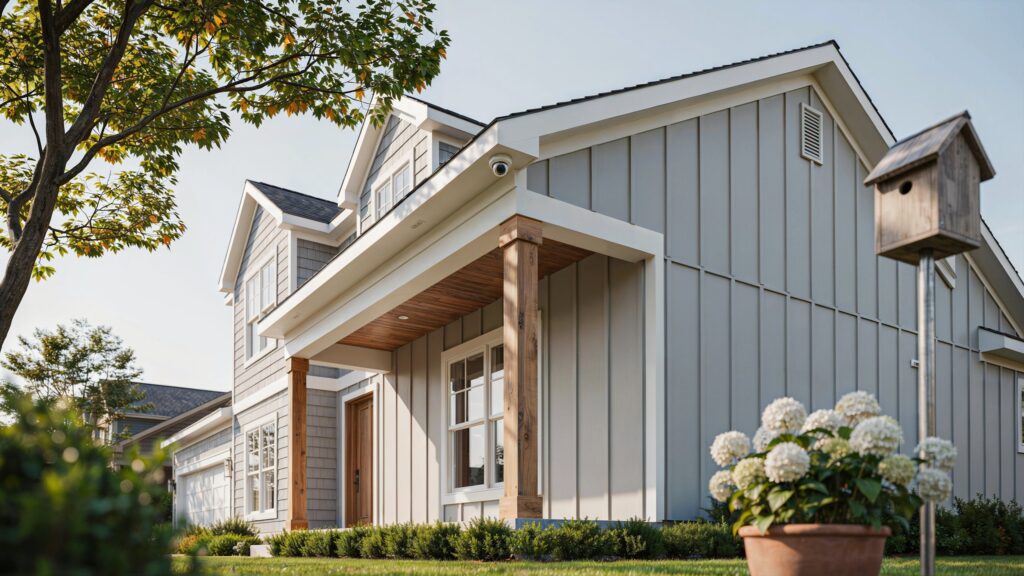
Some of the best ways to hide an outdoor security camera don’t involve buying anything special — they just use everyday objects that already belong in a yard. These options work well because nobody stops to question something they see all the time.
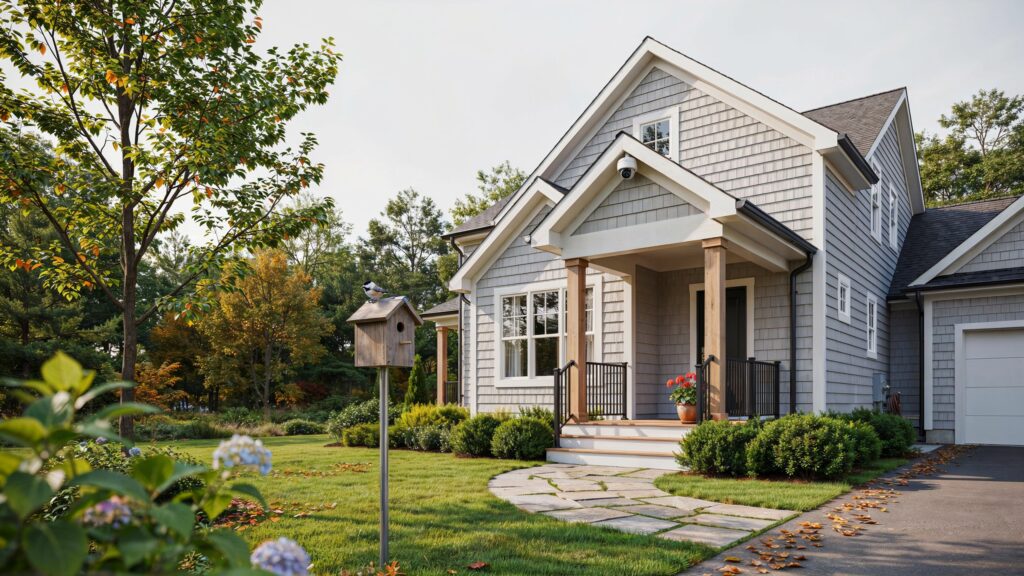
- Birdhouses — mounted on poles or hung from trees, a small opening lets the lens peek through while the birdhouse looks completely normal from the ground
- Fake rocks — hollow versions designed for hiding electronics sit naturally near flower beds, walkways, or garden borders
- Planters — a camera placed among artificial leaves inside a real-looking planter gives a clear view of a porch or entryway without standing out
- Light fixtures — replacing an old porch light with a camera-equipped version solves lighting and security at the same time, with no visible change to the exterior
What makes these disguises effective isn’t complexity — it’s familiarity. A birdhouse, a rock, or a porch light is something people walk past every day without a second glance, which is exactly what makes them such reliable hiding spots.
A couple of things to keep in mind with any disguise:
- Match the color and style to what’s already in the yard, or it’ll draw attention instead of avoiding it
- Keep the lens unobstructed so the camera still captures a full, usable view
With the right object and a little placement, a hidden camera can do its job quietly for years without anyone noticing it’s there.
Placement Mistakes That Ruin a Hidden Camera’s Purpose
Hiding an outdoor security camera sounds simple until you actually try it — and that’s where most people run into trouble. We’ve tested enough setups to know that a poorly placed hidden camera can look perfectly disguised while quietly failing at the one job it’s supposed to do.
Blocking the Camera’s Own View
The most common mistake is hiding the camera so well that it hides its own field of view too. A branch that looked harmless during installation can grow just enough to block the frame within a few months. The goal isn’t just concealment — it’s concealment that still leaves a clear, usable shot of the area you actually care about.
Poor Angles That Miss the Action
A hidden camera tucked into a tight spot often gets squeezed into whatever angle fits the disguise, not the angle that actually covers the driveway, door, or walkway. We’ve seen homeowners realize months later that their “hidden” camera never once captured a clear face because it was pointed slightly too high or too far to the side.
Foliage Ruining Night Vision
This one catches a lot of people off guard. Leaves and branches placed too close to the lens reflect infrared light at night, turning footage into a wash of glare instead of a usable image. It looks fine during the day and useless after dark — exactly when most break-ins happen.
A few placement mistakes worth double-checking on any hidden setup:
- Overgrown branches or bushes slowly creeping into the frame
- Motion sensors triggered constantly by wind-blown leaves, draining battery and filling storage with nothing useful
- Glare or blackout at night caused by nearby foliage reflecting infrared light
- Weak coverage angles chosen for concealment instead of visibility
A hidden camera only earns its place if it still does the basic job — capturing clear footage of what matters. Concealment should always come second to coverage, never the other way around.
Is Hiding a Security Camera Legal in the USA?
This is usually the first question that comes up once someone decides to hide an outdoor security camera — and it’s a fair one to ask before you install anything. The short answer is yes, it’s legal in most situations, but where the camera points matters just as much as where it’s hidden.
Recording Public and Semi-Private Areas
In general, homeowners across the U.S. can record their own property — driveways, front yards, porches, and entryways — without breaking any laws, whether the camera is visible or hidden. These are areas where people don’t have a reasonable expectation of privacy, so capturing footage here is considered standard practice for home security.
Where the Line Gets Drawn
The legal trouble starts when a hidden camera captures spaces where someone would reasonably expect privacy. That includes:
- A neighbor’s yard, windows, or private property without their knowledge or consent
- Bathrooms, bedrooms, or changing areas, even inside your own home if guests are present
- Audio recording, which carries stricter rules in several states compared to video alone
A Simple Rule of Thumb
If the camera only captures your own property and public-facing areas, hiding it is no different legally than mounting it in plain sight. The moment it starts pointing into someone else’s private space, that’s where problems begin — regardless of whether the camera is visible or hidden.
Since laws can vary slightly by state, especially around audio recording and notice requirements, it’s worth doing a quick check on local regulations before finalizing camera placement. For most homeowners protecting their own front door or driveway, though, hiding a camera is both legal and a smart step toward better security.
Final Thoughts
Learning how to hide an outdoor security camera isn’t about secrecy for its own sake — it’s about protecting your home quietly and effectively. A camera tucked into a birdhouse, bush, or porch light is more than a clever trick. It’s peace of mind, working in the background exactly when you need it most.
Every hiding spot and angle comes down to one question: will it still protect what matters if something goes wrong?
Now take a moment to think — is your camera truly positioned to protect you, or just tucked away and forgotten?
FAQs
1. Is it legal to hide an outdoor security camera in the USA?
Yes, as long as it only records your own property or public-facing areas.
2. Where’s the best spot to hide an outdoor camera?
Under eaves or rooflines works best since most people rarely look up.
3. Do hidden cameras work better than visible ones?
Hidden cameras capture evidence, while visible ones mainly deter trouble before it starts.
4. Can bushes or trees affect a hidden camera’s performance?
Yes, moving leaves can trigger false motion alerts and block night vision.
5. Are fake rocks a good way to disguise a camera?
Yes, as long as the color and texture match your existing landscaping.
6. Does hiding a camera reduce its video quality?
No, as long as the lens stays unobstructed and properly angled.
7. Should I hide all my cameras or keep some visible?
A mix works best — visible cameras deter, hidden ones catch what’s missed.