Introduction
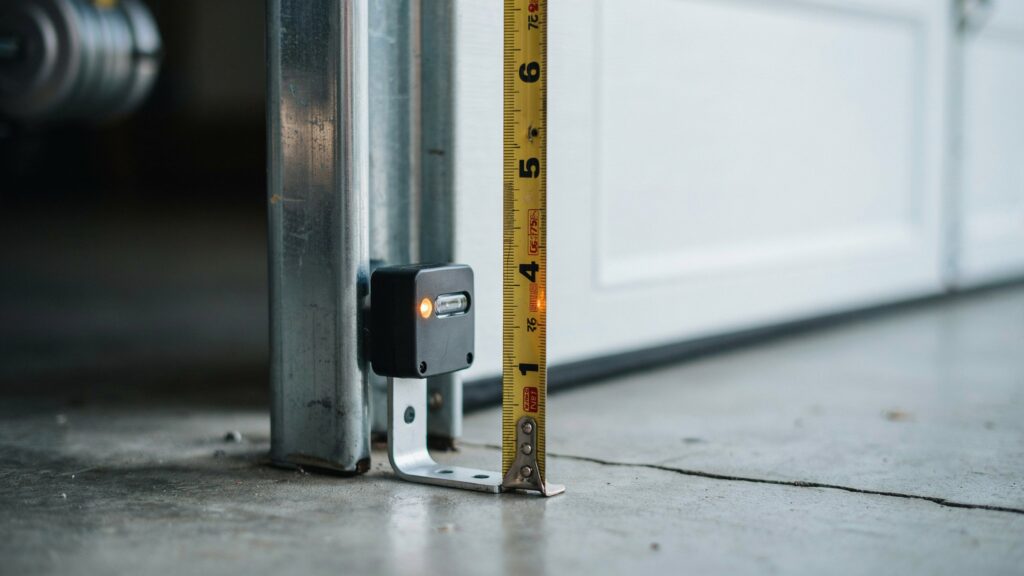
The correct garage door sensor height is essential for safe and reliable garage door operation. These photo-eye sensors are usually installed near the bottom of the door tracks, creating an invisible infrared beam that detects obstructions.
Most manufacturer guidelines specify a maximum mounting height of 6 inches (15 cm) above the garage floor. In this guide, you’ll learn the correct sensor height, proper placement, measuring steps, and common installation mistakes to avoid.
Table of Contents
What Garage Door Sensor Height Actually Means
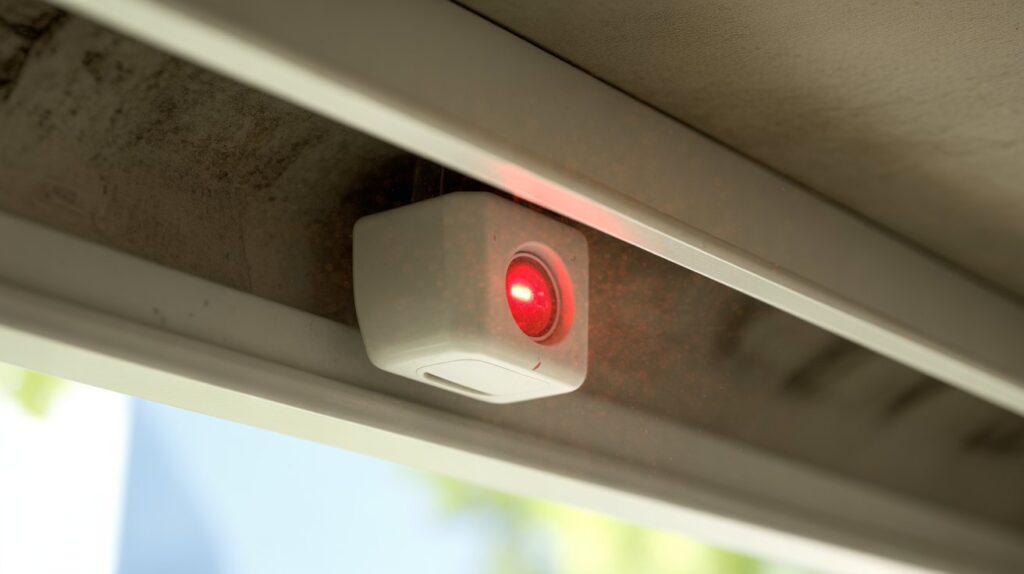
Garage door sensor height refers to the distance between the garage floor and the safety sensor lenses mounted on opposite sides of the garage door opening. These photo-eye sensors send an invisible infrared beam across the doorway to detect obstructions while the door is closing.
Correct positioning is important because the sensors must detect objects in the door’s path. If they are mounted too high, smaller objects may pass underneath the beam. If they are mounted incorrectly or become misaligned, the garage door may refuse to close or reverse unexpectedly.
The correct garage door sensor height helps:
- Detect obstructions: Identify objects, pets, or other obstacles crossing the infrared beam.
- Maintain safe operation: Help prevent the closing door from continuing when the beam is interrupted.
- Reduce false interruptions: Keep the sensors away from unnecessary interference caused by poor positioning.
- Maintain proper alignment: Keep both photo-eye sensors facing each other at the same level.
Why Sensor Height Matters
Garage door safety sensors work as part of the opener’s safety reversing system. Their mounting position determines where the infrared beam crosses the garage doorway.
- Too high: Smaller objects near the floor may remain below the detection beam.
- Uneven positioning: The sensors may not communicate properly if their lenses are not aligned.
- Loose mounting: Brackets can shift, interrupting the infrared beam and affecting door operation.
For most residential garage door openers, manufacturer instructions specify installing safety sensors no higher than 6 inches (15 cm) above the garage floor. Always check your opener’s installation manual for the exact requirements.
The Standard Garage Door Sensor Height (And Why It’s Set This Way)
The recommended garage door sensor height is generally no more than 6 inches (15 cm) above the garage floor. This maximum helps the photo-eye sensors detect obstructions near the bottom of the garage door opening.
Garage door safety sensors are designed to send an infrared beam between two photo-eye units. When an object interrupts that beam, the opener’s safety system should prevent the door from continuing its normal closing cycle.
Why Is the 6-Inch Maximum Important?
This mounting height helps:
- Detect low-level obstructions: Keep the infrared beam close enough to the floor to detect objects in the door’s path.
- Protect children and pets: Reduce the chance of smaller obstructions passing unnoticed beneath the beam.
- Maintain proper sensor operation: Position both photo-eye sensors at matching heights so they can communicate correctly.
- Meet installation guidance: Follow the safety sensor positioning requirements provided by the opener manufacturer.
Do All Garage Door Brands Use the Same Sensor Height?
Major brands such as Chamberlain, LiftMaster, Genie, and Craftsman provide installation instructions for their safety reversing sensors. Although the 6-inch maximum is common guidance, always check your specific garage door opener manual for the correct mounting position.
Remember, installing sensors too high, using loose mounting brackets, or allowing the infrared beam to become misaligned can affect the garage door’s safety system.
If your sensors are installed at the correct height but the door still refuses to close, check their positioning and alignment. See our guide on how to align garage door sensors for troubleshooting steps.
Important: Never bypass or disable garage door safety sensors to make the door close. Test the safety reversing system according to the manufacturer’s instructions after installation or adjustment.
How to Measure Garage Door Sensor Height the Right Way
Measuring garage door sensor height correctly helps keep both safety sensors properly positioned. You don’t need special equipment for this job. A tape measure and a few basic tools are enough to check the mounting position and identify height differences between the two photo-eye sensors.
Tools You’ll Need
Before measuring your garage door safety sensors, gather these tools:
- Tape measure: Measures the distance between the garage floor and each sensor lens.
- Small level: Helps check whether both sensors are positioned evenly.
- Pencil or marker: Marks the correct mounting position on the wall or bracket.
- Flashlight: Makes it easier to inspect sensor brackets and wiring in dark areas.
Step-by-Step Guide to Measuring Sensor Height
Follow these steps to measure both garage door safety sensors and check their mounting position. Proper measurement helps keep the photo-eye sensors within the recommended height and maintain a clear infrared safety beam.
Step 1: Position the Tape Measure on the Floor
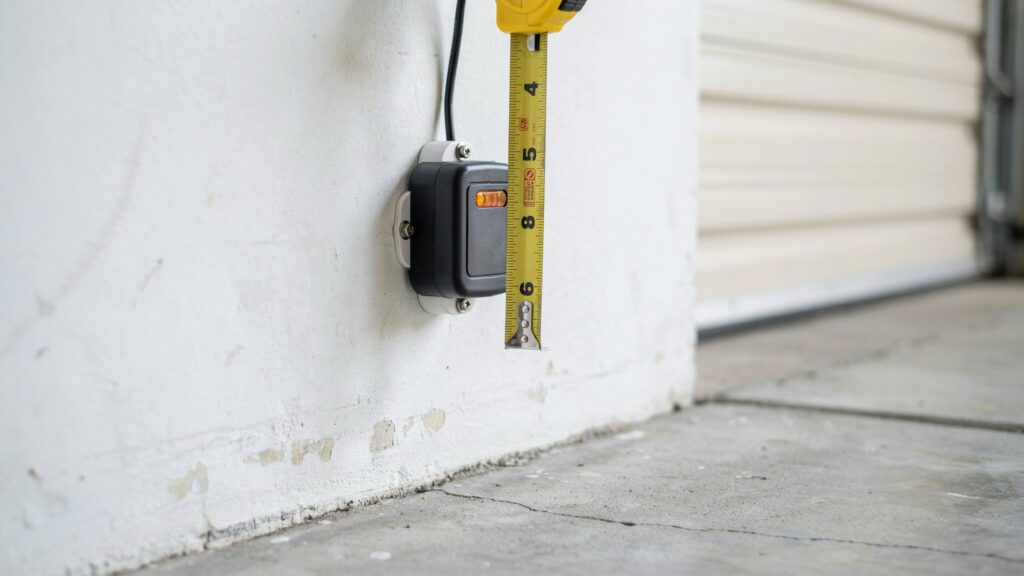
Place the end of your tape measure directly below the first photo-eye sensor. Keep it straight and vertical to get an accurate measurement from the garage floor.
Step 2: Measure to the Sensor Lens
Measure from the floor to the top of the photo-eye lens, not the mounting bracket or screw.
According to DASMA Technical Data Sheet #364, photoelectric sensor lenses should be positioned to create a beam no higher than 6 inches above the garage floor.
Step 3: Check the 6-Inch Maximum
Most residential garage door safety sensors should be installed no higher than 6 inches (15 cm) above the floor.
Do not treat 4–6 inches as a universal required range. Always follow your garage door opener manufacturer’s installation manual.
Step 4: Measure the Opposite Sensor
Repeat the measurement on the other side of the garage door opening.
Check that:
- Both sensors meet the manufacturer’s mounting-height requirements.
- Both photo-eye lenses face each other.
- Neither sensor points upward or downward.
- Nothing blocks the infrared beam between the sensors.
Step 5: Check Sensor Alignment Before Tightening
Use a small level to check the sensor mounting position. Make sure the brackets are secure and both lenses face each other correctly.
If either sensor moves during adjustment, check the alignment again before operating the garage door. Follow the manufacturer’s instructions when testing the safety reversing system.
Common Measuring Mistakes to Avoid
A small measurement mistake can affect the position of the safety beam. Watch out for these common problems:
- Measuring the bracket instead of the lens: Always use the specified sensor lens reference point.
- Checking only one sensor: Measure both sides independently.
- Using an angled measurement: Keep the tape measure vertical from the floor.
- Ignoring loose brackets: A sensor can shift after installation if its bracket is not secure.
- Assuming equal height means correct alignment: Both lenses must also face each other properly.
Safety note: Keep the garage door stationary while checking sensor height. Disconnect opener power before performing wiring or electrical work, following the manufacturer’s instructions. Never bypass the safety sensors.
When Both Garage Door Sensors Aren’t at the Same Height
Both garage door safety sensors should be positioned at the correct mounting height and aligned with each other. Even when both photo-eye sensors are below the 6-inch maximum, a height difference can prevent the infrared beam from reaching the receiving sensor properly.
Garage door sensors work by sending an invisible infrared beam across the garage door opening. The sending sensor transmits the beam, while the receiving sensor detects it. If one unit sits higher, lower, or at an incorrect angle, the beam may miss the receiver and interrupt the garage door’s closing cycle.
Common Signs of Uneven Sensor Height
A height difference between the two sensors can cause several problems:
- Garage door won’t close: The opener may refuse to close the door because the safety beam is not reaching the receiver.
- Flickering sensor lights: The indicator lights may become unstable when the sensors are poorly positioned.
- Door reverses unexpectedly: Some opener systems reverse or stop when the safety sensor circuit detects a problem.
- Intermittent operation: The door may work sometimes but fail when vibration or movement shifts a loose sensor bracket.
How to Check Whether Both Sensors Are at the Same Height
You can check the sensor mounting position with a tape measure and a small level.
- Measure from the garage floor to the top of the first sensor lens.
- Repeat the measurement on the opposite side.
- Compare both measurements to identify any height difference.
- Check that both lenses face directly toward each other.
- Inspect the mounting brackets for looseness, bending, or damage.
Both sensors should be mounted at matching heights according to the manufacturer’s installation instructions. However, equal measurements alone do not guarantee proper alignment. The lenses must also face each other without anything blocking the infrared beam.
How to Correct Uneven Garage Door Sensor Height
If one sensor is higher or lower than the other:
- Loosen the mounting hardware carefully.
- Adjust the sensor bracket until both units are at the correct height.
- Make sure neither lens points upward, downward, or away from the opposite sensor.
- Tighten the brackets securely.
- Check the sensor indicator lights and test the safety reversing system according to the opener manufacturer’s instructions.
Important: Never bypass the photo-eye sensors to force the garage door to close. If the sensors still fail after adjustment, inspect the wiring and brackets or contact a qualified garage door technician
Garage Floors Aren’t Always Flat – Why It Affects Sensor Height
Not every garage floor is perfectly level. Some concrete floors have slopes for water drainage, while older garages may have uneven surfaces caused by settling or concrete damage. These differences can affect garage door sensor height and make proper sensor positioning more difficult.
When the floor slopes from one side to the other, the two photo-eye sensors may sit at different distances from the ground, even if their mounting positions appear similar. This can also affect the infrared safety beam if the sensor lenses are not properly aligned.
If uneven positioning causes alignment problems, check our guide on how to align garage door sensors for practical adjustment steps.
Common Garage Floor Problems That Affect Sensor Placement
A few floor conditions can make sensor installation more challenging:
- Sloped concrete floors: A floor that rises or falls across the garage opening can create different sensor-to-floor measurements.
- Uneven or settled concrete: Older garage floors may have dips or raised areas that affect sensor mounting positions.
- Drainage channels: Floor drains or recessed sections can change the ground level near one sensor.
- Cracked garage floors: Damaged concrete may create an uneven surface around the sensor mounting area.
How to Measure Sensor Height on an Uneven Floor
If your garage floor isn’t level, check the position of each sensor separately.
- Measure both sides individually: Place the tape measure directly below each sensor lens and measure vertically from the floor.
- Check the maximum height: Make sure neither sensor exceeds the manufacturer’s permitted mounting height, commonly no more than 6 inches (15 cm).
- Compare both sensor lenses: Use a level or laser level to check that the lenses are aligned across the garage opening.
- Inspect the mounting brackets: Make sure both brackets are secure and do not move when lightly touched.
- Check the infrared beam: Confirm that both sensors face each other and the beam has a clear path.
What If One Side of the Garage Floor Is Higher?
If one side of the garage floor is higher than the other, don’t simply raise or lower a sensor to match the floor measurement. Both requirements matter: the sensors must remain properly aligned, and neither should exceed the permitted mounting height above the floor.
If the floor slope makes it difficult to meet both requirements, follow the opener manufacturer’s instructions or ask a qualified garage door technician to check the installation.
When Should You Replace or Adjust Sensor Brackets?
Sometimes the problem isn’t the concrete floor but the mounting hardware. Bent, loose, or damaged brackets can make it difficult to keep the photo-eye sensors in the correct position.
If your brackets won’t hold their position, read our guide on garage door sensor bracket installation for mounting and bracket guidance.
If one sensor has stopped working after adjustment, our guide on one garage door sensor not lighting up covers possible causes, including wiring problems and sensor obstructions.
Important: Never raise a sensor beyond the manufacturer’s permitted height or bypass the safety reversing system to compensate for an uneven floor.
Final Thoughts
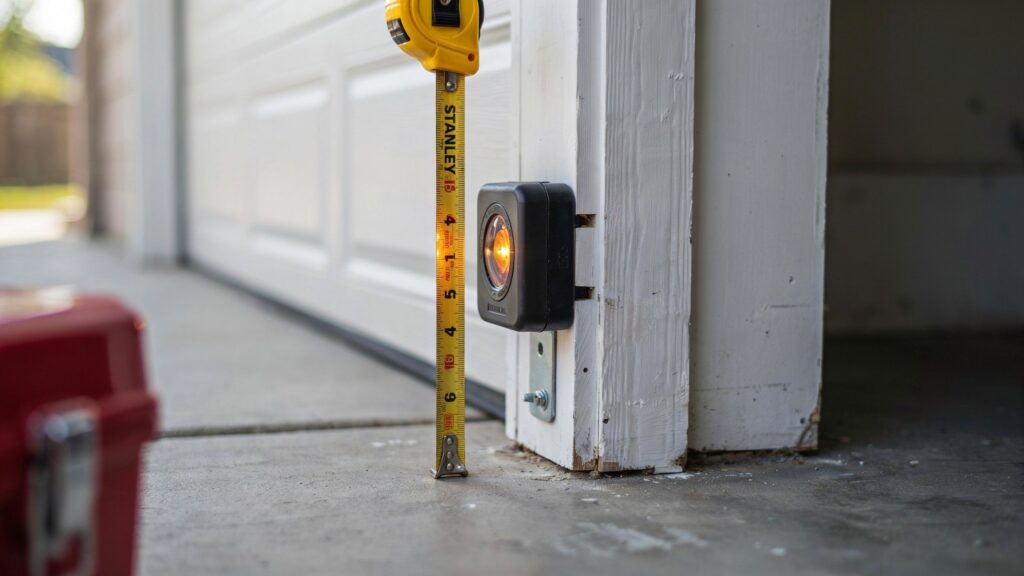
Correct garage door sensor height helps your safety sensors detect obstructions and allows the garage door opener’s safety reversing system to work properly. Check both sensor positions, keep the lenses aligned, and follow your manufacturer’s installation guidelines.
Even a small mounting problem, loose bracket, or uneven garage floor can affect sensor operation. Taking a few minutes to inspect the sensors can help prevent closing problems and keep your garage door operating safely.
If the sensors remain faulty after adjustment, consult a qualified garage door technician rather than bypassing the safety system.
FAQs
1. How high should garage door safety sensors be?
Most residential garage door safety sensors should be installed no higher than 6 inches (15 cm) above the garage floor.
2. Should both garage door sensors be at the same height?
Yes. Both photo-eye sensors should be mounted at matching heights and properly aligned to maintain the infrared safety beam.
3. Can garage door sensors be installed on the wall?
Yes. They can be mounted on the wall or door tracks using compatible brackets, following the manufacturer’s installation instructions.
4. What happens if garage door sensors are too high?
Objects near the floor may pass underneath the infrared beam without being detected, affecting the safety system.
5. How do I know if my garage door sensors are misaligned?
Common signs include flickering indicator lights, a garage door that refuses to close, or a door that reverses unexpectedly.
About the Author – M. Bilal
M. Bilal holds a BS degree in Criminology and is a home security expert. He writes about garage door safety, security cameras, and modern home protection systems. Through CrimTechHub, he helps homeowners understand security technology and make informed decisions to protect their homes and families.