
Introduction
Are self-defense rings legal in California? The answer depends on the ring’s design, construction, and how it functions. Some rings may be ordinary jewelry, while others could fall under California’s laws on metal knuckles or dirks and daggers.
Before buying or carrying one, it is important to understand these legal distinctions. A ring marketed as a personal protection accessory is not automatically legal just because it is small or looks like jewelry.
This guide explains how California law treats different self-defense ring designs, what restrictions may apply, and which alternative personal safety options you can consider.
Table of Contents
Are Self Defense Rings Legal in California?
Self-defense rings are not automatically legal or illegal in California. Their legality depends on the ring’s design, materials, and intended function. Some ordinary rings may be lawful to own, while certain metal or blade-style designs can fall under California’s prohibited weapons laws.
One important law to understand is California Penal Code §21810, which prohibits the manufacture, sale, giving, lending, and possession of metal knuckles. Under Penal Code §16920, metal knuckles include devices made wholly or partly of metal that are worn on or in the hand for offense or defense and are designed to protect the wearer’s hand while striking or increase the force of an impact.
This means a metal self-defense ring could raise legal concerns if its construction and function meet that definition. Simply calling a product a self-defense ring or wearing it as jewelry does not automatically make it lawful.
Pointed or blade-style rings raise a separate legal question. California Penal Code §16470 defines a dirk or dagger as a knife or other instrument capable of ready use as a stabbing weapon that may cause great bodily injury or death. However, a pointed appearance alone does not automatically establish that a ring meets this definition. Its actual design and ability to function as a stabbing instrument matter.
Before purchasing or carrying one, review these official California laws:
- California Penal Code §16920 – Definition of Metal Knuckles
- California Penal Code §21810 – Metal Knuckles Prohibition
- California Penal Code §16470 – Definition of Dirk or Dagger
- California Penal Code §21310 – Carrying a Concealed Dirk or Dagger
If you are considering another personal safety option, you can also read our guide to pepper spray laws in California. California regulates pepper spray under separate rules, including restrictions on who may possess it and the permitted product size.
The key takeaway is simple: do not assume a ring is legal just because it is small, wearable, or marketed as jewelry. Check its design against the relevant California weapon definitions before buying or carrying it.
What Exactly Are Self-Defense Rings and How Do They Work?
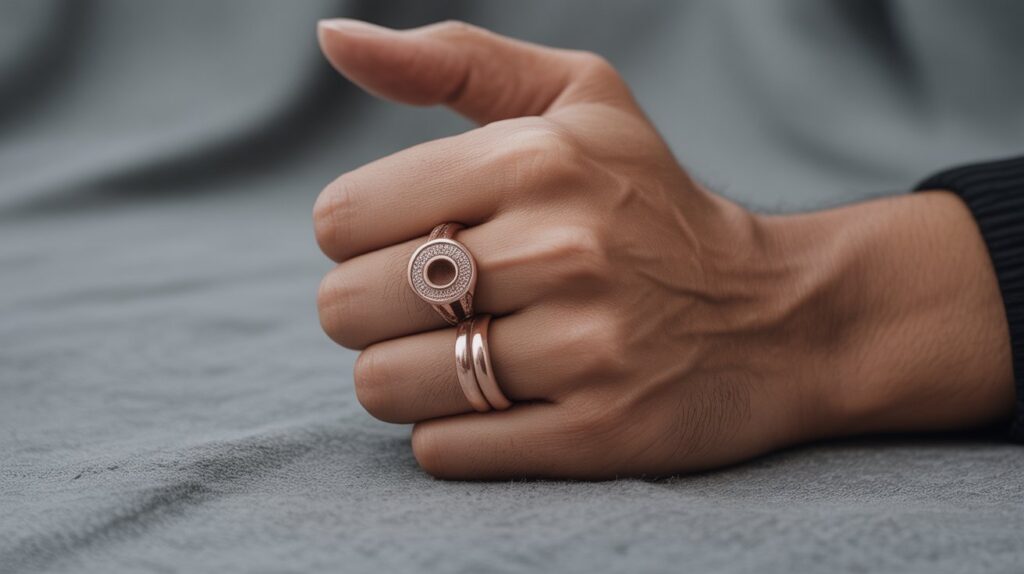
Self-defense rings are wearable accessories marketed for personal protection. Unlike ordinary fashion rings, some models have reinforced surfaces, raised edges, pointed features, or other design elements intended for use during a physical confrontation.
However, these products are not all built the same way. Their design can also affect how California law classifies them.
Common designs include:
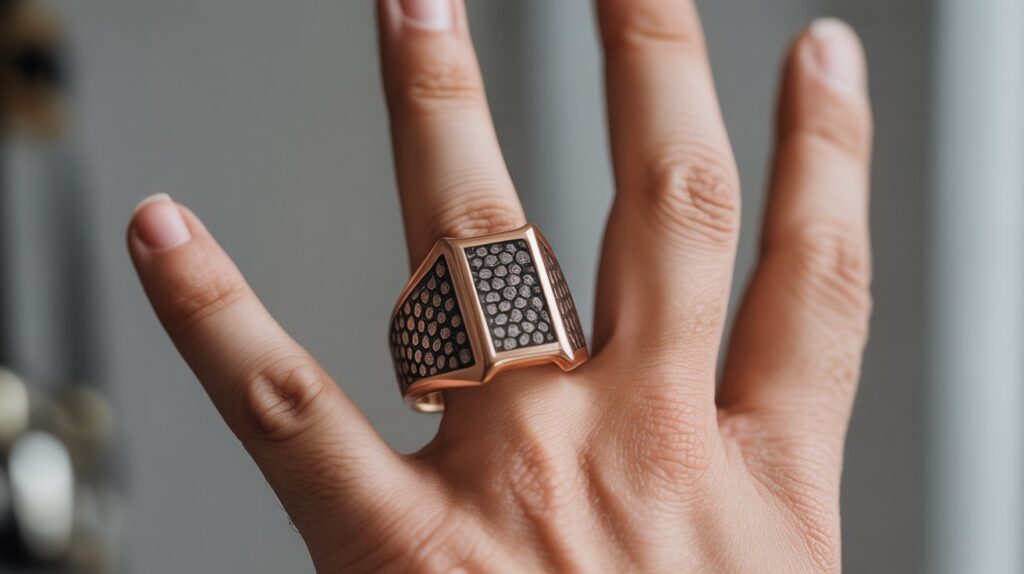
- Pointed-tip rings: These rings have a raised or pointed feature. Depending on the shape and construction, a particular design may raise questions under California’s laws on stabbing weapons. A pointed appearance alone does not automatically make a ring illegal.
- Blade-style or concealed-edge rings: These models contain a small cutting edge or blade-like feature. Their legal classification depends on the actual construction and whether the item meets the definition of a prohibited weapon. Buyers should not assume that a small size creates an exemption.
- Metal impact-style rings: Some rings have thick metal sections, reinforced surfaces, or protruding features intended to increase impact during a strike. These designs deserve particular attention because they may fall within California’s definition of metal knuckles under Penal Code §16920.
- Ordinary blunt rings: These are typically designed as jewelry without a blade, sharp point, or impact-enhancing structure. They are different from purpose-built striking devices, but their legality still depends on their actual construction and function.
People may consider these accessories because they are compact and easy to wear. However, a ring should not be treated as a guaranteed way to stop an attacker or as a substitute for awareness, planning, and a safe escape route.
If you are comparing personal safety options, consider the legal requirements and practical limitations of each tool before choosing one. The right decision should be based on your circumstances, the product’s design, and the laws that apply where you live.
California Weapon Laws: Rules to Know Before Carrying a Self-Defense Ring
California law does not classify every object as a weapon simply because someone could use it to cause harm. The item’s design, construction, function, and the circumstances in which it is carried or used can all matter.
For self-defense rings, two legal definitions deserve particular attention: metal knuckles and dirks or daggers.
Under California Penal Code §16920, metal knuckles include certain devices made wholly or partly of metal that are worn on or in the hand for offense or defense and designed to protect the wearer’s hand while striking or increase the force of an impact. A metal ring with reinforced or impact-enhancing features could raise concerns under this definition.
California Penal Code §16470 separately defines a dirk or dagger as a knife or other instrument capable of ready use as a stabbing weapon that may cause great bodily injury or death. A blade-style ring may require examination under this definition, but a small pointed feature alone does not automatically make an item a dirk or dagger.
Here are the main legal provisions to understand:
- Metal knuckles: Penal Code §16920 explains what qualifies as metal knuckles. Section §21810 prohibits their possession, manufacture, sale, and related conduct.
- Dirks and daggers: Penal Code §16470 provides the legal definition. Section §21310 makes carrying a concealed dirk or dagger on the person a crime.
- School property: Penal Code §626.10 restricts certain weapons on school grounds. The exact restriction depends on the item and the type of school property involved.
- Government buildings: Some state and federal facilities have separate restrictions on weapons. Their rules should be checked individually rather than assuming every government building follows one identical policy.
You can review these rules through the official California Legislature:
- California Penal Code §16920 – Metal Knuckles Definition
- California Penal Code §21810 – Metal Knuckles
- California Penal Code §16470 – Dirk or Dagger Definition
- California Penal Code §21310 – Carrying a Concealed Dirk or Dagger
- California Penal Code §626.10 – Weapons on School Grounds
Understanding these definitions is important before buying or carrying a self-defense ring. A product’s marketing description, small size, or jewelry-like appearance does not determine its legal status.
Are Self-Defense Rings Legal in California? It Depends on the Design
California does not have a single rule that makes every self-defense ring legal or illegal. The main question is whether the particular design falls within a prohibited weapon definition.
Pointed and Blade-Style Rings
Rings with blades, cutting edges, or stabbing features may raise concerns under California’s dirk-or-dagger laws.
Under Penal Code §16470, the relevant question is whether the item is capable of ready use as a stabbing weapon and can cause great bodily injury or death. If a particular ring meets that definition, carrying it concealed on your person may violate Penal Code §21310.
However, not every pointed ring automatically qualifies. Its construction and practical function must be considered.
Examples that deserve careful legal review include:
- Rings with an exposed or concealed blade.
- Rings designed with a pointed stabbing feature.
- Rings marketed specifically for piercing or stabbing.
- Jewelry that can function as a concealed stabbing instrument.
Do not rely only on a seller’s claim that a product is legal in California. Review the actual design and applicable law before carrying it.
Blunt or Rounded Rings
A ring without a blade or stabbing point is not automatically a dirk or dagger. However, that does not mean every blunt ring is lawful.
Metal construction is an important factor. A metal ring designed to protect the hand during a strike or increase the force of an impact may fall within California’s metal-knuckles definition under §16920. Section §21810 prohibits possession of metal knuckles.
Therefore, a rounded or flat striking surface does not automatically make a metal self-defense ring legal.
An ordinary decorative ring without weapon-like features presents a different situation from a purpose-built impact device. The actual construction and function matter.
Does Your Intent Matter?
Yes, the circumstances and purpose of carrying or using an object can matter under California law. However, intent alone does not automatically turn every ordinary ring into a prohibited weapon.
For example:
- Wearing ordinary jewelry does not automatically make it a weapon.
- Carrying a device that meets the metal-knuckles definition can create a legal problem even if you describe it as a self-defense accessory.
- Threatening someone or displaying an object during a confrontation may raise separate legal issues.
- Using force against another person must satisfy California’s self-defense requirements.
California Penal Code §417 addresses brandishing certain weapons in specified circumstances. Whether it applies depends on the object, the conduct, and the facts of the incident.
When Can a Self-Defense Ring Create Legal Problems?
A self-defense ring may create legal risks when its design or use falls within a prohibited category.
Pay particular attention to these situations:
- Metal impact design: The ring may meet the statutory definition of metal knuckles.
- Stabbing capability: A blade-style ring may qualify as a dirk or dagger.
- Concealed carrying: Carrying an item that legally qualifies as a concealed dirk or dagger may violate §21310.
- Threatening behavior: Displaying or using an object to threaten someone may lead to separate legal consequences.
- Restricted locations: School property, courthouses, and other secured facilities may have specific weapon restrictions.
The safest approach is not to assume that a ring is lawful simply because it is small, blunt, or sold as jewelry. Check its construction and the relevant California statutes before carrying it.
Safe and Legal Alternatives to Self-Defense Rings in California
If you are unsure whether a self-defense ring complies with California law, consider other personal safety options. Some tools are designed to help you attract attention, create an opportunity to escape, or protect yourself without relying on a potentially restricted weapon.
However, no product should be described as legal in every location or suitable for every person. California laws, product restrictions, and individual facility policies still matter.
Pepper Spray: A Regulated Self-Defense Option
Pepper spray is a commonly used personal safety product in California. State law allows eligible individuals to purchase, possess, and use qualifying pepper spray for lawful self-defense, subject to specific restrictions.
Under California Penal Code §22810:
- A permitted aerosol spray container cannot exceed 2.5 ounces in net weight.
- A person convicted of a felony or a qualifying assault offense generally cannot purchase, possess, or use it.
- A person addicted to a narcotic drug is also prohibited from possessing it.
- Individuals under 16 generally cannot possess it.
- A person aged 16 or 17 may possess it when accompanied by a parent or guardian or with the required written parental or guardian consent under §22815.
- Pepper spray must be used for self-defense, not to threaten, intimidate, or assault someone unlawfully.
California also requires qualifying products to carry warning and expiration information and to include instructions and safety information.
For more details about product restrictions and eligibility, read our guide to pepper spray laws in California.
Official sources:
- California Penal Code §22810 – Tear Gas and Pepper Spray Rules
- California Penal Code §22815 – Rules for Minors
Personal Safety Alarms
A personal safety alarm is a small electronic device that produces a loud sound when activated. It does not rely on physical force and can help attract attention when someone feels threatened.
Potential benefits include:
- Alerting people nearby to an emergency.
- Drawing attention in a parking lot, hallway, or other public area.
- Giving the user a way to call for help without confronting another person.
- Providing a simple, non-contact safety option.
An ordinary personal alarm is different from a striking or stabbing device. However, do not assume that every venue permits every electronic device. Schools, workplaces, and secured facilities may have their own rules.
Keychain Safety Accessories
Some people prefer compact safety accessories that attach to a keyring, purse, or backpack. Examples include ordinary plastic grip tools, non-sharp keychain accessories, and devices designed to make it easier to attract attention.
Before carrying a keychain tool, check its construction and intended function. A plastic or blunt appearance does not automatically establish that an item is exempt from California weapon laws. An accessory designed or used as a prohibited weapon may still create legal concerns.
Avoid assuming that a product described as a kubotan, tactical keychain, or personal protection tool is automatically lawful. Review the actual design and applicable rules before purchasing it.
Choosing a Practical Personal Safety Option
The best personal safety choice depends on your daily routine, surroundings, and ability to use the device responsibly.
Consider these points before choosing a product:
- Legal requirements: Check whether California law restricts the item’s possession, design, or use.
- Ease of use: Choose an option you can operate under stress.
- Location rules: Check school, workplace, airport, and private-property policies before entering.
- Escape and communication: Prioritize options that help you attract attention, reach assistance, or leave an unsafe situation.
A safety product should support a practical escape plan, not encourage confrontation. Understanding the law before carrying any personal protection device can help prevent avoidable legal problems.
Personal Safety Tips When Carrying a Self-Defense Tool
Carrying a personal safety device is only one part of staying safe. Awareness, preparation, and responsible use are equally important.
Stay Aware of Your Surroundings
Pay attention to the people and activity around you, especially when walking alone or traveling at night.
Useful habits include:
- Keep your phone accessible without becoming distracted by it.
- Choose well-lit routes and populated areas when possible.
- Let someone you trust know your travel plans when appropriate.
- Notice nearby exits and places where you can ask for help.
- Leave an area if a situation begins to feel unsafe.
Understand California Weapon Laws
Before purchasing or carrying a self-defense accessory, check whether its design falls under a California weapon restriction.
Pay particular attention to:
- Metal rings or accessories that may qualify as metal knuckles.
- Blade-style products that may meet the definition of a dirk or dagger.
- Rules for carrying prohibited or restricted weapons in public.
- School, courthouse, airport, and other facility-specific restrictions.
- Local rules and private-property policies that may apply.
Do not rely only on an online seller’s product description or claim that an item is legal in California.
Learn How to Use Your Safety Device
Read the manufacturer’s instructions before carrying a personal safety product. If training is available and appropriate, learn how to operate it safely.
For example, understand how to activate a personal alarm and how to check its battery. If you carry pepper spray, learn its safety instructions, storage requirements, expiration date, and legal restrictions.
Avoid carrying a device that you do not understand or cannot access safely.
For additional ideas about everyday personal safety items, see our self-defense kit guide for women. Check the legal requirements for each item before purchasing or carrying it.
Use Force Only When Legally Justified
Owning a self-defense product does not give someone permission to threaten or attack another person. California law evaluates whether the force used was legally justified under the circumstances.
Avoid using a safety device to intimidate someone, settle an argument, or escalate a confrontation. When possible, move away from danger and contact law enforcement or emergency services.
Conclusion
Self-defense rings can look like convenient personal safety accessories, but their legal status in California depends on their actual design and function. A metal ring may raise concerns under the state’s metal-knuckles law, while a blade-style design may require review under the laws governing dirks and daggers.
If you are uncertain about a ring, consider other personal safety options, such as a qualifying pepper spray product or a personal alarm. Check the applicable laws and location-specific rules before carrying any device.
Ultimately, personal safety is about more than choosing an accessory. Staying aware, avoiding unnecessary confrontations, and knowing how to get help are important parts of protecting yourself.
Frequently Asked Questions
1. Can I carry a self-defense ring on an airplane in California?
TSA does not provide a separate rule specifically naming every type of self-defense ring. However, a ring with a blade or sharp feature may be treated as a prohibited sharp object, and an impact-style device may receive additional screening. Check the current TSA prohibited items list before flying. TSA officers make the final decision at the security checkpoint.
2. Do self-defense rings need to be registered in California?
California does not have a general registration requirement for ordinary jewelry simply because it is worn as a ring. However, registration is not an exemption from weapon laws. A ring that qualifies as prohibited metal knuckles or another restricted weapon can still be unlawful to possess.
3. Can minors legally carry a self-defense ring in California?
There is no single statewide age rule that applies to every ordinary ring. However, a ring that qualifies as prohibited metal knuckles remains subject to California’s weapon laws. Schools may also restrict objects that could be considered weapons under their policies. Parents and students should check the applicable school rules before bringing any self-defense accessory onto campus.
4. Can I buy a self-defense ring online and have it shipped to California?
It depends on the product. An ordinary decorative ring is different from a metal impact device or a blade-style ring that may fall under California’s prohibited weapon laws. Buying online does not make a restricted item legal. Review the product’s actual design and applicable California statutes before placing an order.
5. What happens if police find a sharp self-defense ring on me?
The legal consequences depend on the ring’s design, whether it meets the definition of a dirk or dagger, how it is carried, and the circumstances involved. If it qualifies as a dirk or dagger and is carried concealed on your person, California Penal Code §21310 may apply. A sharp appearance alone does not automatically establish a violation.
About the Author – M. Bilal
M. Bilal holds a Bachelor’s degree in Criminology and writes about self-defense laws, personal safety, crime prevention, and security-related topics. Through CrimTechHub, he aims to provide clear, research-based information to help readers understand safety products and state-specific laws.
Legal Disclaimer
This article is for general informational and educational purposes only and does not constitute legal advice. California weapon laws may change, and restrictions can depend on an item’s design, intended function, and circumstances of possession. Always verify current requirements through official California government sources or consult a qualified attorney before purchasing or carrying a self-defense ring. CrimTechHub does not encourage unlawful use or misuse of self-defense products.