Introduction
You press the garage door remote, glance at the sensor, and spot a yellow light you don’t remember seeing before. It’s a common moment of doubt — is the garage still safe to use, or is something failing?
In most USA homes, that light is simply part of the door’s built-in safety system, quietly working in the background. When its color looks unfamiliar, though, it’s natural to assume the worst. The truth is, a yellow light usually isn’t a problem — but it’s still worth understanding.
This guide breaks down what’s normal, what’s not, and exactly when you need to act.
Table of Contents
Why That Yellow Sensor Light Gets Your Attention Fast
You press the remote, glance down, and there it is — a yellow light glowing near the bottom of the track. It’s a small detail, but it raises a big question fast, especially since the garage door is one of the largest moving parts in your home.
Garage door sensors do more than most homeowners realize. They stop the door from closing on a child, pet, bike, or package in its path, and they keep daily open-close cycles smooth whether you’re rushing to work or coming home late. So when a sensor light changes, it’s natural to wonder if the door will work when you need it most.
Is the sensor broken? Does it need replacing? Will the door get stuck tonight? These worries spike especially during bad weather or rushed mornings. Not every light change is the same, though — a garage door sensor flashing red usually signals something different than a steady yellow. The good news here: yellow doesn’t always mean trouble, and the fix is often simple.
What the Yellow Light Usually Means on a Garage Door Sensor
If you are asking what does yellow light mean on garage door sensor units, the first thing to know is that the light is often completely normal. Most garage door systems use two safety sensors placed near the floor on each side of the door. One sensor sends an invisible beam, and the other receives it. When that beam stays connected, the door can close safely. If something blocks the path, the door stops or reverses to prevent accidents.
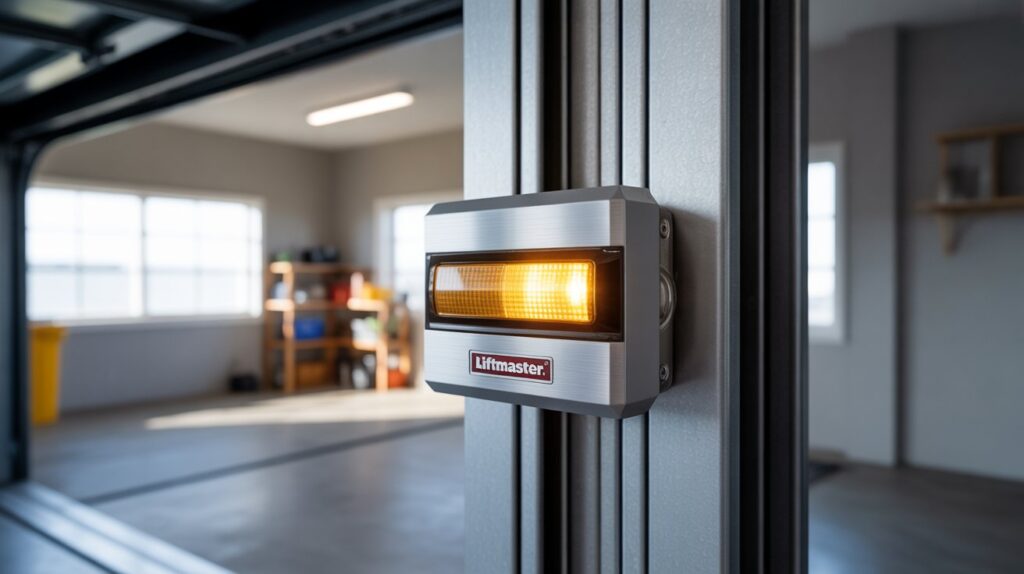
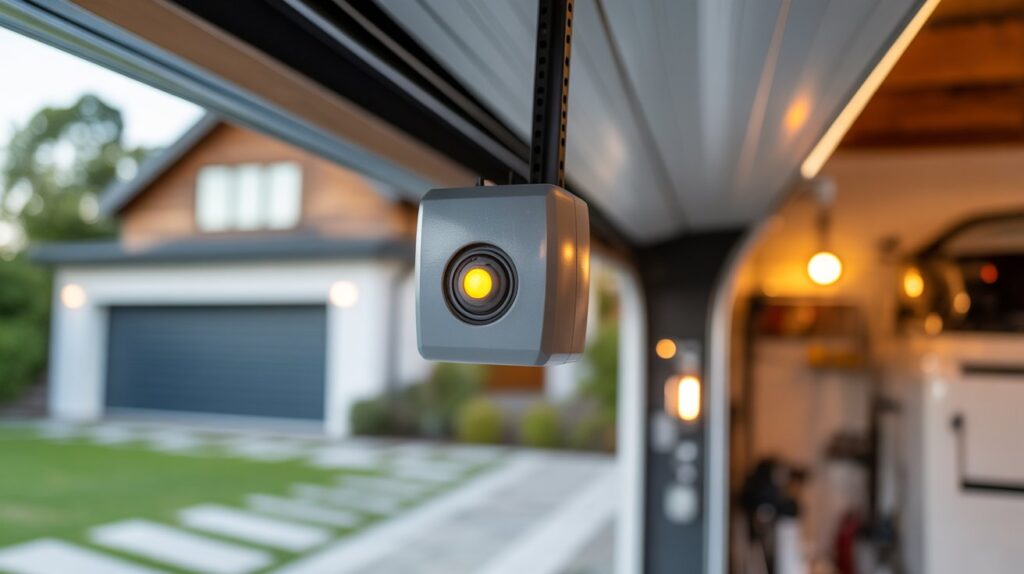
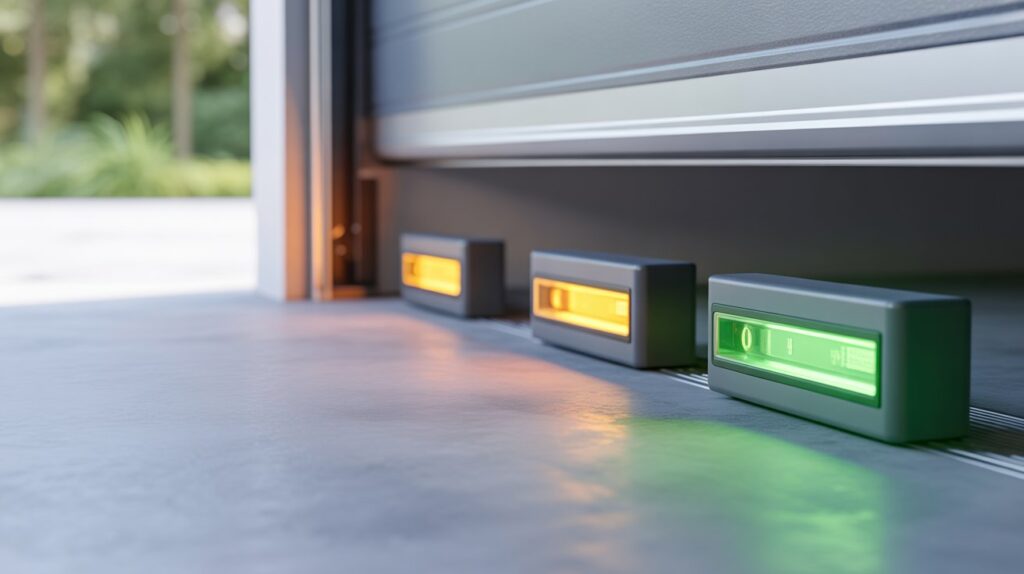
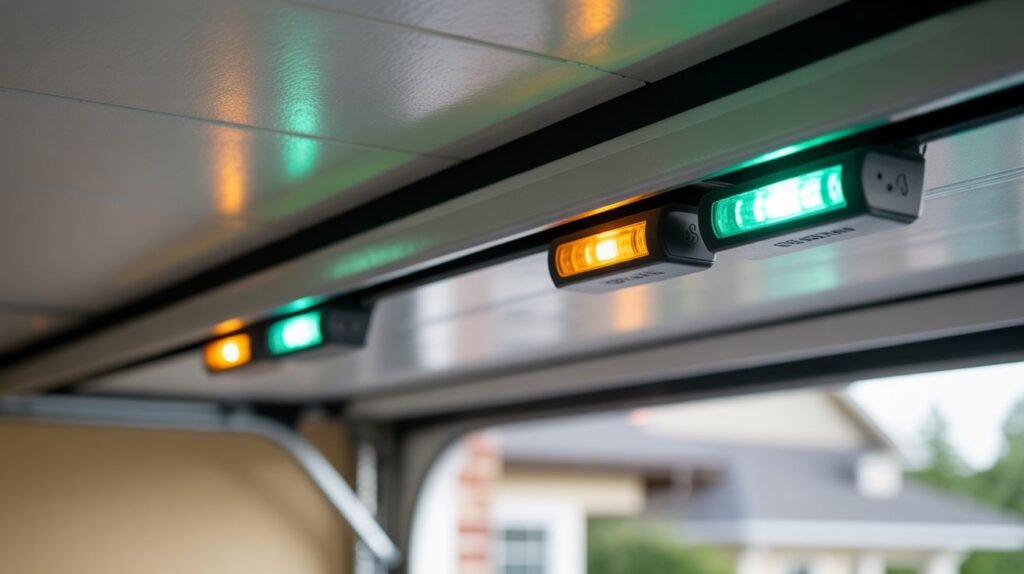
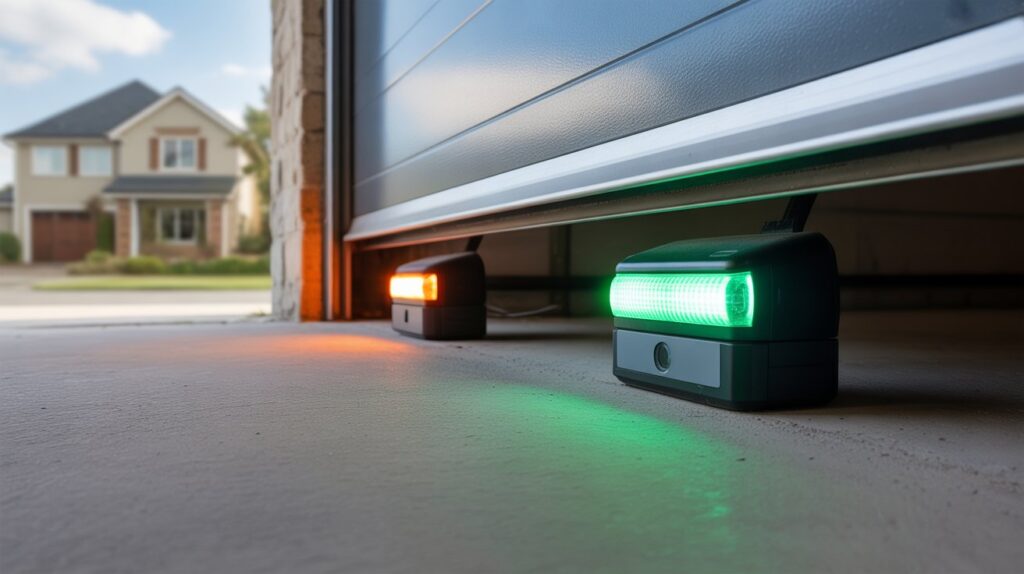
On many popular garage door opener brands in the USA, one sensor commonly shows a yellow or amber light all the time. This usually means the sending sensor has power and is doing its job. The other side may display a green light to show it is receiving the beam correctly. So if you notice one yellow light and one steady green light, that is often a sign the system is working exactly as it should.
The real concern starts when the yellow light blinks, turns off, or the garage door refuses to close. That can point to loose wiring, dirty lenses, misaligned sensors, or something blocking the beam. Think of the yellow light as a messenger—it is not always bad news, but it is worth paying attention to when behavior changes. A steady light is usually normal. A flashing light with door problems is your cue to inspect the sensors.
Signs the Yellow Light Points to a Problem
- Blinking yellow light usually means the sensor is not working normally. It may be out of alignment or losing power.
- Door refuses to close is one of the most common warning signs. The opener may detect a sensor issue and stop the door for safety reasons.
- Door reverses suddenly after starting to close often means the safety beam is interrupted or not connecting correctly.
- Dirty sensor lens can block the invisible beam. Dust, spider webs, or mud near the garage floor are common causes.
- Loose or damaged wires may stop the sensor from sending a steady signal. This can happen over time with vibration or wear.
- Direct sunlight interference can confuse some garage door sensors, especially during bright afternoons.
- If you are asking what does yellow light mean on garage door sensor systems, these signs usually mean the light needs attention rather than being ignored.
How to Fix a Yellow Garage Door Sensor Step by Step
A yellow light doesn’t always mean a major repair. In most homes, the fix takes a few minutes once you know where to look.
Quick Checks You Can Do in Minutes
- Clean the sensor lenses with a soft dry cloth — dust, dirt, or spider webs are common beam-blockers
- Clear the beam path of trash cans, tools, boxes, bikes, or anything stored near the track
- Check alignment by making sure both sensors face each other evenly; a slight bump can knock them off, and a loose or bent sensor bracket is often the real culprit
- Inspect the wiring near the sensor brackets and opener unit for damage or loose connections
These simple checks resolve most common yellow-light issues.
When to Reset or Test the System
- Try the wall button to see if the door behaves differently than with the remote
- Power cycle the opener by unplugging it for about 30 seconds, then plugging it back in
- Test the door again to check if the light turns steady and normal
If the light keeps blinking or the door still won’t close, it’s time for a deeper inspection or professional help.
When to Call a Garage Door Professional
Sometimes a quick cleaning or sensor adjustment solves it. But if the yellow light keeps returning, it may be time to bring in a trained technician — someone who can catch deeper electrical or mechanical issues before they turn into a bigger, costlier repair.
Repeated Sensor Problems After Basic Fixes
If you’ve already cleaned the lenses, checked alignment, and cleared the beam path — but the light still blinks or the door still won’t close — expert help is the smart next step.
Watch for:
- The problem returning every few days
- The door working sometimes, then failing again
- The light changing with no clear cause
- Resetting the opener not helping
If basics haven’t fixed it, hidden wiring or opener issues are likely involved.
Frayed Wires or Damaged Hardware
Garage doors move daily, and vibration over time loosens parts and wears down wires. Don’t ignore visible damage:
- Frayed, cracked, or exposed sensor wires
- Bent brackets no longer holding the sensor straight
- Rusted screws or loose mounting hardware
- Sensors hanging lower than normal
These affect safety directly and need proper repair.
Older Garage Door Systems Need Extra Attention
Openers and sensors wear out over years of use, especially in garages exposed to heat, cold, or moisture:
- Sensors responding inconsistently
- Replacement parts hard to find
- Lights behaving oddly even after repairs
- No newer safety features
Following a regular maintenance routine can catch these issues early — in many USA homes, though, replacing outdated sensors or upgrading the opener altogether saves more time and stress long-term.
Conclusion
A yellow light on your garage door sensor isn’t cause for panic — but it’s not something to ignore either. In most cases, it simply means the system is working as designed. If it starts blinking or the door refuses to close, though, that’s your sign to act.
A quick lens cleaning, alignment check, or basic reset resolves the issue in most homes. If problems keep coming back, it’s worth checking your garage door sensor bracket — a bent or loose bracket is one of the most common hidden causes behind a stubborn yellow light.
Your garage door is part of your home’s daily rhythm, protecting your car and family every time it opens and closes. A small light is an easy thing to notice early — before it turns into a bigger repair.
FAQs
1. Is a yellow light on a garage door sensor normal?
Yes, in most systems one sensor shows a steady yellow or amber light to indicate it’s powered and sending the signal correctly.
2. Why is my garage door sensor light blinking yellow?
A blinking yellow light usually means misalignment, a dirty lens, or a loose wire — clean the lenses and check alignment first.
3. What does it mean if one sensor is yellow and the other is off?
It likely means the receiving sensor isn’t detecting the beam — check for obstructions, dirt, or misalignment between the two sensors.
4. Can direct sunlight affect the garage door sensor light?
Yes, strong sunlight hitting the sensor lens can interfere with the beam, sometimes causing false blinking or detection errors.
5. How do I reset a garage door sensor showing a yellow light?
Unplug the opener for 30 seconds, plug it back in, then test the door with the wall button to see if the light turns steady.