
Introduction
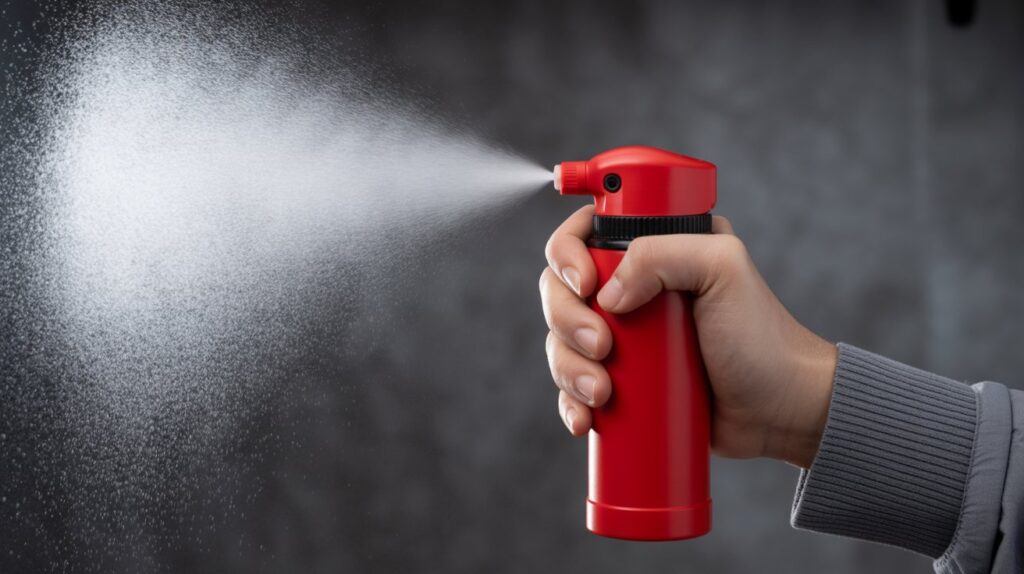
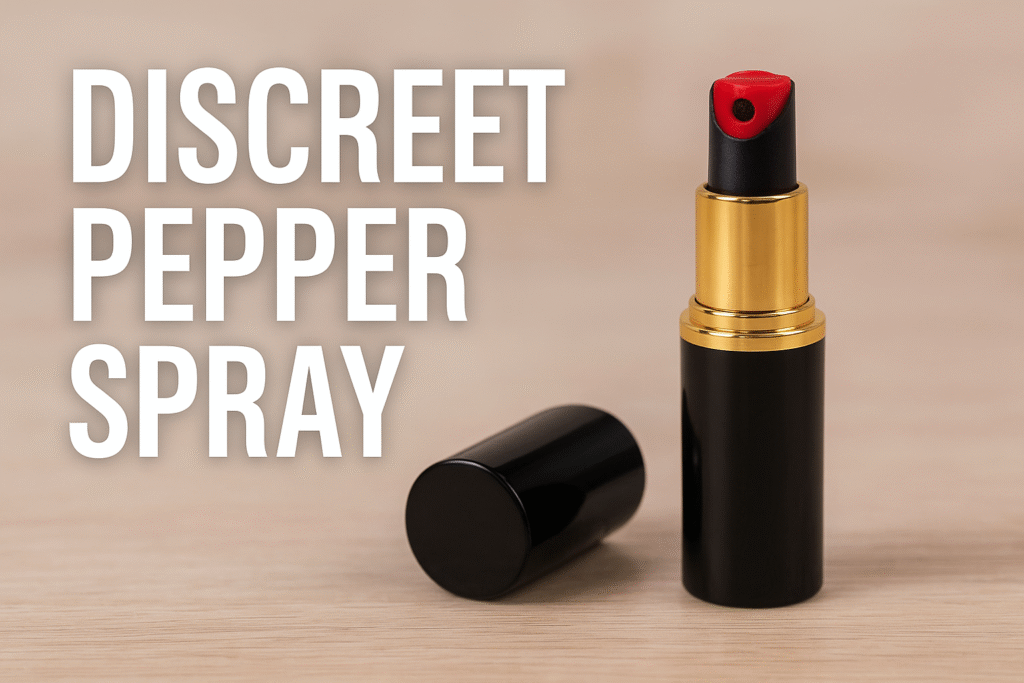
Inert pepper spray is a training tool designed to help people practice with a spray canister without using an active pepper spray formulation. It can be useful for learning basic handling, improving familiarity with the canister, and practicing controlled training drills in an appropriate setting.
Unlike defensive pepper spray, inert training spray does not contain the active OC ingredient responsible for the typical effects of pepper spray. This makes it a practical option for training and demonstrations when used according to the product instructions and proper safety precautions.
Whether you are new to self-defense training or want to become more familiar with your equipment, inert pepper spray can provide a controlled way to practice before handling a live product.
Table of Contents
What Is Inert Pepper Spray?
Inert pepper spray is a non-active version of regular pepper spray that is used specifically for training and practice purposes. Unlike standard pepper spray, which contains the active ingredient oleoresin capsicum (OC)—a compound that causes intense burning and irritation—inert sprays are completely safe and chemical-free. Government research on OC notes that as an inflammatory agent, it causes near-immediate swelling of the eyes and airways, along with burning in the eyes, throat, and skin, which is exactly why a chemical-free training version exists — to build the same skills without any of that risk. You can read more in the National Institute of Justice’s overview of oleoresin capsicum. National Institute of Justice
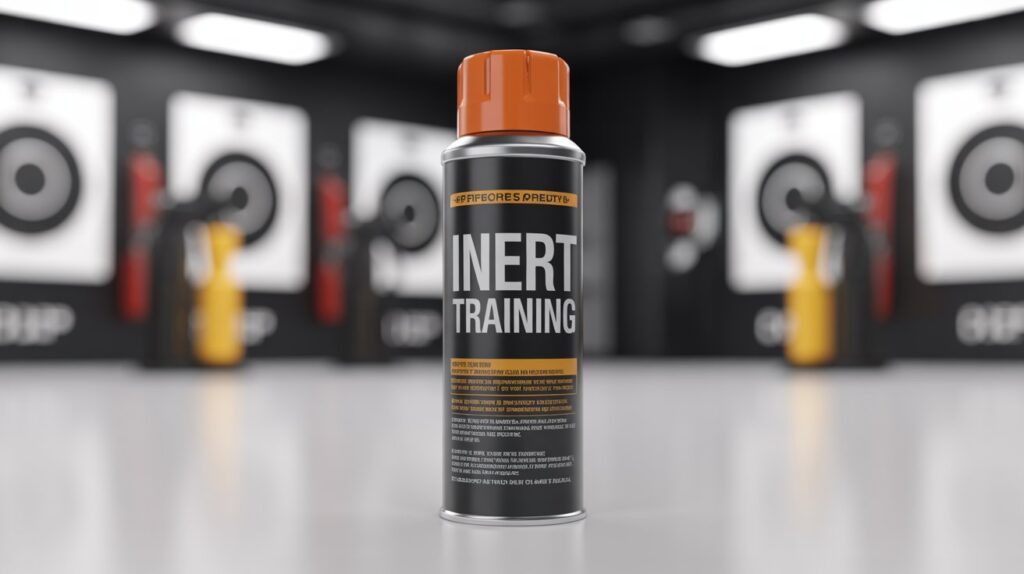
Instead of active OC, training formulas typically use water, propellant, dye, or other inactive ingredients to replicate the feel and operation of a defensive spray. They can help users become familiar with handling and spray patterns during controlled practice without the effects associated with an active formulation. However, users should still follow the product instructions and recommended safety precautions during training.
In simple terms, inert pepper spray is a training tool that allows users to practise self-defence techniques safely. The canister, nozzle, and spray pattern are identical to those of real pepper sprays, giving users a realistic feel during training. This helps beginners, security officers, and law enforcement professionals gain confidence in handling and deploying sprays effectively.
The main goal of using inert pepper spray is to build familiarity and muscle memory. Practising with this non-active spray helps users understand how to hold the canister correctly, how far the spray can reach, and how to react under pressure—all without any health risks.
Whether you’re a civilian learning self-defence or a professional undergoing tactical training, inert pepper spray provides a safe and realistic way to improve your reaction time and accuracy before using real defensive sprays.
If you want to learn more about the active version and how it works in real situations, check out our detailed guide on Pepper Spray.
Why Use Inert Pepper Spray for Training
Learning to use pepper spray correctly starts with practice, and a non-active training canister is one of the safest ways to build that skill. It lets you rehearse real-life defence scenarios without any exposure to the active compounds found in standard sprays. If you’re still deciding which type suits you best, our complete guide to pepper spray types breaks down the options in detail.
Regular OC-based sprays rely on oleoresin capsicum, which causes intense burning and discomfort on contact. A training version skips that entirely — it’s made from harmless components like water and propellant, so it’s safe to use even indoors or in group sessions.
Working with this kind of canister helps you build muscle memory, sharpen accuracy, and grow more comfortable handling the device overall. It’s also the easiest way to rehearse proper grip, spraying distance, and aim — all skills that matter the moment a real threat shows up. Once you’re confident with the basics, our step-by-step guide to using pepper spray safely walks you through applying these same techniques with a real canister.
For law enforcement officers, security personnel, and self-defence instructors, this kind of practice tool is essential. It allows them to run realistic drills that mirror actual threats, without putting trainees or bystanders at risk.
There’s another advantage worth mentioning: it teaches you the real-world limits of a spray. Practising with an inactive version shows you how far the stream actually travels, how wind can throw off your aim, and how fast you need to react once a situation turns serious.
Put simply, training this way gives you a risk-free but realistic path to mastering defensive technique. Whether you’re just starting out or refining skills you already have, it’s a meaningful way to boost your confidence and readiness for real situations.
Benefits of Practicing with Inert Pepper Spray
Training with a practice spray canister can help people become more familiar with its handling and operation. Because this type of training spray does not contain an active pepper spray formulation, it can be used during controlled practice sessions focused on grip, handling, and basic spray technique. This approach can improve familiarity with self-defense equipment and help build confidence before using defensive tools when appropriate.
1. Safe and Risk-Free Practice
The most important benefit of inert pepper spray is safety. It allows users to practise spraying techniques without the burning effects of real pepper spray. This makes it perfect for beginners, security professionals, and training sessions where multiple people are involved.
2. Builds Muscle Memory and Confidence
Practising regularly with inert pepper spray helps develop muscle memory—the ability to react quickly and confidently during an emergency. The more you practise, the more natural it becomes to draw, aim, and spray under pressure.
3. Improves Accuracy and Control
Accuracy is key in self-defence. Inert sprays allow users to test how far the spray reaches, how it behaves in different weather conditions, and how to adjust their aim accordingly. This improves spray control and ensures more effective use of real pepper spray if ever needed.
4. Realistic Training Experience
Inert pepper spray mimics the weight, shape, and spray pattern of real pepper spray, giving users a realistic training experience. This hands-on practice helps individuals understand how to manage stress and act effectively in threatening situations.
5. Suitable for All Skill Levels
Whether you’re a complete beginner or already have self-defence experience, this training tool works for everyone. That’s why personal safety courses, police academies, and tactical simulation programs rely on it — it lets every participant practise without any risk of injury.
6. Enhances Reaction Time
Every second matters when a real threat appears. Regular drills with a non-active canister sharpen your instincts, helping you spot danger sooner and respond with more confidence when it actually counts.
7. Encourages Consistent Practice
Because there’s zero risk involved, you can repeat these drills as often as you like. That consistency is what keeps your defensive reflexes sharp and your readiness intact over the long run.
Putting in this kind of repetition doesn’t just build technique — it builds the composure to stay level-headed under pressure. Over time, that combination becomes the real foundation of a solid personal defence strategy.
How to Use Inert Pepper Spray Safely
Even though this training canister carries zero real risk, using it responsibly still matters. Handling it with care not only keeps everyone around you safe but also makes the whole practice session feel closer to a real-world scenario.
1. Choose a Safe Training Area
Stick to open or well-ventilated spaces whenever you’re drilling with this device. Outdoor settings work best since the spray can disperse naturally. Steer clear of crowded or enclosed areas where bystanders could get caught in the mist by accident.
2. Check the Wind Direction
Position yourself with the wind at your back before you spray. This keeps the mist from drifting back toward your own face — a habit worth building even though there’s no active chemical involved. Getting this right in practice carries over directly to a real defensive situation.
3. Practise Proper Grip and Stance
Grip the canister firmly, thumb under the base and index finger resting on the actuator. Keep your wrist steady and your stance balanced. This kind of muscle memory is what lets you react fast and spray accurately the moment it counts. For a different handling technique, our guide to using a pepper spray gun covers a device with its own grip and trigger mechanics.
4. Aim for Realistic Targets
Set up dummies, paper cutouts, or wall markers to mimic an actual threat. Aiming at a fixed target sharpens your distance judgement and precision. Keep roughly 6 to 10 feet between you and the target while training.
5. Stay Aware of Your Surroundings
Keep your attention on what’s around you throughout the drill — obstacles, people, even pets nearby. This kind of situational awareness matters just as much as the spraying technique itself, since it’s what prepares you to think clearly during a genuine emergency. Building that mindset is a core part of why self-defence training matters in the first place.
6. Clean and Store It Properly
Once you’re done, wipe the canister down and keep it somewhere cool and dry. Label it clearly as “inert” so it never gets mixed up with an active canister. A little routine maintenance keeps your training gear reliable session after session.
7. Repeat for Confidence
Confidence builds with repetition. Sticking to a regular training schedule keeps your muscle memory sharp and your defensive instincts ready long-term.
Following these habits helps you get real value out of every session — and it sets you up to handle an actual canister correctly and confidently if the moment ever comes.
Choosing the Best Inert Pepper Spray
Not every training canister performs the same way. Different brands and models bring their own design quirks that affect how realistic and useful your practice sessions actually are. Here’s what actually matters when picking one.
1. Check the Brand and Quality
Stick to manufacturers with a solid reputation in the self-defence space — names like SABRE, Mace, and Fox Labs are popular precisely because their training versions closely replicate the look, weight, and spray pattern of the real thing. A well-made canister means your practice sessions stay consistent and dependable.
2. Consider the Spray Pattern
These canisters come in a few different spray patterns — stream, cone, fog, or gel — and each behaves differently in the real world.
- A stream pattern is tightly focused and works well when you need to target one direction precisely.
- Cone or fog patterns spread wider, making them a better fit for group drills or scenarios involving multiple angles.
Match your training canister’s pattern to whichever real-world spray type you eventually plan to carry. Our full breakdown of stream, fog, and gel options covers how each performs in real defensive situations.
3. Size and Grip
Pick a canister that sits comfortably in your hand. Compact sizes suit personal practice, while bulkier ones are often better suited to professional or tactical training. Whatever size you choose, it should still allow a firm hold, a quick draw, and steady control.
4. Realistic Spray Pressure
The closer a training canister replicates the pressure and range of a genuine OC spray, the more useful your practice becomes. This is what teaches you how much force deployment actually takes and how far the stream will travel once you’re using a real one.
5. Visibility and Safety Markings
Look for a canister that’s clearly marked “INERT,” often with a distinct cap colour to set it apart from an active spray. This isn’t just good practice — many jurisdictions actually mandate specific labeling and safety mechanisms for self-defense spray devices in general. New York State’s own regulations, for instance, require tamper-proof packaging, safety devices, and clear warning labels on any self-defense spray sold — a good reminder of why clear “inert” labeling matters just as much on a training version.
6. Price and Refill Options
Training canisters are generally budget-friendly, though pricing shifts with size and brand. Some manufacturers offer refillable options, which pay off if you train often. Keep an eye on expiration dates too, and swap out old canisters when needed.
7. Customer Reviews and Reliability
Before you buy, skim through what other buyers say about performance and build quality. Genuine feedback from people who’ve actually used the product tells you more than the marketing copy ever will.
Weighing these factors carefully helps you land on a training canister that actually improves your accuracy and control — and keeps every session safe and effective.
Difference Between Inert and Real Pepper Spray
Both canisters might look almost identical at first glance, but they’re built for completely different jobs. Knowing exactly how they differ is what keeps your training safe and helps you reach for the right one when it actually matters.
1. Active vs. Non-Active Ingredients
This is where the two products really split apart.
- Real pepper spray relies on oleoresin capsicum (OC) — a chilli-derived compound that triggers intense burning, coughing, and temporary loss of vision.
- Training versions skip the active compound entirely, using nothing more than water, dye, or propellant to recreate the spray action safely.
2. What Each One Is Built For
A non-active canister exists purely so you can rehearse technique without any consequences. A live OC spray, on the other hand, is meant for genuine threats — it’s your last line of defence when things turn serious. That’s exactly why running through drills beforehand matters: it sharpens the accuracy and instinct you’ll need if a real threat ever appears. If you haven’t already, our foam pepper spray guide covers another defensive format worth knowing about.
3. Safety Level
Since there’s no active ingredient involved, a training canister is safe for absolutely anyone to handle — beginners included. A live spray demands far more care, given how much irritation it can cause if it’s mishandled.
4. Spray Pattern and Pressure
Manufacturers deliberately keep the size, shape, and spray pattern nearly identical across both versions. That similarity is the whole point — it lets your muscle memory transfer directly from practice to a real emergency without any adjustment period.
5. Legal and Practical Considerations
Because training canisters contain no active irritant, they’re generally treated far more leniently under local laws than live OC sprays — though it’s still worth confirming your local rules before practising in public spaces. A live spray, by contrast, often comes with real restrictions — things like canister size, concentration limits, or age requirements that vary by state. If you’re carrying an active version day-to-day, our cone pepper spray guide walks through one format that comes with its own set of considerations. Always double-check your local regulations before carrying or deploying a live canister.
6. Cost and Availability
Training canisters tend to be the more budget-friendly option and are widely sold by most self-defence brands, often in multipacks built for repeated practice. Live sprays cost a little more but remain easy to find and reasonably priced for everyday personal safety use.
In short: a training canister builds the skill, and a live spray is what you deploy when it counts. Practising with the inert version first is what makes you confident and ready the moment a real situation calls for it.
Common Mistakes to Avoid When Training
Using a training spray canister can help you become more familiar with self-defense equipment, but proper technique and safety still matter. Beginners can develop poor habits if practice is rushed or done without a controlled setup. Here are some common mistakes to avoid during training.
1. Practicing in Unsafe Areas
Avoid crowded, poorly ventilated, or uncontrolled locations. Even non-active training formulas can contain propellants or other ingredients that may cause discomfort if they come into contact with the eyes or skin. Choose an open, controlled area and follow the product’s safety instructions.
2. Ignoring Wind Conditions
Wind can affect how a spray disperses and may change the direction of the stream. Practicing in suitable conditions can help you understand how environmental factors influence spray patterns without relying on assumptions about live defensive products.
3. Using Poor Handling Technique
An inconsistent grip or incorrect handling can make training less effective. Follow the manufacturer’s instructions and focus on becoming familiar with the canister, actuator, and overall operation before beginning practice drills.
4. Failing to Practice Basic Accuracy
Controlled practice can help improve familiarity with the direction and spray pattern of a training canister. Use an appropriate training target and follow the product’s recommended distance rather than practicing toward people or animals.
5. Practicing Only in Predictable Conditions
Repeating the same drill every time may limit the value of your training. Once you are comfortable with basic handling, you can vary the practice environment or sequence while keeping the session controlled and safe.
6. Skipping Protective Equipment
Protective eyewear can provide an additional layer of safety during training, particularly when practicing with other people nearby. Always follow the manufacturer’s recommended precautions and avoid unnecessary exposure to the spray.
7. Training Inconsistently
Occasional practice may not provide enough familiarity with your equipment. A consistent training routine can help you remember basic handling procedures and maintain confidence with your chosen training canister.
Practice Safely and Consistently
Avoiding these common mistakes can make training more structured and productive. Focus on safe handling, controlled practice, proper equipment, and consistency rather than trying to replicate a real confrontation.

FAQs
1. Can inert pepper spray expire?
Yes. Even without an active chemical, the propellant inside a training canister loses pressure over time, and dye or filler ingredients can degrade. Most manufacturers print an expiration date on the canister — check it before every training season and replace the unit once it’s passed.
2. Does inert pepper spray leave a mess or stain?
Some training canisters use a colored dye to simulate real spray contact, which can leave a temporary mark on skin or clothing. Water-based formulas typically wash off easily with soap and water, but it’s worth testing on old clothes first if you’re training indoors.
3. Can I refill or reuse an inert pepper spray canister?
It depends on the brand. Some manufacturers sell refillable training units designed for repeated drills, while others are single-use and need full replacement once empty. Checking the product specifications before buying saves money if you plan to train often.
4. How does a training canister feel compared to a real one in your hand?
Most reputable brands match the weight, size, and trigger resistance of an actual OC canister almost exactly. This is intentional — the goal is for your grip, draw speed, and muscle memory to transfer directly to a live spray without needing to relearn anything.
5. Can children or teenagers use inert pepper spray for training?
Since there’s no active irritant involved, supervised training with a non-active canister is generally considered low-risk for teens learning basic self-defence awareness. That said, adult supervision and proper technique instruction are still important, and any move toward a live spray should follow local age restrictions.
Conclusion
A training spray canister provides a controlled way to become more familiar with self-defense equipment and basic handling techniques. It can help users practice equipment familiarity, spray patterns, and basic training drills without using an active pepper spray formulation.
Regular, responsible practice can improve familiarity and confidence over time. Whether you are new to self-defense training or reviewing your existing skills, using a non-active training product in a controlled environment can be a practical part of a broader safety and preparedness routine.
About the Author
M Bilal holds a Bachelor’s degree in Criminology and writes about home security, self-defense tools, and personal safety for CrimTechHub. His background in criminology shapes how he approaches each topic — looking closely at how these tools actually work, what the research says, and where common advice gets it wrong.
Before publishing any guide, he cross-checks manufacturer claims, government safety resources, and real-world usage reports rather than relying on marketing copy. The goal is straightforward: give readers accurate, practical information they can actually use — not recycled product descriptions.