

Introduction
Gel pepper spray is a self-defense product that releases a thick, targeted stream designed to reduce airborne spread compared with traditional fogger sprays. Its adhesive formula can help limit the spread of the spray, but wind, poor aim, and close-range exposure can still create risks for the user.
This guide explains how gel formulas work, their benefits and limitations, how they compare with other pepper spray types, and the safety precautions to consider before choosing one. You’ll also learn about proper handling and storage to make informed decisions about personal safety.
Table of Contents
What Is Gel Pepper Spray?
Gel pepper spray is a self-defense product that releases a thick, concentrated stream containing oleoresin capsicum (OC), an active ingredient derived from hot peppers. Unlike traditional fogger sprays that create a cloud of droplets, this formula delivers a targeted stream designed to stick to the surface it contacts.
When it reaches a person’s eyes or face, the OC formula can cause intense irritation, burning, tearing, coughing, and temporary difficulty keeping the eyes open. The severity of these effects varies depending on exposure and individual sensitivity.
How Does the Gel Formula Work?
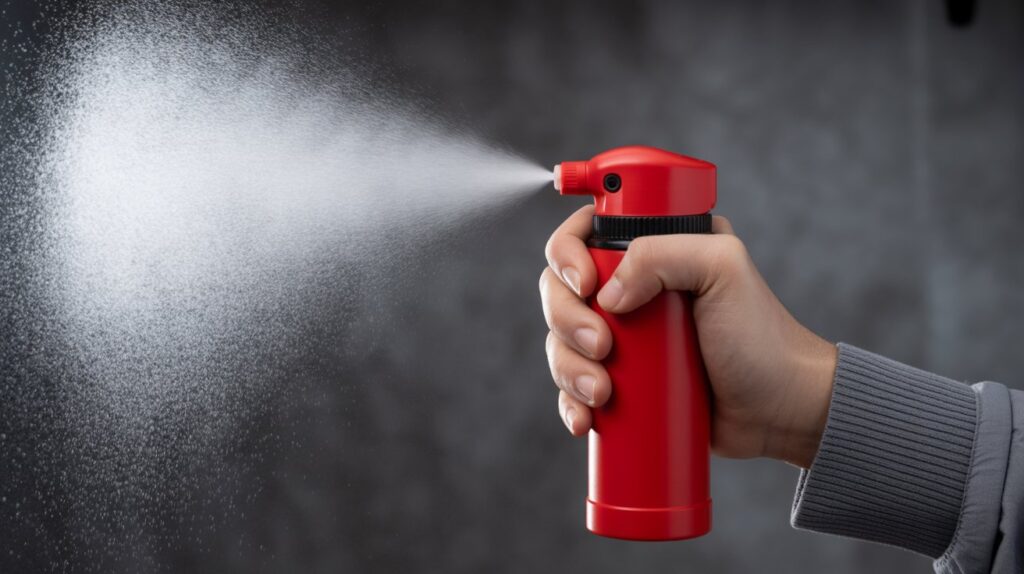
The product uses a pressurized canister to release an OC-based gel toward a target. Its thicker consistency helps limit airborne dispersion compared with wide-pattern aerosol sprays.
Key characteristics include:
- Thick consistency: The adhesive formula is designed to cling to the surface it contacts.
- Targeted delivery: Releases a concentrated stream rather than a wide spray pattern.
- OC-based formula: Contains oleoresin capsicum, which causes temporary irritation and discomfort.
- Reduced airborne spread: Generally produces less airborne dispersion than fogger-style products, although accidental exposure remains possible.
- Portable design: Available in compact containers suitable for everyday carry, where legally permitted.
Key Features and Benefits
This type of personal safety product offers several practical features, particularly for people who prefer a more targeted delivery system. However, its performance depends on the product design, environmental conditions, and proper handling.
1. More Targeted Spray Pattern
Unlike wide-area fogger products, gel-based formulas release a concentrated stream. This allows more focused delivery and may reduce the amount of spray dispersed into the surrounding air.
2. Reduced Risk of Blowback
One potential advantage is reduced blowback. The thicker formula is less likely to drift through the air like fine aerosol droplets. However, wind, close-range exposure, and accidental contact can still expose the user or nearby people.
3. Less Airborne Dispersion
The gel consistency helps limit the spread of airborne droplets compared with traditional fogger sprays. This can be useful in situations where a wide spray cloud is undesirable. However, it should not be considered completely safe for indoor or enclosed spaces.
4. Different Spray Ranges
Some manufacturers advertise ranges of up to 18 feet, but the actual distance varies by model, nozzle design, and environmental conditions. Always check the manufacturer’s specifications rather than assuming every canister offers the same range.
5. Compact and Portable Design
Many models come in small canisters, keychain-style containers, and pocket-sized designs. These options make them easier to carry during everyday activities, provided local laws allow possession and carry.
6. Practical Personal Safety Option
For people comparing different self-defense products, the targeted delivery pattern and reduced airborne dispersion may make this format worth considering. However, no formula guarantees protection or produces identical effects in every situation.
Important: Gel formulas still contain an irritating chemical agent. Avoid direct contact, follow the manufacturer’s safety instructions, and never assume that reduced airborne spread eliminates exposure risks.

Gel Pepper Spray vs. Other Types
Different pepper spray formulas have different spray patterns, ranges, and exposure risks. Gel uses a thicker, targeted stream, while liquid stream, fogger, and foam products deliver the OC formula differently. Understanding these differences can help you evaluate which format suits your personal safety needs.
1. Gel vs. Stream Pepper Spray
Stream pepper spray releases a narrow liquid stream designed for targeted delivery. It generally requires accurate aiming and may be affected by wind or environmental conditions.
Gel has a thicker consistency and is designed to cling to the surface it contacts. It typically produces less airborne dispersion than a conventional liquid stream.
Key differences:
- Consistency: Stream uses liquid, while gel uses a thicker formula.
- Spray pattern: Both deliver a targeted stream rather than a wide cloud.
- Airborne dispersion: Gel generally produces less airborne spread.
- Limitations: Both require proper handling and accurate direction.
Learn more about the liquid formula in our Stream Pepper Spray Guide.
2. Gel vs. Fogger Pepper Spray
Fogger pepper spray releases a wide cloud of fine droplets designed to cover a larger area. Unlike targeted formulas, it does not depend as heavily on precise aiming.
Gel releases a more concentrated stream, which generally limits the amount of irritant dispersed into the surrounding air. However, neither format is completely risk-free, especially in enclosed environments.
Key differences:
- Coverage: Fogger provides wider coverage, while gel targets a smaller area.
- Airborne spread: Fogger creates more airborne droplets.
- Aiming: Gel requires more precise direction.
- Exposure risk: Fogger has a greater potential to affect nearby people and the user.
3. Gel vs. Foam Pepper Spray
Foam pepper spray releases an expanding or aerated formula that can cover a surface on contact. Gel has a thicker consistency and is designed to adhere to the area it reaches.
Both formats can reduce wide airborne dispersion compared with fogger sprays, but their performance depends on the specific product formulation.
Key differences:
- Texture: Gel has a sticky consistency, while foam has an aerated texture.
- Application: Gel produces a concentrated stream; foam expands or spreads on contact.
- Visibility: Foam can create a more visible coating.
- Performance: Effectiveness depends on the product’s formulation and delivery system.
For a broader comparison of spray patterns, limitations, and applications, see our Stream vs. Fogger vs. Gel Pepper Spray Comparison.
How to Handle Gel Pepper Spray Properly
Knowing how a personal safety product operates is important before carrying it. Familiarity with its safety mechanism, instructions, and limitations can help reduce accidental discharge and handling mistakes.
1. Check the Safety Mechanism
Before carrying the canister, identify its safety lock, trigger, and protective cap. Different manufacturers use different activation systems, so read the product instructions instead of assuming every model works the same way.
2. Choose an Accessible Carrying Location
Keep the canister in a secure location where you can reach it without searching through several compartments. Depending on its design, this could be a designated pocket, belt holder, or keychain attachment.
Make sure the trigger cannot be accidentally pressed while carrying it.
3. Understand the Manufacturer’s Range
Advertised spray distance varies between models. Factors such as nozzle design, pressure, and environmental conditions can affect actual performance.
Check the manufacturer’s specifications rather than relying on a general range for every product.
4. Practice With an Inert Training Unit
A non-pressurized or inert training cartridge can help you become familiar with the product’s size, grip, and safety mechanism without releasing an active chemical formula.
Follow the manufacturer’s training recommendations and avoid testing an active canister around other people.
5. Prioritize Escape and Emergency Assistance
In a genuine self-defense emergency, personal safety should remain the priority. Move away from danger as soon as possible, reach a secure location, and contact emergency services when necessary.
For broader handling and personal safety guidance, read our Pepper Spray Safety Tips Guide.
Safety Tips and Maintenance
Proper storage and regular inspection help keep a personal safety canister in suitable condition. Although these products are designed for portability, improper storage, accidental discharge, and expired formulas can create unnecessary risks.
1. Store the Canister Correctly
Keep the product in a cool, dry location and follow the temperature limits printed on its label. Avoid leaving it in direct sunlight or inside a hot vehicle, where excessive heat may damage the container or affect its pressure.
2. Check the Expiration Date
Pepper spray products have a limited shelf life. Over time, the propellant and formulation may lose their intended performance.
Check the expiration date regularly and replace the canister according to the manufacturer’s recommendations.
3. Inspect the Container
Periodically check for:
- Cracks, dents, or other visible damage.
- Signs of leakage around the nozzle.
- A loose or damaged safety cap.
- Corrosion or deterioration.
- Missing or unreadable product instructions.
Do not carry a damaged or leaking container.
4. Prevent Accidental Exposure
Keep the product away from children, pets, and unauthorized users. Avoid touching the nozzle or rubbing your eyes after handling a canister.
If accidental exposure occurs, move to fresh air and follow appropriate decontamination guidance. The National Capital Poison Center (Poison Control) explains exposure symptoms and recommended first-aid steps.
Seek immediate medical attention for serious breathing difficulties, chest pain, or persistent eye pain.
5. Replace Used or Expired Products
After any discharge, inspect the canister and follow the manufacturer’s replacement instructions. Even a partially used container may not have enough pressure or contents for reliable future use.
Regular inspection is a simple way to avoid depending on a damaged or expired product.
Legal Considerations in the U.S.
Before purchasing or carrying a personal safety spray, check the laws that apply in your state and city. Although civilian pepper spray is permitted in much of the United States, regulations can differ regarding container size, product formulation, sales, possession, and lawful use.
State-Specific Restrictions
Some states have additional requirements:
- California: California Penal Code Section 22810 includes restrictions on tear gas containers and weapons, including a limit of 2.5 ounces net weight for qualifying aerosol spray containers.
- New York: State law regulates the sale and possession of self-defense spray devices. Authorized sellers and purchaser eligibility requirements apply.
You can review the relevant laws through the California Penal Code and New York State Senate legislation.
Airline Travel Restrictions
Pepper spray is not permitted in carry-on baggage under FAA rules. The FAA allows one self-defense spray container of no more than 4 fluid ounces in checked baggage, provided it meets the required accidental-discharge protection conditions.
International aviation rules may differ, so check your airline and destination requirements before traveling.
For current guidance, consult the FAA PackSafe rules for self-defense sprays.
Important: Laws can change, and restrictions may apply even when a product is sold legally. Verify current state and local requirements before purchasing, carrying, or using any self-defense spray.
Best Uses and Scenarios
A gel-based formula may suit people who prefer a targeted spray pattern and want to limit airborne dispersion. However, its suitability depends on the environment, product design, and user’s ability to handle it responsibly.
1. Everyday Personal Safety
People who walk, commute, or travel alone may consider a compact canister as part of a broader personal safety plan. Portability and convenient access are important factors when comparing different designs.
2. Outdoor Environments
The thicker formula generally produces less airborne dispersion than fogger-style products. However, strong wind, rain, and other environmental conditions can still affect delivery and performance.
3. Parking Lots and Building Entrances
Parking areas, building entrances, and outdoor walkways are common places where people may want an additional personal safety option. A compact canister may be convenient to carry, but awareness of surroundings and access to a safe exit remain important.
4. Situations Where Bystander Exposure Matters
People who are concerned about affecting others nearby may prefer a more targeted delivery format over a wide-area fogger. Nevertheless, gel does not eliminate accidental exposure, and it should never be considered completely safe for crowded or enclosed spaces.
Ultimately, evaluate the product’s specifications, storage requirements, legal restrictions, and handling instructions before deciding whether it meets your needs.

FAQs
1. What Makes Gel Pepper Spray Different From Mist or Fog?
Gel pepper spray releases a thick, targeted stream rather than a wide cloud of droplets. It generally produces less airborne dispersion than fogger sprays, although accidental exposure and blowback are still possible.
2. How Far Can Gel Pepper Spray Reach?
The spray range depends on the manufacturer, nozzle design, and canister pressure. Some products advertise distances of 12 to 18 feet, but buyers should always check the specific product’s stated range.
3. Is Gel Pepper Spray Safe to Use Indoors?
Gel formulas generally produce less airborne dispersion than fogger sprays. However, they are not completely safe for enclosed spaces because accidental contact and chemical exposure can still occur. Always follow the manufacturer’s safety instructions.
4. Can Gel Pepper Spray Be Used Against Animals?
Not every human self-defense spray is designed or approved for animal deterrence. Check the product label and intended use before considering it for protection against aggressive animals. Animal-specific deterrent products may have different formulations and instructions.
5. Is Gel Pepper Spray Legal in Every U.S. State?
Pepper spray is permitted for civilian self-defense in most U.S. states, but restrictions vary. Some states regulate container size, formulation, sales, and possession. Check your current state and local laws before purchasing or carrying it.
Conclusion
Gel pepper spray offers a targeted delivery option for people comparing different personal safety products. Its thicker formula can reduce airborne dispersion compared with fogger sprays, although it does not eliminate exposure risks or guarantee protection in every situation.
Before choosing a product, compare its spray range, safety mechanism, expiration date, and manufacturer instructions. Also, check your state and local regulations before purchasing or carrying it. Understanding its benefits and limitations can help you make a more informed decision about personal protection.


Pingback: Types of Pepper Spray: 5 Main Types Explained