
Introduction
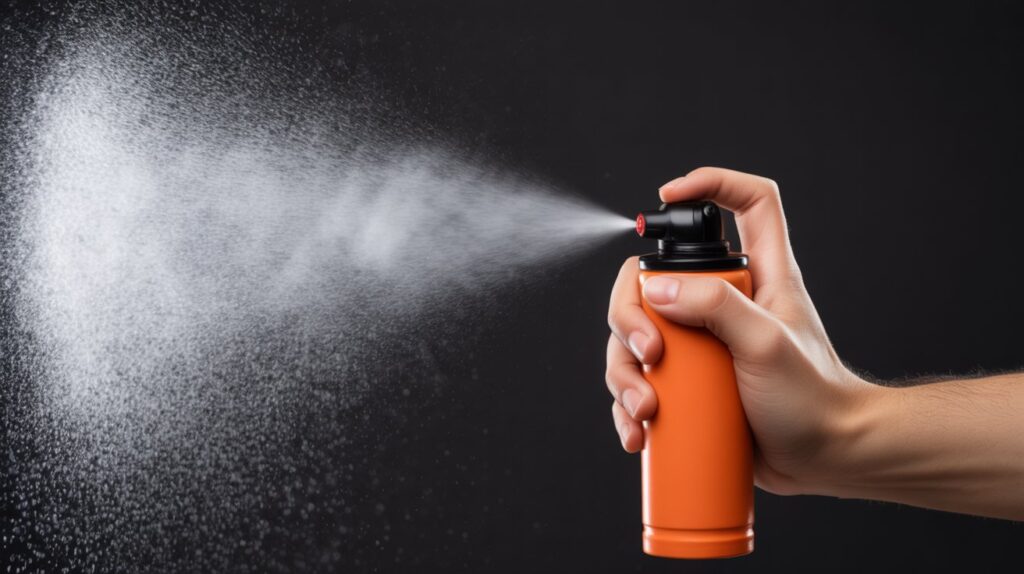
Pepper spray comes in several types, and each design works differently depending on the spray pattern, range, and intended use. Understanding these differences can help you better understand your self-defense options before choosing a product.
Common types include stream, gel, foam, and fogger pepper spray, along with other specialized designs. Each type has different characteristics that may make it more suitable for particular environments and situations.
In this guide, we’ll explain the different types of pepper spray, how they work, their key differences, and the factors to consider when comparing them. We’ll also cover important safety and legal considerations for pepper spray use in the United States.
Table of Contents
What Is Pepper Spray?
Pepper spray is a personal defense spray made with oleoresin capsicum (OC), an active ingredient derived from hot peppers. It is designed to cause temporary irritation when it comes into contact with the eyes, skin, or respiratory system. Common effects include intense eye irritation, burning sensations, excessive tearing, and coughing.
As a widely recognized self-defense tool, pepper spray is available in several formulations and spray patterns, including stream, gel, foam, and fogger. These delivery methods differ in how the OC formula is dispersed, their potential for airborne exposure, and how they may perform in different environments.
The effects of pepper spray are not identical for everyone. They can vary based on the product’s formulation, concentration, amount of exposure, and individual sensitivity. Exposure may also affect people who are not the intended target, particularly with airborne spray patterns.
Pepper spray is commonly used for personal protection, but it should not be considered a guaranteed way to stop an attacker. Understanding its ingredients, delivery methods, handling precautions, and limitations can help users make informed decisions when comparing different types of pepper spray.
Before carrying or using an OC spray, read the manufacturer’s instructions, check the expiration date, and understand the applicable self-defense laws in your state.
Why Choose Pepper Spray for Self-Defense?
Pepper spray is a commonly considered personal safety tool because it is compact, portable, and available in different delivery formats. Unlike defensive tools that require physical contact, an OC spray can provide an opportunity to create distance from a potential threat and move toward safety.
However, not every pepper spray product works in the same way. Its spray pattern, formulation, effective range, and exposure characteristics depend on the specific model and manufacturer.
Here are some common features that make pepper spray an option for personal protection:
- Compact and portable design: Many pepper spray canisters are small enough to carry in a pocket, purse, or dedicated safety holder.
- Multiple spray patterns: Stream, gel, foam, and fogger formulations offer different delivery characteristics for personal defense.
- Different effective ranges: The distance a spray can travel varies by nozzle design, propellant, and product specifications.
- Non-contact defense option: OC spray can provide an opportunity to move away from a threatening situation without relying on physical contact.
- Widely available formats: Consumers can find different canister sizes, safety mechanisms, and delivery systems.
- Product-specific operation: Many models have simple activation mechanisms, but users should understand the safety lock and operating instructions before carrying one.
- Legal considerations: State and local laws may restrict canister size, formulation, concentration, possession, or use.
What to Consider Before Choosing Pepper Spray
Before selecting a personal defense spray, consider where you might carry it, the possibility of accidental exposure, and whether you can operate the safety mechanism correctly.
Also consider these factors:
- Read the manufacturer’s specifications rather than relying on advertised range alone.
- Check the expiration date and storage recommendations.
- Understand the difference between liquid stream, gel, foam, and aerosol mist.
- Review applicable self-defense laws in your state.
- Never assume that one spray pattern is suitable for every environment.
Pepper spray is not a guarantee of protection. Its effects can vary depending on the formulation, exposure, and individual response. Responsible handling and an understanding of its limitations are essential.
Main Types of Pepper Spray
The main types of pepper spray are classified by their delivery method and spray pattern. Each design disperses oleoresin capsicum (OC) differently, which can influence accuracy, airborne exposure, potential blowback, and product range.
Understanding these differences can help you compare personal defense sprays based on their actual specifications rather than marketing claims.
1. Stream Pepper Spray
Stream pepper spray releases a narrow, concentrated liquid stream instead of a broad cloud of mist. This delivery method is designed for more focused application and generally produces less airborne dispersion than fogger-style sprays.
Key characteristics:
- Narrow, focused liquid spray pattern.
- Less airborne dispersion than wide-area fog sprays.
- Generally lower potential for wind-related blowback.
- Requires more accurate application.
- Effective range depends on the canister and manufacturer.
Limitations: A narrow spray pattern requires reasonable accuracy. Wind and other environmental conditions can still affect its direction and performance.
For a closer look at its spray pattern, features, and limitations, read our detailed guide to stream pepper spray and how it works.
2. Gel Pepper Spray
Gel pepper spray uses a thicker OC formulation that is discharged as a concentrated gel rather than a fine aerosol mist. Its heavier consistency is designed to reduce airborne dispersion compared with traditional fog-style sprays.
Key characteristics:
- Thick, concentrated gel formulation.
- Reduced airborne dispersion compared with fogger sprays.
- Designed to adhere to surfaces it contacts.
- More focused delivery than a wide-area mist.
- Range varies between products.
Limitations: Gel requires direct contact with the intended target. It should not be considered completely blowback-proof or risk-free in enclosed spaces. Handling and cleanup must follow the manufacturer’s instructions.
For a closer look at this formulation, read our detailed guide to gel pepper spray and its characteristics.
3. Foam Pepper Spray
Foam pepper spray releases an OC-based formulation in a semi-stream or expanded foam pattern. Unlike a traditional fogger, it is designed to deliver a thicker substance with less airborne dispersion.
Key characteristics:
- Foam-based OC formulation.
- Semi-stream delivery pattern in many models.
- Less airborne dispersion than broad mist sprays.
- Visible foam residue may remain after contact.
- Product performance depends on the formulation and nozzle design.
Limitations: Foam products vary in consistency, coverage, and range. Residue can also create cleanup concerns. Check the manufacturer’s instructions before purchasing or handling this type of defensive spray.
4. Fogger or Cone Pepper Spray
Fogger or cone pepper spray releases OC in a wider aerosol pattern. Instead of producing a narrow liquid stream, it disperses a cloud of fine droplets across a broader area.
Key characteristics:
- Wide cone-shaped spray pattern.
- Greater airborne dispersion than stream and gel formats.
- Covers a broader area than a focused liquid stream.
- Less dependent on precise application.
- Environmental conditions can influence spray direction.
Limitations: Wind can carry airborne particles away from the intended area or back toward the user. The wider spray pattern also increases the possibility of unintended exposure to nearby people.
Fogger sprays should not automatically be considered suitable for indoor use or crowded environments because airborne irritants can spread beyond the intended area.
5. Pepper Spray Gun or Launcher
A pepper spray gun or launcher is a specialized defensive device that differs from a conventional handheld OC canister. Depending on the model, it may use OC-filled projectiles, pressurized liquid, or another manufacturer-specific delivery system.
These devices should be evaluated separately from ordinary aerosol pepper spray because their operating mechanisms and performance characteristics can differ considerably.
Key characteristics:
- Specialized delivery mechanism.
- Some models use OC-containing projectiles or cartridges.
- Different sizes, designs, and operating systems.
- Product-specific range and technical specifications.
- May have different storage and maintenance requirements.
Limitations: Pepper spray launchers are generally larger than traditional pocket-size canisters. Some models may resemble firearms, and legal classifications can differ depending on the device and location. Users should verify the manufacturer’s instructions and applicable laws before purchasing or carrying one.
For additional information about responsible handling, see our guide to pepper spray gun safety.
How Do the Different Pepper Spray Types Compare?
The following table summarizes the main differences between common OC spray delivery methods.
| Spray Type | Delivery Pattern | Main Characteristic | Important Limitation |
|---|---|---|---|
| Stream | Narrow liquid stream | Focused delivery | Requires accuracy |
| Gel | Thick gel | Reduced airborne dispersion | Requires direct contact |
| Foam | Semi-stream or foam | Thicker formulation | Product performance varies |
| Fogger | Wide aerosol cone | Broad dispersion | Greater bystander exposure risk |
| Gun/Launcher | Model-dependent | Specialized delivery system | Different legal and operating requirements |
The U.S. Environmental Protection Agency also describes different defense spray delivery methods, including stream, foam, fog, and vapor, and explains how their dispersion characteristics differ. You can review its technical support document on defense sprays for additional background.
When comparing pepper spray products, pay attention to the active ingredients, delivery mechanism, manufacturer specifications, safety instructions, and applicable regulations. No single spray type is universally suitable for every person or situation.
Choosing the Right Type of Pepper Spray
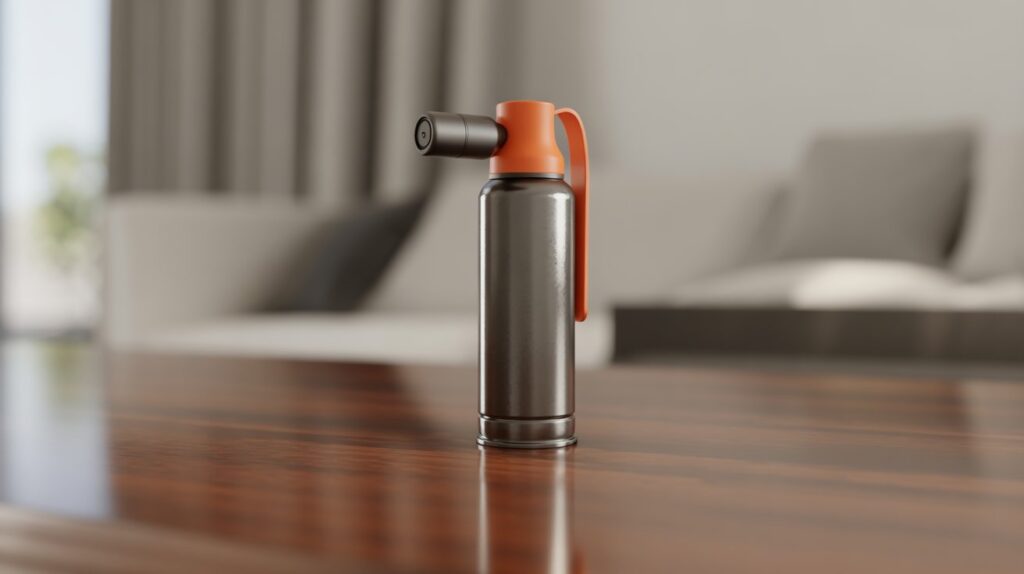
Choosing the right type of pepper spray depends on several factors, including its delivery method, spray pattern, intended environment, and your ability to handle the product safely. Stream, gel, foam, fogger, and launcher-style devices have different characteristics, so no single option is suitable for every situation.
Before selecting a personal defense spray, consider the following factors:
- Spray pattern: Understand whether the product releases a narrow liquid stream, thick gel, foam, or a wider aerosol mist.
- Airborne dispersion: Some formulations produce more airborne particles than others, which can increase the possibility of unintended exposure.
- Environmental conditions: Wind, ventilation, and enclosed spaces can affect how an OC spray disperses.
- Product specifications: Check the manufacturer’s stated range, canister capacity, formulation, and safety mechanism.
- Ease of handling: Choose a product whose controls and safety features you can understand and operate responsibly.
- Legal restrictions: Verify state and local requirements before purchasing or carrying pepper spray.
Factors to Consider for Different Environments
Different environments create different exposure and handling concerns. Understanding these differences is more useful than assuming one spray pattern is always better.
1. Outdoor Environments
Stream and gel pepper sprays generally produce less airborne dispersion than broad fogger-style sprays. However, wind direction and changing weather conditions can still affect their performance.
Check the manufacturer’s instructions and understand the possibility of accidental exposure before carrying an OC spray outdoors.
2. Indoor and Enclosed Spaces
Indoor environments require additional caution because airborne irritants can remain in the surrounding area and affect other occupants.
Gel formulations are designed to reduce airborne dispersion compared with some aerosol sprays, but they are not completely free from exposure risks. Avoid unnecessary discharge in enclosed spaces.
3. Products With Wider Spray Patterns
Fogger or cone-style pepper sprays distribute their contents across a wider area. This creates a greater possibility of affecting nearby people, particularly when ventilation is limited or wind changes the direction of the spray.
Review the manufacturer’s warnings before considering this type of personal defense spray.
4. Foam-Based Formulations
Foam pepper spray has a different consistency and dispersion pattern from traditional liquid or aerosol products. Its characteristics, residue, and effective range vary between manufacturers.
Check the product specifications rather than assuming all foam formulations perform identically.
5. Pepper Spray Guns and Launchers
Pepper spray guns and launchers use specialized delivery systems that may differ significantly from conventional OC canisters.
Before considering one, review its operating mechanism, cartridge compatibility, maintenance requirements, and legal classification.
Quick Reference: Pepper Spray Types and Their Characteristics
| Pepper Spray Type | Delivery Method | Main Consideration |
|---|---|---|
| Stream | Narrow liquid stream | Focused application and accuracy |
| Gel | Thick gel formulation | Reduced airborne dispersion |
| Foam | Expanded foam | Formulation and residue |
| Fogger | Wide aerosol pattern | Greater airborne exposure |
| Gun/Launcher | Specialized delivery system | Product-specific operation and laws |
There is no universally best pepper spray for outdoor use, home protection, or everyday carry. The appropriate choice depends on the product’s specifications, the environment, and applicable safety requirements.
For additional information about compact and concealed designs, see our guide to discreet pepper spray and its different styles.
Safety Tips for Carrying and Handling Pepper Spray
Owning pepper spray is only one part of personal safety. Proper storage, product familiarity, and responsible handling are equally important. Since OC spray can irritate the eyes, skin, and respiratory system, even accidental discharge can affect the user and people nearby.
Follow these precautions when carrying or storing a pepper spray canister.
1. Keep Pepper Spray Secure and Accessible
Store your pepper spray in a designated holder, protective case, or suitable pocket where it can be carried securely without accidental activation.
Avoid placing loose canisters alongside sharp objects, keys, or other items that could damage the safety mechanism.
If you carry a compact or concealed model, make sure you understand its design and how its safety features work.
2. Understand the Safety Mechanism
Pepper spray products can have different activation systems, including flip-top covers, twist locks, and push-button mechanisms.
Before carrying a new product:
- Read the manufacturer’s operating instructions.
- Identify the safety lock and nozzle position.
- Understand how to prevent accidental discharge.
- Use an inert training unit if the manufacturer provides one.
- Keep the safety mechanism engaged when the product is not being used.
Never experiment with a live canister simply to become familiar with its controls.
3. Avoid Unnecessary Testing Indoors
Discharging pepper spray inside a home, vehicle, or other enclosed space can spread irritating particles throughout the area.
This may expose family members, children, pets, and other occupants.
If the manufacturer recommends testing, follow its specific instructions and use an appropriate outdoor location away from other people and animals. Do not discharge the product merely to test it unless necessary and permitted by the manufacturer.
4. Check the Expiration Date
Pepper spray has a limited shelf life, but its recommended expiration period varies by manufacturer and product.
An outdated, damaged, or improperly stored canister may not perform as expected. Check the printed expiration date and replace the product according to the manufacturer’s recommendations.
Inspect the container periodically for:
- Rust or corrosion
- Dents or visible damage
- Leakage around the nozzle
- Damaged safety covers
- Missing or unreadable expiration information
For more details, read our guide on how long pepper spray lasts and when to replace it.
5. Understand Wind and Airflow Conditions
Environmental conditions can influence the movement of airborne pepper spray particles.
Outdoor wind may carry the spray away from its intended area or back toward the person carrying it. Indoor ventilation can also spread airborne irritants into adjoining spaces.
Understand these risks before carrying or using any aerosol-based defensive spray.
6. Know What to Do After Accidental Exposure
Accidental pepper spray exposure can cause eye pain, tearing, coughing, skin irritation, and breathing discomfort.
If exposure occurs:
- Move away from the contaminated area and get fresh air.
- Avoid rubbing your eyes or touching your face with contaminated hands.
- Remove contaminated clothing carefully.
- Rinse exposed eyes with room-temperature water for 10–15 minutes.
- Wash exposed skin with soap and water.
- Remove contact lenses and do not reuse contaminated lenses.
Seek medical attention if you experience difficulty breathing, chest pain, persistent eye pain, or other serious symptoms.
For additional medical guidance, consult Poison Control’s pepper spray safety information.
7. Store Pepper Spray Away From Children and Heat
Keep pepper spray out of children’s reach and away from pets. Store the canister in accordance with the manufacturer’s temperature and storage recommendations.
Avoid leaving pressurized pepper spray in a hot vehicle, direct sunlight, or locations exposed to extreme temperatures.
A secure storage location helps reduce the risk of accidental discharge, canister damage, and unintended exposure.
Legal Considerations for Pepper Spray in the United States
Pepper spray laws in the United States vary by state and, in some cases, by local jurisdiction. Although federal law recognizes individual self-defense devices, including pepper spray, state and local regulations can still impose restrictions on possession, purchase, and use.
Depending on the jurisdiction, regulations may address:
- Minimum purchase and possession age
- Canister size and product specifications
- Permitted formulations or chemical concentrations
- Restrictions on certain locations
- Eligibility requirements or permits
- Lawful use in self-defense situations
Before purchasing or carrying pepper spray, check the current regulations that apply to your location.
1. Age and Purchase Requirements
Age restrictions are not identical across the United States. Some states allow adults to purchase and possess pepper spray without a special permit, while others have additional requirements for minors.
Example: Massachusetts
Massachusetts regulates the purchase and possession of self-defense spray under its General Laws, Chapter 140, Sections 122C and 122D.
Under Section 122D, individuals under 18 generally need a self-defense spray permit to purchase or possess pepper spray. The law also establishes eligibility requirements for certain younger applicants.
You can review the current provisions through the official Massachusetts General Laws.
This example demonstrates why checking state-specific requirements is important instead of relying on a nationwide age rule.
2. Canister Size and Formulation Restrictions
Some jurisdictions regulate the size, composition, or concentration of personal defense sprays.
For example, Michigan publishes guidance on self-defense spray devices, including restrictions concerning the permitted OC formulation and concentration.
The Michigan State Police legal update provides additional information about these requirements.
Do not assume that a product permitted in one state automatically meets the requirements of another state.
3. Where Pepper Spray May Be Restricted
Even when pepper spray possession is generally permitted, individual properties and facilities may have additional restrictions.
Examples can include:
- Schools and educational facilities
- Courthouses
- Government buildings
- Secure transportation facilities
- Private properties with weapons policies
- Other locations covered by state or federal regulations
Check the specific facility’s rules before bringing a defensive spray onto its premises.
4. Understand the Lawful Use of Pepper Spray
Possessing pepper spray and using it against another person are separate legal questions.
Self-defense laws generally consider factors such as the nature of the threat, whether force was reasonably necessary, and the circumstances surrounding the incident.
Using pepper spray to threaten, intimidate, harass, or harm someone without lawful justification can result in legal consequences.
For this reason, understand the self-defense laws that apply in your state rather than assuming that legal possession automatically makes every use lawful.
5. Check Official State Laws Before Carrying
Before buying or carrying an OC spray, review the following information:
- Current state pepper spray statutes
- Purchase and possession age requirements
- Canister size and formulation restrictions
- Restricted public and private locations
- Applicable self-defense laws
- Local regulations that may affect possession or use
You can also review 18 U.S.C. § 229C, which addresses individual self-defense devices under federal law.
Important: This information is for general educational purposes and is not legal advice. State and local regulations can change, so verify current requirements through official government or legislative sources before purchasing, carrying, or using pepper spray.
FAQs
1. What are the main types of pepper spray?
The main types include stream, gel, foam, fogger, and specialized pepper spray launchers. Each has a different delivery method, spray pattern, and potential for airborne exposure.
2. Which type of pepper spray is best for self-defense?
There is no universally best type. Stream, gel, foam, and fogger sprays have different characteristics. Consider the product specifications, intended environment, and safety instructions before choosing one.
3. How long does pepper spray remain effective?
Pepper spray shelf life varies by manufacturer and product. Check the expiration date printed on the canister and replace expired or damaged products according to the manufacturer’s recommendations.
4. Is pepper spray legal in all U.S. states?
Pepper spray is generally legal in the United States, but state and local laws may restrict age, canister size, formulation, possession, or use. Check your state’s current regulations before carrying it.
5. What is the difference between pepper spray gel and fogger?
Gel pepper spray uses a thicker formulation with reduced airborne dispersion, while fogger spray releases a wider aerosol mist. Both have different exposure characteristics and handling considerations.
6. Can pepper spray be used indoors?
Pepper spray can create exposure risks indoors because airborne irritants may spread through enclosed spaces. Follow the manufacturer’s warnings and avoid unnecessary discharge inside buildings.
7. Does pepper spray expire?
Yes. Pepper spray canisters have a limited shelf life. Expiration, propellant condition, and storage can affect product performance, so follow the manufacturer’s replacement guidance.
Conclusion
Understanding the different types of pepper spray can help you make a more informed decision when comparing personal defense products. Stream, gel, foam, fogger, and launcher-style sprays each have different delivery methods, spray patterns, and potential exposure risks.
Before choosing an OC spray, consider its formulation, manufacturer specifications, storage requirements, and applicable state laws. Most importantly, understand its limitations and follow the product’s safety instructions.
A responsible approach to selecting and handling pepper spray can help you make a better-informed personal safety decision without assuming that one type is suitable for every situation.
About the Author
M. Bilal is a Criminology graduate and security-focused content writer with an interest in personal safety, crime prevention, and modern protection technologies. He researches security-related topics using reliable sources, manufacturer information, and relevant safety guidance to provide readers with clear, practical, and easy-to-understand information.
At CrimTechHub, he writes about personal defense products, pepper spray, home security systems, surveillance technology, and residential safety. His goal is to help readers understand security products, compare their features, and make informed decisions about personal and home protection.
Areas of Focus: Criminology • Personal Safety • Pepper Spray Education • Home Security • Security Technology



Pingback: Discreet Pepper Spray Safety Tips for Everyday Carry
Pingback: Is Pepper Spray Legal in California? Laws and Rules
Pingback: Is Pepper Spray Legal in Arizona? Rules and Laws