Introduction
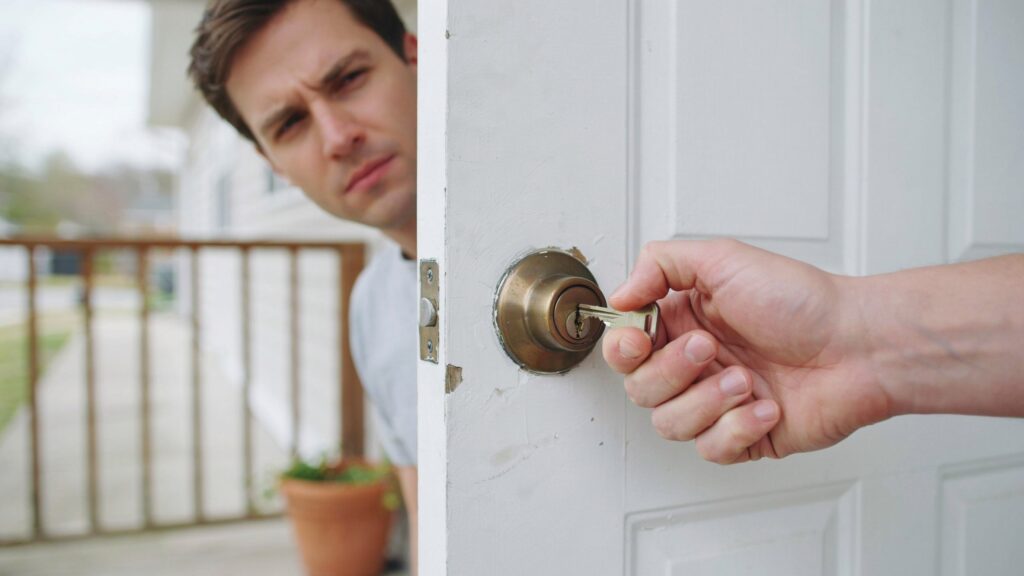
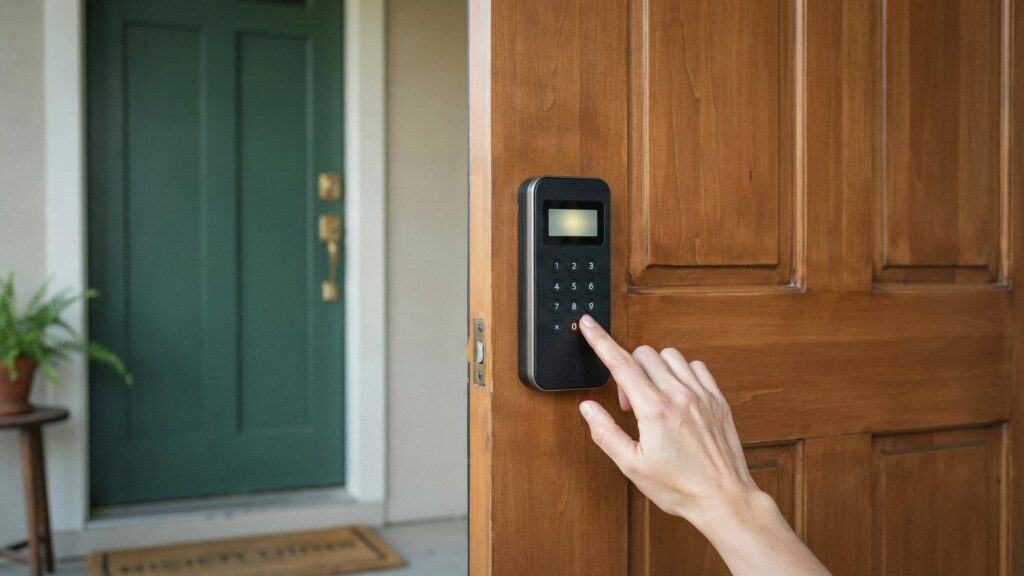
Ever stood outside your own front door, digging through your bag for keys while your groceries slip out of your arms? That small, everyday frustration is exactly why so many homeowners are weighing smart lock vs traditional lock options right now. One relies on a simple metal key you’ve used your whole life; the other replaces it with an app, a code, or even your fingerprint. In this article, we’ll break down where each one truly shines, so you can figure out which lock actually fits how you live.
Table of Contents
What Makes a Lock “Smart” Versus “Traditional”?
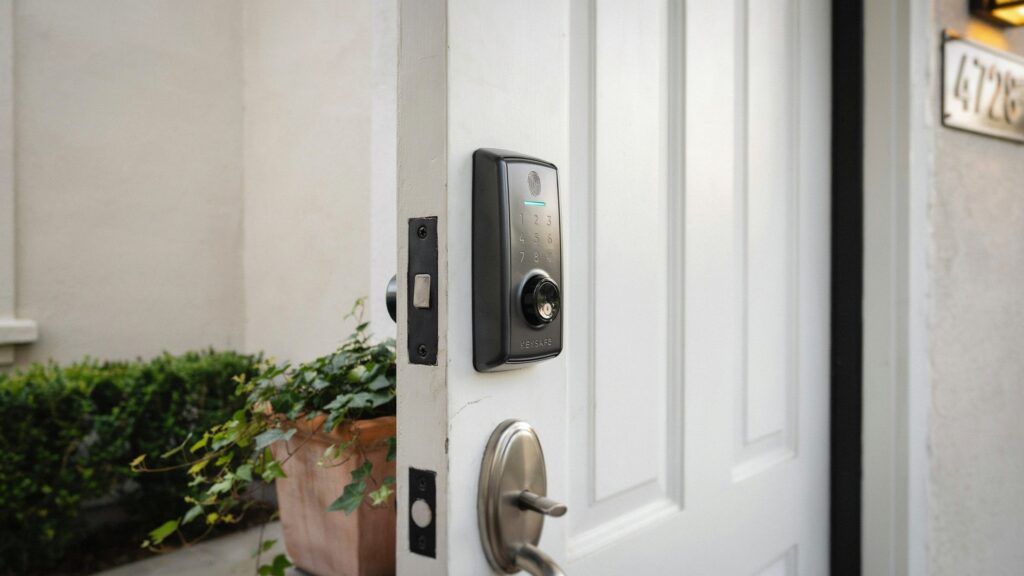
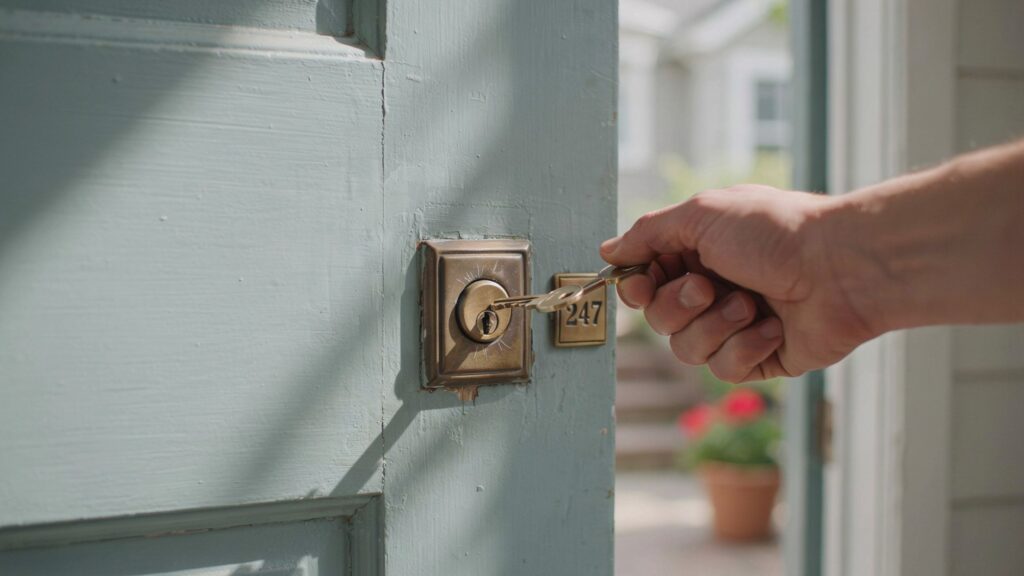
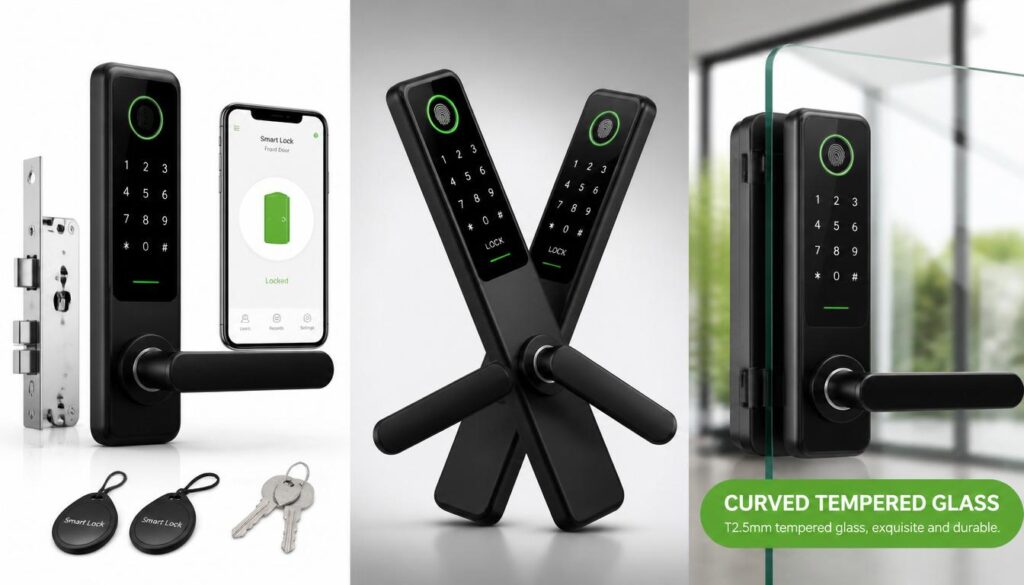
The real difference comes down to how the lock decides who gets in. A traditional lock relies on a physical key that matches a mechanical cylinder inside the door — nothing electronic, nothing connected. A smart lock replaces that mechanism with an electronic system that unlocks through a code, an app, a fingerprint, or a signal from your phone.
Think about a simple everyday scenario: you’re standing at your front door with grocery bags in both hands. With a traditional lock, you’re digging through a pocket or purse for a key. With a smart lock, you tap a code on a keypad or let the door unlock automatically as your phone gets close. That single moment captures most of what separates the two categories — one depends on a physical object you have to carry, the other depends on identity or proximity.
Underneath that convenience, smart locks run on small computers. Most use Bluetooth or Wi-Fi to talk to an app, and many now support newer smart home standards that let them work with voice assistants or home hubs. Like any connected device, this kind of technology comes with general security practices worth following, as outlined in CISA’s guidance on securing IoT devices. Traditional locks skip all of that. There’s no battery to charge, no firmware to update, and no app to open when you just want to leave the house.
Neither design is inherently better at this stage — they’re just built around different priorities. A traditional lock is built around simplicity and durability. A smart lock is built around flexibility: letting you grant temporary access to a dog walker, check who came and went, or lock the door remotely if you forgot on your way to work. That distinction sets up everything else worth comparing between the two.
Where Traditional Locks Still Win
When it comes down to pure reliability, a traditional lock simply doesn’t fail the way electronics can. In the smart lock vs traditional lock debate, this is the category where the old-fashioned deadbolt quietly holds its ground.
A mechanical lock has no battery to die, no software to glitch, and no signal to lose. That matters more than people expect — picture coming home late at night in the middle of a Midwest winter storm, only to find your smart lock’s battery drained from the cold. A traditional key doesn’t care about temperature, power outages, or Wi-Fi downtime. It works the same way it did the day it was installed.
A few practical reasons traditional locks still hold real value:
- No batteries to monitor or replace — you’re never caught off guard by a dead lock at your own front door
- Zero hacking risk — there’s no app, no Bluetooth signal, and no network connection for anyone to exploit
- Lower upfront cost — a solid deadbolt typically costs a fraction of a smart lock, with no ongoing app or subscription fees
- Familiar, foolproof operation — anyone in the house, including kids or older family members, already knows how to use a key
There’s also something to be said for pure trust built over decades. Locksmiths have refined mechanical lock design for well over a century, and that history shows in how predictable and repairable these locks are. If something goes wrong, a local locksmith can usually fix it in minutes, without needing to troubleshoot an app or reset a device.
That said, this reliability comes with trade-offs of its own — mainly around convenience, which is where smart locks start to shift the balance, especially for anyone managing guest access or checking on their home remotely.
Where Smart Locks Pull Ahead
This is where the smart lock vs traditional lock comparison flips in the other direction — smart locks win on flexibility, especially for households juggling multiple people coming and going.
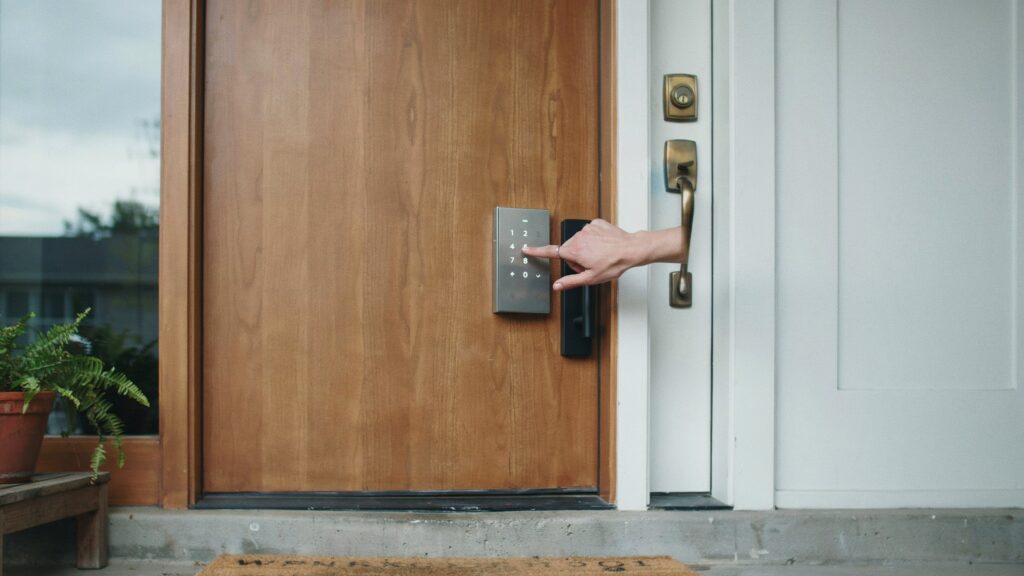
Picture a common scenario: your dog walker comes by at noon, a cleaner shows up on Thursdays, and your teenager keeps forgetting to bring a key to school. With a traditional lock, that means cutting spare keys for everyone, hoping nobody loses one, and never really knowing who used it or when. A smart lock solves all of that with a single keypad or app, letting you assign a unique code to each person and remove it the moment it’s no longer needed.
Keyless entry is the most obvious shift, but the real advantage sits underneath it. Most smart locks keep an activity log, showing exactly when the door was locked or unlocked and by which code. That kind of visibility isn’t something a traditional lock can offer at all — there’s no way to know if a key was used at 7 a.m. or 11 p.m.
A few specific ways smart locks extend beyond basic entry:
- Remote locking and unlocking — lock the door from work if you forgot, or let in a family member without being home
- Temporary guest codes — set codes that expire automatically after a visit, a weekend rental, or a one-time delivery
- Activity history — see a timestamped record of every entry, useful for tracking family schedules or service visits
- Integration with smart home systems — many models connect with voice assistants or home hubs, which we cover in our guide on smart lock compatibility with Google Home and Matter
For anyone managing a household with regular visitors, renters, or family members on different schedules, this level of control is hard to replicate with a physical key. It’s less about replacing the front door and more about knowing exactly who’s coming through it.
A Real-World Look: Choosing a Lock for a Rental vs. an Owned Home
Whether a smart lock or traditional lock makes more sense really depends on one simple factor: do you own the door, or are you just borrowing it? Renters and homeowners face very different rules when it comes to changing what’s on their front entry.
The Renter’s Situation: Permission Comes First
For anyone renting, the smart lock vs traditional lock decision isn’t really about preference — it’s about what the lease allows. In most states, a tenant cannot swap out the original lock without getting written approval from the landlord first, and skipping that step can count as a lease violation. This is why renter-friendly smart locks have become popular: models that fit over the existing deadbolt, keep the original key working from outside, and can be removed in minutes when moving out. A tenant who wants this kind of upgrade typically needs to put the request in writing, confirm the landlord will still have a way to access the unit in an emergency, and agree to restore the original hardware at move-out. That last part matters more than people realize — landlords who never gave permission for a hardware swap can treat it as unauthorized property alteration, which puts a security deposit at risk, something covered further in our home security systems for renters guide.
The Homeowner’s Situation: Full Control, Full Responsibility
Owning the property removes that entire layer of negotiation. A homeowner can replace a traditional lock with a smart lock outright, choose any brand or connectivity type, and skip the “ask permission first” step altogether. The trade-off is that all the decision-making, and all the responsibility for maintenance, battery changes, and app setup, falls on the homeowner alone. There’s no landlord to fall back on if something goes wrong, but there’s also no one to answer to before making the switch.
Why This Distinction Actually Matters
A single detail separates these two situations more than anything else: for a renter, the traditional lock is often not really a choice, it’s a starting condition that any smart lock has to work around. For a homeowner, it’s a genuine decision between two systems with no outside constraints. Anyone weighing a switch should start by asking which category they fall into, since that answer shapes every option that follows — something we go into further in our guide on the best smart locks for rental apartments.
Cost, Installation, and Maintenance Compared
The short answer: traditional locks cost less upfront and need almost no upkeep, while smart locks ask for a bit more money and effort at the start in exchange for long-term convenience. That trade-off shows up clearly once you break down installation and maintenance side by side.
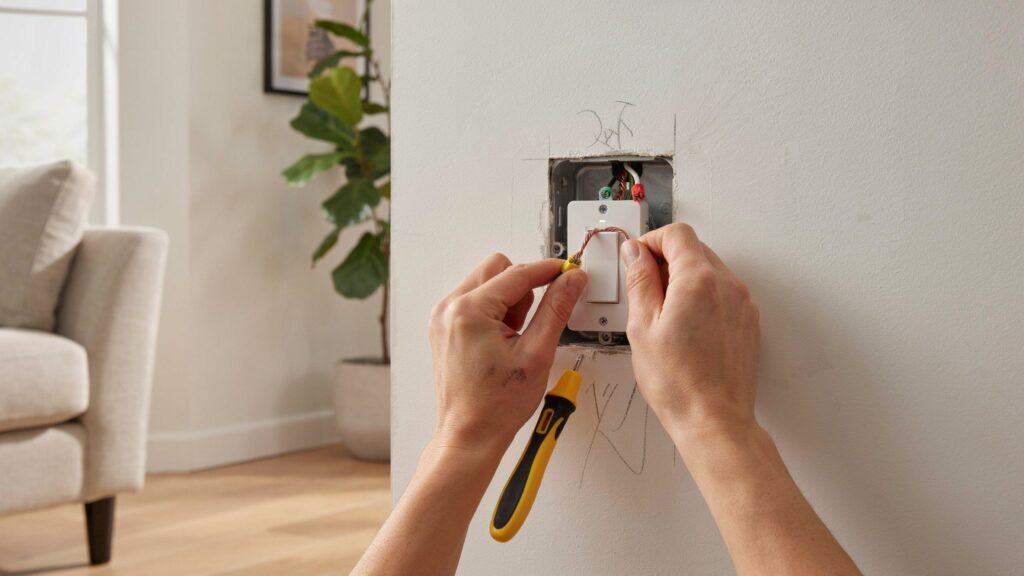
A traditional deadbolt is about as simple as home hardware gets. Swapping one out usually means removing a few screws, fitting the new mechanism, and testing the key — a task most homeowners finish in under 15 minutes without calling anyone. A smart lock, on the other hand, often involves aligning it with the existing bolt, running through an app setup, and sometimes adjusting the strike plate if the fit isn’t exact. It’s not difficult, but it does take longer, and the electronics inside mean there’s more that can eventually need attention.
Here’s how the two compare across the areas that matter most:
- Upfront cost — traditional locks are generally the more affordable choice, with no ongoing fees; smart locks cost more initially and sometimes include an optional app subscription for extra features
- Installation time — a traditional lock swap is usually a quick, single-tool job; a smart lock install takes longer due to app pairing and initial setup
- Ongoing maintenance — traditional locks need occasional lubrication at most; smart locks require regular battery checks, since a fully drained battery can lock you out until it’s replaced
- Drilling and door modification — most traditional lock replacements need zero new drilling if the format matches; some smart locks fit over the existing deadbolt with no drilling, while others require minor adjustments depending on the model
That battery question deserves its own mention, since it’s the one maintenance task traditional locks never require. Most smart locks last several months to about a year on a single set of batteries, and many send a low-battery alert through the app well before they die — a habit worth building early, as covered in our Kwikset smart lock battery change guide.
Weighed together, the real decision isn’t just about spending more or less. It’s about whether you’re willing to trade a slightly higher upfront cost and a bit of ongoing maintenance for the convenience a smart lock brings to daily life.
Which Lock Actually Fits Your Lifestyle?
There’s no universal winner in the smart lock vs traditional lock debate — the right choice depends on how you live, not which lock is “better.” If you rent, value simplicity, or just want something that never needs a battery, a traditional lock still holds up. If you manage guests, want remote access, or like knowing exactly who’s coming and going, a smart lock earns its extra cost.
The real question isn’t which technology is superior. It’s which one matches your daily routine, your living situation, and how much control you want over your own front door.
Conclusion
At the end of the day, a lock is just a tool for trust — deciding who gets in, and how much you want to know about it. Whether you stick with a traditional deadbolt or move to something smarter, the choice says more about how you want to live than which technology wins on paper.
So take a moment before you decide: what does your front door actually need to do for you?
FAQs
Is a smart lock better than a normal lock?
It depends on your priorities — smart locks offer convenience and control, while traditional locks offer simplicity and zero reliance on power.
What are the downsides of smart locks?
Battery upkeep, higher upfront cost, and dependence on an app or Wi-Fi connection are the main trade-offs.
What locks do locksmiths recommend?
Most locksmiths recommend ANSI Grade 1 deadbolts for baseline security, whether paired with a smart or traditional mechanism.
Do smart locks void insurance?
No, smart locks don’t void insurance on their own, but always check your policy for specific security-device requirements.
What door locks do police recommend?
Police typically recommend deadbolts with a one-inch throw bolt and reinforced strike plates for stronger break-in resistance.
What is the problem with smart door lock?
The biggest issue is dependence on batteries and connectivity, since a dead battery or app glitch can delay entry.
What is the lifespan of a smart lock?
Most smart locks last three to five years before hardware or battery components need replacing.
What happens if a smart lock fails?
Nearly all models include a physical key override or backup keypad code, so you’re never permanently locked out.