Introduction
Ever wondered how do daylight sensors work to turn your outdoor lights on at exactly the right moment—without you touching a switch? That’s the magic of daylight sensors, a core part of modern smart lighting systems.
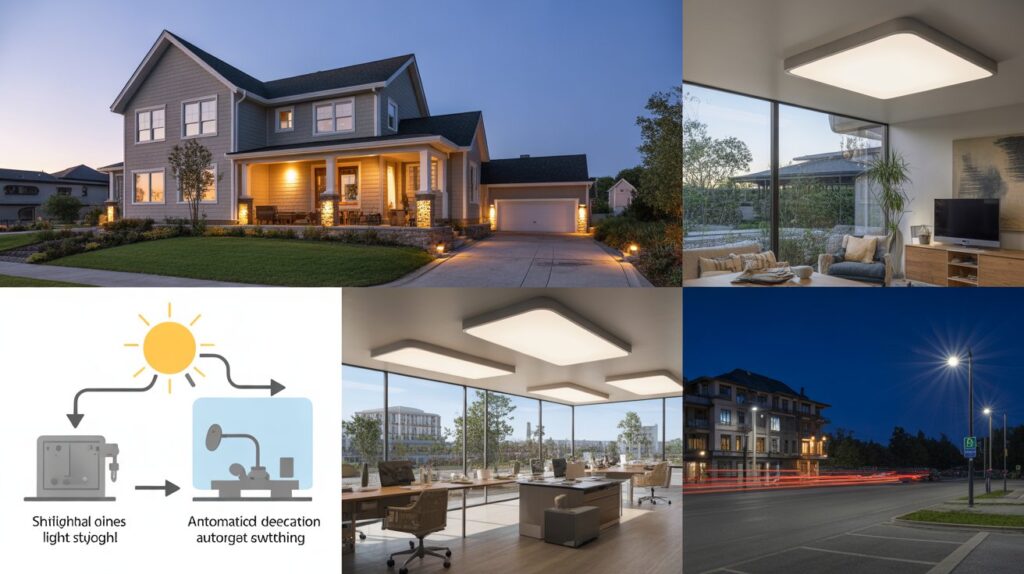
At its core, a daylight sensor detects natural sunlight levels and automatically controls connected lights based on brightness. As the sun sets, it triggers the lights on; as daylight returns, it switches them off. This simple yet effective technology is helping homes and businesses across the USA cut energy waste and boost nighttime security—all without manual effort.
Understanding how daylight sensors work reveals just how much energy is wasted around your home every day, and how easily a small upgrade can fix it.
Table of Contents
Why Daylight Sensors Matter More Than Most People Realize
Many people waste electricity every day without realizing it. Outdoor lights stay on after sunrise, office lights run near bright windows, and garage lights burn longer than needed. These small habits may seem harmless, but over time they raise energy bills and shorten bulb life. That’s one reason more people are asking how do daylight sensors work and why they matter.
Daylight sensors solve this problem by making lighting automatic and efficient. They detect natural light levels and turn lights on or off at the right time—working much like motion sensor light bulbs, which also rely on smart detection to save energy. This means better comfort when you come home after dark, added safety around walkways and entrances, and less stress about forgetting switches.
Savings are another major reason daylight sensors are growing in popularity across the United States. Homeowners want lower utility costs, while businesses look for smart ways to reduce overhead expenses. Parking lots, storefronts, warehouses, and apartment buildings often use daylight sensors to control exterior lighting without wasting power.
With rising electricity costs and growing interest in smart homes, daylight sensors have become a practical upgrade—part of a broader shift toward smarter home security systems that save money while improving safety.
What Is a Daylight Sensor and How Does It Detect Light?
- A daylight sensor is a small device that detects natural light levels and controls connected lights automatically.
- It helps turn lights off during bright daylight and on when the area becomes darker.
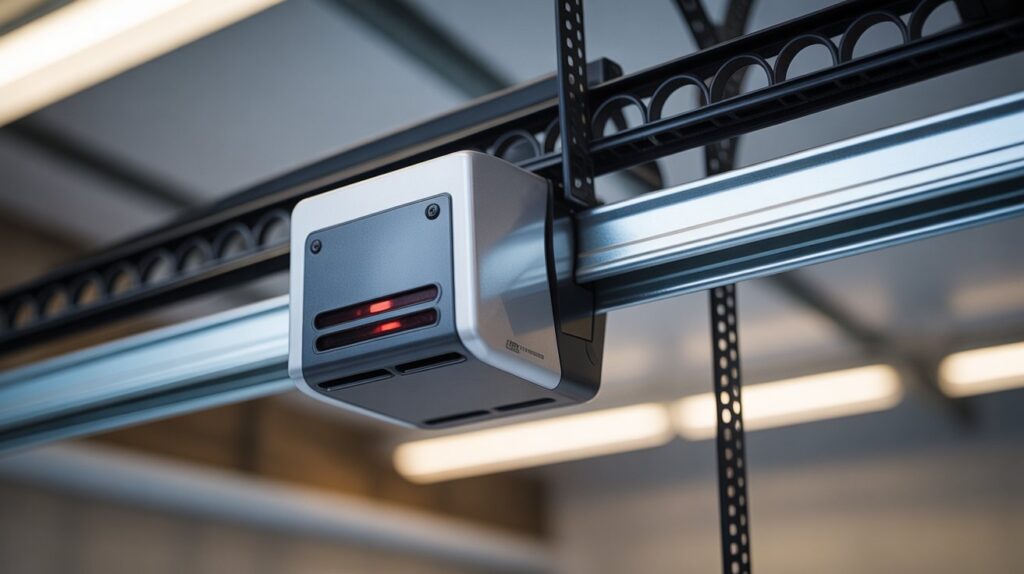
- Most daylight sensors use a light-sensitive component, often called a photocell, to measure surrounding brightness.
- The sensor continuously reads sunlight levels throughout the day for accurate lighting control.
- If sunlight drops below a preset level, the sensor sends a signal to switch lights on.
- When daylight becomes strong again, it turns the lights off to save energy.
- Darkness detection means the sensor reacts when light becomes too low, such as at sunset or during storms.
- Brightness detection means the sensor recognizes enough daylight is available, so extra lighting is unnecessary.
- A common example is a porch light that turns on at dusk and off after sunrise.
- If you wonder how do daylight sensors work, they simply use real-time light levels to manage lighting efficiently.
How Do Daylight Sensors Work Step by Step?
Curious how do daylight sensors work in everyday life? The process is simple, automatic, and designed to save energy. A daylight sensor constantly monitors natural light and responds instantly when brightness changes—keeping homes and businesses lit efficiently without manual effort.
Here’s how the system works step by step:
- The sensor continuously reads surrounding light levels throughout the day.
- It compares current brightness to a preset light threshold.
- When daylight drops too low, it sends a signal to turn lights on.
- When sunlight returns, it signals the lights to turn off.
- The cycle repeats automatically every day for consistent lighting control.
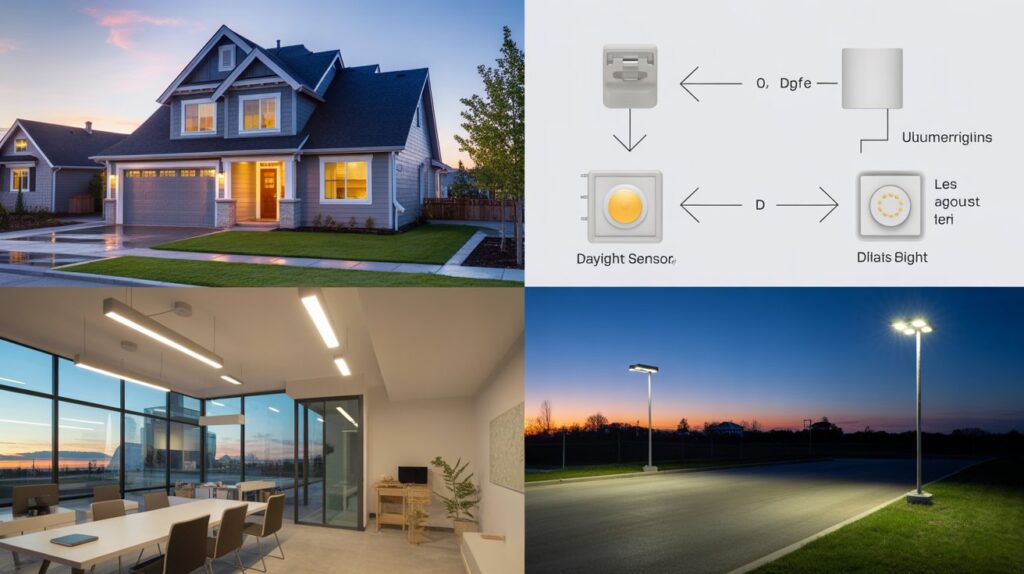
A common real-world example is a porch light at sunset: as the sun goes down, the daylight sensor detects lower light levels and switches the light on. In the morning, it turns off again—delivering convenience, improved safety, and reduced energy waste.
Different Types of Daylight Sensors You Should Know
Not all daylight sensors work the same way. Choosing the right type can make a big difference in energy savings, convenience, and daily comfort. If you have ever wondered how do daylight sensors work in different spaces, the answer depends on the sensor design and where it is installed.
Photocell Daylight Sensors
Photocell sensors are the most common option for homes and businesses. They detect changes in natural light and automatically turn lights on at dusk and off at sunrise. You often see them on porch lights, streetlights, and outdoor wall fixtures because they are reliable and cost-effective.
Infrared and Smart Daylight Sensors
Infrared and smart sensors offer more advanced control. Some systems combine daylight sensing with motion detection, which means lights respond to both darkness and movement. Smart daylight sensors may also connect to home automation systems, giving users better scheduling and energy management.
Indoor vs Outdoor Daylight Sensor Systems
Indoor daylight sensors are usually placed in offices, hallways, or rooms with windows to reduce unnecessary lighting during bright daytime hours. Outdoor sensors are built to handle weather conditions and are ideal for exterior lighting needs.
Best Uses for Everyday Spaces
Daylight sensors are popular because they fit many environments:
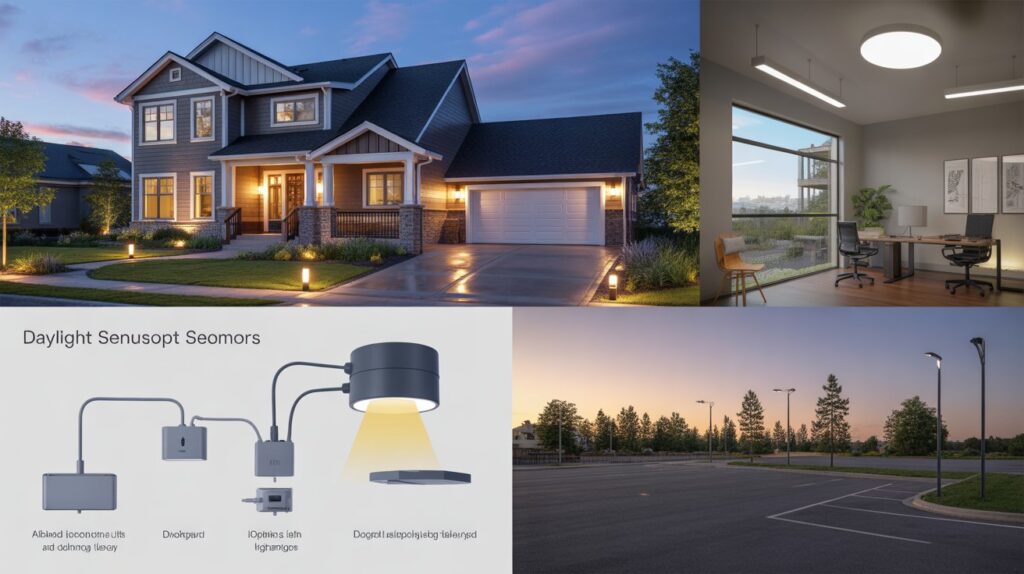
- Homes for porch lights, garages, and driveways
- Offices for energy-efficient indoor lighting
- Parking lots for safer nighttime visibility
- Security lights for automatic protection after dark
- Commercial buildings for lower operating costs
The right sensor can turn ordinary lighting into a smarter, money-saving system.
Benefits of Using Daylight Sensors in Everyday Life
Daylight sensors do more than turn lights on and off. They make daily life easier, reduce waste, and help properties run smarter. If you’re asking how do daylight sensors work and why they’re worth it, the real value shows up in comfort, savings, and long-term efficiency.
Lower Electricity Bills
One of the biggest benefits is reduced energy use. Lights only run when needed, helping homeowners and businesses avoid wasting power during bright daylight hours. Over time, this leads to noticeable savings on monthly utility bills.
Longer Bulb Lifespan
When lights aren’t left on unnecessarily, bulbs last longer—meaning fewer replacements, less maintenance, and lower lighting costs. This is especially useful for outdoor fixtures, garage lighting, parking lot lights, and hard-to-reach areas.
Better Convenience and Safety
Daylight sensors bring peace of mind. Porch lights, pathways, garages, and entryways light up automatically when darkness falls. You don’t need to remember switches, and family members can move around more safely at night.
Energy-Efficient Lighting for Eco-Conscious Homes
Many U.S. homeowners want practical ways to reduce energy waste. Daylight sensors support a greener lifestyle by lowering unnecessary electricity use while keeping homes comfortable and secure—a simple upgrade with lasting benefits.
Conclusion
Understanding how do daylight sensors work shows just how simple yet powerful smart lighting can be. These small devices quietly manage your lights, reduce wasted electricity, and make everyday life more convenient—without you even thinking about it. From lowering energy bills to improving home safety, daylight sensors bring real value to modern homes and businesses across the USA.
According to the U.S. Department of Energy, strategic use of natural light can reduce lighting, heating, and cooling costs for both homeowners and businesses, reinforcing just how impactful this small upgrade can be over time (Energy.gov). Department of Energy
It’s not just about technology—it’s about living smarter, saving more, and reducing unnecessary waste without effort.
Now take a moment to think — how many lights in your home are running when they don’t need to be? Sometimes, the smartest solutions are the ones you never have to think about twice.
FAQs
How do daylight sensors work in outdoor lighting?
Daylight sensors use a light-sensitive component called a photocell to measure ambient brightness. When light levels drop below a preset threshold, the sensor signals the connected light to turn on automatically.
What is a good light threshold for a daylight sensor?
Most residential daylight sensors trigger between 1 and 10 lux, roughly the brightness level of dusk. Some smart sensors let you adjust this threshold manually for earlier or later activation.
Can daylight sensors be used indoors?
Yes. Indoor daylight sensors are commonly placed near windows in offices and hallways to dim or switch off artificial lighting when enough natural light is available.
Do daylight sensors work on cloudy or rainy days?
Yes, daylight sensors respond to overall ambient light rather than sunlight alone, so they’ll still activate lighting during overcast conditions, storms, or heavy shade.
How long do daylight sensors typically last?
Quality photocell and smart daylight sensors generally last 5 to 10 years with normal use, though outdoor units exposed to harsh weather may need earlier replacement.
About the Author
M. Bilal
I’m the founder of CrimTechHub, where I write about home security, smart lighting, and the everyday tech that keeps homes safer and more efficient. I hold a Bachelor’s degree in Criminology, which shapes how I look at home protection — not just as gadgets, but as part of a bigger picture of safety and prevention.
Daylight sensors caught my attention early on because they sit right at the intersection of security and energy savings — two things every homeowner cares about. I’ve spent time testing and researching different sensor types, from basic photocells to smart, app-connected systems, to give readers practical advice they can actually use.
When I’m not writing for CrimTechHub, I work on SEO content projects, helping other sites explain technical topics in plain, useful language.